Published on February 16, 2026
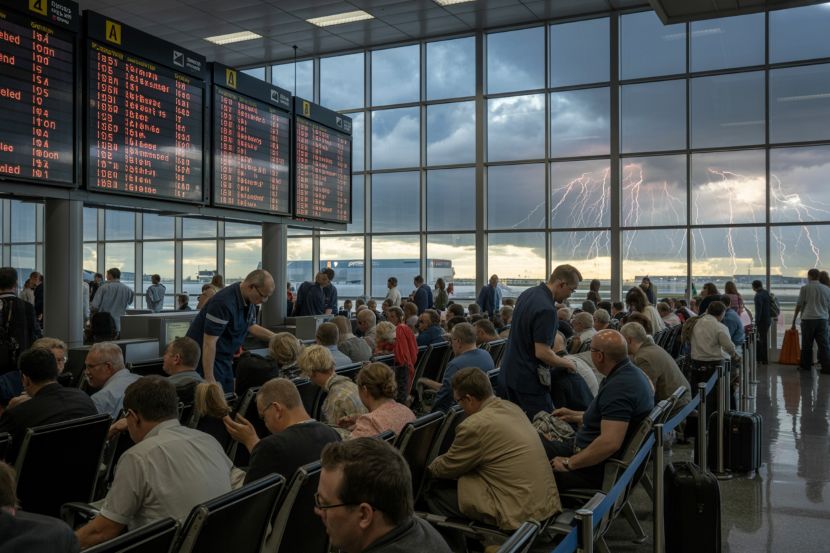
Image generated with Ai
As of today, aviation across the United States is facing major disruptions, with a total of 94 flight cancellations and 645 delays reported nationwide. These disruptions are not only impacting travelers’ schedules but are also creating significant ripple effects throughout the airline industry and beyond. The most notable airports to suffer from these cancellations are Montreal-Trudeau, Toronto Pearson, Orlando International, Boston Logan International, and Denver International, each contributing to the broader picture of aviation chaos.
In this detailed analysis, we will explore the specific flight cancellation data from these airports, investigate the underlying causes of such widespread disruptions, and offer advice for passengers affected by these cancellations.
Total Cancellations: 6
Delays: 12
| Airline | Cancelled (#) | Cancelled (%) | Delayed (#) | Delayed (%) |
|---|---|---|---|---|
| WestJet | 4 | 11% | 1 | 2% |
| Air Canada | 1 | 0% | 5 | 3% |
| Jazz (ACA) | 1 | 0% | 1 | 0% |
| AeroMéxico | 0 | 0% | 1 | 50% |
| Austrian Airlines | 0 | 0% | 1 | 50% |
| Air Transat | 0 | 0% | 3 | 7% |
Montreal-Trudeau, a key Canadian airport, has seen relatively modest disruptions with 6 cancellations today. Among the most affected airlines are WestJet, responsible for 4 cancellations, contributing significantly to the total disruption. In terms of delays, Air Canada and Jazz (ACA) have been notably impacted, with 5 delays for Air Canada and 1 for Jazz.
Advertisement
WestJet, accounting for 11% of cancellations, seems to be the most affected airline at this airport. Other carriers like AeroMéxico and Austrian Airlines also show significant delays, especially with a 50% delay rate for both.
Total Cancellations: 5
Delays: 15
Advertisement
Advertisement
| Airline | Cancelled (#) | Cancelled (%) | Delayed (#) | Delayed (%) |
|---|---|---|---|---|
| WestJet | 4 | 3% | 2 | 1% |
| Jazz (ACA) | 1 | 0% | 0 | 0% |
| China Eastern | 0 | 0% | 1 | 100% |
| EVA Air | 0 | 0% | 2 | 66% |
| Egypt Air | 0 | 0% | 1 | 50% |
| American Airlines | 0 | 0% | 1 | 12% |
| Air Transat | 0 | 0% | 7 | 2% |
| Air Canada | 0 | 0% | 7 | 4% |
Toronto Pearson is experiencing 5 cancellations and 15 delays. WestJet stands out as the airline most affected, with 4 cancellations and 2 delays. The carrier accounts for 3% of cancellations, but its percentage of delays is more pronounced, impacting around 1% of the total flights. Other significant disruptions include EVA Air with 2 delays affecting 66% of its operations, and Air Transat contributing to 2% of total delays. This paints a picture of widespread, though not catastrophic, disruptions at one of Canada’s busiest airports.
Total Cancellations: 11
Delays: 35
Advertisement
Advertisement
| Airline | Cancelled (#) | Cancelled (%) | Delayed (#) | Delayed (%) |
|---|---|---|---|---|
| Spirit | 7 | 5% | 12 | 9% |
| Frontier | 3 | 2% | 0 | 0% |
| Alaska Airlines | 1 | 6% | 0 | 0% |
| Delta Air Lines | 0 | 0% | 5 | 3% |
| JetBlue | 0 | 0% | 1 | 0% |
| LATAM Peru | 0 | 0% | 1 | 50% |
| Southwest | 0 | 0% | 14 | 4% |
| Volaris | 0 | 0% | 1 | 25% |
| American Airlines | 0 | 0% | 1 | 0% |
Orlando International has seen a larger impact today, with 11 cancellations and 35 delays. The primary culprit appears to be Spirit Airlines, which has accounted for 7 cancellations and 12 delays. This makes up 5% of cancellations and 9% of delays across the airport. Other notable contributors include Frontier with 3 cancellations, Alaska Airlines, and LATAM Peru.
Spirit’s operational issues highlight how low-cost carriers are bearing the brunt of today’s disruption, with a significant percentage of both cancellations and delays compared to other airlines. The 9% delay rate from Spirit is particularly concerning for travelers heading to or from Orlando.
Total Cancellations: 7
Delays: 21
| Airline | Cancelled (#) | Cancelled (%) | Delayed (#) | Delayed (%) |
|---|---|---|---|---|
| JetBlue | 4 | 1% | 11 | 4% |
| Iberia | 2 | 33% | 0 | 0% |
| Spirit | 1 | 4% | 3 | 12% |
| AeroMéxico | 0 | 0% | 1 | 50% |
| Alaska Airlines | 0 | 0% | 3 | 30% |
| Delta Air Lines | 0 | 0% | 1 | 50% |
| Lufthansa | 0 | 0% | 1 | 25% |
| LATAM Brasil | 0 | 0% | 1 | 100% |
Boston Logan International has experienced 7 cancellations and 21 delays today. The most significant disruption comes from JetBlue, accounting for 4 cancellations and 11 delays. Other airlines like Iberia (with 33% cancellation rate) and Spirit (with 12% delay rate) have also contributed to the disturbances.
Total Cancellations: 5
Delays: 22
| Airline | Cancelled (#) | Cancelled (%) | Delayed (#) | Delayed (%) |
|---|---|---|---|---|
| Frontier | 5 | 3% | 0 | 0% |
| SkyWest | 0 | 0% | 8 | 1% |
| Southwest | 0 | 0% | 12 | 2% |
| United | 0 | 0% | 2 | 0% |
At Denver International, 5 cancellations have been recorded today, almost entirely attributed to Frontier Airlines. Although cancellations are fewer than in other airports, there are still 22 delays, affecting airlines like SkyWest (with 1% of its flights delayed) and Southwest.
Several factors contribute to the current aviation crisis across U.S. and Canadian airports. The primary reasons include:
If you are a passenger affected by these cancellations, here’s what you need to know:
The ripple effect of today’s flight cancellations and delays is being keenly felt in the U.S. tourism sector, threatening not only travelers’ plans but also the economic fabric of one of the world’s largest travel destinations. Millions of visitors flock to the U.S. every year for leisure, business, and family gatherings, but disruptions like this can significantly alter their travel itineraries.
For many travelers, flight cancellations translate into missed holiday celebrations, business conferences, and special events. With travel seasons often tightly scheduled around holidays and conventions, any delay or cancellation becomes more than just an inconvenience—it disrupts the very core of a traveler’s plans. Tourism-based businesses, including hotels, restaurants, and event venues, rely heavily on the timely arrival of visitors to sustain their peak revenue periods. Extended delays and cancellations risk damaging consumer confidence in the airline industry and might deter future bookings, ultimately slowing growth in tourism.
As flights are grounded, so too are the hotel reservations, tour packages, and local excursions that would typically benefit from an influx of travelers. With over 91 cancellations across U.S. airports, major tourism hubs such as New York, Los Angeles, and Miami could experience empty rooms, unfilled tours, and restaurant cancellations. The immediate financial hit is evident in the form of lost revenue and unpredictable demand. Hotels may see last-minute cancellations, leaving them scrambling to find other guests or adjust rates. For tourism-dependent regions, these ripple effects can devastate local economies, particularly in cities dependent on seasonal visitors.
The far-reaching economic consequences of these disruptions stretch beyond the tourism sector, impacting various industries tied to airline operations, business travel, and commerce.
In the world of corporate America, business travel is a vital economic driver. From sales meetings to conferences and negotiations, companies rely on timely travel to maintain productivity and operational efficiency. When flights are delayed or canceled, it leads to missed opportunities, delayed deals, and increased costs for businesses attempting to reschedule flights or secure last-minute accommodations. The cumulative effect on the national economy could be in the billions, as companies are forced to absorb the extra costs of rebooking and the indirect productivity losses caused by disrupted schedules.
Flight cancellations also severely affect retailers and logistics companies. Many industries rely on air travel to move goods, especially time-sensitive products like electronics, fashion items, and pharmaceuticals. Disruptions in the airline industry cause delays in inventory restocking and supply chain interruptions. For U.S. retailers, this can mean empty shelves, lost sales, and customer dissatisfaction. Similarly, logistics companies that rely on air freight for just-in-time deliveries are facing potential revenue losses and increased operational costs.
The aviation industry itself is not immune to the financial blowback. With a high number of cancellations comes an increase in customer service claims, refunds, and compensation demands. Airlines are now facing the challenge of not only dealing with operational issues but also compensating passengers for disrupted services. This additional financial burden, combined with the loss of customer loyalty, is forcing many airlines to reassess their service models and overhead costs.
As climate change accelerates, extreme weather events are increasingly becoming a norm in the airline industry. The aviation sector must adapt by embracing strategies that anticipate and mitigate the impact of such disruptions.
In conclusion, the impact of today’s flight cancellations and delays extends far beyond frustrated travelers. From tourism to logistics, industries across the U.S. are feeling the economic sting of disrupted air travel. Airlines, government bodies, and tourism stakeholders must come together to develop more resilient systems to prevent such widespread chaos in the future. It’s not just about dealing with cancellations but also about creating a future-proof industry that can weather both economic and environmental storms.
Advertisement

















Monday, February 16, 2026

Monday, February 16, 2026

Monday, February 16, 2026

Monday, February 16, 2026

Monday, February 16, 2026

Monday, February 16, 2026

Monday, February 16, 2026