Published on March 1, 2026
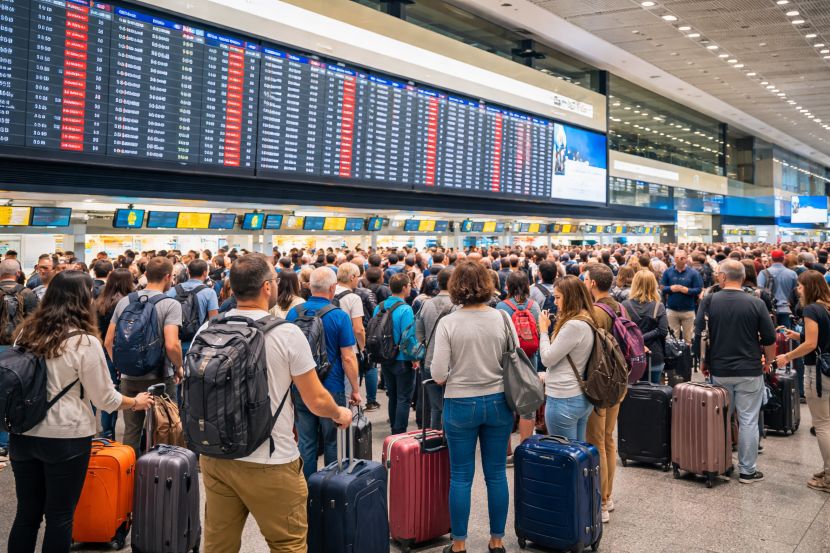
Rome’s Leonardo da Vinci International Airport and Lombardy’s Milan Malpensa Airport, two of Italy’s busiest international entry points, experienced considerable operational disruptions. There was a cumulative total of 147 flights delayed or cancelled.

Data operational reports submitted to ENAC (Italy’s civil aviation authority) indicate there are operational reports Milan Malpensa and Rome Fiumicino (FCO) airports. FCO reports 48 delays and 21 cancellations; Malpensa, 54 delays and 24 cancellations. These two airports have 102 delays and 45 cancellations.
Report delays and cancellations normalize air traffic at Italy’s major intercontinental airports.
Rome Fiumicino serves as Italy’s principal long-haul hub, connecting Europe with North America, the Middle East, Asia, and Africa. Milan Malpensa, meanwhile, is Northern Italy’s largest international airport and a key cargo and passenger gateway for the Lombardy region.
Advertisement
Advertisement
While specific airline-level operational breakdowns were not publicly itemised in today’s summary, both airports host a mix of:
Airlines operating from these hubs typically include Italian flag carriers, European legacy airlines, and international long-haul operators connecting Italy with global markets. Disruptions at these airports generally ripple across multiple airline schedules due to aircraft rotation patterns and shared ground infrastructure.
Advertisement
Advertisement
ENAC’s regulatory framework requires airlines and airport operators to coordinate passenger assistance and ensure compliance with European Union passenger rights regulations.
The disruptions at Rome and Milan inevitably affected passengers traveling to and from:
As Rome is Italy’s political and cultural capital, and Milan is its financial and industrial center, delays and cancellations at these airports impact domestic connections to cities such as Naples, Palermo, Catania, Bari, and Venice, as well as international routes across the EU and beyond.
Given the connectivity of both airports, secondary impacts likely extended to connecting passengers traveling onward to smaller Italian regional airports and European transit hubs.
With 147 total disruptions recorded in one day, passenger impact is considerable.
Based on average narrow-body and wide-body aircraft capacities commonly used at these airports, thousands of passengers were likely affected by either extended waiting times or flight cancellations.
Delayed flights often result in missed onward connections, rebooking complications, and extended airport stays. Cancelled services create more significant disruption, requiring passengers to be re-accommodated on alternative flights, which can take several hours or even days depending on seat availability.
Under EU Regulation EC 261/2004, passengers departing from Italian airports are entitled to assistance, including meals, accommodation when necessary, and potential compensation depending on the cause of disruption.
Italy remains one of the world’s most visited destinations, with official tourism data from Istituto Nazionale di Statistica (ISTAT) consistently showing strong inbound travel numbers. Rome and Milan function as primary entry points for international visitors.
Short-term disruptions can affect:
Rome, home to iconic heritage sites, and Milan, known for business, fashion, and trade exhibitions, depend heavily on predictable air connectivity. Even temporary flight irregularities can influence traveler confidence, particularly during peak tourism periods.
However, aviation authorities and airport operators maintain structured contingency plans to manage irregular operations and restore schedule stability quickly.
Operating challenges are always going to affect multiple destinations and thousands of passengers as exemplified by today’s 147 flight disruptions at Rome Fumicino and Milan Malpensa.
Although such disruptions are part of every day life in global aviation network, the Italian government has neglected to set some emergency response plan to ENAC and the airport authorities.
Travelers are advised to monitor real-time information on flight departures roll on the airport websites and airline websites. In order for Italy to retain its role as one of the top travel destinations in Europe, it is important to keep Rome and Milan operational.
Source: FlightAware and Affected airport
Advertisement
Tags: cancellation, Delay, Flight, Italy airport disruption


















Sunday, March 1, 2026

Sunday, March 1, 2026

Sunday, March 1, 2026

Sunday, March 1, 2026
Sunday, March 1, 2026

Sunday, March 1, 2026