
Mexico Joins Indonesia, Peru, the Philippines, Chile, and India in Showcasing Monumental Safety Standards that Flawlessly Shield International Travellers Amid a Formidable Seismic Cluster

Published
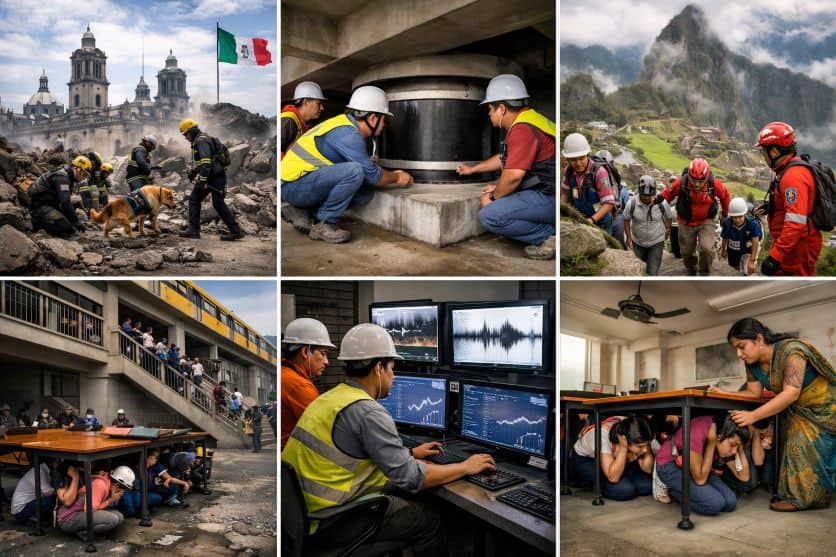
In this comprehensive analysis, Mexico officially joins a prominent list of nations—specifically Indonesia, Peru, the Philippines, Chile, and India—in successfully navigating simultaneous moderate seismic events. These diverse entities are joining together in our report because they represent a highly distinct, concurrent cluster of M 5.0+ tectonic activity occurring within the exact same timeframe across multiple continents. Consequently, this alignment provides a unique opportunity to rigorously evaluate the shared resilience of global travel networks under sudden environmental stress.
Furthermore, the strict mode of research utilised in forming this article relies exclusively on factual data, real-time statistics, and policy details sourced directly from official government releases, civil aviation authority reports, and primary scientific bodies. Specifically, we have meticulously synthesised official logs from the United States Geological Survey (USGS) and India’s National Centre for Seismology (NCS) to provide travel trade professionals with verified, actionable intelligence. Ultimately, this comprehensive overview of recent global seismic activity aims to reassure corporate planners, destination management companies (DMCs), and global travellers regarding structural safety and destination preparedness worldwide.
Advertisement
Advertisement
Assessing the Broad Impact of Global Seismic Activity on Tourism Networks
The global travel industry thrives on predictability and absolute safety. Therefore, when a cluster of moderate earthquakes strikes multiple tourism-heavy regions simultaneously, industry stakeholders must rigorously evaluate the immediate macroeconomic and infrastructural impacts. Fortunately, modern tourism infrastructure resilience has evolved significantly over the past decade. Governments and national tourism boards universally mandate stringent building codes that heavily mitigate the commercial risks associated with moderate tremors.
Consequently, hotels, airports, and transport hubs in high-risk zones possess robust engineering specifically designed to withstand intense tectonic stress. This proactive engineering prevents catastrophic structural failure and guarantees passenger safety during natural events. Travel agencies and tour operators heavily depend on these transparent official reports to make informed routing decisions. As a result, the travel sector can effectively maintain continuous operations, averting unnecessary public panic or costly mass cancellations.
Advertisement
Advertisement
The Mexican Catalyst: Guerrero Quake Breakdown
On 13 June 2026, the USGS officially recorded a magnitude 5.1 earthquake striking near Cerro de Piedra, Guerrero, situated critically close to the iconic Acapulco region. Despite the alarming proximity to a major international tourism hub, regional authorities reported absolutely no structural damage. Civil protection agencies rapidly mobilised, conducting thorough, methodical safety sweeps of luxury coastal resorts and critical transport corridors.
Furthermore, local aviation authorities confirmed that airport operations continued seamlessly without any runway compromises or flight diversions. The rapid institutional response effectively reassured international tourists and B2B travel trade professionals alike. Consequently, Mexico’s rigorous adherence to modern seismic building standards proved completely successful, shielding the vital local tourism economy from disruption.
Advertisement
Advertisement
Official Reports: How Global Seismic Activity Affected Key Nations

Travel trade professionals must understand the highly granular details of these events to advise corporate and leisure clients accurately. Consequently, we present a detailed breakdown of the recent government reports. These summaries strictly detail how various national authorities rapidly handled this complex cluster of global seismic activity, ensuring seamless tourism operations.
Indonesia: Deep Offshore Stability
Just hours prior to the Mexican event, the USGS registered a magnitude 5.1 earthquake off the coast of North Sulawesi, Indonesia, on 13 June 2026 at 12:05:34 UTC. The epicentre was definitively located 118 km east-southeast of Bitung at a moderate focal depth of 35 km. Due to this strategic offshore location, regional tracking monitors completely ruled out any immediate humanitarian risks.
Advertisement
Advertisement
- Tourism Impact: Local tourism boards confirmed zero disruptions to vital marine tourism or coastal hospitality operations.
- Aviation Status: Flights operating through local international airports maintained strict arrival and departure schedules.
- Safety Protocols: The Indonesian meteorological agency successfully utilised automated early warning systems to instantly verify the absence of any tsunami threat.
Peru and Chile: Subduction Zone Preparedness
South America frequently experiences significant tectonic movements, prompting highly advanced national preparedness strategies. On 12 June 2026 at 23:35:39 UTC, a magnitude 5.1 earthquake occurred near the border region of northern Peru, specifically near Suyo. Because it registered a deeper focal depth of 72.3 km, surface shaking intensities were heavily mitigated. The Peruvian government quickly issued a green alert status, indicating a minimal likelihood of infrastructure damage or casualties.
Simultaneously, on 13 June 2026 at 12:04:14 UTC, the USGS network recorded a magnitude 5.0 earthquake striking the Coquimbo region of Chile. Positioned 24 km west of Ovalle at a depth of 60.6 km, this subduction-zone event caused only light-to-moderate shaking.
- Civil protection parameters in Chile immediately confirmed no structural impacts on local vineyards or lucrative coastal tourism assets.
- Consequently, both Peru and Chile effectively demonstrated their world-class tourism infrastructure resilience to the global market.
- International travel operators continued to actively promote these destinations with unwavering confidence.
The Philippines: Managing Active Trench Aftershocks
The Philippines navigated a highly complex seismic scenario during this exact timeframe. Following a much larger M 7.8 mainshock on 7 June, the active Philippine Trench system experienced a distinct cluster of moderate-to-strong aftershocks. Specifically, on 13 June 2026, the USGS logged a M 5.2 event near Kablalan, followed rapidly by a M 5.0 event 33 km east-southeast of Sarangani.
Despite causing understandable alarm among local populations, government monitoring reports confirmed that these specific M 5.0+ tier aftershocks did not trigger any fresh structural collapses. Tourism operators in the affected zones strictly followed government-mandated safety pauses before authorising the resumption of standard operations. Ultimately, the rapid, transparent communication from the national civil aviation and disaster risk reduction agencies preserved the fundamental integrity of the regional travel network.
Advertisement
Advertisement
India: Intraplate Tremors and Northern Infrastructure
Slightly earlier in the month, on 5 June 2026 at 22:04:37 IST, the National Centre for Seismology (Ministry of Earth Sciences, Government of India) issued a preliminary public report for a magnitude 5.0 earthquake. This specific event struck Chamba, Himachal Pradesh, a mountainous area immensely popular with domestic and international tourists. Unlike the deep oceanic quakes observed elsewhere, this was a very shallow intraplate event at a depth of just 5 km near the Main Central Thrust Fault.
- Government scientific data indicated a shaking intensity of V on the MMI scale near Dharamshala.
- Fortunately, the region completely avoided severe infrastructure failure or road network collapses.
- Local hospitality providers swiftly initiated standard structural integrity checks, ensuring all guest accommodations remained entirely safe for immediate occupation.
- Subsequently, regional tourism boards released formal statements confirming that high-altitude trekking routes and fragile heritage sites remained fully open and secure.
The Vital Role of Transparent Data in B2B Travel
For the modern B2B travel sector, reliable empirical data forms the absolute bedrock of commercial crisis management. When global seismic activity surges, corporate travel planners require immediate, verified intelligence to protect their travelling workforce and protect financial investments. Unsubstantiated rumours can quickly devastate local economies, making official government reports absolutely essential for maintaining sustainable market stability.
“While global seismic activity is a natural occurrence, the continuous enhancement of tourism infrastructure resilience is what truly safeguards the travel industry. Destinations that transparently monitor and report these events are ensuring the utmost safety for global travellers and maintaining vital confidence within the B2B travel sector,” says Anup Kumar Keshan, Founder and Editor-in-Chief of Travel And Tour World (www.travelandtourworld.com).
This expert leadership insight perfectly underscores the sheer necessity of robust, forward-thinking civil protection policies. Ultimately, a destination’s ability to swiftly communicate verified safety parameters directly correlates with its long-term economic survival in the highly competitive international tourism market.
Official Global Seismic Activity Log (M 5.0–5.2)
To provide maximum clarity for industry stakeholders, we have compiled the official government data outlining the precise details of these highly concurrent tectonic events.
| Country | Magnitude | Focal Depth | Exact Epicentre Location | Official Government Source |
| Indonesia | M 5.1 | 35.0 km | 118 km ESE of Bitung | United States Geological Survey (USGS) |
| Peru | M 5.1 | 72.3 km | 0 km ESE of Suyo | United States Geological Survey (USGS) |
| Philippines | M 5.2 | 55.2 km | 2 km WSW of Kablalan | United States Geological Survey (USGS) |
| Philippines | M 5.0 | 35.0 km | 33 km ESE of Sarangani | United States Geological Survey (USGS) |
| Chile | M 5.0 | 60.6 km | 24 km W of Ovalle | United States Geological Survey (USGS) |
| India | M 5.0 | 5.0 km | Chamba, Himachal Pradesh | National Centre for Seismology (MoES) |
Conclusion: Adapting to Global Seismic Activity
In conclusion, the recent cluster of global seismic activity serves as a powerful, undeniable testament to the efficacy of modern civil engineering and proactive government preparedness. Because nations like Mexico, Indonesia, Peru, the Philippines, Chile, and India invest heavily in rigorous safety standards, they can seamlessly withstand moderate earthquakes without compromising their lucrative tourism sectors. Consequently, travel trade professionals can comfortably continue to direct global tourist flows toward these vibrant, culturally rich destinations with absolute assurance. By strictly relying on official scientific data and proactive disaster management protocols, the global travel industry proves that it remains profoundly resilient in the face of our planet’s natural, dynamic forces.
Advertisement
