Published on February 24, 2026

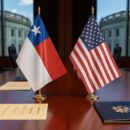
Image generated with Ai
In a recent move, the United States has imposed visa restrictions on Chilean officials, citing regional security concerns. The decision, announced earlier this week, underscores the growing tensions between the two countries regarding security policy and regional influence in South America. The restrictions have raised eyebrows among diplomatic circles, as they highlight the United States’ increasing focus on Latin American politics and its desire to influence security dynamics in the region.
The visa restrictions come amid a period of increasing tension between the United States and Chile regarding regional security matters. The US State Department has indicated that the restrictions are in response to what it perceives as increased alignment between Chile and countries with opposing views on certain security issues. While the specifics of the security concerns have not been fully disclosed, it is clear that the US is concerned about Chile’s growing ties with China and Russia in recent years, particularly in the areas of trade and military cooperation.
Chile, traditionally one of Latin America’s more stable democracies, has had a history of balancing its diplomatic and economic relationships between the US and other global powers. However, with Chile’s increasing alignment with China, particularly in economic matters like trade deals and infrastructure investments, the US has been vocal about its concern over China’s influence in the region and its potential impact on regional security structures.
In response to the visa restrictions, Chile’s government expressed disappointment and denounced the move as a violation of diplomatic norms. Chilean President Gabriel Boric and other officials have reiterated the country’s commitment to pursuing independent foreign policies that prioritize national sovereignty while fostering strong relations with all countries, including the United States. However, Boric’s government has also made clear that Chile’s foreign policy will not be dictated by any external power, emphasizing the importance of maintaining Chile’s autonomy on the international stage.
Advertisement
The Chilean Ministry of Foreign Affairs has condemned the visa restrictions as an unwarranted action and warned that it would review its bilateral ties with the United States as a result. Some political analysts speculate that Chile may take retaliatory steps, such as imposing similar restrictions on US officials or scaling back certain types of cooperation in regional security forums.
The United States’ decision to impose visa restrictions also reflects its broader strategy of countering China’s growing influence in Latin America and the Caribbean. Over the past few years, the US has become increasingly concerned about China’s growing economic and political footprint in the region. With its Belt and Road Initiative and increasing investments in infrastructure and energy projects, China has positioned itself as a key partner for many Latin American nations, including Chile.
Advertisement
Advertisement
China’s presence in Latin America has raised alarms in Washington, particularly in the context of security alliances and military cooperation. The US has sought to strengthen its own ties with Latin American countries, but its efforts have been met with mixed results. Countries like Brazil, Argentina, and Chile have made moves to increase their economic ties with China, leading to a shift in the balance of power in the region.
The imposition of visa restrictions on Chilean officials has the potential to strain bilateral relations between the two countries. Chile is a member of the Pacific Alliance, a trade bloc that also includes Mexico, Colombia, and Peru. The US has traditionally been a key partner for the Pacific Alliance countries, and tensions with Chile could have wider implications for the region’s trade relations and security cooperation.
Advertisement
Advertisement
In the short term, the visa restrictions may lead to diplomatic clashes and possible retaliation from Chile. However, both countries may work behind the scenes to resolve their differences, especially as they both recognize the importance of regional stability and economic cooperation. The situation will likely remain fluid, and further diplomatic negotiations will determine whether the visa restrictions escalate or serve as a catalyst for more constructive dialogue.
The recent decision by the United States to impose visa restrictions on Chilean officials is a reflection of the growing tensions between the two countries, driven by regional security concerns and the broader geopolitical competition between the US and China in Latin America. While the decision has strained diplomatic relations, it also underscores the importance of regional security and foreign policy in shaping international alliances. As Chile responds to the restrictions, both countries will have to navigate a complex web of economic interests, military cooperation, and geopolitical influence in order to maintain a stable and productive relationship.
Advertisement
Tags: Chile diplomatic relations, Chile visa ban, regional security concerns, US China Latin America, US visa restrictions


















Tuesday, February 24, 2026

Tuesday, February 24, 2026
Tuesday, February 24, 2026

Tuesday, February 24, 2026

Tuesday, February 24, 2026

Tuesday, February 24, 2026

Tuesday, February 24, 2026

Tuesday, February 24, 2026