





































Vietnam’s Hanoi Street Circuit Lies Abandoned, a Symbol of Unfulfilled Motorsport Ambitions and Lost Potential

Published
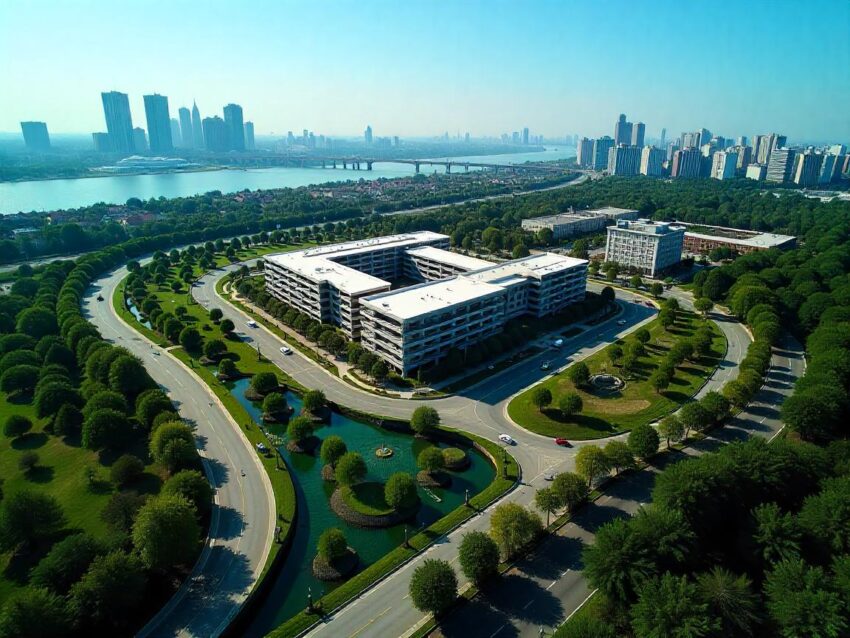
Image generated with Ai
Vietnam’s Hanoi Street Circuit, once poised to bring Formula 1 to the streets of Hanoi, now lies abandoned, a stark symbol of unfulfilled ambitions and lost potential. Originally designed as a state-of-the-art venue, it was set to offer a unique racing experience in a rapidly growing motorsport market. However, due to a combination of political corruption allegations and the global pandemic, the race never took place, leaving the circuit to decay. Despite the significant investment and excitement surrounding its inception, the Hanoi circuit now stands as a forgotten monument to what could have been in the world of global motorsport.
The ambitious Hanoi street circuit, a mega-structure built to host a Formula 1 race, was poised to become a new addition to the sport’s storied history. It was meant to bring the thrill of Formula 1 to the streets of Vietnam, a country eager to join the global motorsport stage. However, what was supposed to be a momentous occasion turned into a ghost town for racing, lying dormant and decaying due to the COVID-19 pandemic and a series of unforeseen events.
Street races have long been a part of the Formula 1 calendar, from the glamorous Monaco Grand Prix to the neon-lit streets of Las Vegas, and even through the curves of Baku’s highways. These events have brought motorsport closer to the public, making it more accessible and thrilling for fans around the world. Over the years, some street races have become iconic, while others have fizzled out.
While the Monaco Grand Prix remains an enduring staple of the calendar, other races, like Pescara in Italy, have come and gone. The Pescara circuit, spanning 15.8 miles, was a one-time wonder, never to return after its lone race in 1957. Others, like the one planned for Hanoi, were meant to endure but fell into obscurity before even starting.
The Hanoi street circuit was built with great expectations. Costing an estimated £450 million (approximately $600 million), it was envisioned as a state-of-the-art venue that would rival some of the most prestigious circuits in the world. However, despite the colossal investment and the excitement surrounding its announcement, the race never took place.
There were two main reasons for the downfall of the Hanoi Grand Prix. First, allegations of corruption against key stakeholders, including the then-mayor of Hanoi, Nguyễn Đức Chung, put the event into jeopardy. While the accusations were a significant blow to the race’s credibility, the pandemic dealt the final, devastating blow. The global health crisis led to widespread lockdowns and travel restrictions, halting international events, and forcing the cancellation of the inaugural Hanoi race that was originally scheduled for April 5th, 2020.
With the hopes of a grand debut dashed, the Hanoi street circuit became a symbol of what could have been. Today, the once-vibrant track is overtaken by nature. The circuit’s outline, once sharply defined with grid markings and pit buildings, is now a fading memory, with the occasional car, cyclist, or pedestrian crossing what should have been one of the most prestigious race tracks in the world.
Fast forward five years, and the Hanoi circuit joins a long list of “What ifs” in the world of motorsport. The failed Vietnamese race is now just a curious footnote in Formula 1’s history. But Hanoi is not alone in its dashed racing dreams. There are numerous places worldwide that have designed tracks in anticipation of hosting a Grand Prix, only for those dreams to be left unfulfilled.
One of the most notable examples of this is London, where a proposal for a street race was submitted as recently as 2023. The idea, dubbed the East London Grand Prix, was designed to take place around the Docklands area in the east of the city. The plan involved floating grandstands and a £250 million redevelopment of the area, but the race has yet to come to fruition, much like Hanoi.
While it’s easy to point to the failure of specific circuits like Hanoi or London, it’s important to understand that the road to a successful Grand Prix is often fraught with challenges. Political, economic, and environmental factors can derail even the most promising racing projects. In Hanoi’s case, the mix of corruption allegations, the COVID-19 pandemic, and unforeseen recovery plans made the race impossible to execute.
The legacy of the Hanoi street circuit may be one of unfulfilled potential, but it serves as a stark reminder of how quickly the tides of fortune can change in the world of motorsport. Plans for new races are constantly being drawn, with some making it to the track and others fading into history. The fact that the Hanoi circuit never hosted a race doesn’t mean it’s forgotten; rather, it’s a testament to the ever-changing landscape of global motorsport.
Looking back, one can’t help but wonder what could have been if the Hanoi Grand Prix had taken place. The circuit’s picturesque setting, surrounded by the vibrant streets of Hanoi, promised a unique racing experience. However, the cancellation of the event, combined with the rise of other popular street circuits, left fans and stakeholders alike questioning the what-ifs of the sport.
Formula 1 has always been a sport of unpredictability. From the drivers to the tracks, it thrives on the excitement of the unknown. Unfortunately, not every dream track gets the chance to fulfill its destiny. The Hanoi street circuit, like many before it, will remain an untold story of what might have been. As motorsport continues to evolve, more cities may propose new races, but only a select few will make it onto the calendar.
For now, the Hanoi circuit remains a quiet, forgotten space, its faded grid lines and abandoned stands serving as a silent monument to a race that never was. It is part of a broader narrative of ambitious projects that failed to materialize, and yet it stands as a symbol of hope for future races, wherever they may be.
