
United States Partners with New Zealand as Rare Midwinter Antarctic Rescue Highlights Polar Travel Safety: Everything You Need To Know

Updated
Published
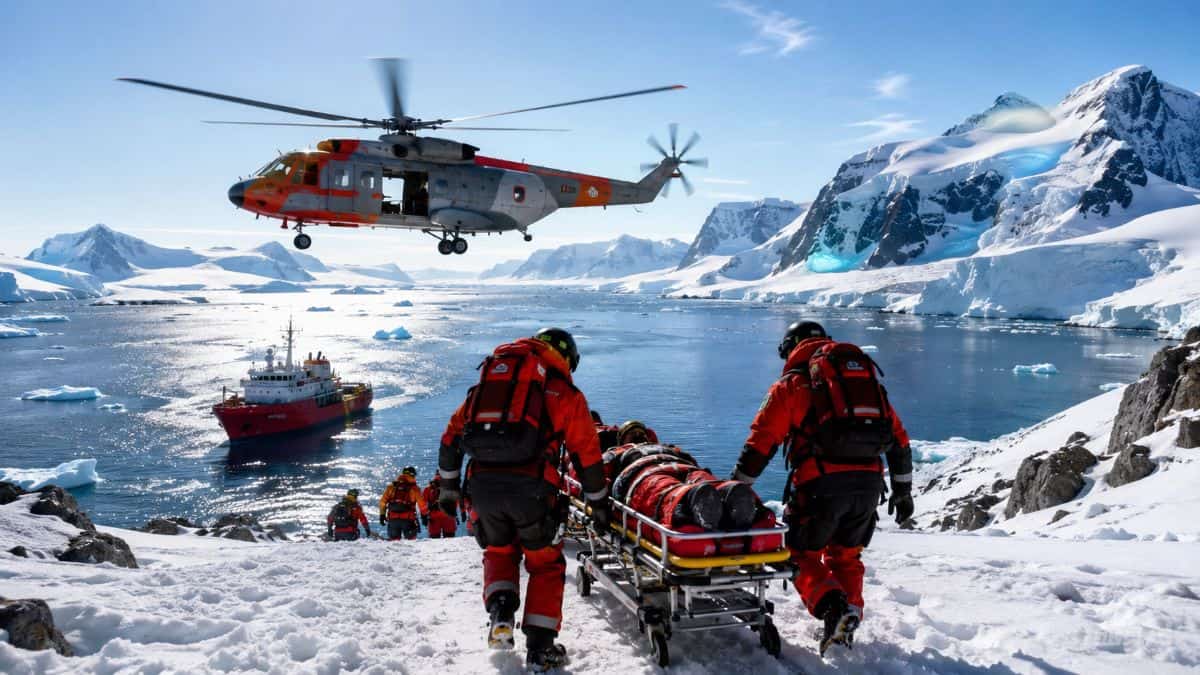
The recent medical evacuation of an American in Antarctica has once again shown how the U.S., New Zealand, and Australia can work together under harsh conditions to carry out a complex rescue during the Antarctic winter. This requires a lot of advanced planning and coordination, along with the right medical and aeronautical skills and resources.
This evacuation also shows how planning for an Antarctic rescue can benefit the world at large, and how an Antarctic rescue can be used to plan for other world rescues. In recent years, Antarctica has seen an increase in researchers and regulated tourists. Because of this, there has to be an advanced rescue capability at all times, including the middle of the Antarctic winter, when the sun does not rise and the weather is at its worst to provide the medical assistance. This rescue shows how a collaborative effort between countries increases safety in Antarctica and helps provide the infrastructure for continued research and tourism, thereby bolstering the decision to allow research in Antarctica.
Rare Antarctic Medical Evacuation Demonstrates International Cooperation
A rare emergency evacuation took place after a United States national required urgent medical treatment while stationed at the US McMurdo Station in Antarctica.
Responding to an urgent assistance request, an Australian-operated Airbus A319 Long Range aircraft, known by the call sign “Snowbird 1”, departed Hobart, Tasmania, and successfully reached the Phoenix Airfield near McMurdo Station despite some of the most difficult flying conditions experienced anywhere in the world.
Advertisement
Advertisement
After collecting the patient, the aircraft continued directly to Christchurch, New Zealand, where specialised medical care was available.
The operation involved cooperation between the Australian Antarctic Division, Skytraders, the United States Antarctic Programme and New Zealand medical authorities, highlighting the global partnerships that support Antarctic operations throughout the year.
Advertisement
Advertisement
Why Midwinter Antarctic Flights Are Exceptionally Rare
Unlike the busy Antarctic summer season, winter operations are extremely limited.
From late March until September, Antarctica experiences continuous darkness at the geographic South Pole. During this period, temperatures frequently fall below minus 40 degrees Celsius while severe snowstorms, high winds and blowing ice dramatically reduce visibility.
These conditions make aircraft operations exceptionally challenging.
Pilots must also contend with:
| Operational Challenge | Impact on Flight Operations |
|---|---|
| Continuous winter darkness | Minimal visual references for landing |
| Temperatures below -40°C | Aircraft performance limitations |
| Snowstorms | Rapid runway deterioration |
| Strong winds | Increased landing complexity |
| Remote location | Limited emergency diversion options |
| Ice runway conditions | Constant monitoring required |
The successful mission required an exceptionally narrow weather window after an earlier attempt had been cancelled because of deteriorating weather.
Aircraft Performance Reached Operational Limits
The Airbus A319 Long Range aircraft was specifically configured for Antarctic operations.
Advertisement
Advertisement
According to the flight crew, temperatures dropped to approximately minus 43 degrees Celsius during the mission, approaching the aircraft’s certified operating limits.
Pilots also had to rely on extremely limited natural light known as nautical twilight, creating conditions that were close to complete darkness.
Experienced Antarctic aviators noted that conducting such an operation during the depths of winter is exceptionally uncommon and required extensive planning, risk assessment and coordination between multiple agencies.
McMurdo Station Remains Antarctica’s Largest Research Hub
McMurdo Station serves as the largest scientific research facility on the Antarctic continent.
Operated by the United States Antarctic Programme, the station supports scientists, engineers, logistics specialists and support personnel conducting research across numerous disciplines including:
| Scientific Field | Research Focus |
|---|---|
| Climate science | Global climate monitoring |
| Glaciology | Ice sheet research |
| Marine biology | Southern Ocean ecosystems |
| Astronomy | Space observations |
| Geology | Antarctic land formations |
| Environmental science | Polar ecosystem monitoring |
The station functions as a major logistics gateway for scientific operations throughout Antarctica.
Advertisement
Advertisement
Christchurch Plays a Critical Role in Antarctic Logistics
Christchurch has long served as one of the world’s principal gateways to Antarctica.
Its strategic location enables aircraft travelling from Australia and New Zealand to provide medical support, logistical resupply and scientific transport to Antarctic research stations.
The city’s hospitals are also equipped to receive patients evacuated from Antarctica, making Christchurch an essential component of international polar emergency planning.
The latest medical evacuation further reinforces New Zealand’s vital contribution to Antarctic safety and scientific cooperation.
Australia Continues Supporting International Antarctic Operations
Australia maintains one of the world’s most experienced Antarctic aviation programmes.
Through the Australian Antarctic Division and contracted aviation providers, specialised aircraft regularly support research stations, cargo deliveries and emergency operations.
Advertisement
Advertisement
Although most flights occur during the Antarctic summer, specialised crews remain prepared throughout the year to respond when weather conditions allow.
This capability benefits not only Australia’s own Antarctic programme but also partner nations operating scientific facilities across the continent.
Travel Industry Lessons from the Rescue Mission
Although the evacuation involved research personnel rather than tourists, the mission offers valuable insights for Antarctica’s growing expedition travel sector.
Luxury expedition cruises and specialist adventure operators continue attracting travellers interested in experiencing Antarctica’s unique landscapes, wildlife and scientific heritage.
The rescue highlights several important considerations for polar travel:
| Travel Consideration | Importance |
|---|---|
| Emergency evacuation planning | Critical |
| Comprehensive travel insurance | Essential |
| Medical screening | Highly recommended |
| Weather flexibility | Necessary |
| Experienced expedition operators | Important |
| International rescue cooperation | Fundamental |
Travellers planning Antarctic expeditions should understand that weather conditions can delay transport for days or even weeks, making preparation essential.
Advertisement
Advertisement
Antarctica’s Extreme Environment Requires Global Collaboration
No single nation possesses the resources required to independently manage every emergency across Antarctica.
Instead, countries participating in Antarctic scientific programmes routinely cooperate through shared logistics, aviation assets, medical expertise and operational planning.
These partnerships allow nations to respond quickly when emergencies occur despite enormous distances, severe weather and limited infrastructure.
The latest evacuation demonstrates how international cooperation remains one of Antarctica’s greatest strengths.
Growing Scientific Activity Increases Emergency Preparedness Requirements
Scientific activity across Antarctica continues to expand as researchers investigate climate change, biodiversity, ocean systems and atmospheric processes.
As more international teams conduct year-round research, emergency preparedness becomes increasingly important.
Advertisement
Advertisement
Investment in aviation capability, medical infrastructure, weather forecasting and international coordination ensures that researchers working in isolated environments can receive assistance when necessary.
Such preparedness also benefits carefully managed expedition tourism operating under strict environmental regulations.
What the Rescue Means for Global Polar Travel
The successful evacuation boosts faith in the international systems that facilitate operations in Antarctica.
Antarctica is still one of the most difficult places to operate in, but emergency management frameworks made possible by international cooperation over the years, demonstrate the effectiveness of collaborative efforts.
The mission is testament to the fact that international coordinated efforts in the most difficult of winter conditions can be performed and that lives can be saved. This will remain true for scientists, logistics personnel, and expedition travellers.
Since the interest in both polar tourism and science continues to rise, investing in both aviation and infrastructure, as well as multinational cooperation, will be the most important factors in keeping Antarctica accessible but well managed.
Advertisement
Advertisement
Frequently Asked Questions
1. Who was rescued during the Antarctic mission?
An American working at the United States’ McMurdo Station required urgent medical evacuation and was flown to Christchurch, New Zealand.
2. Which countries participated in the rescue?
The operation involved the United States, Australia, New Zealand and wider international Antarctic programme partners.
3. Why was the rescue considered rare?
It occurred during the Antarctic winter when darkness, extreme cold and severe weather make flights exceptionally difficult.
4. Where did the rescue aircraft depart from?
The aircraft departed from Hobart in Tasmania, Australia.
5. Which aircraft carried out the mission?
An Airbus A319 Long Range aircraft operating under the call sign “Snowbird 1” completed the evacuation.
6. Why is Christchurch important for Antarctic operations?
Christchurch serves as a major logistics gateway and medical evacuation hub for Antarctic missions.
Advertisement
Advertisement
7. What is McMurdo Station?
McMurdo Station is the largest research facility in Antarctica and supports international scientific programmes.
8. How cold were conditions during the rescue?
Temperatures reportedly reached approximately minus 43 degrees Celsius.
9. Does this rescue affect Antarctic tourism?
While the mission involved research personnel, it highlights the importance of emergency preparedness for all Antarctic travel.
10. Why is international cooperation essential in Antarctica?
The continent’s remote location and extreme environment require nations to share aviation, logistics, medical expertise and emergency response resources.
Advertisement
