
Why Europe’s Next Travel Breakthrough Depends On Restoring Budapest And Prague’s Historic Buildings, All You Need To Know

Published
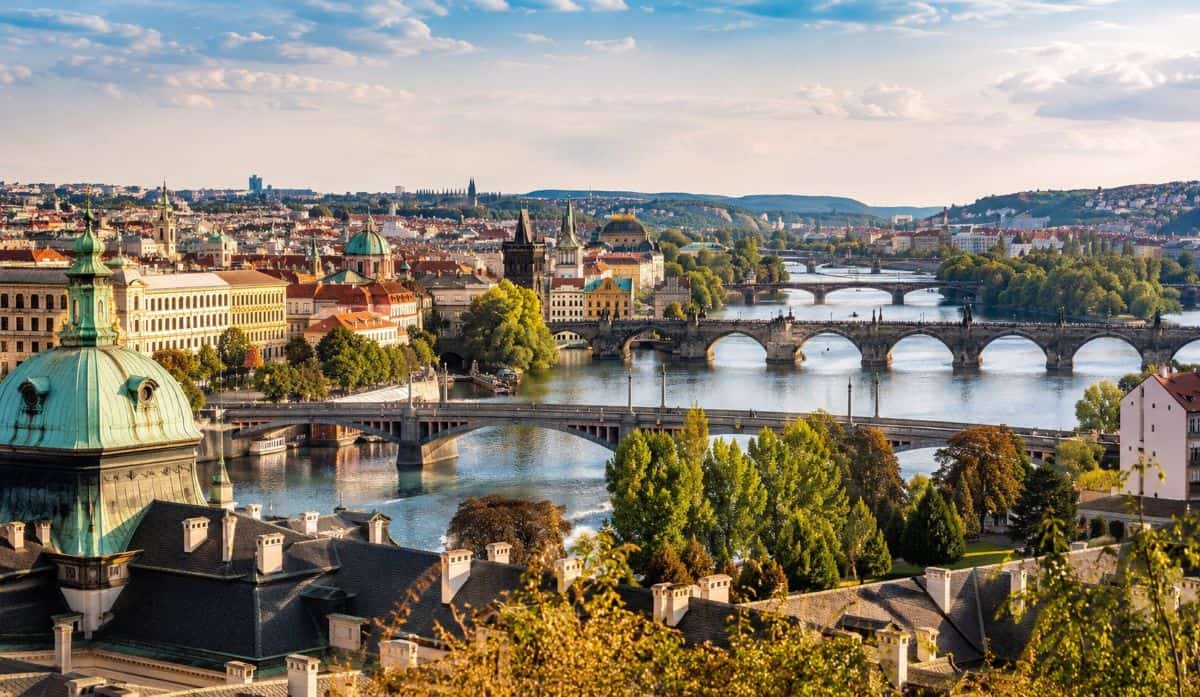
Stepping onto a quiet side street in Budapest, Paris, or Prague, one begins to appreciate the unique feel of History’s presence on these worn stones. Besides the visceral pull of these historic cities, there isn’t a modern skyscraper that can compare. Although visiting historic cities is great, experiencing one of these cities means you have put yourself in the heart and soul of this historic city. For too many decades, historical architectural treasures have been viewed as a liability on city budgets by the city mayors. They see older buildings as requiring maintenance and costing budget money, when in fact the streetscape is the most important part of a city, and if you ignore or neglect an historical facade, you are erasing the reasons that draw people from around the world. Cities across Europe have great potential to make historic architecture the core of their local economies and ignite their first renaissance to revitalize their local historic neighborhoods and treasures. This change will allow them to protect their irreplaceable heritage.
Reimagining Built Heritage as a Key Economic Driver in European Tourism
Historic architecture serves as a vital economic backbone for major international destinations across Europe. However, traditional urban planners frequently overlook its immense commercial power. Consequently, municipal leaders routinely handle building maintenance as a isolated preservation duty rather than a major generator of national revenue. Meanwhile, transforming historic streetscapes into active economic infrastructure fundamentally reshapes how international visitors experience and navigate urban spaces. Furthermore, aligning structural preservation with overall tourism expansion creates a resilient path forward for sustainable urban growth.
Consequently, worldwide visitors now prioritize immersive, highly walkable journeys when choosing international locations. Therefore, the physical appearance of aging residential structures directly dictates tourist satisfaction, stay duration, and localized commerce. When municipal leaders treat physical streetscapes as vital engines of financial growth, public policy naturally shifts toward long-term urban revitalization. Ultimately, this comprehensive strategy ensures that heritage cities remain competitive, visually stunning, and financially rewarding for global travelers.
Advertisement
Advertisement
Strategic Alignment of Historic Urban Structures as Essential Infrastructure for Global Tourism Development
It was observed that premier global destinations, including Paris, Prague, Vienna, and London, consistently demonstrate how historic architecture functions as a primary commercial offering rather than simple background scenery. Within these famed capitals, the immediate streetscape provides an essential consumer experience that captivates millions of travelers every year. Furthermore, well-preserved building exteriors continuously reinforce local destination identity, effectively turning entire residential neighborhoods into major travel hubs.
Advertisement
Advertisement
This dynamic precedent highlights crucial choices for Hungary, raising fundamental questions about whether vintage structures ought to be reclassified as active economic and tourism infrastructure rather than passive heritage monuments. Indeed, financial data from 2024 strongly reinforces this economic viewpoint:
This continuous inflow of global capital fuels essential local business networks, supporting hotels, restaurants, transit channels, and cultural venues. As a result, tourism operates as a powerful export industry, with Budapest possessing an extraordinarily valuable resource in its dense historic architecture. The city’s rich concentration of late-19th- and early-20th-century apartment houses, Art Nouveau façades, Neo-Renaissance edifices, and eclectic designs forms a unified urban landscape. Consequently, global travelers experience Budapest continuously as they move between landmark sites such as the Parliament or Buda Castle, engaging directly with street-level façades, open courtyards, ground-floor cafés, and local retail shops.
Evaluating the Long-Term Economic Impacts of Building Deterioration on International Visitor Experiences
When historical residential and commercial structures endure prolonged neglect, crumbling plaster, and postponed repairs, the resulting financial loss extends far past private property boundaries. A deteriorating building exterior represents a declining economic resource that tarnishes public spaces, damages visual appeal, and diminishes overall trip satisfaction for international visitors.
Within the global travel sector, widespread structural decay directly reduces the competitive edge of historical urban districts. Travelers seeking rich cultural settings often perceive neglected streetscapes as uninviting, which prompts shorter stays and reduced spending at neighborhood businesses. Conversely, meticulously maintained street corridors foster welcoming environments that encourage foot exploration, boost retail activity, and significantly elevate the perceived quality of regional hospitality services.
Additionally, global travel markets depend heavily on aesthetic beauty and street-level vitality. When historic city centers exhibit visible decline, the overarching brand reputation of the host city faces long-term erosion. Treating ongoing building upkeep as a strategic financial investment guarantees that historic destinations remain premier choices for international holidaymakers and corporate travelers alike.
Advertisement
Advertisement
Analyzing Restoration Frameworks and Municipal Governance Models in Major European Capitals
Comparative governance models across Europe highlight the immense value of incorporating building restoration into broader municipal tourism blueprints. In Prague, official municipal records documented 8,079,195 guests and 18,326,168 overnight stays during 2024, with foreign tourists generating 80.5% of total guest arrivals and 85.6% of overnight stays. Although popular commentary often suggests an 80/20 ratio between renovated and unrenovated buildings in Prague compared to an opposite balance in Budapest, such assertions lack formal statistical confirmation and should be viewed merely as unverified assumptions.
In similar fashion, Paris classifies exterior building maintenance as a compulsory public responsibility, mandating façade cleaning and repairs every ten years by law. This rigid framework seamlessly merges historic preservation with structural updates and energy-efficiency improvements. This policy model offers vital lessons for Budapest, where street-facing building exteriors directly impact public safety, pedestrian enjoyment, and global destination image. Addressing this across Budapest requires tailored governance solutions, as many historic structures remain private condominiums with multiple owners, making municipal collaboration essential for large-scale urban renewal.
Quantifying how Protected Architectural Heritage Raises Property Values and Hospitality Revenues Across European Destinations
Analytical investigations into protected historic zones across major European urban centers demonstrate that legally recognized heritage status creates a substantial financial premium across real estate and hospitality markets. Within residential districts that enjoy formal historic preservation status, such as Budapest’s historic Castle District, real estate acquisitions command a 30% to 40% valuation markup over non-designated residential properties in adjacent neighborhoods. Furthermore, hospitality market research confirms that lodging facilities operating inside protected historic structures realize 27% higher average daily room rates compared to contemporary hotels located within the same municipal zone.
Beyond individual property metrics, broad architectural preservation generates widespread financial benefits across entire urban communities. Neighborhood-level economic studies show that every 1 percentage point expansion in the concentration of listed historic structures corresponds to a 3% growth in regional property values. This structural dynamic illustrates that comprehensive heritage protection operates as a direct engine for community wealth creation, driving private capital investment into streetscapes and elevating the economic profile of surrounding commercial corridors.
Advertisement
Advertisement
Transforming Grand Historic Palaces into High-Yield Boutique Hotels through Strategic Adaptive Reuse Initiatives
Major financial sponsors are increasingly bypassing greenfield construction to repurpose vacant administrative complexes and grand historical residential buildings into ultra-luxury accommodations. Across central Budapest, recent adaptive reuse ventures have successfully rehabilitated over 69,000 square meters of historical interior spaces, converting underutilized historic architecture into premium hospitality destinations that cater to high-spending international travelers.
Urban planning projections indicate that Budapest is currently adding 22 luxury and boutique hotel properties, representing 3,000 newly created room keys, through the systematic conversion of historic palaces, former banking headquarters, and vacant administrative offices. Although these complex conversion initiatives require approximately 4.5 years from architectural design to operational launch, they generate steady long-term construction employment while permanently enhancing the visual character and street-level appeal of central urban quarters for foreign travelers.
Estimating the Multi-Trillion Forint Macroeconomic Growth Stemming from Urban Streetscape Renewal Programs
Long-term econometric projections demonstrate that resolving urban structural degradation and accelerating streetscape restoration directly boosts national economic growth by expanding international traveler expenditures. Comprehensive financial models project that strategic investments in streetscape refurbishment and targeted international destination marketing could contribute between HUF 1.1 trillion and HUF 1.9 trillion to Hungary’s national Gross Domestic Product by 2030.
In addition to driving economic output, large-scale urban restoration initiatives create wide-reaching employment opportunities across diverse commercial sectors. Comprehensive streetscape revitalization programs are forecasted to create 23,000 to 49,000 new direct and indirect positions spanning hospitality, building maintenance, traditional artisan crafts, and transportation services. Ultimately, systematically upgrading historic urban districts can double international guest stays while expanding total foreign tourist expenditures by two to three times.
Advertisement
Advertisement
Linking International Airport Passenger Traffic Capacity to Historic District Footfall and Commercial Activity
The overall commercial productivity of historic urban quarters remains closely linked to international transit infrastructure, flight route density, and passenger processing capacity. When Ferenc Liszt International Airport processed a record 19 million travelers, it directly directed millions of international visitors straight into the central historic districts of Budapest, boosting pedestrian footfall across key retail, dining, and cultural corridors.
While Budapest maintains direct connectivity to 32 international routes, peer historical capitals such as Prague and Vienna average 53 long-haul and mid-haul destinations, demonstrating a clear growth opportunity for urban heritage expansion. Recent transit data shows that expanded flight capacity yielded a 13% annual increase in foreign visitor arrivals alongside a 9% to 10% rise in total overnight stays throughout primary historic quarters.
Overcoming Private Multi-Owner Condominium Ownership Obstacles in Structural Heritage Renovation
A central hurdle in executing widespread urban heritage preservation involves private multi-owner residential buildings, which require innovative public-private co-financing models to fund comprehensive exterior restoration. In major Central European capitals like Budapest, more than 70% of historic residential façades are held by private multi-owner condominiums rather than single institutional or municipal owners, complicating individual building maintenance decisions.
To resolve these governance challenges, successful European cities employ 50/50 public-private matching funds, where local municipal subsidies cover half of total restoration costs provided property owners commit to utilizing period-accurate materials. Additionally, municipal policy adjustments such as increasing flat taxes on short-term rental apartments from HUF 38,400 to HUF 150,000 per unit generate dedicated municipal revenues specifically reserved for residential façade rehabilitation and street-level safety enhancements.
Advertisement
Advertisement
How Capital Architecture Investment Disperses Countrywide Tourism Expenditure and Regional Economic Benefits
Investing in capital city streetscapes creates a positive economic ripple effect, encouraging international visitors to venture beyond primary metropolitan centers into regional heritage sites, thermal spa resorts, and countryside destinations. Supported by strong capital city branding, Hungary surpassed 20 million total overnight accommodation guests, reaching an all-time record of 47 million to 49 million overnight stays across the nation.
This enhanced destination appeal motivates foreign visitors to explore regional historical landmarks, resulting in 3.4 million annual visitors at primary countryside hubs like Lake Balaton. Although Budapest captures roughly 60% of total foreign visitor traffic, restored transport networks and regional marketing encourage travelers to extend their trips to traditional spa destinations such as Hévíz, Siófok, and Hajdúszoboszló.
Integrating Modern Thermal Energy Retrofits into Historic Façade Preservation and Environmental Sustainability
Modern heritage preservation extends beyond simple aesthetic restoration by pairing historical façade renewal with advanced energy-efficiency upgrades that reduce urban carbon footprints. Regulatory governance models, such as the mandatory 10-year façade inspection policy in Paris, require building owners to pair exterior masonry restoration with enhanced thermal insulation and high-performance window upgrades.
Retrofitting 19th-century residential structures with period-appropriate thermal insulation reduces total building energy usage by 20% to 30%, aligning urban architectural preservation with modern European climate targets. Furthermore, timely masonry maintenance prevents crumbling plaster from falling into public walkways, simultaneously protecting pedestrian safety, improving residential living comfort, and lowering heating costs across historic urban districts.
Advertisement
Advertisement
Caring For Cities’ Souls Through The Years
Traveling goes beyond seeing points of interest, it’s more about experiencing a city and hearing its voice in the chipped stones and worn, sun-drenched, faded plaster. We lose more than a building when we let historic buildings deteriorate. It is about losing architecture and memories and the place of people and travelers’ souls. Certain cities like Budapest or Prague, for instance, which have historic streets, have a special gift. A city is a gem with character when the preserved historic buildings and historic facades highlight the streets. It is not only an economic benefit to restore historic facades. It is an appreciation of a legacy and the memory of our collective experiences as humans. To honor the past, we need to protect the beauty of the streetscapes. We also need to provide a place of respect and worship to the past creators where future creators will have the space to provide the world with a warm place to explore.
Advertisement
