
South Asia : Air India Wrong Turn Triggers Nose-to-Nose Taxiway Standoff With IndiGo — What Others Are Missing in Ground Safety Oversight

Published
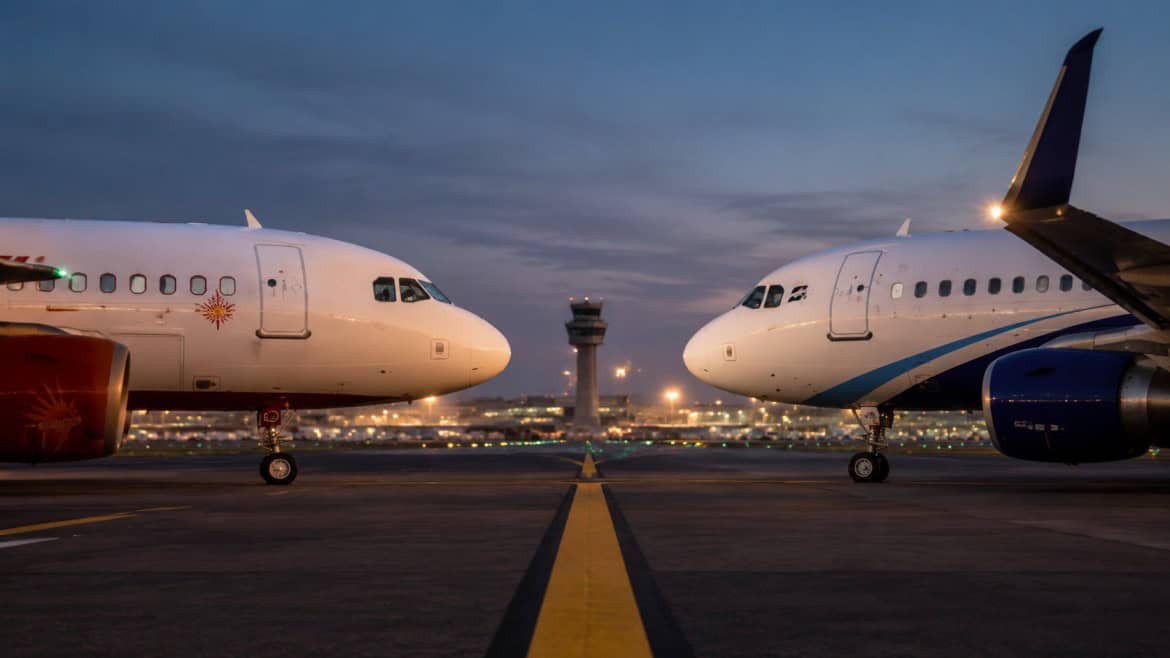
A serious ground movement incident involving two commercial aircraft unfolded at Sardar Vallabhbhai Patel International Airport, Ahmedabad on June 24, 2026. A taxiing error led to a face-to-face situation between Air India and IndiGo aircraft.
The event involved two passenger jets positioned nose-to-nose on an active taxiway during peak evening operations.
Advertisement
Advertisement
Within the first moments of the incident, three critical facts emerged:
- An Air India aircraft took an incorrect taxiway turn after landing from Mumbai
- An IndiGo aircraft was simultaneously preparing for departure to Mumbai
- Both aircraft came to a halt before any physical contact occurred
The situation has triggered a formal investigation and renewed scrutiny of ground navigation safety at one of western India’s busiest airports.
Advertisement
Advertisement
What Happened on the Taxiway at Ahmedabad Airport
At around 8 pm local time, Air India flight AI2493 arrived from Mumbai and was instructed to taxi to its designated parking stand via standard taxiways. During this movement, the aircraft deviated from the assigned route.
At the same time, IndiGo flight 6E 5160 was taxiing out for departure to Mumbai.
Advertisement
Advertisement
The two aircraft unexpectedly converged on intersecting taxi paths, resulting in a face-to-face standstill.
Key operational details include:
- Air India aircraft: Arriving Mumbai to Ahmedabad
- IndiGo aircraft: Departing Ahmedabad to Mumbai
- Both aircraft: Halted at safe distance, no contact reported
- Air Traffic Control (ATC): Instructed IndiGo to give way
Ground operations were briefly disrupted, but airport movement continued after clearance was restored.
Why This Incident Matters for Aviation Safety
This incident is not about collision damage. It is about taxiway incursion risk, one of the most closely monitored safety categories in global aviation standards set by the International Civil Aviation Organization (ICAO).
Even without contact, such events are treated seriously because:
- Taxiways operate with minimal separation margins
- Pilot navigation relies heavily on signage, markings, and ATC instructions
- A wrong turn can escalate into runway or taxiway conflict in seconds
Aviation experts classify such events as surface movement safety breaches, where human error, signage interpretation, or situational awareness can contribute.
Advertisement
Advertisement
In this case, the Air India aircraft reportedly took an incorrect turn after landing, resulting in an unintended alignment with an active taxiing aircraft.
How the Situation Was Controlled in Real Time
Despite the alarming visual of two aircraft facing each other, the situation was contained quickly.
Operational response steps included:
- Immediate ATC instruction for IndiGo to hold position
- Air India aircraft brought to a complete stop
- No engine shutdown required due to safe separation distance
- Aircraft later repositioned and towed to parking bay
The swift coordination between pilots and ground controllers ensured that normal airport operations resumed without cascading delays.
Both airlines confirmed that safety protocols were followed, and no passengers or crew were placed at risk.
What Others Are Missing About Ground Movement Errors
While most reports focus on the “face-to-face” moment, the deeper issue lies in airport surface complexity under mixed traffic pressure.
Advertisement
Advertisement
Ahmedabad Airport operates a high-frequency domestic network where:
- Multiple narrow taxiway intersections increase navigation complexity
- Peak-hour congestion raises workload for pilots and ATC
- Visual confusion risk increases during simultaneous arrival-departure cycles
This incident highlights a broader aviation concern:
modern airport layouts are becoming operationally dense, while human reliance on visual taxi navigation remains unchanged.
International safety frameworks such as ICAO Annex 14 emphasize:
- Clear taxiway lighting systems
- Standardised signage compliance
- Continuous pilot situational awareness training
However, even compliant systems are not immune to momentary human deviation.
This is why aviation safety analysts often stress that most ground incidents are not mechanical failures but coordination and perception errors.
Impact on Airlines and Airport Operations
Both Air India and IndiGo responded with standard safety disclosures.
Advertisement
Advertisement
- Air India confirmed a taxiing deviation after landing and towing of aircraft for inspection
- IndiGo reported a brief departure delay before resuming normal operations
- Airport operations continued without full shutdown
The incident is now under formal review by relevant aviation authorities, focusing on:
- Taxi instruction adherence
- Pilot situational awareness
- Ground marking visibility and compliance
While no disruption cascaded across the wider network, such incidents often feed into internal safety audits and training updates.
Aviation Safety Context in India
India’s aviation sector has experienced rapid expansion in recent years, with increased aircraft movements at major hubs.
This growth brings operational pressure on:
- Taxiway capacity management
- Ground radar and surveillance systems
- Pilot workload during peak scheduling windows
Authorities continuously monitor such events under civil aviation safety frameworks to prevent recurrence and maintain compliance with global aviation safety benchmarks.
Industry Perspective and Expert View
Aviation safety is built on prevention, not reaction. This Ahmedabad incident reinforces how even a single taxiway deviation involving 2 aircraft can create a high-risk moment inside tightly controlled airport environments.
Advertisement
Advertisement
TTW Founder and Editor-in-Chief, Mr. Anup Kumar Keshan, observes:
“Ground movement safety is becoming the next frontier of aviation risk management. As airports grow busier, even minor taxi errors can create high-alert situations. The industry must invest deeper in real-time guidance systems and pilot-ground coordination to prevent near-miss events from becoming future crises.”
The Ahmedabad incident stands as a reminder that modern aviation safety is no longer only about flying in the sky, but also about precision on the ground.
As investigations continue, attention now turns to whether procedural refinements or technological upgrades will be introduced to further strengthen taxiway safety discipline.
Call to Action
Stay updated on emerging aviation safety developments, airport incident reports, and global travel disruptions as the industry continues to evolve rapidly in 2026.
Advertisement
