
United Kingdom’s Family Tourism Attraction in Clevedon Faces Restoration Disruption After Valuable Tools Are Stolen from Miniature Railway Site

Updated
Published
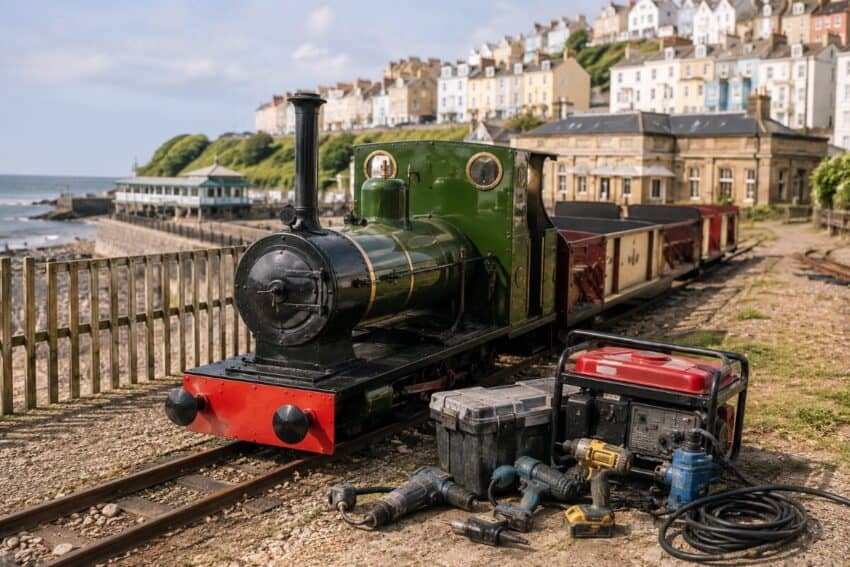
A major theft from the Clevedon miniature railway restoration site in Somerset has placed a community-led visitor attraction under fresh operational pressure. Avon and Somerset Police recorded the incident as a non-dwelling burglary at Salthouse Fields, while North Somerset Council had already positioned the railway revival as part of a wider Clevedon seafront regeneration push. For UK travel businesses, the case highlights a practical risk around small-scale attractions, asset protection, project timelines, visitor confidence and local tourism resilience.
United Kingdom Coastal Tourism Faces a Security Shock at Clevedon Railway Site
The reported burglary at Clevedon’s miniature railway restoration site has turned a local policing appeal into a wider travel infrastructure story for the United Kingdom’s domestic tourism market. The incident affected tools and equipment being used to restore the railway at Salthouse Fields, a seafront leisure area linked to family visits, Marine Lake access, coastal walks and wider public recreation.
The official police record identifies the incident as a single non-dwelling burglary. It does not confirm a series of burglaries. That distinction matters for travel trade reporting because overstating the event could mislead operators, visitors and destination partners. The verified story is still significant. The railway project forms part of a broader plan to revive a long-closed family attraction and strengthen Clevedon’s waterfront offer.
For tour operators, destination management organisations and local suppliers, the incident is a reminder that heritage and leisure infrastructure depends on more than visitor demand. Restoration sites require secure storage, contractor resilience, insurance planning and close coordination with local authorities and police.
Advertisement
Advertisement
Clevedon Miniature Railway Theft: Verified Operational Facts
The police appeal records that a significant number of tools and equipment were stolen from Salthouse Fields on Old Church Road in Clevedon. The estimated incident window ran from the evening of Sunday, 14 June, to the morning of Monday, 15 June 2026. The stolen items included drills, generators and jet washers. Police also noted that the weight of the missing equipment suggested that a vehicle was likely involved.
This detail gives the incident a clear infrastructure dimension. The loss was not a low-value visitor nuisance. It affected equipment connected to restoration work. For a small attraction returning after years of closure, such losses can slow site preparation, raise replacement costs and complicate opening schedules.
Advertisement
Advertisement
| Verified issue | Officially confirmed detail | Travel trade relevance |
|---|---|---|
| Incident type | Non-dwelling burglary | The matter concerns project infrastructure, not a passenger incident |
| Location | Salthouse Fields, Old Church Road, Clevedon | The site sits within a seafront visitor zone |
| Estimated timing | 14 June evening to 15 June morning 2026 | Operators should monitor project timeline updates |
| Stolen assets | Tools and equipment including drills, generators and jet washers | Loss may affect restoration pace and contractor readiness |
| Likely logistics | Vehicle likely used due to item weight | Site access and perimeter security become operational concerns |
| Public appeal | CCTV, dashcam and information requested | Local evidence networks can support destination security |
The most important point for publishers is accuracy. The official appeal supports a headline focused on a major burglary, tool theft or restoration disruption. It does not support wording that claims a confirmed series of burglaries.
Why the Rio Grande Railway Matters to Clevedon’s Visitor Economy
The railway is not a large mainline transport asset. Its value sits in destination experience. North Somerset Council has described the Rio Grande miniature railway as a much-loved attraction at Salthouse Fields. The council’s redevelopment approach connects the railway with a wider visitor offer, including a new indoor Station Café, adventure golf redevelopment, a refreshed children’s rides area and a restored fully operational railway.
Advertisement
Advertisement
That makes the burglary relevant to the leisure economy. Small attractions help seaside towns convert day trips into longer dwell time. They also support family spending across food, beverage, parking, retail, informal recreation and linked attractions. In Clevedon, the railway sits near Marine Lake and the seafront, giving it a role in a compact tourism cluster rather than a standalone entertainment site.
The railway first opened in 1952 and runs in a loop around Salthouse Fields. Council records show that it had been closed in recent years, which made the 2026 operator appointment a milestone in the attraction’s return. For residents, the project carries heritage value. For visitors, it offers a nostalgic family product within a coastal setting.
Infrastructure Impact: How Tool Theft Can Delay Small Visitor Attractions
For the travel sector, the key question is not only what was stolen. It is what the theft may disrupt. Restoration projects depend on equipment availability, contractor scheduling and staged site works. When generators, drills and jet washers disappear, the operational effect can move through the project chain.
Replacement costs can create budget pressure. Delays can affect inspections, testing, fit-out, cleaning, preparation and opening readiness. Contractors may need to revise work windows. Operators may need to adjust marketing expectations. Local businesses may need to manage visitor questions if reopening timelines change.
Advertisement
Advertisement
| Risk area | Potential impact on the project | Likely concern for tourism partners |
| Equipment replacement | Higher immediate restoration cost | Possible pressure on project budget |
| Contractor schedules | Work sequencing may need adjustment | Possible delay in visitor readiness |
| Site security | Storage and overnight protection may need review | Higher insurance and safeguarding focus |
| Visitor messaging | Public may seek clarity on reopening | Need for accurate destination communication |
| Local business planning | Cafés, family attractions and seafront traders may track footfall expectations | Need for updated seasonal planning |
| Reputation | Community confidence can be affected | Destination resilience becomes part of the story |
This is why the story belongs in a B2B travel context. It highlights the fragility of smaller leisure assets that shape visitor experience in coastal towns. Major airports and hotel groups often dominate tourism infrastructure coverage, but destination competitiveness also depends on local attractions that serve families, domestic travellers and repeat visitors.
Clevedon Seafront Regeneration Adds Strategic Weight to the Incident
North Somerset Council’s wider plan places the railway within the Great Lakes Project and Clevedon seafront improvements. The restoration was linked to the rejuvenation of Salthouse Fields, Marine Lake and the waterfront. This context elevates the burglary from a local crime brief to a destination development issue.
The planned facilities matter because they diversify the seafront product. A restored railway can anchor family visits. A café can support dwell time and wet-weather resilience. Adventure golf and children’s rides can strengthen the offer for school holidays and weekend breaks. Together, these elements can improve the area’s ability to compete for short domestic leisure trips.
The burglary therefore intersects with place-making. It affects a project intended to refresh a heritage asset and support a more attractive year-round destination. Even if the long-term strategy remains intact, the incident demonstrates how security gaps can create immediate pressure on local tourism renewal.
Travel Agents and Tour Operators Should Track Community Attractions More Closely
For inbound and domestic travel sellers, Clevedon may not sit in the same category as London, Bath, Edinburgh or the Lake District. Yet secondary destinations across the United Kingdom increasingly rely on small experiences to build richer itineraries. Rail heritage, coastal walking, open-water swimming, historic piers, gardens and community attractions can support slow travel and regional dispersal.
The Clevedon case shows why agents should monitor the operational status of local attractions before packaging them. A restoration project can generate interest before it is fully ready. A security incident can change timelines. A police appeal can affect public perception. Accurate itinerary planning depends on verified updates from councils, operators and local institutions.
Advertisement
Advertisement
This approach is especially important for family travel, educational groups, domestic coach programmes and niche heritage routes. These segments often depend on modest attractions that may have limited contingency capacity after disruption.
Official-Source Accuracy Is Crucial for June 2026 Travel Reporting
The current official information supports a carefully worded travel news angle. A correct headline should identify the United Kingdom, Clevedon, the miniature railway restoration site, the major tool theft and the police appeal. It should not describe a confirmed series unless police release further evidence.
For E-E-A-T, the article should separate verified facts from reasonable sector analysis. The verified facts include the location, timing, burglary classification, stolen equipment categories and public appeal. The analysis concerns potential implications for tourism infrastructure, local visitor confidence and project resilience.
This distinction protects editorial credibility. It also helps travel professionals act on reliable information rather than inflated claims.
Critical Operational Takeaways for Travel Agents and Tour Operators
- Treat the Clevedon case as a UK coastal tourism infrastructure issue, not a passenger safety incident.
- Use wording such as major burglary, tool theft or restoration site theft rather than confirmed series of burglaries.
- Monitor official updates before promoting the restored railway in itineraries.
- Check whether linked seafront facilities, including café, adventure golf and children’s rides, remain on schedule.
- Build flexibility into family-focused Somerset and North Somerset travel programmes.
- Encourage destination partners to strengthen overnight site security during restoration phases.
- Rely on police, council and operator updates before publishing attraction reopening claims.
- Position Clevedon as part of a wider coastal leisure cluster rather than a single-attraction stop.
- Watch for changes in visitor messaging if replacement equipment or restoration works affect timelines.
- Use the incident as a case study in destination resilience for smaller UK visitor attractions.
Long-Term Outlook for United Kingdom Coastal Tourism and Global Market Growth
The Clevedon miniature railway burglary is a local crime incident, but its strategic meaning is broader. Across the United Kingdom, coastal towns are using heritage, outdoor recreation and family attractions to rebuild visitor appeal. These projects often need modest capital, strong community support and careful operational management. They also need robust protection while works are underway.
If Clevedon’s railway restoration continues as planned, the attraction could strengthen the town’s family tourism product and support wider seafront regeneration. Its return would add depth to the destination offer around Salthouse Fields, Marine Lake and the coastal walking environment. For the travel trade, the lesson is clear. Small attractions can influence itinerary value, but they also carry operational vulnerabilities that require close monitoring.
In the long term, the strongest coastal destinations will be those that combine heritage renewal, visitor safety, local business integration and transparent communication. Clevedon’s experience shows how even a small railway can sit at the centre of a much larger conversation about UK destination competitiveness, domestic travel growth and the resilience of community-based tourism infrastructure.
Advertisement
