
São Paulo Aligns Rio de Janeiro, Salvador and More in Unlocking Spectacular Visa-Free Escapes for Chinese Travellers in November 2026: Everything You Need to Know

Published
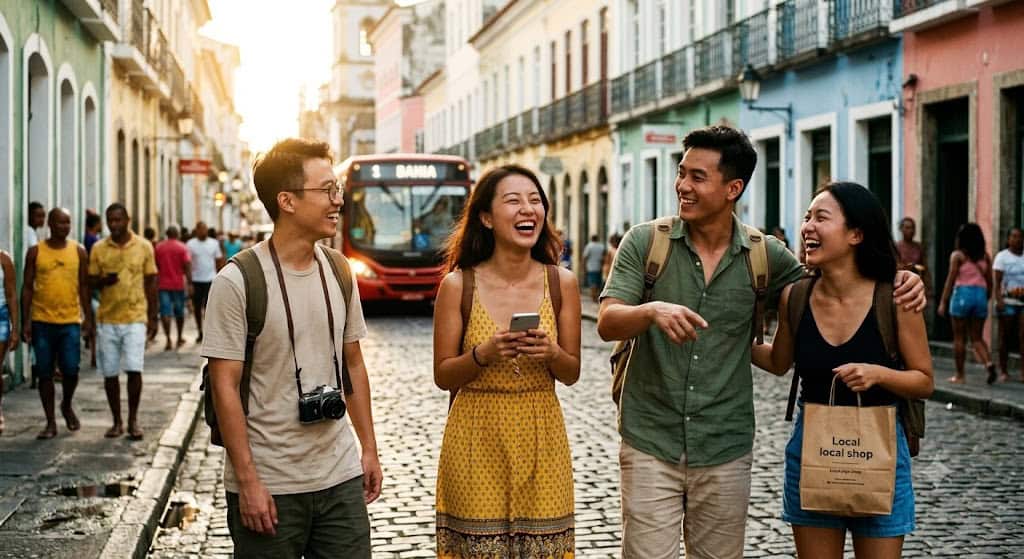
As Brazil experiences a historic surge in international tourism, the implementation of Brazil visa-free entry for Chinese travellers has transformed iconic destinations like São Paulo, Rio de Janeiro, and Salvador into accessible cultural hotspots this November 2026. Backed by official government decrees and Embratur initiatives, this groundbreaking bilateral policy eliminates bureaucratic barriers for short-term visitors holding ordinary passports. By fostering deeper economic cooperation, strengthening people-to-people connectivity, and unlocking unprecedented travel potential across South America’s largest economy, this landmark exemption delivers extraordinary opportunities for global tourism, international trade partnerships, and unforgettable modern holiday adventures spanning diverse South American urban heritage landscapes.
The Historic Bilateral Tourism Milestone
The global tourism landscape has witnessed a monumental shift as South America’s economic titan opens its doors wider than ever before. For decades, international mobility between the Federative Republic of Brazil and the People’s Republic of China was subject to stringent consular procedures, meticulous background verifications, and complex visa issuance timelines. However, the regulatory framework governing cross-border movement has undergone a radical and progressive transformation. Through a coordinated diplomatic effort cemented in early 2026 and coming into full operational swing through November 2026, ordinary passport holders from China can now enter Brazilian territory without the burden of a traditional visitor visa.
Advertisement
Advertisement
This policy is not merely a transient administrative adjustment; it represents a profound geopolitical and cultural alignment between two powerhouse nations of the Global South. As November 2026 unfolds, metropolitan giants like São Paulo and coastal paradises like Rio de Janeiro and Salvador are experiencing an unprecedented influx of international explorers, business leaders, and cultural tourists. The removal of visa barriers has dismantled historical friction points, allowing seamless travel for tourism, business meetings, unpaid artistic pursuits, and short-term transit. For travellers seeking to immerse themselves in the rhythm of samba, the architectural brilliance of Oscar Niemeyer, and the rich Afro-Brazilian heritage of Bahia, this moment marks a watershed in international tourism history.
The Geopolitical and Economic Background of Brazil-China Relations
To fully appreciate the gravity of this visa waiver, one must examine the deepening diplomatic and economic matrix linking Brasilia and Beijing. China has maintained its status as Brazil’s primary trading partner for over fifteen years, anchoring massive bilateral exchanges in agriculture, mineral resources, telecommunications, green energy infrastructure, and advanced manufacturing. Yet, while commercial cargo and high-level governmental delegations have crossed oceans with increasing frequency, leisure and business travel among everyday citizens lagged behind institutional partnerships due to consular bottlenecks.
Advertisement
Advertisement
Recognising that robust commercial ties must be mirrored by vibrant people-to-people exchanges, government authorities in both capitals initiated high-level dialogues to streamline mobility. The strategic convergence of interests led to landmark reciprocal agreements. China previously extended visa facilitation and exemptions to Brazilian nationals, establishing a foundation of mutual trust and diplomatic parity. In response, and guided by the foundational diplomatic principle of reciprocity, the Brazilian government formalised executive decrees to welcome Chinese visitors with open arms. This historical backdrop underscores that the current tourism boom is rooted in years of careful economic diplomacy and strategic partnership cultivation within multilateral frameworks like BRICS.
Official Government Announcements and Legislative Framework
The formalisation of this transformative travel policy was executed through official decrees published in the official gazette of the Brazilian federal government, in strict accordance with international legal protocols. The initiative was championed by the Ministry of Foreign Affairs (Ministério das Relações Exteriores) alongside the Brazilian Tourism Board (Embratur), ensuring that all immigration channels, federal police checkpoints, and consular offices aligned their operational guidelines ahead of implementation.
Advertisement
Advertisement
According to the official legal text, ordinary passport holders of the People’s Republic of China are legally exempt from visitor visa requirements for stays lasting up to 30 days. Crucially, this temporary visitor exemption is designed for short-term engagements—encompassing tourism, business conferences, corporate negotiations, and short educational or cultural exchanges. Government agencies have emphasised that the 30-day allowance is strictly non-extendable from within the country, ensuring that long-term residency, employment, or academic enrolment still require traditional specialized consular visas. This regulatory clarity has provided airlines, travel agencies, and corporate mobility managers with the legal certainty required to market and operate multi-destination itineraries across Brazil with total confidence.
Statistical Growth: How Chinese Tourism Surged into Brazil in 2025 and 2026
Numbers tell a compelling story of transformation. Prior to the announcement and implementation of the visa waiver, Chinese visitor arrivals to Brazil experienced steady incremental growth, which later exploded into exponential curves following initial policy signals. Official statistical reports released by Embratur highlight that Chinese visitor arrivals reached an impressive 103,122 travellers throughout 2025, setting a robust baseline for subsequent expansion.
The momentum accelerated dramatically into the first quarter of 2026. Statistical data reveals that Chinese visitor flows to Brazil surged by an extraordinary 74.8% in January 2026 compared to the same period in the previous year, jumping from approximately 5,000 monthly visitors to nearly 9,000 arrivals in a single month. With the formal implementation of the visa waiver taking effect in May 2026 and extending dynamically through the peak travel periods of late 2026—including November—tourism analysts project that annual arrivals will shatter all historical records. This statistical leap validates government forecasts that removing administrative friction is the single most effective catalyst for unlocking high-value long-haul tourism markets from East Asia.
São Paulo: The Financial Epicentre Embracing Global Mobility
At the heart of this tourism renaissance lies São Paulo, Latin America’s undisputed financial, industrial, and cultural powerhouse. Known as the concrete jungle where commerce meets avant-garde arts, São Paulo has aggressively prepared for the influx of Chinese visitors arriving under the new Brazil visa-free entry for Chinese travellers framework.
As a global megacity, São Paulo offers an eclectic blend of high-end gastronomy, world-class museums, architectural masterpieces, and bustling commercial districts like Avenida Paulista and the historic Centro. Local municipal tourism boards, in partnership with hotel associations and cultural institutions, have rolled out Mandarin-language digital guides, enhanced payment integration systems compatible with international digital wallets, and specialized hospitality training programs. Business travellers attending trade fairs at the Anhembi District or São Paulo Expo now enjoy frictionless entry, allowing them to transition seamlessly from long-haul flights at Guarulhos International Airport directly into corporate boardrooms, luxury hotels, and Michelin-starred dining establishments.
Rio de Janeiro and Salvador: Cultural Beacons Welcoming Asian Visitors
While São Paulo drives the corporate and cultural engine, Rio de Janeiro and Salvador capture the soul of Brazil’s breathtaking coastal heritage. In Rio de Janeiro, iconic landmarks such as Christ the Redeemer, Sugarloaf Mountain, and the golden shores of Copacabana and Ipanema are welcoming a diverse new demographic of Asian tourists. The city’s hospitality sector has embraced the policy shift by integrating multilingual concierge services and tailored tour packages highlighting samba heritage, botanical wonders, and architectural landmarks designed by legendary Brazilian masters.
Advertisement
Advertisement
Further north, Salvador da Bahia—Brazil’s first colonial capital and the beating heart of Afro-Brazilian culture—presents an irresistible draw for travellers seeking deep historical immersion. Famous for its colourful Pelourinho district, infectious percussion rhythms, and world-renowned culinary traditions, Salvador is leveraging the visa waiver to position itself as a premier cultural tourism destination. Local tourism authorities have collaborated with tour operators to curate immersive heritage trails, ensuring that Chinese visitors receive a warm, culturally resonant welcome that highlights the shared historical appreciation of diverse global civilisations.
Policy Implications and the Principle of Reciprocity
The mechanics behind Brazil’s modern immigration shift are deeply anchored in international law and the diplomatic principle of reciprocity. In international relations, visa waivers are rarely unilateral gestures; they are carefully calibrated instruments designed to foster mutual advantage and equal treatment for citizens of both sovereign states. Since China previously enacted measures facilitating entry for Brazilian nationals, the Brazilian government’s decision to reciprocate reflects a mature, balanced diplomatic partnership.
From a public policy perspective, this reciprocal framework serves as a blueprint for future international agreements. Immigration authorities and federal ministries have established rigorous monitoring mechanisms to evaluate border security, overstay rates, and migratory compliance during the active period of the waiver. By maintaining strict adherence to the 30-day non-extendable limit while removing pre-travel consular hurdles, Brazil has demonstrated that national security and tourism promotion can exist in perfect harmony. Legal scholars and policy analysts monitoring these developments note that this framework could pave the way for permanent bilateral visa abolition or extended multiple-entry frameworks in the years following 2026.
Industry Impact: Aviation, Hospitality, and Tour Operators
The ripple effects of the visa waiver have profoundly restructured the operational strategies of commercial aviation, hotel chains, and international tour operators. Airlines operating long-haul routes connecting major Asian aviation hubs—such as Beijing, Shanghai, and Guangzhou—with Brazilian gateways via Middle Eastern or European transit points have reported surging forward bookings through November 2026. Load factors on key trans-Pacific and trans-Atlantic corridors have climbed steadily, prompting discussions among major carriers regarding increased flight frequencies and code-sharing agreements.
Within the hospitality sector, luxury hotels, boutique pousadas, and urban business properties across São Paulo, Rio de Janeiro, and Salvador have overhauled their service architectures. Recognizing the distinct preferences of high-spending international tourists, hotels have invested heavily in digital infrastructure, customized culinary offerings, and staff training to ensure frictionless service delivery. Furthermore, specialized incoming tour operators (DMCs) have designed bespoke multi-city itineraries that combine corporate networking in São Paulo with leisure escapes in Rio de Janeiro, Iguazu Falls, and the Amazon rainforest, maximizing the economic value of every visitor’s 30-day stay window.
Economic Implications for South America’s Largest Economy
Tourism is a powerful macroeconomic multiplier, and the influx of affluent international visitors is injecting vital capital directly into Brazil’s domestic economy. Chinese travellers are widely recognised by global tourism councils as among the highest-spending outbound tourists in the world, directing substantial funds toward retail luxury goods, premium hospitality, fine dining, guided excursions, and domestic transportation networks.
Advertisement
Advertisement
Economists at leading national financial institutions estimate that the surge in tourism catalysed by the visa waiver will contribute millions of dollars in direct and indirect revenues to Brazil’s service sector. Small and medium-sized enterprises—ranging from artisan workshops in Salvador to high-end boutiques in São Paulo’s Jardins district—are reaping the rewards of increased consumer spending. Moreover, the strengthening of service-sector employment helps absorb labour market fluctuations, driving inclusive economic growth across urban centers and regional tourist hubs alike.
Public Impact, Cultural Exchange, and People-to-People Connectivity
Beyond balance sheets and macroeconomic indices, the true legacy of this policy lies in its human dimension. Tourism has long served as the most effective bridge between disparate cultures, breaking down preconceived stereotypes and fostering genuine cross-cultural understanding. For local communities in Brazil, interacting with visitors from China enriches the social fabric, introducing new perspectives on art, philosophy, daily life, and modern innovation.
Conversely, Brazilian travellers and citizens engaging with Chinese tourists experience firsthand the warmth, curiosity, and dynamism of one of the world’s oldest and most vibrant cultures. Cultural exchange programs, academic partnerships, and artistic collaborations coordinated between institutions in São Paulo and Beijing are flourishing under the umbrella of enhanced mobility. This growing people-to-people connectivity ensures that the relationship between Brazil and China transcends transactional trade, evolving into a profound, enduring friendship shared by their respective citizens.
Official Statements from Embratur and Foreign Ministries
Authoritative public institutions have maintained active communication regarding the rollout and success of the visa waiver program. Leadership at Embratur has repeatedly highlighted that opening South America’s premier attractions to the East Asian market is a core pillar of Brazil’s National Tourism Plan. In official press briefings, tourism executives noted that targeted international marketing campaigns, digital roadshows, and participation in major travel fairs across Asia have successfully positioned Brazil as a top-tier bucket-list destination for discerning global travellers.
Similarly, diplomatic spokespersons from the Ministry of Foreign Affairs have commended the seamless cooperation between consular services and federal border agencies. Officials have underscored that while the current decree provides a temporary framework valid through December 31, 2026, the empirical data gathered during this period will serve as an invaluable empirical foundation for future bilateral agreements. These official statements reinforce public confidence, confirming that state institutions are fully committed to maintaining safe, orderly, and welcoming borders while championing global tourism growth.
Operational Guidelines: What Travellers Need to Know for November 2026
For Chinese citizens planning a journey to Brazil during November 2026, understanding the precise operational parameters of the visa waiver is essential for a smooth travel experience. Travellers must ensure that their ordinary passports are valid for the entirety of their intended stay and that they carry return or onward travel tickets. While traditional consular visa applications are waived for visits under 30 days, complying with standard international health regulations—such as recommended yellow fever vaccinations for certain regional excursions—remains mandatory.
Advertisement
Advertisement
Immigration officials at major international airports, including Guarulhos in São Paulo and Galeão in Rio de Janeiro, have streamlined clearance procedures to handle increased passenger volumes efficiently. Travellers are advised to carry digital or printed copies of their hotel reservations, itinerary details, and proof of financial means to facilitate prompt processing upon arrival. By adhering to these straightforward guidelines, visitors can guarantee a hassle-free entry into Brazil, unlocking an unforgettable journey across South America’s most dynamic landscapes.
Future Outlook: Long-Term Bilateral Cooperation Beyond December 2026
As the current calendar year draws toward its conclusion, policymakers, industry leaders, and tourism stakeholders are already casting their gaze toward the future. The resounding success of the visa-waiver initiative through May, August, and November 2026 has provided overwhelming evidence that barrier-free travel is mutually beneficial for both economies. Discussions are already underway among bilateral committees regarding the potential extension, expansion, or permanent codification of visa-free travel provisions beyond the initial December 31 expiration date.
Looking ahead, ongoing investments in direct aviation links, digital payment integration, and multilingual tourism infrastructure promise to cement Brazil’s status as a permanent favourite for international travellers from Asia. By continuously refining its tourism policies, embracing sustainable development models, and nurturing deep cultural ties with global partners, Brazil is charting a bold, prosperous course for the future of international travel and economic cooperation.
Advertisement
