

India Aligns with Nepal and Bhutan on Planning for a Unified Himalayan New Green Tourism Circuit

Published
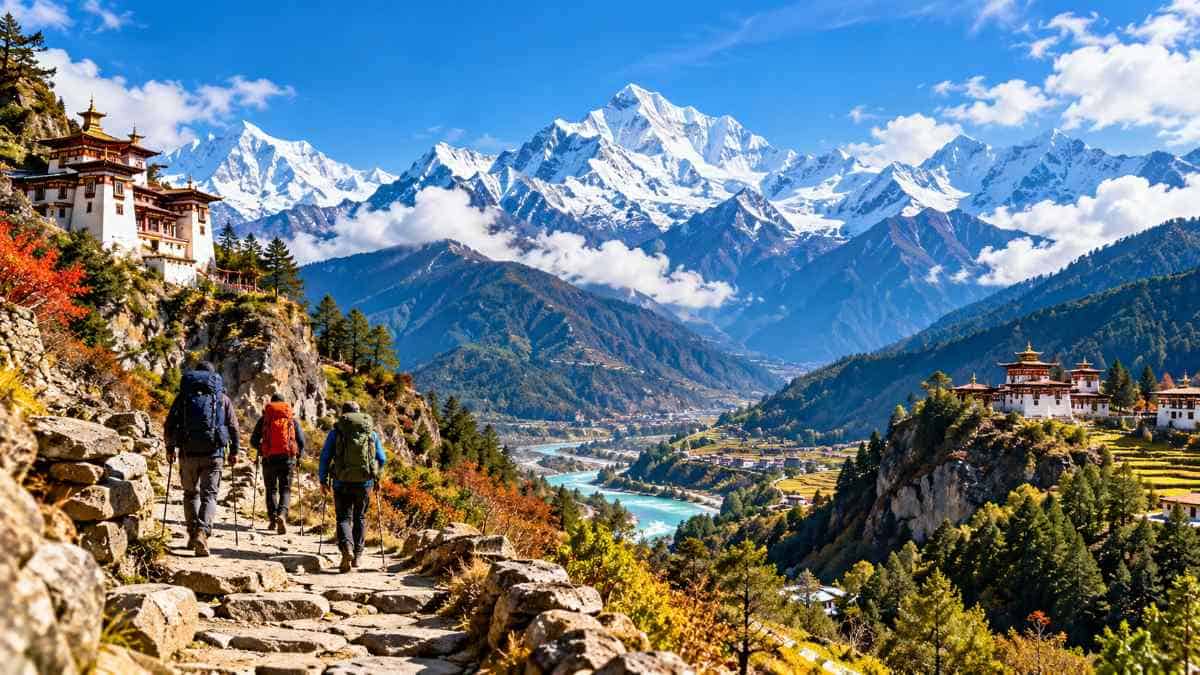
India Aligns with Nepal and Bhutan on Planning for a Unified Himalayan Green Tourism Circuit. India, Nepal, and Bhutan will soon have a joint platform for sustainable tourism in their mountains via the Trans-Himalayan Sustainable Tourism Alliance, which is due to commence operations on 15 November 2026. In this proposal, the tourism boards as well as environment ministries of the three nations will collaborate to facilitate trekking permits, mountain rescue and the issue of a universal digital pass to selected tourists. The joint program dubbed ‘The Himalayan Green Circuit’ seeks to make travel through certain mountain areas easier while setting up common standards for the environment and visitor management. This will involve issuing high-altitude trekking permits, setting up rescue systems and a digital clearance system meant to save on the repetition of administrative processes at border crossings. International tourists will be able to enjoy longer holidays in the Himalayas, passing through all three nations depending on entry procedures.
A Connected Himalayan Adventure Tourism Network
The Himalayas extend across several countries, offering some of the world’s most recognisable mountain landscapes, trekking routes, cultural settlements and nature-based tourism experiences. India, Nepal and Bhutan each provide distinct opportunities for visitors seeking high-altitude adventures and encounters with Himalayan communities.
In India, Ladakh, Sikkim, Himachal Pradesh and Uttarakhand attract trekkers through their mountain trails, monasteries, alpine lakes and remote villages. Popular experiences include exploring the Markha Valley, travelling through the Spiti region and trekking towards high-altitude destinations around Uttarakhand.
Nepal remains an established international destination for mountain tourism, with the Everest region, Annapurna Circuit and Langtang Valley attracting visitors interested in trekking and mountaineering. Kathmandu also serves as an important starting point for travellers exploring the country’s Himalayan landscapes and cultural heritage.
Advertisement
Advertisement
Bhutan offers a different mountain tourism experience, combining trekking with traditional architecture, Buddhist monasteries and carefully managed visitor access. The Paro Valley, Punakha and the routes surrounding the country’s mountainous interior provide opportunities for visitors interested in nature, culture and outdoor exploration.
The proposed alliance would seek to connect these tourism experiences through coordinated administrative procedures rather than create a single unrestricted travel zone.
Advertisement
Advertisement
Unified Permits Could Simplify Cross-Border Trekking
One of the central elements of the proposed agreement is a unified digital pass covering eligible high-altitude trekking activities across participating regions.
At present, international visitors planning mountain expeditions across different Himalayan countries must navigate separate national entry requirements, trekking permissions and local regulations. Certain restricted or protected areas also require additional authorisations, depending on the route, nationality and nature of the expedition.
Advertisement
Advertisement
The proposed system aims to reduce duplicated permit procedures for qualifying journeys. This could make multi-country itineraries easier to organise for international adventure travellers, trekking groups and specialist tour operators.
However, a shared trekking pass would not automatically remove national visa requirements, passport controls or restrictions governing protected and border-sensitive areas. Travellers would still need to satisfy the individual entry and permit conditions applicable to their destinations.
Mountain Safety and Search-and-Rescue Coordination
High-altitude tourism presents specific safety challenges, including altitude sickness, rapidly changing weather, difficult terrain and limited access to emergency medical facilities.
The proposed alliance would introduce standardised search-and-rescue protocols across participating mountain tourism regions. Greater coordination could help authorities, local rescue teams and tourism operators respond more effectively when visitors encounter emergencies during cross-border expeditions.
Advertisement
Advertisement
For trekkers, this aspect is particularly relevant when planning extended journeys involving remote valleys and high mountain passes. Consistent emergency procedures could improve coordination between participating authorities, although rescue operations would continue to depend on local infrastructure, weather conditions and available personnel.
Tour operators would also need to communicate route difficulty, acclimatisation requirements, insurance conditions and emergency arrangements clearly to visitors.
Tourism Revenue to Support Himalayan Conservation
Environmental protection forms another important part of the proposed framework. The alliance plans to direct revenues generated through its joint digital pass towards regional carbon-offset programmes and community conservation funds.
Mountain destinations face growing environmental pressures from tourism activity, including waste generation, pressure on water resources, trail erosion and increasing demand for local infrastructure. In sensitive Himalayan ecosystems, poorly managed visitor numbers can place additional pressure on wildlife habitats and fragile landscapes.
The proposed funding arrangement is intended to support conservation activities while ensuring that local communities receive a direct share of the economic benefits associated with tourism.
For participating destinations, community conservation funding could support environmental management, local employment and initiatives that protect natural and cultural resources. The effectiveness of the arrangement would depend on transparent revenue allocation, monitoring and clearly defined conservation priorities.
Implementation Scheduled for November 2026
According to the suggested pact, the Trans-Himalayan Sustainable Tourism Alliance would come into effect from 15 November 2026. Information about the trekking routes, electronic pass requirements, cost of permits, border processing, and distribution of funds would be essential information for tourists and tourism operators who wish to plan their trips. People planning trips through India, Nepal, and Bhutan should be familiar with immigration, trekking, and conservation policies before setting out. The suggested Himalayan Green Circuit would unite the main mountain tourism markets within one system.
Advertisement
