
Philippines And More Asian Aviation Crisis Deepens as Visayas Power Grid Failures Drive Airport Disruptions and Fuel Surcharges

Published
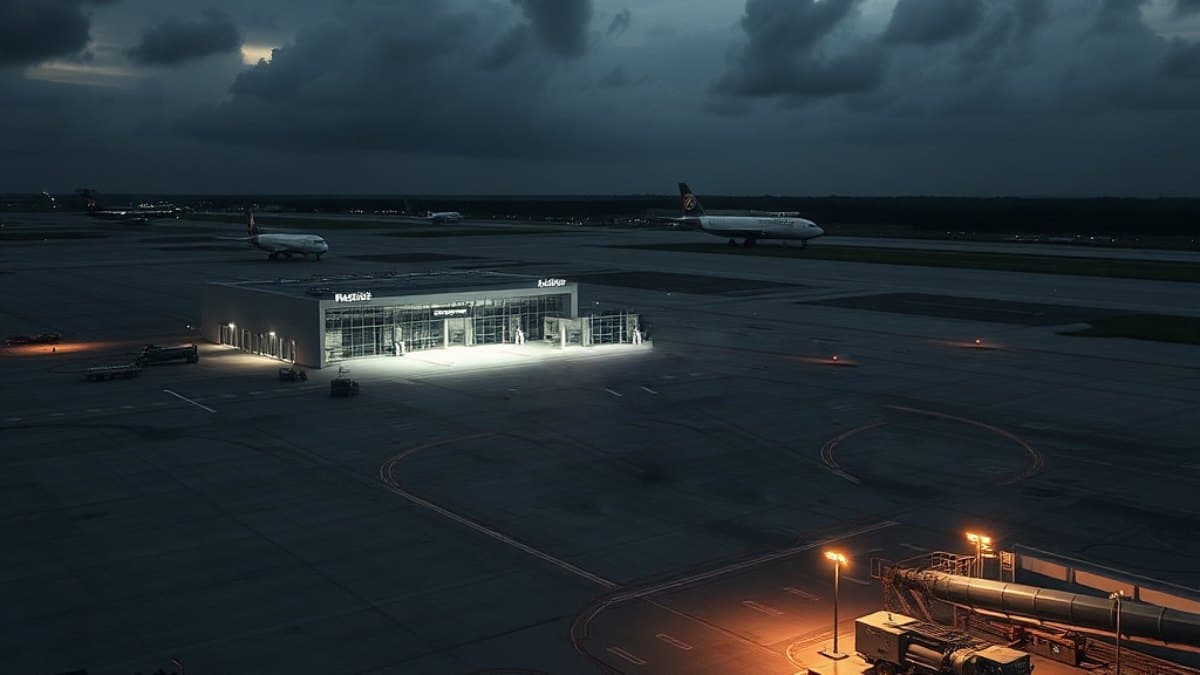
Severe power fluctuations in the central Philippines threaten to paralyze vital airports as the world faces an unprecedented aviation energy crisis. The electricity grid in the region’s Visayas interconnected system is plagued by periodic red and yellow alerts. Primary domestic gateways such as Cebu, Iloilo, Bacolod, and other regional hubs are forced to make do with secondary power systems such as costly diesel generators. Passengers already paying an exorbitant grid reliability surcharge and high aviation fuel prices may become more fickle on domestic and international tourism, imperiling the region’s transportation revenue and carriers’ financial gains. The transport sector and commercial airlines are already reeling from the mounting costs that require urgent and permanent reforms across the country.
The Structural Anatomy of the Visayas Power Grid Crisis
The electrical architecture supporting the central Philippine archipelago has entered an era of sustained operational vulnerability, precipitating systematic load shedding that directly disrupts municipal infrastructure, commercial transport networks, and public services. Over the course of 2026, systemic supply deficiencies across the Visayas interconnected grid have deteriorated to critical levels, compelling the transmission operator, the National Grid Corporation of the Philippines (NGCP), to place regional distribution networks under repetitive emergency alert statuses. Between 1 January 2026 and 3 September 2026, the Visayas transmission backbone logged no fewer than 93 yellow alerts and 30 red alerts, reflecting an operating environment characterised by razor-thin operating margins and inadequate contingency reserves.
| Metric / Operating Condition | Recorded Value / Regulatory Status | Primary Impacted Corridors |
| Cumulative Yellow Alerts (1 Jan – 3 Sept 2026) | 93 official notices issued | Panay, Negros, Cebu, Leyte-Samar |
| Cumulative Red Alerts (1 Jan – 3 Sept 2026) | 30 official notices issued | Regional load shedding corridors |
| Peak Unavailable Generation Capacity | 786.4 MW to 971.0 MW | Visayas regional transmission network |
| Rotational Brownout Durations | 5 to 9 consecutive hours | Bacolod, Iloilo, suburban Cebu |
| Derated & Forced Outage Baseload Units | 14 derated plants; 30+ total offline units | Toledo (TVI 1), Panay Energy (PEDC 3) |
| Mandated Backup Power Consumer Tariff | PHP 1.04 per kilowatt-hour (kWh) | Visayas grid captive consumer base |
| Short-Term Emergency Grid Capacity Additions | 170 MW BESS; 20 MW Modular Diesel | Island hubs (Cebu, Negros, Panay) |
The severity of the crisis is illustrated by the duration of compulsory rotational brownouts, which have escalated from nominal one-hour precautionary interruptions to prolonged five-to-nine-hour outages across Western and Central Visayas. Operating data confirm that the grid has repeatedly operated with unavailable generation capacity swinging between 786.4 MW and 971 MW, leaving the available capacity of approximately 2,255 MW well below peak regional demand forecasts that frequently surpass 2,432 MW. Fourteen commercial power generating facilities have operated on derated capacities, alongside an unyielding wave of forced plant outages.
Prolonged plant outages encompass facilities that tripped recently as well as long-term offline baseload generators: seven units tripped since September 2026, four in August, one in July, two in June, seven in May, and eight units offline dating back between 2021 and 2025. Baseload availability has been critically undermined by the simultaneous unavailability of the Toledo Veolia Inc. (TVI) Unit 1 plant in Cebu and the Panay Energy Development Corporation (PEDC) Unit 3 facility in Iloilo. Combined with physical capacity constraints across the Leyte-Samar transmission corridor and restricted underwater power imports from the Mindanao grid, the central regional network has lacked the operating inertia required to withstand sudden unit trips without cascading load drops.
Advertisement
Advertisement
In response to the mounting public and industrial disruption, Department of Energy (DOE) Secretary Sharon Garin publicly condemned the situation as unacceptable, emphasising that electricity consumers cannot be forced to continually shoulder structural instability caused by uncoordinated transmission planning and lagging private plant maintenance. The DOE issued formal show-cause directives against the NGCP for documented delays in executing mandatory ancillary services procurement agreements and energising strategic battery energy storage systems (BESS). To prevent widespread blackouts during the final quarter of 2026, the regulatory body ordered the accelerated connection of 170 MW of battery storage distributed across Panay, Negros, and Cebu, alongside 20 MW of modular diesel generating assets and the relocation of an emergency power barge from Metro Manila to Western Visayas.
Legislative Scrutiny and the Controversial PHP 1.04 Ancillary Reserve Tariff
The persistence of rolling load shedding in the face of escalating utility costs has prompted institutional confrontation between legislative leaders and energy regulators. On 7 September 2026, Negros Occidental 3rd District Representative Javier Miguel Benitez filed House Resolution 1430, compelling the House Committee on Energy to execute an inquiry in aid of legislation into the contracting, physical procurement, and financial settlement of power reserves across the Visayas. The legislative inquiry, supported by 11 principal co-authors and 25 co-signing representatives, represents a unified parliamentary front demanding operational and financial transparency from the Energy Regulatory Commission (ERC), the NGCP, the Independent Electricity Market Operator of the Philippines (IEMOP), and private power generation companies.
Advertisement
Advertisement
The primary grievance driving House Resolution 1430 centres upon the controversial PHP 1.04 per kWh ancillary reserve fee billed to retail electricity consumers across the central islands. Consumers and regional enterprises have paid this supplementary charge under the statutory premise that ancillary service contracts guarantee grid reliability by securing dispatchable reserve capacity. Lawmakers have underscored the acute contradiction between these high consumer charges and the reality of the grid, which logged 30 red alerts within eight months. The inquiry mandates a full audit of all ancillary collections amassed throughout 2026, requiring authorities to verify how many megawatts of spinning and contingency reserves were contracted, which private power firms received these disbursements, and why contracted reserves consistently failed to deploy during forced baseload outages.
Simultaneously, House Deputy Speaker Alfredo Abelardo Benitez of the Lone District of Bacolod City filed a complementary legislative resolution directing the Committee on Visayas Development to investigate the broader economic damages inflicted by the unstable grid. The resolution affirms that continuous and reliable electricity supply constitutes a baseline consumer entitlement. The findings document that systemic power interruptions have caused severe revenue attrition among commercial enterprises, compromised public health delivery at facilities dependent on continuous life-support systems, disrupted basic education, and weakened investor confidence in regional trade, logistics, and tourism investment.
Advertisement
Advertisement

Local Aerodrome Operations Under Power Grid Stress
Industrial Backup Systems at Mactan-Cebu, Iloilo, and Bacolod-Silay
The operational realities of modern aviation infrastructure mean that airports cannot simply shut down when the local power grid collapses. For major regional hubs—such as Mactan-Cebu International Airport (MCIA), Iloilo International Airport (ILO), and Bacolod-Silay Airport (BCD)—prolonged rotational blackouts require immediate, automated load transfers to industrial secondary power plants. The operational viability of these gateways during emergency periods depends entirely on dedicated diesel engine generator sets (DEGS).
| Airport Gateway & IATA Code | Primary Municipal Grid Utility | Secondary Power Infrastructure | Critical Vulnerabilities Under Grid Failure |
| Mactan-Cebu International (CEB) | Visayan Electric Company (VECO) | Central Multi-Megawatt DEGS Facility | Automated baggage sorting, chillers, smart gates |
| Iloilo International (ILO) | Iloilo Electric Cooperatives (ILECO) | Industrial DEGS (3x 300 kW Chiller Block) | HVAC compressor failure, terminal overheating |
| Bacolod-Silay Airport (BCD) | Central Negros Electric (CENECO) | Heavy-Duty Auxiliary DEGS | Digital check-in servers, carry-on screening |
| Regional Radar & ATM Sites | Local Island Distribution Feeds | 80 kVA Dedicated AKSA DEGS & UPS | Voltage sags, radar synchronization drops |
Under standard operating mandates, secondary generator units are engineered to serve as short-term emergency bridges rather than continuous primary energy sources. However, five-to-nine-hour municipal outages force airport managers to run these secondary power generation units continuously under intense ambient temperatures. Civil Aviation Authority of the Philippines (CAAP) spokesperson Eric Apolonio confirmed that aerodromes nationwide maintain emergency diesel fuel reserves to navigate unexpected grid interruptions, asserting that facilities stand prepared to withstand municipal blackouts.
Nevertheless, maintaining this continuous operating tempo consumes thousands of litres of diesel fuel daily, driving airport operational expenditure (OpEx) to unprecedented levels. At Iloilo International Airport, ongoing infrastructure upgrades require continuous terminal energisation to operate critical infrastructure, including three recently installed 300 kW passenger terminal chiller units. The recurring need to isolate these facilities from the unstable grid and operate them via diesel generators generates millions of pesos in unbudgeted utility fuel overheads every month, placing substantial financial pressure on regional transport budgets.
Operational Friction: Voltage Sags, Border Screening, and Air Traffic Control
The vulnerability of regional gateways to grid instability extends beyond fuel burn. Transitioning an entire international airport from a municipal grid feed to auxiliary diesel plants introduces severe mechanical and electrical friction. Automatic transfer switches (ATS) typically engage within fractions of a minute following a grid failure. However, the initial phase drop and resultant transient voltage sags frequently bypass standard surge suppression hardware, tripping sensitive airport IT systems and initiating automatic protective shutdowns.
Advertisement
Advertisement
| System Stage | Failure / Technical Event | Immediate Consequence | Operational Impact |
|---|---|---|---|
| 1. Municipal Grid Failure | Loss or instability of external electrical supply | Automatic Transfer Switch (ATS) activates | Airport systems transition to backup power |
| 2. Automatic Transfer Switchover (ATS) | Transient voltage sags and phase drops during power transition | Sensitive electronic systems experience instability | Short-duration equipment interruptions and system resets |
| 3. Passenger Screening Systems | Digital baggage and carry-on X-ray machines trip | Equipment requires approximately 10–15 minutes for cold reboot and recalibration | Screening throughput temporarily declines, potentially creating passenger queues |
| 4. Biometric Immigration & Customs | Biometric gates crash during electrical instability | Manual passenger processing is enforced | Slower immigration and customs processing |
| 5. Terminal Cooling Systems | Chillers enter protective thermal lockout | Reduced or interrupted cooling capacity | Rapid concourse temperature increases and degraded passenger conditions |
| 6. CNS/ATM Power Transition | UPS and dedicated 80 kVA DEGS transition to backup supply | Communication, navigation and surveillance systems face transition stress | Potential battery/rectifier strain and temporary data disruptions |
| 7. Air Traffic Management Response | Risk of CNS/ATM data drops | Controllers apply wider aircraft separation buffers | Increased holding patterns and reduced traffic-handling efficiency |
| Overall System Effect | Grid failure cascades through passenger-processing, terminal-comfort and aviation systems | Multiple independent systems experience disruption despite backup power | Airport capacity, passenger flow and aircraft operations become progressively constrained |
Digital security equipment, including checked-baggage dual-view X-ray machinery, explosive detection screening systems, and carry-on conveyor scanners, are exceptionally sensitive to power transitions. When utility voltage sags, these digital imaging devices enter automatic fail-safe shutdown cycles, requiring technical staff to manually reset, reboot, and recalibrate each terminal unit. These manual reboots routinely halt security screening lines for ten to fifteen minutes at peak flight windows, producing extensive queues that overflow terminal check-in lobbies. At Mactan-Cebu International Airport, temporary voltage fluctuations have caused sporadic reboots of biometric customs gates and immigration servers, forcing border personnel to revert to manual document checks.
The most safety-critical risks occur within the realm of air traffic management. Communications, navigation, and surveillance/air traffic management (CNS/ATM) systems rely on uninterruptible power supply (UPS) batteries coupled with dedicated 80 kVA AKSA diesel engine generator sets. Previous historical disruptions across national air navigation centres have highlighted how catastrophic UPS component failures, blown rectifiers, and thermal overheating during switchovers can sever radar feeds and ground control communications.
When the local grid experiences multiple rapid switchovers during rolling brownouts, the physical wear on UPS battery banks increases dramatically. In response, air traffic controllers at regional towers are often forced to take precautionary measures, including widening procedural separation distances between aircraft, implementing departure ground-stop intervals, and directing arriving flights into holding patterns. These defensive operational steps prevent safety hazards, but they inevitably introduce flight delays that cascade across domestic and regional hub networks.
The 2026 Global Jet Fuel Crisis: Strait of Hormuz Bottlenecks
The structural difficulties hampering domestic airport operations have unfolded against a severe global aviation energy crisis. Commercial aviation has faced intense geopolitical disruptions following extended military friction in the Middle East and maritime closures along the critical Strait of Hormuz. Because roughly 20 to 21 per cent of the world’s seaborne petroleum and refined distillates pass through this narrow chokepoint, the disruption caused an immediate, severe supply deficit in commercial aviation kerosene (Jet A-1).
| Aviation Energy Metric | Global & Regional Trend Data | Regulatory & Financial Consequence |
| Global Jet Fuel Peak Pricing | US$1,730 per metric tonne / US$184.63–200 per barrel | International spot prices surged 105.1% to 140% |
| Worldwide Flight Schedule Cuts | Exceeded 150,000 scheduled operations (Q2–Q3) | Non-US airline capacity contracted 2.3% YoY |
| Peak Philippine CAB Surcharge Level | Level 19 (Enacted late April 2026) | Domestic max PHP 1,834; Int’l max PHP 15,397 |
| Current CAB Fuel Surcharge Imposition | Level 13 (Valid 1–15 September 2026) | Domestic max PHP 1,237; Int’l max PHP 10,385 |
| Cargo Surcharge Rates (Level 13) | Domestic: PHP 2.17–6.36/kg; Int’l: PHP 7.18–53.39/kg | Direct cost escalation on island logistics |
| Surcharge Foreign Exchange Reference Rate | Benchmark set at PHP 61.39 to PHP 61.65 per US Dollar | Currency depreciation compounding import costs |
Global jet fuel spot prices reached unprecedented peaks, touching US$1,730 per metric tonne and surpassing US$184 to US$200 per barrel, representing a year-on-year surge exceeding 105 to 140 per cent. Across the Asia-Pacific region, where carriers operate on thin net profit margins averaging around 3 per cent, the surge in fuel costs quickly outpaced airline operating cash reserves. Between March and June 2026 alone, international carriers cancelled more than 150,000 scheduled flights, trimming capacity to avoid flying empty aircraft under ruinous fuel cost conditions.
In the Philippines, the economic impact of global fuel price spikes prompted emergency regulatory interventions from the Civil Aeronautics Board (CAB). In late April 2026, the CAB escalated the allowable passenger fuel surcharge to Level 19 under Resolution No. 25, just one step below the absolute statutory ceiling of Level 20. At Level 19, domestic surcharges reached PHP 1,834 per passenger per sector, while long-haul international flights carried mandatory levies of up to PHP 15,397. To keep pace with market volatility, the regulator abandoned its traditional 30-day tariff review window in favour of an agile 15-day price monitoring cycle.
Advertisement
Advertisement
Entering the first half of September 2026, the CAB adjusted passenger and cargo fuel surcharges to Level 13, based on an applicable foreign exchange rate of PHP 61.39 per US dollar. Under Level 13 schedules, airlines are permitted to collect between PHP 423 and PHP 1,237 per passenger on domestic flight legs, and between PHP 1,396.74 and PHP 10,385.42 on international departures, depending strictly on distance travelled. Cargo rates under the same tier range from PHP 2.17 to PHP 6.36 per kilogram on domestic routes and up to PHP 53.39 per kilogram internationally. This regulatory pricing framework ensures carrier solvency amid high crude prices, but it embeds an expensive fuel premium directly into regional air transit tickets.
Asian Airlines Operating Under Dual Energy and Ground Stress
Regional commercial airlines operate in an extraordinarily complex operating environment. Carriers across Southeast and East Asia face a double shock: they must navigate tight, expensive global jet fuel supplies while simultaneously adapting their operational schedules to handle unconditioned ground infrastructure and rolling power blackouts at destination airports.
| Airline Carrier | Primary Energy & Operational Vulnerability | Operational & Fleet Adjustment Strategy |
| Philippine Airlines (PAL) | Long-haul transoceanic kerosene exposure, Visayas airport power volatility | Induction of fuel-efficient A350-1000s, schedule padding, dynamic fuel surcharging |
| Cebu Pacific (Cebu Air) | Low-cost seat cost sensitivity, high exposure to secondary airport turnaround delays | Selective flight cancellations, schedule retiming away from peak brownout windows, ancillary unbundling |
| Vietnam Airlines | Severe domestic jet fuel rationing, high import dependency on Middle East crude | Suspension of 7 domestic routes, trimming 23 weekly flights, contingency plans for 26% cut |
| VietJet Air | High exposure to intra-Asia tourist routes, rapid fleet turnarounds strained by fuel quotas | 20% reduction of international flights on 24 routes, heavy cuts on Korea-Vietnam sectors |
| AirAsia Group (AAG) | Ultra-low-cost margin model crushed by fuel price spikes and airport auxiliary ground fees | Unbundling baggage, priority check-in, dynamic seat selection fees, rerouting feeder links |
| ANA & Japan Airlines | Substantial flight circuity bypassing Middle Eastern and Russian airspace | Flight path restructuring, raising long-haul international fuel surcharges, capacity consolidation |
Philippine Airlines and Cebu Pacific have had to restructure flight scheduling and ground management to maintain operational integrity. Cebu Pacific implemented proactive schedule cuts and flight consolidations across domestic sectors, advising passengers of cancellations forced by the compounding impacts of global fuel prices and regional airport turnaround constraints. At secondary island hubs like Bacolod-Silay and Iloilo, airline dispatchers have increasingly retimed feeder flights to avoid the midday and early-evening windows when the Visayas grid historically enters red alert status, protecting passengers from baggage belt shutdowns and terminal overheating. Philippine Airlines has accelerated the deployment of fuel-efficient next-generation aircraft, including taking delivery of its fourth Airbus A350-1000, while applying CAB Level 13 surcharges across its domestic and regional networks to offset elevated fuel bills.
Across Southeast Asia, carriers have faced direct fuel rationing. In Vietnam, where the commercial aviation sector relies on imported fuel for roughly 70 per cent of its jet kerosene, suppliers were forced to ration fuel allocations to domestic airports. Vietnam Airlines suspended services on seven domestic routes, eliminating approximately 23 weekly flights, and prepared contingency measures to trim domestic operations by up to 26 per cent. VietJet Air initiated comparable cuts, removing nearly 20 per cent of its international flight capacity across 24 routes, including popular holiday links to South Korea.
For budget operators like AirAsia, whose business model relies on low fares and rapid aircraft turnarounds, higher fuel prices and ground infrastructure delays created severe margin compression. To preserve liquidity, AirAsia implemented aggressive fee unbundling across its booking systems, raising ancillary tariffs on seat selection, checked luggage allowances, and priority boarding passes. In East Asia, All Nippon Airways (ANA) and Japan Airlines (JAL) faced additional cost pressures due to airspace restrictions in the Middle East, requiring widebody aircraft to fly detour routes that added thousands of kilograms of fuel burn per flight. Both Japanese carriers raised their international passenger fuel levies to cover these structural route diversions.
Passenger Sentiment, Terminal Surcharges, and Ancillary Fee Escalation
The convergence of electrical grid deficits and international energy volatility has created a challenging travel environment for domestic passengers. Consumers travelling through secondary Philippine airports now absorb compounding fees across every phase of their journey.
Advertisement
Advertisement
| Fee / Tariff Classification | Regulatory Basis / Source Institution | Direct Cost Passed Down to Passenger | Consumer Sentiment Impact |
| Mandated Electrical Reserve Surcharge | NGCP / ERC Ancillary Tariff | PHP 1.04 per kWh billed to regional consumers | Public frustration over paying for non-existent grid stability |
| Domestic Aviation Fuel Surcharge | CAB Resolution No. 25 (Level 13) | PHP 423 to PHP 1,237 per passenger per leg | Ticket inflation depressing non-essential inter-island holiday trips |
| International Aviation Fuel Surcharge | CAB Resolution No. 25 (Level 13) | PHP 1,396.74 to PHP 10,385.42 per booking | Resistance to outbound travel; reduced budget for overseas packages |
| Unbundled Carrier Ancillary Fees | Commercial Airline Tariff Adjustments | Up to 35% increases in baggage, seats, priority fees | Growing traveller dissatisfaction over hidden flight add-ons |
| Terminal Operations Cost Transfers | Airport Authority OpEx Recovery | Escalating terminal fees to cover diesel fuel burn | Negative passenger perception of regional airport infrastructure |
The consumer experience inside provincial terminals has deteriorated during peak alert windows. During extended brownouts, heavy terminal air-conditioning chillers are frequently kept offline or run on reduced loads to prevent generator overloads. Consequently, passenger concourses in Iloilo and Bacolod-Silay can become uncomfortably hot and overcrowded during flight delays.
| Stage | Trigger / Development | Immediate Impact | Downstream Passenger / Commercial Effect |
|---|---|---|---|
| 1. Regional Grid Deficits | 93 Yellow Alerts and 30 Red Alerts indicate regional electricity supply stress | Increased risk of unstable power supply to municipalities | Greater vulnerability of critical infrastructure, including airports |
| 2. Municipal Brownouts | Power interruptions lasting approximately 5–9 hours | Airport transitions to secondary DEGS backup generation | Dependence on emergency power increases operating costs |
| 3. Terminal Cooling Disruption | Heavy terminal chillers are dropped from the backup-power load | Concourses begin to overheat | Passenger comfort deteriorates and terminal conditions become more difficult to manage |
| 4. Passenger Screening Instability | Voltage sags affect screening equipment | Screening systems require approximately 15-minute reboot delays | Reduced passenger-processing capacity and potential queue formation |
| 5. Rising Airport Operating Costs | Extended reliance on backup generators and additional fuel consumption | Airport operating expenditure increases by millions of pesos monthly | Higher infrastructure and operating costs create pressure for increased terminal fees |
| 6. Global Jet Fuel Crisis | Supply and price pressures linked to the Strait of Hormuz chokepoint | Jet kerosene prices rise by more than 105% against the MOPS benchmark | Airlines face significantly higher fuel-related operating expenses |
| 7. Aviation Fuel Surcharges | Rising fuel costs prompt regulatory fare adjustments | CAB fuel surcharge reaches Level 13, with domestic surcharges of up to PHP 1,237 | Direct increase in passenger ticket costs |
| 8. Airline Ancillary Fees | Low-cost carriers seek to offset higher operating expenses | Baggage, seat selection and priority-boarding services become increasingly unbundled | Additional charges accumulate beyond the base airfare |
| 9. Accumulated Passenger Burden | Airport cost increases combine with airline fuel and ancillary charges | Travelers face higher total out-of-pocket expenses | Degraded travel sentiment, affordability pressure and weaker passenger experience |
| Overall Chain Reaction | Grid deficits → brownouts → airport power constraints → higher OpEx → fuel-cost escalation → surcharges and ancillary fees | Multiple infrastructure and aviation cost pressures converge | Higher passenger costs and deteriorating overall travel sentiment |
At the same time, when voltage dips trigger diagnostic restarts of security scanners, boarding gates stall, forcing ground crews to process travellers manually. Passengers who have paid Level 13 fuel surcharges and compulsory PHP 1.04 per kWh reserve levies are met with long ticket-counter lines, broken flight connections, and stuffy terminal gates. This operational friction has produced growing consumer backlash across social channels, eroding trust in domestic airlines and depressing advance bookings along inter-island leisure routes.

Infrastructure Risk in Destination Marketing: Threatening MICE and Luxury Bookings
The chronic power instability across the Visayas poses a structural challenge to the Philippine government’s destination marketing initiatives. Under the Department of Tourism’s (DOT) National Tourism Development Plan 2023–2028 and the flagship “Love the Philippines” campaign, national agencies have committed substantial capital to promote regional gateways like Cebu, Iloilo, and Bacolod as attractive international business and leisure hubs. A primary goal of this strategy is de-concentrating foreign arrivals away from congested Manila by positioning the Visayas as an integrated hub for international MICE tourism and luxury island getaways.
| Destination Gateway | Strategic Tourism & MICE Assets | Infrastructure Risk & Outage Vulnerabilities | Competitive Regional Divergence |
| Cebu Metropolitan Hub | Five-star beach resorts, international convention centres | Two-and-a-half-hour urban rolling blackouts, terminal power dips | Event bids lost to Clark or Manila; luxury bookings re-routed |
| Bacolod & Negros Corridor | Bacolod MICE Summit, heritage estates, sugarland resorts | Five-to-nine-hour continuous grid outages, high generator fuel costs | Event planners shifting conferences to Luzon venues |
| Iloilo City & Western Visayas | Modern convention halls, colonial heritage, Boracay transit link | Terminal chiller failures, flight delays, brownout disruptions | Multinationals favouring Bali and Phuket for corporate events |
| Regional Competitors (ASEAN) | Bali (Indonesia), Phuket (Thailand), Da Nang (Vietnam) | Insulated microgrid systems, stable base power, widebody links | Securing regional market share diverted from central Philippines |
This marketing strategy depends heavily on reliable baseline infrastructure. The MICE sector operates on strict service level agreements. Multinational conference planners, tech summit organisers, and corporate travel managers require guaranteed, uninterrupted electricity to power digital presentation technology, live multilingual interpretation booths, secure enterprise data networks, and global hybrid streaming platforms. When an entire regional grid is subjected to 93 yellow alerts and 30 red alerts within eight months, holding large-scale corporate events becomes an operational liability.
While luxury resorts and urban convention hotels in Cebu and Bacolod maintain on-site emergency generators, running massive commercial properties on backup diesel for five to nine hours daily is noisy, carbon-intensive, and expensive. Many hospitality properties have been forced to pass these operational costs along to corporate clients via energy surcharges, making regional bids less cost-competitive against competing Southeast Asian event destinations.
International event planners are increasingly passing over the Visayas in favour of destinations like Bali in Indonesia or Phuket in Thailand. These competing ASEAN destinations offer comparable island-resort settings, robust international flight links, and municipal power grids that are largely shielded from prolonged rotational blackouts. When event organisers choose to keep bookings within the Philippines, persistent reports of airport terminal brownouts and flight disruptions frequently push corporate conferences back to Metro Manila or Clark, undermining efforts to distribute tourism spending more evenly across the provinces.
Advertisement
Advertisement
Strategic Imperatives: Transitioning to Airport Microgrids and Renewable Resilience
Addressing the persistent operational vulnerabilities at regional gateways requires a fundamental shift in airport energy planning. Relying indefinitely on stopgap diesel generation during utility collapses is neither operationally reliable nor economically sustainable. Philippine aviation authorities and infrastructure developers must transition regional aerodromes from vulnerable end-of-the-line consumers into self-sustaining, resilient energy microgrids.
| Strategic Priority | Technical Architecture / Infrastructure Action | Regulatory & Institutional Stakeholders | Expected Operational Outcome |
| Long-Term Grid Expansion | 1,060 MW Panay-Negros generation pipeline by 2031 (690 MW base, 370 MW RE) | Department of Energy (DOE), Private Power IPPs | Permanent elimination of island generation capacity deficits |
| Decentralised Airport Microgrids | Multi-megawatt rooftop & ground solar PV paired with industrial BESS | CAAP, Private Airport Concessionaires (Mactan, Iloilo) | Zero-latency power switchovers, off-grid terminal energisation |
| CNS/ATM Facility Hardening | High-frequency SCADA monitoring, isolated UPS busbars at radar sites | CAAP Air Traffic Management Center, DOTr | Elimination of flight tracking and communication interruptions |
| Reserve Tariff Transparency | Forensic audit of PHP 1.04/kWh ancillary collections via House Resolution 1430 | Philippine House Committee on Energy, ERC, IEMOP | Consumer protection, verified delivery of spinning reserves |
| Sustainable Aviation Fuels (SAF) | Developing domestic feedstocks and local refining processing capabilities | CAAP, Philippine Department of Energy, Airline Operators | Reduced exposure to international jet kerosene spot price volatility |
The Department of Energy has outlined a long-term supply pipeline that projects adding 1,060 MW of generation capacity to Panay and Negros by 2031, comprising 690 MW of baseload capacity and 370 MW of renewable power, alongside capacity expansions for Cebu and Bohol. However, because major power plants require three to five years to develop, regional airports need immediate, site-specific energy resilience measures.
The Civil Aviation Authority of the Philippines and private airport operators must invest in on-site solar photovoltaic (PV) arrays paired with utility-scale battery energy storage systems (BESS). Modern aerodromes feature extensive terminal roof areas and airside ground buffers that are well-suited for high-capacity solar installations. Integrating multi-megawatt solar arrays with containerised battery storage allows airports to supply clean baseline power for passenger terminal HVAC systems and baggage handling equipment during daylight hours.
Crucially, modern battery energy storage systems offer sub-second response times, bridging power interruptions instantaneously when the external grid fails. This fast-acting battery buffering eliminates the transient voltage dips that trip passenger screening X-rays, border control servers, and air traffic control electronics, allowing facilities to maintain continuous security and screening operations without relying on polluting backup generators. Advanced SCADA monitoring at airport substations can also allow engineers to decouple terminal infrastructure from the municipal grid at the first sign of transmission instability, protecting sensitive CNS/ATM networks from cascading utility faults.
On the policy front, the Philippine government must follow through on the legislative initiatives launched by House Resolution 1430. Enforcing stricter regulatory accountability on the PHP 1.04 per kWh ancillary charge will ensure that collected reserve tariffs are spent directly on functional, contracted reserve power plants and fast-ramping battery systems. In parallel, accelerating the commercial adoption of locally produced Sustainable Aviation Fuels (SAF) will help shield domestic airlines from international oil market shocks. By pairing off-grid renewable microgrids at key airports with rigorous oversight of regional utility reserves, the Philippines can build a more resilient air transport network, insulate its travel sector from volatile fuel markets, and restore passenger and investor confidence across the Visayas.
Conclusion
With continuous infrastructural challenges in the archipelago, it is difficult to keep up with the modern commercial aviation schedule. Having said that, airport authorities can no longer rely on auxiliary diesel generators when blackouts happen while passengers are subjected to additional charges and surcharges. The challenge of frequent red alerts and volatile jet fuel prices is pressing enough to warrant immediate action in terms of refunding reserve costs, installing battery storage systems, and adopting off-grid solar panels in major hubs. It is, therefore, necessary to update interconnection and airport infrastructure to prevent disruptions in the country’s status as a business and tourist destination.
Advertisement
