
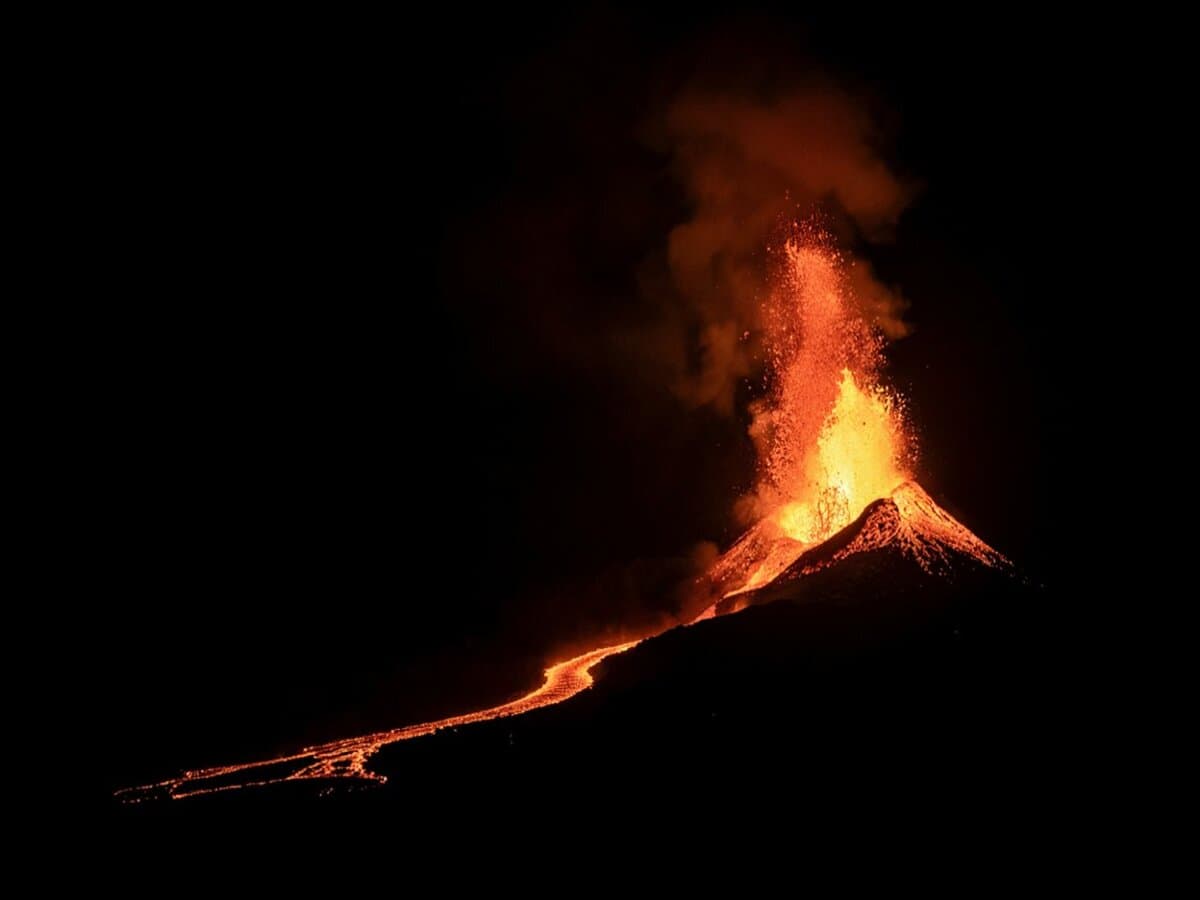
Image generated with Ai
Mount Etna Eruption Causes Travel Disruption to Sicily’s Catania Airport. Italy has issued a new travel advisory for visitors to Sicily after another eruption of Mount Etna contributed to the closure of Catania airport for several days. The last volcanic activity which started on 8 August 2026 resulted in the closure of Catania–Fontanarossa International Airport to incoming flights after erupting clouds of ash on to the sky, hindering air traffic. Eastern Sicily was temporarily on high alert after the volcano eruption caused by the massive emissions of ash and smoke, which made authorities rush to reassure anxious residents and tourists, who are enjoying the peak season.
The timing of the volcano’s latest visit was not the best as thousands of tourists visit Sicily for their holidays and spend the summer exploring the island, taking day trips from Catania, which is located near the volcano.
Advertisement
The airport suspension was linked directly to volcanic ash released by Mount Etna, which created unsafe conditions for aircraft approaching the airport. Authorities temporarily closed the affected airspace sector and restricted incoming flights until conditions improved. While arrivals were halted, aircraft already positioned at the airport were allowed to continue departures under operational safety procedures.
The incident highlights the continuing challenges faced by Sicily’s aviation network due to the unpredictable activity of Mount Etna, a natural landmark that attracts millions of tourists every year but also remains a significant operational risk for nearby transport infrastructure.
Advertisement
Advertisement
Catania–Fontanarossa Airport, one of Italy’s busiest regional airports, temporarily suspended all arriving flights after volcanic ash from Mount Etna entered controlled airspace around eastern Sicily.
The arrival suspension remained in place until 12:00 local time (10:00 GMT) on 8 August 2026 as aviation authorities monitored the movement and concentration of ash particles in the atmosphere.
The airport continued handling departure operations for aircraft already located at the facility. However, incoming flights were restricted because aircraft arriving through volcanic ash clouds face increased safety risks.
Volcanic ash is considered one of the most dangerous natural hazards for aviation. Unlike normal weather conditions, ash particles contain tiny fragments of volcanic rock and glass that can damage aircraft engines, reduce visibility and affect important flight systems.
For airlines operating into Sicily, the temporary closure required adjustments to schedules, possible delays and operational changes. Passengers travelling to Catania were advised to monitor airline updates before beginning their journeys.
Mount Etna’s renewed activity created concerns for travellers visiting Sicily during one of the busiest periods of the year.
August is a major holiday month in Italy, attracting millions of domestic and international tourists to coastal resorts, historical cities and natural attractions. Sicily remains one of the country’s most popular destinations due to its beaches, ancient heritage, Mediterranean landscapes and volcanic tourism experiences.
Catania Airport plays a vital role in supporting Sicily’s tourism economy. The airport serves as the main arrival point for many visitors travelling to eastern Sicily, including those heading towards:
Any disruption at Catania Airport can create wider travel impacts across the island because thousands of visitors depend on the airport for access to hotels, resorts and tourist attractions.
The temporary suspension of arrivals followed established aviation safety procedures used worldwide when volcanic ash affects flight paths.
When volcanoes release ash clouds, aviation authorities carefully monitor:
Even small amounts of volcanic ash can create serious risks for commercial aircraft. Jet engines operate at extremely high temperatures, and ash particles can melt inside engines before forming deposits that affect performance.
Volcanic ash can also damage aircraft windows, sensors and external surfaces. Because of these risks, airlines and aviation authorities often choose temporary restrictions rather than allowing flights to operate through potentially dangerous areas.
The decision to suspend arrivals at Catania Airport was therefore a precautionary measure aimed at protecting passengers, airline crews and aircraft.
The latest disruption is another example of how Mount Etna’s volcanic activity can affect transportation across Sicily.
Located on the eastern side of Sicily near Catania, Mount Etna is among the most active volcanoes on Earth. Its frequent eruptions often produce lava activity, ash emissions and volcanic gases.
Although Etna is a major tourism attraction, attracting visitors from around the world who want to explore its landscapes and volcanic environment, its activity requires constant monitoring because of its proximity to populated areas and major transport infrastructure.
Catania Airport has experienced similar operational challenges in the past when ash clouds from Etna forced temporary flight restrictions. These disruptions are usually managed through close coordination between airport authorities, aviation agencies and scientific monitoring organisations.
The latest event again demonstrates the importance of balancing tourism access with aviation safety.
Passengers planning to travel to Sicily following the Mount Etna eruption were advised to remain updated with airlines and airport announcements.
Travellers could experience:
Airlines operating routes to Catania may adjust services depending on the movement of the ash cloud and decisions from aviation authorities.
While the disruption was temporary, travellers were encouraged to confirm their flight status before travelling to the airport.
The incident did not involve damage to Catania Airport infrastructure. The restrictions were introduced purely because of safety concerns related to volcanic ash in the surrounding airspace.
Despite occasional disruptions, Mount Etna continues to be one of Sicily’s most important tourism attractions.
The volcano represents a unique natural experience for visitors, offering hiking opportunities, scenic views, geological discoveries and access to one of Europe’s most fascinating volcanic landscapes.
Tourism authorities and local businesses continue to rely on Etna as a major attraction that supports hotels, restaurants, tour operators and regional economies.
However, the latest eruption serves as a reminder that destinations built around natural wonders must also prepare for environmental challenges.
For Sicily, maintaining safe and reliable air connectivity remains essential because tourism is strongly connected to international flight access.
Italy continues to monitor Mount Etna’s activity while aviation authorities assess conditions around Sicily’s airspace.
The temporary arrival suspension at Catania Airport demonstrates how volcanic activity can quickly affect international travel networks, even in highly developed tourism destinations.
As conditions improve, normal flight operations are expected to resume following safety assessments.
The latest Mount Etna eruption reinforces the importance of volcanic monitoring systems and emergency response planning for regions where tourism, aviation and natural landscapes exist side by side.
Mount Etna’s latest eruption is causing chaos, with ash falling over Sicily, leading to the closure of Catania airport and ruining summer plans for many Italians.
For those visiting Sicily, it is a sobering reminder that they need to be more aware of the power of nature, especially when they are visiting near a volcano. It is a good lesson for all those considering a trip to the region, and one that will make them more cautious in the future.
Advertisement
Advertisement
Advertisement













Saturday, September 5, 2026

Friday, September 4, 2026

Saturday, September 5, 2026

Saturday, September 5, 2026

Thursday, September 3, 2026

Wednesday, September 2, 2026

Saturday, September 5, 2026

Saturday, September 5, 2026


