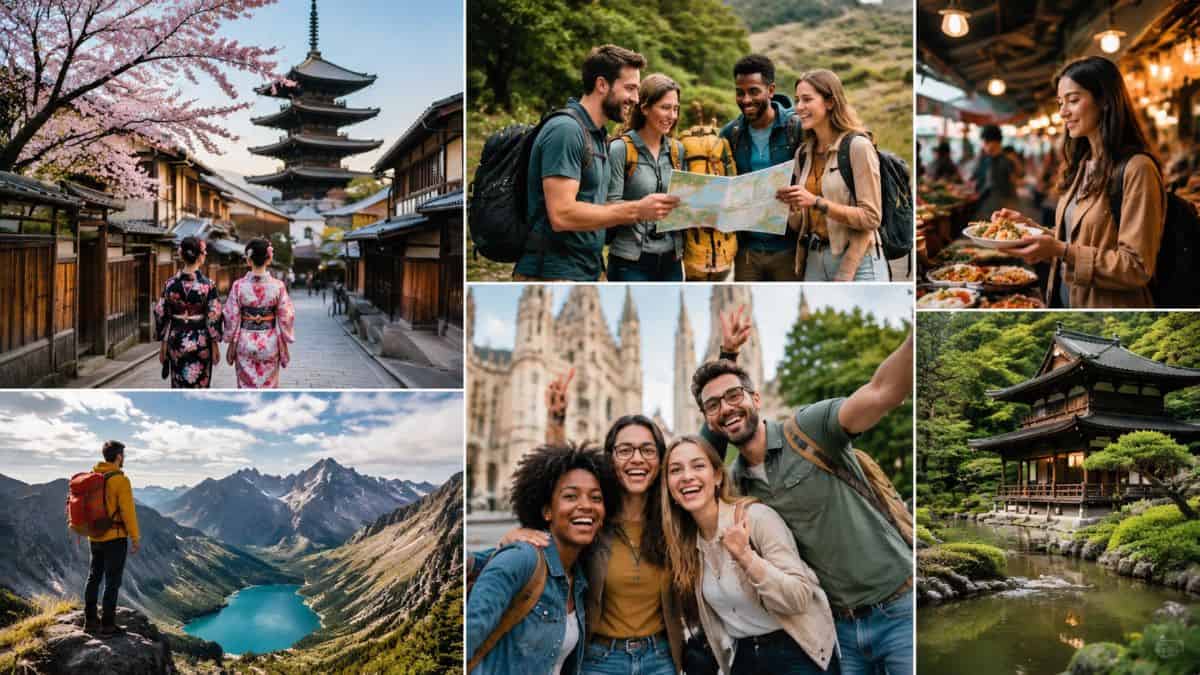
Image generated with Ai
The global tourism landscape is evolving as traveller behaviour, cultural respect and experience-driven journeys shape new travel trends. Japan and many other nations are recognized for their tourist manners, responsible travel, spending, and adventure travel preferences. A global survey captures changing attitudes toward traveller behavior as business travel continues to grow and develop. The dominant themes of ‘new era’ tourism are manners, etiquette, and culture.
Japan has emerged as a global symbol of respectful travel behaviour after a new international survey ranked Japanese tourists as the world’s most polite travellers. The private survey by SafariBookings, based on responses from 192 tour operators, found Japan receiving the highest recognition for tourist manners, while travellers from the United States dominated categories linked with tipping and spending. However, beyond traveller perceptions, Japan’s tourism performance in 2026 is being shaped by government-backed strategies focused on sustainable growth, regional development and improving visitor experiences. Official tourism statistics from the Japan National Tourism Organization (JNTO) continue to track strong international demand, with detailed monitoring of visitor arrivals, source markets and travel behaviour.
The changing global tourism landscape shows that destinations are no longer competing only for visitor numbers. Countries are increasingly focusing on attracting responsible, high-value and experience-focused travellers.
| Tourism behaviour category | Leading nationality | Survey result |
|---|---|---|
| Most polite tourists | Japan | 21.1% |
| Best tippers | United States | 29.5% |
| Biggest travel spenders | United States | 24% |
| Most adventurous travellers | Germany | 21.1% |
| Biggest food-focused travellers | India | Top ranking |
Japan’s tourism strategy in 2026 is increasingly centred on balancing international visitor growth with long-term destination management. Government tourism bodies are working to encourage travellers to explore regional areas, support local economies and reduce excessive concentration in major cities. The Japan National Tourism Organization provides official visitor statistics covering international arrivals, visitor markets, travel purposes and regional travel patterns.
Advertisement
Advertisement
The recognition of Japanese travellers for polite behaviour reflects broader cultural associations with respect, cleanliness and consideration, qualities that are also promoted within Japan’s tourism environment. The country continues developing tourism experiences based on heritage, nature, gastronomy and local communities.
| Japan tourism focus area | Government tourism direction |
|---|---|
| Regional travel | Encourage visitors beyond Tokyo, Kyoto and Osaka |
| Sustainability | Manage tourism growth responsibly |
| Cultural tourism | Promote heritage and traditional experiences |
| Gastronomy tourism | Highlight Japanese cuisine worldwide |
| Visitor services | Improve travel accessibility and information |
Japan’s tourism authorities have increasingly focused on distributing visitor demand across the country. While major destinations remain internationally popular, government tourism planning highlights the importance of introducing travellers to lesser-known prefectures, rural communities and nature-based attractions.
Official tourism platforms promote destinations ranging from mountain villages and national parks to cultural heritage locations. The national tourism approach supports a broader shift towards meaningful travel experiences rather than short visits concentrated around famous landmarks.
This strategy also supports local businesses, traditional industries and regional hospitality providers by creating new opportunities outside major urban centres.
Advertisement
Advertisement
| Tourism challenge | Japan’s response |
|---|---|
| Visitor concentration | Regional promotion campaigns |
| Environmental pressure | Sustainable tourism planning |
| Local economic needs | Community-based tourism |
| Demand for unique experiences | Heritage and nature tourism |
| Changing traveller expectations | Personalised experiences |
The survey identified American tourists as the strongest performers in both tipping and spending categories. US travellers received 29.5% of mentions for tipping behaviour and 24% for overall travel spending, highlighting the importance of the American market for global tourism businesses.
The United States remains one of the world’s most influential outbound travel markets, with travellers showing strong demand for international experiences, luxury holidays, adventure activities and cultural exploration.
Government tourism organisations continue tracking international travel flows through official visitor statistics and market research programmes.
| Category | United States position |
|---|---|
| Tourist spending | Global leader in survey |
| Tipping behaviour | Highest-ranked nationality |
| Travel style | Experience and premium focused |
| Economic impact | Major source market |
Germany achieved the highest ranking for adventurous tourism behaviour, receiving 21.1% of mentions in the survey. The result reflects the continued popularity of outdoor activities, nature exploration and active holidays among German travellers.
Adventure tourism has become an increasingly important global travel segment, with destinations promoting hiking, cycling, wildlife experiences and outdoor recreation to attract visitors seeking active experiences.
Germany’s travel market remains influential for destinations developing sustainable adventure tourism products.
| Adventure tourism preference | Travel impact |
|---|---|
| Hiking | Supports nature tourism |
| Cycling | Encourages slow travel |
| Wildlife experiences | Boosts conservation tourism |
| Cultural exploration | Supports local economies |
| Outdoor activities | Expands regional tourism |
India ranked as the world’s leading foodie tourism market in the survey, highlighting the growing importance of culinary experiences in international travel.
Food tourism has become a major driver of destination choice as travellers increasingly seek authentic local flavours, traditional cooking methods and cultural connections through cuisine.
India’s diverse regional food heritage, from traditional dishes to local culinary practices, continues strengthening its appeal among travellers interested in gastronomy and cultural discovery.
| Food tourism attraction | Visitor appeal |
|---|---|
| Local cuisine | Authentic cultural experience |
| Traditional markets | Community interaction |
| Regional dishes | Unique destination identity |
| Cooking experiences | Hands-on travel |
| Culinary heritage | Cultural preservation |
The latest traveller behaviour findings demonstrate a major shift in global tourism priorities. Destinations are increasingly focusing on visitor quality, spending patterns, cultural respect and sustainable growth rather than simply increasing arrival numbers.
Japan’s recognition for tourist manners, the United States’ leadership in spending, Germany’s adventure appeal and India’s culinary influence represent different segments shaping the future of international travel.
Official tourism organisations worldwide are now developing strategies that combine economic growth with responsible visitor management.
| Future tourism trend | Expected impact |
|---|---|
| Sustainable travel | Protects destinations |
| High-value tourism | Increases economic benefits |
| Regional exploration | Supports local communities |
| Authentic experiences | Improves visitor satisfaction |
| Responsible behaviour | Strengthens tourism relationships |
The global tourism industry is entering a new phase where traveller behaviour, cultural awareness and experience-based journeys are becoming increasingly important. With an increased focus on manners and responsible travel, Japan and other countries continue to attract and shape international travel. An emphasis on adventure travel and the preferences of vacation spending have resulted in an emphasis on a variety of factors that include respectful travel, local engagement and meaningful interactions to define the New Era of tourism. Evolving traveling trends and new patterns that emphasize balanced and sustainable travel, experience-focused travel, and respectful travel define the long-term global appeal of a destination.
Advertisement
Tags: adventure tourism, culinary tourism, global tourist behaviour, Japan tourism trends, responsible travel
Advertisement
Advertisement













Saturday, September 5, 2026

Friday, September 4, 2026

Saturday, September 5, 2026

Friday, September 4, 2026

Thursday, September 3, 2026

Wednesday, September 2, 2026

Friday, September 4, 2026