

Aegean Airlines Beats Budget Rivals as Europe’s 2025 RASK Ranking Exposes Aviation Revenue Divide

Published
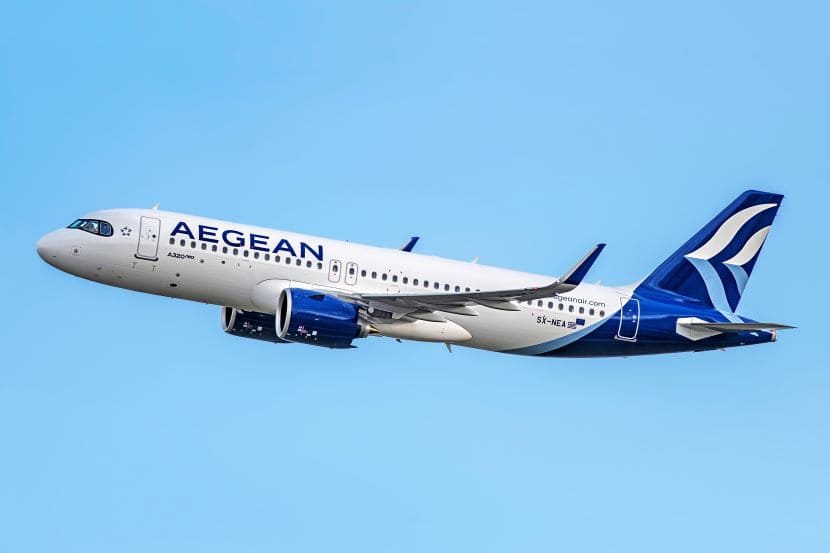
Aegean Airlines had the most impressive finances among European airlines in 2025, according to updated data on revenue and cost efficiency. There was a clear division between full-service and low-cost airlines. Aegean Airlines booked an impressive 8.39 euro cents Revenue per Available Seat Kilometer (RASK), ranking sixth best in the 23 European airline ranking based on public financial data.
The carrier’s performance remained almost unchanged compared with the previous year. Aegean’s RASK declined from 8.40 euro cents in 2024 to 8.39 euro cents in 2025, representing a movement of only 0.01 euro cents.
This minimal change was the smallest year-on-year movement recorded among airlines with comparable data, highlighting Aegean’s ability to maintain revenue strength while the wider European aviation market experienced significant fluctuations.
RASK is one of the key indicators used to evaluate airline revenue performance. It measures the passenger revenue generated for every available seat kilometre flown. The figure reflects the airline’s overall earning capability across its network rather than the price paid by individual passengers.
Advertisement
Advertisement
The latest ranking provides a detailed view of how European airlines performed financially during a period marked by intense competition, changing passenger demand and pressure on ticket pricing.
Europe’s Airline Revenue Rankings Reveal A Dramatic Divide Between Carriers
The 2025 European airline RASK comparison showed a major difference between carriers, with a gap of 27.67 euro cents separating the highest and lowest performers.
Advertisement
Advertisement
Regional airline Widerøe recorded the highest RASK among the airlines analysed, reaching 32.00 euro cents. Among major international carriers, British Airways achieved the strongest performance with 8.88 euro cents.
Air France and Austrian Airlines followed with 8.50 euro cents each, while Lufthansa achieved 8.45 euro cents.
Advertisement
Advertisement
Aegean Airlines ranked sixth with 8.39 euro cents, placing the Greek carrier alongside some of Europe’s most established aviation brands.
The airline remained ahead of several recognised European carriers, including Aer Lingus, SAS and Iberia.
The ranking demonstrates that airline financial performance is influenced by much more than passenger numbers. Factors such as route structure, customer profile, pricing strategy, network connectivity and capacity management all contribute to revenue generation.
While low-cost airlines often dominate passenger traffic, many full-service airlines continue to achieve stronger revenue per available seat because of their different operating models.
Advertisement
Advertisement
Greek Carrier Beats Europe’s Largest Budget Airlines in Revenue Generation
Aegean Airlines achieved a significant advantage over several major European low-cost carriers in the 2025 RASK ranking.
The comparison showed:
| Airline | RASK 2025 |
|---|---|
| Aegean Airlines | 8.39 euro cents |
| Ryanair | 5.56 euro cents |
| easyJet | 5.21 euro cents |
| Wizz Air | 4.33 euro cents |
Aegean’s revenue efficiency was substantially higher than Europe’s largest budget airlines.
The difference between Aegean and Ryanair reached 2.83 euro cents per available seat kilometre. Based on an average European route distance of 1,157 kilometres, this represents around €33 more revenue per available seat.
The difference increased further when compared with easyJet and Wizz Air. Aegean generated approximately €37 more revenue per available seat than easyJet and about €47 more than Wizz Air over the same distance.
These differences underline the contrasting approaches used across European aviation.
Advertisement
Advertisement
Low-cost airlines generally focus on offering competitive fares, maximising aircraft utilisation and stimulating demand through lower prices. Network carriers often depend on a broader mix of travellers, including connecting passengers and higher-value segments.
Ryanair Records Sharp Revenue Decline While Aegean Maintains Balance
The 2025 ranking highlighted significant pressure on several European airlines, with Ryanair experiencing the largest decline among carriers with comparable year-on-year figures.
Ryanair’s RASK dropped from 8.43 euro cents in 2024 to 5.56 euro cents in 2025, representing a decrease of approximately 34%.
The decline was one of the biggest movements recorded in the study and placed Ryanair far below Aegean in revenue efficiency despite its massive European network.
Other airlines also experienced notable reductions:
| Airline | RASK Change |
|---|---|
| Finnair | -1.75 euro cents |
| Iberia | -1.16 euro cents |
| Norwegian Air Shuttle | -0.80 euro cents |
| Vueling | -0.75 euro cents |
| TAP Portugal | -0.17 euro cents |
| Lufthansa | -0.10 euro cents |
The results highlight the challenges facing airlines as competition intensifies across Europe.
Advertisement
Advertisement
Lower fares, changing travel patterns and adjustments in capacity can significantly affect revenue generated from each available seat.
Compared with these larger declines, Aegean’s almost unchanged RASK demonstrates a more stable revenue position.
British Airways Leads Growth as Several Airlines Improve RASK Performance
Despite widespread declines across the market, some European airlines managed to increase their revenue efficiency during 2025.
British Airways recorded the strongest improvement among airlines with comparable figures. Its RASK increased from 8.50 euro cents in 2024 to 8.88 euro cents in 2025.
KLM also achieved growth, rising from 8.19 euro cents to 8.37 euro cents.
Other airlines reporting positive movements included:
Advertisement
Advertisement
| Airline | RASK Growth |
|---|---|
| British Airways | +0.38 euro cents |
| KLM | +0.18 euro cents |
| Wizz Air | +0.16 euro cents |
| SAS | +0.08 euro cents |
| Air France | +0.07 euro cents |
Wizz Air was the only ultra-low-cost carrier among the airlines reporting an increase.
The contrasting results show that European airlines followed different paths in 2025. Some improved revenue performance through pricing strategies and market positioning, while others faced stronger pressure.
Aegean’s Strong Position Reflects Greece’s Growing Aviation Importance
Aegean Airlines’ performance highlights the growing importance of Greece within Europe’s aviation network.
The airline benefits from strong tourism demand, extensive domestic connectivity and a broad European route network. Its operations connect major Greek destinations with key international markets, supporting both leisure and business travel.
The airline’s RASK level placed it close to leading European network carriers:
| Airline | RASK 2025 |
|---|---|
| Austrian Airlines | 8.50 euro cents |
| Lufthansa | 8.45 euro cents |
| Aegean Airlines | 8.39 euro cents |
| Swiss | 8.30 euro cents |
Aegean’s position shows that a smaller national carrier can compete effectively with larger European aviation groups when supported by strong market demand and efficient network planning.
Advertisement
Advertisement
Revenue Efficiency Becomes Key Battlefront for European Airlines
The 2025 RASK ranking reveals a changing European airline industry where financial efficiency is becoming just as important as passenger growth.
Airlines are increasingly focused on improving the value generated from every seat flown. This requires careful capacity planning, stronger route performance and effective pricing strategies.
The ranking also shows why passenger volume alone cannot determine airline success. A carrier can transport millions of travellers while generating lower revenue efficiency compared with a smaller competitor.
For travellers, RASK differences explain why airlines operating similar routes can have very different pricing models and service structures.
Aegean Airlines Shows Resilience as European Aviation Faces New Challenges
Aegean Airlines’ stable RASK performance in 2025 places the carrier among Europe’s strongest revenue performers.
While several airlines experienced major changes, the Greek airline maintained consistency and remained competitive against both traditional network carriers and low-cost operators.
Advertisement
Advertisement
The results underline the importance of balanced growth, efficient operations and strong market positioning.
As European aviation enters a more competitive period, airlines that can maximise revenue from every available seat will be better positioned to succeed. Aegean’s 2025 performance demonstrates the strength of a focused strategy in an increasingly demanding market.
Advertisement
