
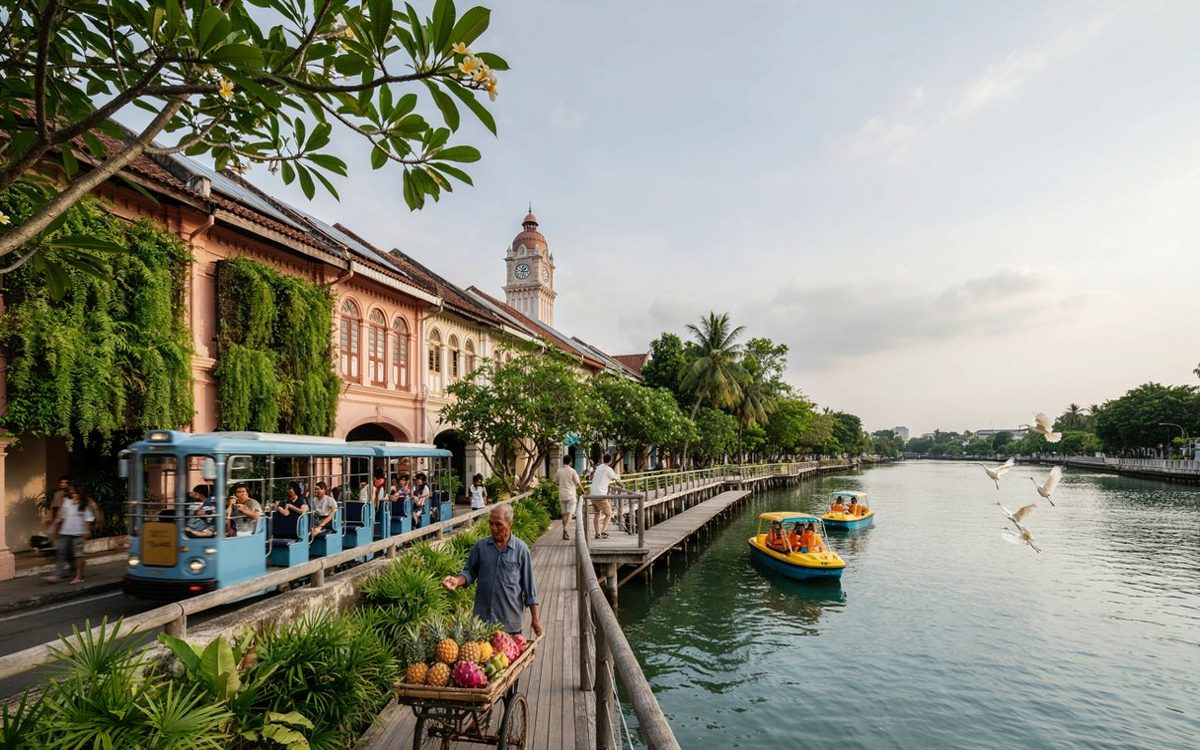
Georgetown keeps pace as Mahaica and more Guyana destinations fuel a wild tourism boom that draws global travellers. Georgetown, Mahaica, and Guyana now attract travellers seeking wild experiences, while Georgetown keeps pace with Mahaica through expanding tourism appeal. Moreover, this wild tourism boom puts Guyana firmly on the global travel map. Global travellers can explore Georgetown’s heritage, Mahaica’s wetlands, and more remarkable Guyana escapes. Travel And Tour World highlights how Georgetown, Mahaica, and more destinations are transforming Guyana’s tourism story. As the boom continues, travellers are discovering why Georgetown and Mahaica deserve attention. Therefore, Travel And Tour World urges readers to explore the entire story for the latest tourism trends.
Guyana’s tourism expansion is increasingly moving beyond Georgetown, with nature, wildlife, adventure, culture and community-led experiences helping diversify the destination. Government data shows that visitor arrivals rose from 158,347 in 2021 to 453,489 in 2025, an increase of about 186.4% in four years. The momentum has continued into 2026, when 271,592 visitors arrived between January and July, up 12% from the comparable period in 2025. July alone produced 45,127 arrivals, an 11.1% increase year-on-year and Guyana’s strongest July on record.
The government is now aiming for more than 500,000 visitors in 2026. December is traditionally Guyana’s strongest month, giving the country another opportunity to approach or exceed that target.
| Year | Visitor arrivals | Annual change | Key tourism development |
|---|---|---|---|
| 2021 | 158,347 | — | International reopening and tourism recovery |
| 2022 | 288,322 | +82.1% | Strong post-pandemic rebound |
| 2023 | 319,056 | +10.7% | Cricket Carnival, CPL and stronger airlift |
| 2024 | 371,272 | +16.4% | New routes, hotels and major events |
| 2025 | 453,489 | +22.1% | Record year and wider international demand |
| Jan–Jul 2026 | 271,592 | +12% YoY | Strongest July on record |
Guyana’s government reported 158,347 arrivals in 2021, followed by 288,322 in 2022, an 82.1% jump. In 2023, arrivals reached 319,056, while 2024 produced 371,272. The country then reached a record 453,489 visitors in 2025, representing a 22% increase over 2024.
Advertisement
Advertisement
The five-year increase is particularly significant because 2021 represented a recovery period following the pandemic. By 2023, Guyana had already surpassed its previous pre-pandemic visitor record.
The visitor mix also explains why Guyana’s tourism market is expanding.
Source market Share reported for 2025 Approximate visitors based on 453,489 United States 40% ~181,396 Caribbean 33% ~149,651 Canada 7% ~31,744 Latin America 7% ~31,744 Europe 6% ~27,209 Other markets 7% ~31,744
The United States and Caribbean remained Guyana’s two largest source markets in 2025. Canada, Latin America and Europe also contributed meaningful shares, indicating that the destination is gradually broadening beyond traditional regional and diaspora travel.
In 2023, 69% of arrivals, or 220,549 visitors, travelled for leisure, while business travel represented 17%, or 53,377 visitors. The same government report recorded 144,307 diaspora arrivals and 174,840 non-diaspora visitors.
Advertisement
Advertisement
Georgetown remains the essential starting point for most international visitors and acts as the gateway to Guyana’s interior. Travellers can use the capital to experience colonial-era architecture, markets, museums, botanical spaces, waterfront areas and the country’s increasingly diverse restaurant scene before continuing towards the rainforest or savannahs. The city is also becoming more important for business and cruise tourism. In 2026, the government commissioned the 172-room Four Points by Sheraton Georgetown at Houston Yards, an investment exceeding US$30 million. The hotel incorporates Guyanese cultural design and offers a restaurant inspired by local cuisine and spices. A much larger 256-room Hilton-branded Georgetown Seafront Resort and Convention Centre is also under development through a GYD63 billion investment, strengthening the capital’s ability to accommodate conferences and business visitors. Travellers should explore local Guyanese dishes such as seven-curry, pepperpot, cook-up rice, metemgee and fresh seafood, while the arrival of restaurants such as the newly opened Spice Route Restaurant and Bar is broadening culinary choices. Government sources describe food as increasingly important to the visitor experience. A practical Georgetown stay is two nights, allowing visitors to recover after international travel and organise domestic excursions. Cruise visitors are already being offered city tours, culinary experiences, botanical visits and onward excursions.
Kaieteur Falls is one of the strongest reasons for nature-focused travellers to add Guyana to their itinerary. The attraction sits within Kaieteur National Park, where visitors encounter one of the country’s most distinctive combinations of rainforest scenery, dramatic waterfalls and biodiversity. Government tourism activity repeatedly places Kaieteur within Guyana’s principal visitor experiences. Cruise passengers arriving in 2026 were offered excursions to Kaieteur Falls and the national park, demonstrating how the attraction is being integrated into international itineraries. The experience is particularly suited to travellers interested in photography, wildlife, landscapes and adventure rather than conventional resort tourism. Visitors should allow a full day or longer depending on the chosen transport arrangement and should use established operators because access to remote areas requires careful logistical planning. Kaieteur works especially well as part of a wider itinerary rather than as an isolated stop. Travellers can combine it with Georgetown, the Rupununi or other interior experiences. The government has also stressed sustainable management of Kaieteur and other natural assets, reflecting Guyana’s intention to grow tourism without turning its most sensitive ecosystems into mass-tourism attractions.
The Rupununi is one of Guyana’s most important regions for travellers seeking wildlife and community-based experiences. Its combination of savannahs, forests, rivers, ranching traditions and Indigenous communities gives visitors a markedly different experience from Georgetown. Government tourism programmes have highlighted destinations and businesses including Karanambu, Caiman House, Surama, Rock View Lodge and Iwokrama. Visitors can build trips around birdwatching, wildlife observation, river excursions, hiking, cultural activities and community tourism. Guyana is also developing a formal Bird Guide Accreditation Programme, launched to strengthen professional birdwatching services and support the country’s expanding avitourism sector. The Rupununi Ranchers’ Rodeo is another major attraction. Government sources describe the annual event as drawing thousands of local and international tourists while showcasing the region’s ranching culture and heritage. Travellers can stay at eco-lodges and community-linked properties rather than returning to Georgetown every night. This makes a three-to-five-night Rupununi stay more practical for wildlife enthusiasts. The 2026 DATA initiative is also encouraging visitors to provide information about trip origin, length of stay and spending, helping Indigenous and local tourism operators improve planning.
Bartica is becoming increasingly important as Guyana develops its inland adventure and boating tourism. Located in Region Seven, the town provides access to river-based experiences and the wider Essequibo interior. Government investment is positioning Bartica as a potential yachting and boating hub, with plans announced for a new tourism marina. The project is intended to create additional recreational opportunities while supporting tourism investment. Travellers can use Bartica as a base for river excursions, island experiences, fishing, nature trips and exploration of the surrounding waterways. Government-led development of the Bartica waterfront is also intended to improve the visitor experience and strengthen connectivity. The wider Essequibo tourism circuit includes attractions such as Kyk-Over-Al, Fort Zeelandia, Sloth Island, Baracara Falls, Marshall Falls and Hurakabra River Resort. Food is another part of the experience, with travellers able to seek out fresh river fish, seafood, local stews and Guyanese dishes in town and at tourism properties. Because reliable pricing varies between operators and seasonal packages, travellers should confirm excursion and accommodation costs directly before departure. A two- or three-night Bartica extension works particularly well after Georgetown. Visitors interested in boating, fishing, waterfalls and slower river journeys can use the destination to experience a side of Guyana that differs significantly from the capital.
Linden offers a distinctive combination of industrial heritage and outdoor adventure. Its famous Blue Lakes were created through historical bauxite mining and have become part of the area’s emerging tourism identity. Government sources identify kayaking, forest trekking, freshwater springs, creeks, hills and lake experiences among the activities available to visitors. The town also has a strong industrial history, with attractions including the Industrial Museum of Linden, historic bauxite equipment and the refurbished water wheel. In 2025, thousands attended the One Guyana Easter Fest at Blue Lake, where kayaking, cooking competitions and family activities were among the attractions. Government plans have also identified Linden as having potential for a high-end eco-tourism product. Travellers should combine a Blue Lake visit with a local history experience and riverfront exploration. Local Guyanese food, especially hearty rice dishes, curry, seafood and snacks, can complement an active day. Linden is also becoming more accessible from the capital as infrastructure improves. The 121-kilometre Linden–Mabura Hill road project reached 86% completion in April 2026, with 100 kilometres paved at that stage and completion targeted for August.
The Mahaica River offers one of the most accessible ways to experience Guyana’s wetlands and birdlife. It is particularly attractive to travellers interested in nature photography and birdwatching without immediately committing to a deep-interior expedition. The Guyana Tourism Authority has highlighted Mahaica River Birding Tour experiences, while government-supported cruise itineraries have incorporated river tours and birdwatching. The destination fits naturally into a Georgetown-based itinerary because visitors can explore the river before returning to the capital. Travellers should schedule an early start for wildlife observation, when temperatures are generally more comfortable and bird activity can be rewarding. The experience can also be paired with Guyanese culinary exploration in Georgetown. Seven-curry, pepperpot, cook-up rice, seafood and other local dishes provide a useful introduction to the country’s multicultural food traditions. Guyana’s government is placing increasing emphasis on culinary tourism, and the tourism minister has stressed that restaurants help visitors connect with local culture. For birdwatchers, Guyana’s new accreditation programme is particularly significant because it aims to improve guiding standards and strengthen community participation in avitourism. A Mahaica excursion therefore works well as a half-day or full-day experience at the beginning or end of a longer Guyana holiday.
| Indicator | Figure |
|---|---|
| 2025 visitor arrivals | 453,489 |
| Jan–Jul 2026 arrivals | 271,592 |
| July 2026 arrivals | 45,127 |
| 2026 visitor target | 500,000+ |
| Official 2026 planning target | 553,257 |
| Accommodation rooms targeted in 2026 | 5,692 |
| 2025 accommodation rooms | 4,658 |
| Tourism businesses targeted | 300 |
| Tourism-sector jobs targeted | 30,000 |
| 2026 hospitality occupancy target | 55% |
| 2026 additional rooms expected | 1,000+ |
| Registered Airbnb establishments reported | 115 |
| Airbnb rooms reported | 544 |
| Four Points Georgetown rooms | 172 |
| Hilton Georgetown Seafront rooms | 256 |
| Hilton project investment | GYD63 billion |
Government budget planning indicates that Guyana expects 5,692 available accommodation rooms in 2026, compared with 4,658 in 2025. The government also targets 300 licensed tourism businesses, 30,000 tourism-sector jobs and a 55% hospitality occupancy rate.
The accommodation expansion is particularly important because the country’s visitor growth is increasingly creating pressure for additional rooms and services.
| Connectivity measure | Reported figure |
|---|---|
| KLM additional weekly seats to Amsterdam | 1,650 |
| Air Transat additional weekly Toronto seats | 796 |
| 2023 airlift capacity | 1.2 million seats |
| 2021 airlift capacity | 226,000 seats |
| 2022 airlift capacity | 1 million+ seats |
Government reporting has linked rising arrivals with improved air connectivity. Airlift capacity increased sharply between 2021 and 2023, reaching approximately 1.2 million seats in 2023. British Airways, American Airlines and United Airlines were among carriers contributing to expanded connectivity.
More recently, government budget information identified additional KLM capacity to Amsterdam and Air Transat capacity to Toronto.
| Tourism indicator | Data |
|---|---|
| 2023 tourism-supported jobs | 18,000+ |
| 2022 estimated tourism earnings | GYD64.1 billion |
| 2021 tourism contribution to GDP | 2.3% |
| 2021 indirect tourism jobs | 15,700 |
| 2024 hospitality-sector earnings | Approximately GYD13.6 billion |
| People trained in hospitality/customer service over five years | 8,000+ |
Tourism is increasingly being positioned as part of Guyana’s economic diversification strategy. Government sources have stressed that rising visitor numbers can benefit farmers, transport operators, restaurants, guides, artisans and entertainers rather than accommodation businesses alone.
| Day | Base | Suggested experience |
|---|---|---|
| 1 | Georgetown | Arrival, city exploration and local dinner |
| 2 | Georgetown | Heritage, markets, botanical attractions and cuisine |
| 3 | Mahaica | River excursion and birdwatching |
| 4 | Kaieteur area | Kaieteur Falls and national park |
| 5 | Georgetown | Rest, food and cultural experiences |
| 6 | Bartica | River journey and waterfront experiences |
| 7 | Bartica | Islands, waterfalls or boating |
| 8 | Linden | Blue Lakes and industrial heritage |
| 9 | Rupununi | Wildlife, savannah and community experience |
| 10 | Rupununi/Georgetown | Cultural experience and onward departure |
For first-time international visitors, a 10-day itinerary offers a more balanced experience than attempting to cover every region quickly. Travellers should reserve additional days if wildlife, birding or remote eco-lodges are the main reason for visiting.
Guyana needs approximately 46,511 additional visitors to move from its 2025 record of 453,489 to 500,000. However, the 2026 target concerns the full year, while 271,592 arrivals had already been recorded by July.
The strongest opportunities are likely to come from expanding air connectivity, promoting nature tourism, increasing accommodation capacity and extending visitor stays beyond Georgetown.
The country’s tourism strategy is also becoming increasingly community-focused. In August 2026, the government, Guyana Tourism Authority, Visit Rupununi and Conservation International-Guyana launched a new tourism data initiative covering Indigenous Peoples and local communities. The project will collect information on visitor origins, length of stay and spending patterns through digital tools.
That data could eventually help Guyana understand which destinations generate longer stays and greater visitor spending.
For global travellers, the biggest opportunity is clear. Guyana is no longer simply a gateway to one spectacular waterfall. It is developing a connected tourism portfolio built around Georgetown, Kaieteur, Rupununi, Bartica, Linden and Mahaica, with wildlife, Indigenous culture, food, adventure and sustainability increasingly linked into one travel proposition.
Guyana’s tourism boom is rapidly changing how global travellers view the destination. Georgetown, Mahaica, Kaieteur Falls, Rupununi, Bartica and Linden are creating a wider travel network built around nature, wildlife, culture, adventure and authentic local experiences. With visitor arrivals already reaching 271,592 through July 2026, Guyana is moving closer to its ambitious 500,000-visitor goal. Better air connectivity, expanding accommodation and stronger community tourism could further accelerate this growth. For travellers seeking an alternative Caribbean experience, Guyana offers something increasingly rare: vast natural landscapes combined with Indigenous culture and immersive adventures. As Travel And Tour World highlights, the country’s tourism story is only beginning, making now an exciting time to discover its lesser-known destinations.
Advertisement
Tags: Georgetown tourism, global travellers, Guyana destinations, Guyana tourism boom, Guyana travel
Advertisement
Advertisement














Saturday, September 12, 2026

Saturday, September 12, 2026
Saturday, September 12, 2026

Saturday, September 12, 2026

Friday, September 11, 2026

Friday, September 11, 2026

Friday, September 11, 2026

Friday, September 11, 2026