
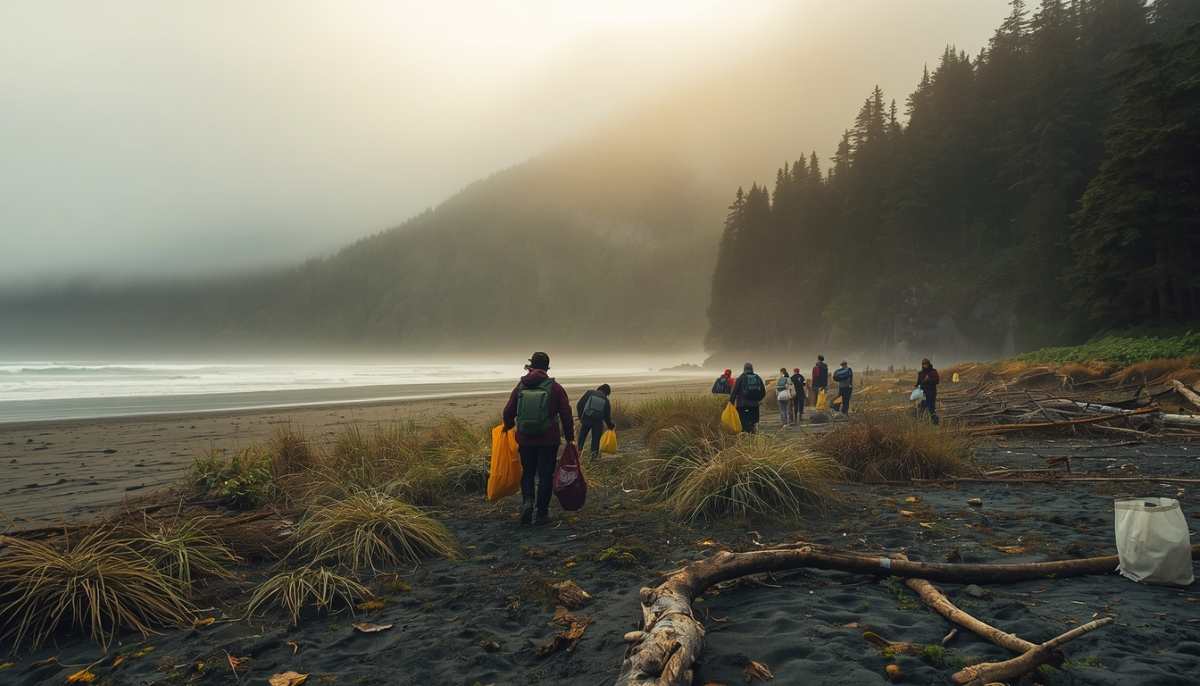
Image generated with Ai
The current paradigm of leisure is in need of a profound transformation. The traditional model of travel, which previously focused on extraction, mass consumption and passive sightseeing, is rapidly shifting towards a more mindful and intentional model of travel. For modern travellers who want to make a real, lasting difference, knowing how to leave a place better than you found it is no longer optional; it’s an urgent priority. This deep dive explores Tofino, British Columbia, a beautiful coastal paradise where regenerative travel is totally changing the dynamic between the visitor and the environment. Travellers are encouraged to go beyond sustainability. They should participate in meaningful actions that contribute to restoring damaged ecosystems, respecting indigenous sovereignty, and empowering local communities from the ground up.
A common and vital question among contemporary travelers is, ‘What is the fundamental difference between sustainable tourism and regenerative tourism?’ While sustainable tourism focuses primarily on minimizing negative footprints—ensuring that natural resources are not depleted any further than their current state—regenerative tourism takes a much more proactive stance. It aims to actively restore, renew, and revitalize social, cultural, and ecological systems.
Advertisement
In a destination like Tofino, where over 600,000 annual visitors converge upon a remarkably delicate coastal ecosystem shared with a small permanent resident population, mere sustainability is entirely insufficient. Regenerative practices demand that every visitor contributes positively to the landscape rather than just breaking even. This involves supporting local circular economies, participating directly in hands-on habitat restoration, and respecting the cultural carrying capacity of the region. Through these concerted efforts, the destination builds long-term resilience against the compounding pressures of climate change and over-tourism.
Another frequent inquiry centres on how local indigenous communities guide modern travel stewardship and ecosystem management. The ancient temperate rainforests and rugged shorelines of Tofino are situated squarely within the traditional, unceded territories of the Nuu-chah-nulth First Nations, specifically the Tla-o-qui-aht First Nation. For thousands of generations, these communities have practised profound stewardship based on ancestral knowledge, maintaining a delicate ecological balance long before modern conservation terms were ever coined.
Advertisement
centering indigenous leadership is crucial for the success of regenerative tourism. Governance frameworks in the region integrate traditional laws and social customs that protect marine and forest biodiversity. By aligning tourism development with indigenous-led initiatives, visitors gain deep educational insights into resource management and historical context. Travelers engaging with these programmes help reinforce tribal sovereignty while ensuring that economic benefits from tourism directly support vital community infrastructure, indigenous language revitalization, and cultural preservation initiatives.
Widespread interest persists regarding how individual travelers can actively participate in regenerative tourism frameworks during a vacation. Achieving this requires a deliberate shift in mindset, transitioning from passive consumption to active contribution.
Verifiable institutional frameworks and data-driven policies support the transition towards a fully regenerative model. Official reports from Tourism Tofino and municipal planning documents outline that the destination solidifies its environmental commitments through comprehensive strategies such as the Tofino Destination Stewardship Plan. Also, the Biosphere Certified programme, which is aligned with the United Nations Sustainable Development Goals (SDGs), officially recognises the fact that local operators are under constant supervision to ensure ecological and social improvement.
Tofino’s daily operations are governed by strict criteria that protect its wealth of natural resources, including centuries-old western red cedars, pristine surfing beaches and a variety of marine environments. To engage with this ecosystem is not merely a scenic escape; it is an authentic connection to a community that thrives in mutual care, respect, and active restoration for the discerning traveller.
Advertisement
Advertisement
Advertisement













Saturday, September 5, 2026

Friday, September 4, 2026
Saturday, September 5, 2026

Saturday, September 5, 2026

Thursday, September 3, 2026

Wednesday, September 2, 2026

Saturday, September 5, 2026

Saturday, September 5, 2026


