
Northern Ireland Puts Young Drivers Under New Rules as Licensing Changes Reshape Self-Drive Travel From October 1st 2026

Published
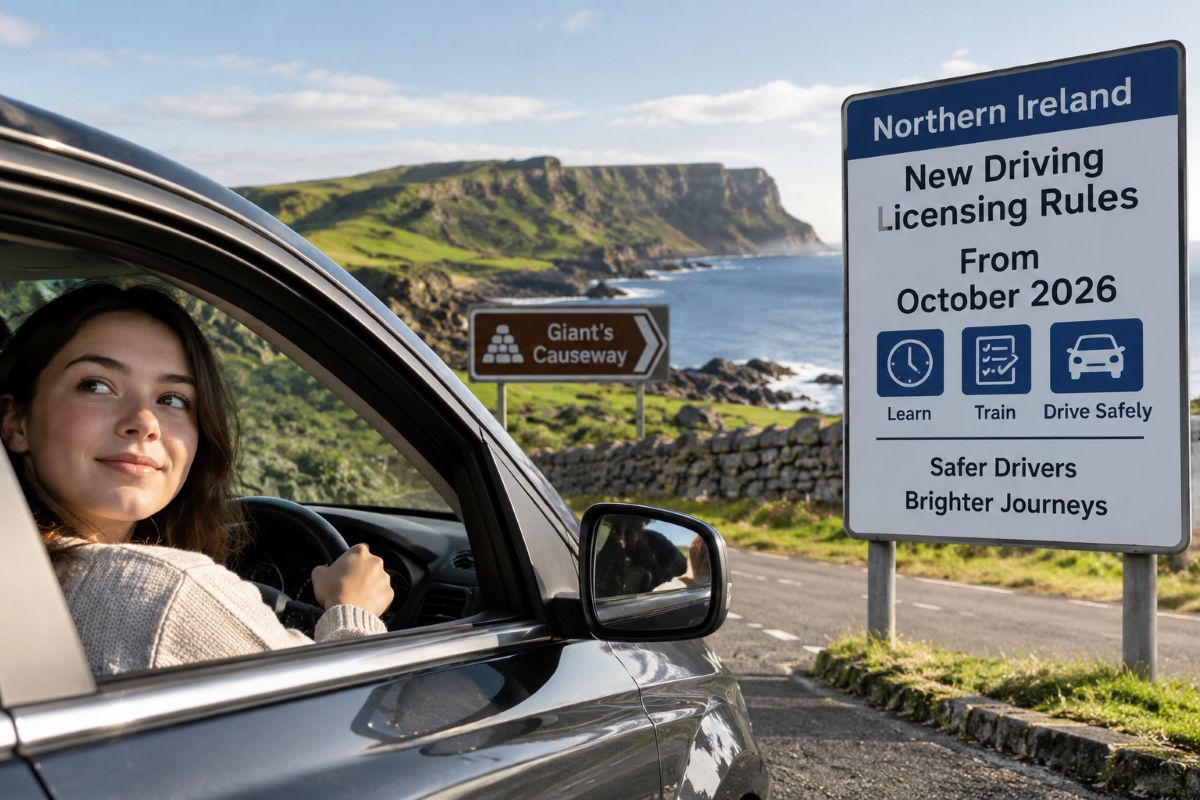
Image generated with Ai
Northern Ireland Puts Young Drivers Under New Rules as 2026 Licensing Changes Reshape Self-Drive Travel as Graduated Driver Licensing begins on 1 October 2026, introducing a phased system for learners and newly qualified motorists. The reason Northern Ireland puts young drivers under new rules is road safety, with official 2024 data showing drivers aged 17–23 accounted for 24% of fatal or serious-injury collisions where responsibility was established, despite representing 8% of licence holders. The 2026 licensing changes introduce a minimum six-month learning period, structured training and a two-year new-driver period. These measures could also reshape self-drive travel for young motorists exploring Northern Ireland’s rural attractions, coastal routes and historic destinations.
Why is Northern Ireland changing young-driver licensing rules in 2026?
Northern Ireland’s Young Drivers Face Major New Licensing Shift From October 2026 as Road Trips Change because the new Graduated Driver Licensing system aims to give inexperienced motorists more structured training and reduce collision risks. From 1 October 2026, Northern Ireland will introduce a phased licensing framework covering Category B cars and Category A motorcycles.
The reform is significant for local motorists and travellers. Northern Ireland is the first UK jurisdiction to introduce this specific comprehensive graduated licensing framework. The system affects how new drivers learn, when they can take their practical test and what happens after qualification.
The road-safety statistics explain the focus. In 2024, drivers aged 17–23 represented 8% of driving licence holders but were responsible for 24% of fatal or serious-injury collisions where responsibility was established. The same year, 251 people were killed or seriously injured in collisions involving a car driver aged 17–23.
Advertisement
Advertisement
What will change for learners from October 2026?
The biggest change for learners is a mandatory minimum six-month learning period before taking the practical driving test.
Learners will also have to complete a structured Programme of Training and Logbook. This introduces a more formal progression between obtaining a provisional licence and taking the practical test.
Advertisement
Advertisement
| Requirement | New arrangement |
|---|---|
| Minimum learning period | Six months |
| Training | Structured programme |
| Logbook | Required record of training |
| Practical test | Subject to new requirements |
| Motorcycles | GDL applies to relevant categories |
The reform also changes motorway learning. Under the new system, learners accompanied by an Approved Driving Instructor will be permitted to drive on motorways.
For young people preparing for independent travel, the change means learning to drive will involve more structured preparation before full licensing.
Advertisement
Advertisement
What happens after a young driver passes the test?
The new framework introduces a two-year new-driver period, replacing the existing 12-month R-plate period.
The first six months will use a blue R on a white background. The following 18 months will use a white R on a blue background.
The first six months also introduce restrictions affecting some younger drivers carrying passengers.
| New-driver provision | Requirement |
|---|---|
| New-driver period | Two years |
| First stage | Six months |
| Second stage | 18 months |
| Passenger restriction | Applies to specified young passengers |
| Restricted period | 11pm–6am |
| Exemptions | Immediate family and specified accompanying adults |
Drivers up to 24 will face restrictions on carrying passengers aged 14–20 between 11pm and 6am, subject to specified exemptions.
Advertisement
Advertisement
This could matter during late-night road trips, especially for young travellers moving between Northern Ireland’s towns, cities and rural destinations.
Why does this matter for Northern Ireland road trips?
Northern Ireland’s tourism geography makes driving particularly important.
Visitors often travel beyond Belfast to reach coastal, rural and mountain attractions.
| Destination | Road-trip appeal |
|---|---|
| Giant’s Causeway | Dramatic Causeway Coast scenery |
| Bushmills | Coastal tourism and distillery experiences |
| Mourne Mountains | Hiking and outdoor travel |
| Fermanagh | Lakes and countryside |
| Derry | Historic and cultural tourism |
| Sperrins | Rural landscapes and outdoor activities |
The road-safety issue is particularly relevant because 71% of people killed or seriously injured in 2024 in collisions involving a driver aged 17–23 were on rural roads.
That statistic matters for tourism. Many of Northern Ireland’s most attractive destinations require travel beyond urban areas.
What happens to learners already in the system?
A transition arrangement will apply.
Advertisement
Advertisement
People whose provisional licence entitlement began before 1 October 2026 can continue under existing arrangements and take the current practical test until 31 March 2027.
From 1 April 2027, learners will need to have completed the new Programme of Training and Logbook before booking the practical test.
| Date | Rule |
|---|---|
| Before 1 October 2026 | Existing learner arrangements |
| 1 October 2026 | GDL begins |
| Until 31 March 2027 | Transitional practical-test arrangements |
| From 1 April 2027 | GDL training and logbook required |
This transition is important for anyone planning to learn to drive during the changeover.
Could the rules affect young tourists hiring cars?
The new system does not mean every young overseas visitor automatically faces identical Northern Ireland licensing requirements.
International visitors should check their driving entitlement, rental-company age limits and insurance conditions before booking a vehicle.
For young travellers, practical considerations include:
Advertisement
Advertisement
- minimum rental age;
- accepted driving licence;
- insurance requirements;
- permitted vehicle categories;
- night-time travel plans.
The distinction between domestic GDL rules and overseas driving entitlement is important. Travellers should not assume that holding a foreign licence creates exactly the same obligations as holding a Northern Ireland licence.
Could the new system affect insurance and travel costs?
The government does not directly determine private motor insurance premiums.
However, the Department for Infrastructure says evidence suggests that reducing collision risk through graduated licensing could potentially contribute to lower insurance costs for young drivers over time.
The actual premium remains a matter for individual insurers.
For tourism, the wider significance is road safety. A safer environment can support confidence in self-drive travel, particularly on rural routes used by visitors exploring Northern Ireland.
The government also cites Transport Research Laboratory evidence indicating that graduated licensing schemes can reduce collisions involving young drivers by 5% to 40%, depending on the strength of the measures introduced.
Advertisement
Advertisement
Why is Northern Ireland becoming the first UK jurisdiction with this framework?
Driver licensing is devolved in Northern Ireland.
The new system therefore represents a significant policy change within Northern Ireland rather than a UK-wide licensing reform.
Great Britain is not introducing the same combination of passenger and night-time restrictions for newly qualified drivers.
For travellers, this creates an important geographic distinction. Someone driving in Northern Ireland cannot simply assume that rules applying elsewhere in the UK are identical.
This is particularly relevant to road trips that cross between Northern Ireland and the Republic of Ireland, or journeys involving visitors who have experience driving elsewhere in the UK.
What does the new licensing system mean for future Northern Ireland travel?
The new rules are primarily a road-safety reform, but they have a clear travel dimension.
Advertisement
Advertisement
Northern Ireland’s tourism appeal extends far beyond Belfast. Visitors drive to coastlines, mountains, historic towns, forests and rural attractions. The new system aims to ensure young drivers gain more experience before taking on higher-risk driving situations independently.
For travellers, the practical message is straightforward: check the rules that apply to your licence before planning a Northern Ireland self-drive journey from October 2026.
The reform changes learning requirements, introduces a longer new-driver period and creates specific restrictions for some young passengers. For tourism, understanding those rules will help young motorists plan safer and more predictable journeys across Northern Ireland.
Comment from Anup Keshan, Founder and Editor-in-Chief of Travel And Tour World
“Northern Ireland’s new graduated licensing system has an important travel dimension because driving is central to experiencing the region beyond its major cities. Visitors often use roads to reach coastal landscapes, historic communities and rural attractions. Young drivers will need to understand the new requirements before planning independent road trips. The reform also highlights the importance of responsible travel, particularly on rural roads where many serious collisions occur. Clear information can help young motorists plan their journeys more confidently while respecting local licensing requirements. For Northern Ireland tourism, safer and better-prepared drivers can contribute to a more responsible self-drive experience.”
— Anup Keshan, Founder and Editor-in-Chief, Travel And Tour World
Conclusion
Northern Ireland Puts Young Drivers Under New Rules as 2026 Licensing Changes Reshape Self-Drive Travel because the new system increases structured learning and introduces additional restrictions for newly qualified drivers. The reason Northern Ireland puts young drivers under new rules is the government’s focus on reducing serious collisions involving inexperienced motorists. From October 2026, the licensing changes will require a minimum six-month learning period and introduce a two-year new-driver phase, while specific passenger restrictions will apply to some drivers aged up to 24. These measures will also reshape self-drive travel for young motorists planning journeys across Northern Ireland. Visitors should check their driving entitlement, rental conditions and applicable rules before setting out.
Advertisement
