
Europe’s Regional Hotel Boom Challenges Global Chains as Italy and More Countries Transform in Secondary Capitals

Updated
Published
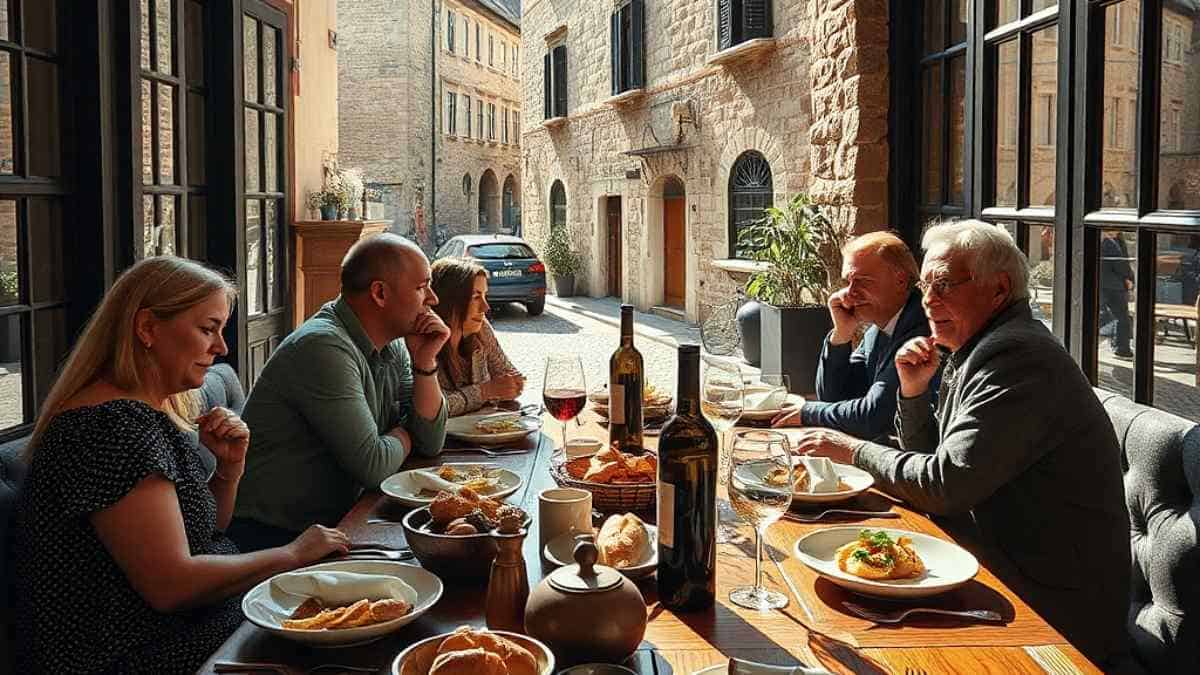
There is an unprecedented change being witnessed in Europe’s secondary cultural destinations, where tourists are moving away from standardized commercial accommodations in favor of authentic immersion into the place they are visiting. From Bologna to Porto, regional tourism promoters are beating the giant global players through offering experiences based on heritage architecture, local cuisine and family craft skills. In situations where primary tourism gateways are saturated and subject to negative tourism sentiments, secondary destinations are the new frontier for growth. Through their knowledge of the culture and community-focused business model, the local independent hoteliers have created a competitive commercial moat that cannot be matched through corporate franchises.
The Great Dispersion: Why Travellers Are Abandoning Primary Gateway Hubs
The spatial distribution of European tourism is undergoing a systemic structural realignment. For decades, international hotel investment flowed almost exclusively toward primary gateway metropolises, concentrating capital into London, Paris, Rome, Barcelona, and Istanbul. However, this hyper-concentration produced severe negative externalities, including acute urban congestion, soaring living costs for residents, municipal restrictions on short-term rentals, and visible anti-tourism civic unrest. In response, consumer preferences have pivoted dramatically toward secondary cultural capitals and regional urban centres that preserve a living, uncommodified municipal fabric.
Advertisement
Advertisement
Harmonised data from Eurostat demonstrates the vast scale of this regional migration. Across the European Union, residents recorded 1.2 billion tourism trips in 2024, with seven out of ten journeys conducted within domestic borders rather than outbound corridors. Concurrently, short-stay platform bookings in non-gateway European regions surged, generating 144.3 million guest nights across the EU in the opening quarter of 2026 alone—a 9.7% expansion compared to the prior year. This macro-level dispersal reflects an intentional rejection of overdeveloped tourist corridors in favour of cities that provide authentic architectural and communal textures.
Decompressing Metropolises: The European Policy Drive Toward Regional Dispersal
National governments and multilateral institutions have accelerated this geographic rebalancing through decisive policy frameworks. The Organisation for Economic Co-operation and Development (OECD), in its Tourism Trends and Policies reporting, identifies destination over-concentration as an existential threat to long-term industry sustainability. The OECD highlights that member states have systematically redesigned their national tourism master plans to prioritise visitor dispersal, steering capital and tourist flows away from strained primary hubs and into emerging regional economic corridors.
Advertisement
Advertisement
This macro-policy shift is evident in the strategic initiatives deployed by Italy’s Ministry of Tourism and Turismo de Portugal. In Italy, public investment and regional development funds have prioritised the historical corridors of Emilia-Romagna, Umbria, and Piedmont, drawing high-spending cultural visitors into medium-sized heritage centres such as Bologna, Parma, and Modena. In Portugal, national strategic frameworks have channelled promotional resources into the Norte and Centro administrative regions, transforming Porto, Coimbra, and Guimarães into prominent cultural travel hubs that balance the historic leisure dominance of Lisbon and the Algarve.
Saturated Capitals and the Erosion of Standardised Hotel Brand Equity
Within secondary cultural destinations, multinational hotel conglomerates face unprecedented commercial friction. The legacy value proposition of global chain hospitality—predictable uniformity, rigid room layouts, and standardised service protocols—was engineered to reassure 20th-century business travellers navigating unfamiliar overseas environments. In modern secondary capitals, however, that same uniformity functions as a commercial deterrent.
Advertisement
Advertisement
Discerning leisure travellers and cultural visitors do not select destinations such as Bologna, Porto, Kutaisi, or Trabzon to experience homogenised American or transnational hotel environments. The primary motivation for visiting secondary cultural hubs is the deliberate consumption of local distinctiveness, including vernacular masonry, regional gastronomy, and neighbourhood traditions. When multinational flags erect standardised, select-service properties in historic centres, they sever guests from the cultural identity of the surrounding destination. Consequently, corporate loyalty programmes and cookie-cutter room modules struggle to capture affluent leisure travellers, leaving market share to agile regional hospitality champions capable of delivering authentic cultural fluency.
The Asset-Right Operational Blueprint: Freehold Preservation vs. Franchise Drag
The competitive divergence between international mega-chains and domestic boutique groups is underpinned by diametrically opposed capital allocation structures. Multinational hotel brands operate primarily on an “asset-light” methodology. To maximise share-price valuations and achieve rapid geographic scale without balance-sheet liabilities, global hotel corporations rarely acquire physical real estate. Instead, they license intellectual property and booking engines to third-party developers via franchise contracts or technical management agreements.
Advertisement
Advertisement
| Operating & Capital Dimension | Asset-Light Multinational Hotel Chains | Asset-Right Regional Hospitality Champions |
| Real Estate Ownership Structure | Third-party institutional leases, management agreements, pure franchise | Direct freehold equity, municipal concessions, long-term master leases |
| Corporate Brand Fee Burden | 8% to 14% of gross property revenue diverted to global brand fees | 0% external corporate brand drag; 100% of operating cash flow retained |
| Capital Allocation Priority | Standardised corporate FF&E modules, modular builds, uniform signage | Vernacular structural restoration, seismic retrofitting, local artisanal finishes |
| Supply Chain Freedom | Mandated corporate supply catalogues and offshore purchasing networks | Hyper-local sourcing perimeter (minimum 70% within a 100-km radius) |
| Regulatory & Planning Agility | Rigid corporate brand design templates conflict with local zoning | Deep local mastery of municipal heritage preservation and zoning statutes |
| Economic Value Retention | Substantial capital leakage to offshore corporate headquarters | Reinvestment of operating profits directly into the local civic ecosystem |
While the asset-light framework minimises capital intensity for public hotel conglomerates, it imposes severe operational drag upon individual hotel properties. Franchisees must surrender between 8% and 14% of gross property revenues to multinational headquarters in the form of base management fees, marketing assessments, technology royalties, and loyalty programme administration fees. In secondary markets with lower baseline business volumes than capital cities, this continuous cash outflow strips properties of the capital reserves required to maintain high-touch physical environments and premium staffing models.
Unburdening Hotel Balance Sheets from Corporate Licensing Overhead
In contrast, regional hospitality champions employ an “asset-right” capital strategy. Rather than allocating significant operating revenue to distant corporate licensors, domestic hoteliers operate through direct property ownership, joint ventures with local civic entities, or long-term heritage concessions. By eliminating corporate brand leakage, independent European operators retain their full operating margins.
These retained earnings are systematically reinvested into tangible property enhancements. Capital is channelled into preserving historical features, bespoke joinery, acoustic engineering appropriate for historic masonry, and contextual interior design. Because their capital structure is decoupled from quarterly corporate expansion mandates, native hoteliers can evaluate return on capital expenditure through long-term asset appreciation and lasting RevPAR premiums rather than short-term contractual milestones.
Navigating Heritage Zoning: Vernacular Agility vs. Brand Standardization
A major operational bottleneck confronting multinational hotel chains in Europe’s secondary capitals is their inability to navigate complex local heritage and urban planning regulations. Historical city centres across Western and Southern Europe are protected by stringent preservation statutes enforced by municipal planning departments and national cultural ministries.
Advertisement
Advertisement
Global brand design manuals typically mandate inflexible structural parameters, including fixed room dimensions, standardized structural column grids, uniform corridor widths, and centralized mechanical ventilation chases. Attempting to force these corporate templates into 14th-century Italian palazzi or 18th-century Portuguese mercantile houses results in drawn-out municipal planning disputes, prohibitive architectural modification costs, and substantial project delays.
Regional hospitality champions treat architectural idiosyncrasies as their primary competitive asset. Possessing deep familiarity with municipal conservation regulations and working collaboratively with local heritage superintendents, native hoteliers adapt their operations to the existing built fabric. Historical timber beams, internal stone courtyards, uneven medieval floor plans, and original fresco fragments are preserved and integrated into the guest experience. This vernacular architectural agility allows regional hoteliers to deliver structurally unrepeatable properties at a significantly lower conversion cost per key than global competitors attempting structural overhauls to satisfy generic brand standards.
Sourcing Density: The 100-Kilometre Terroir Moat
The operational division between multinational operators and independent champions is acutely apparent in supply-chain architecture. Multinational hotel chains rely on consolidated, cross-border procurement networks to standardise purchasing across hundreds of properties. This model relies on central distribution centres supplying standardised bed linens, single-use packaged amenities, and uniform, industrialised food and beverage items.
Domestic European champions reject this centralised procurement model, implementing ultra-dense, hyper-local purchasing ecosystems where the vast majority of goods and services originate within a 100-kilometre perimeter. In cultural capitals where gastronomy, craft traditions, and material heritage are the central focus of leisure travel, this supply-chain density creates a commercial advantage that standardized international brands cannot replicate without violating their own corporate standards.
Gastronomic Custodianship in Emilia-Romagna and Northern Portugal
In Emilia-Romagna, often designated as Europe’s culinary capital, the food and beverage program represents the core identity of the hospitality experience. Under Italian agricultural legislation and European Union frameworks protecting Denominazione di Origine Protetta (DOP) and Indicazione Geografica Protetta (IGP) commodities, native hoteliers in Bologna and Parma collaborate directly with artisanal dairies, salumifici, and private vineyards. Rather than offering an outsourced, mass-market continental buffet, regional hoteliers transform morning dining into an educational masterclass featuring 30-month Parmigiano Reggiano, Prosciutto di Parma, Mortadella di Bologna, and Modena balsamic vinegars aged in traditional wooden casks.
| Operational Pillar | Southern Europe (Italy/Portugal) | Eurasia (Georgia/Turkey) |
|---|---|---|
| Heritage Legal Framework | Albergo Diffuso / Programa REVIVE | Law 2634 / Özel Tesis |
| Food & Beverage Sourcing | Certified DOP/IGP micro-terroirs | Supra feasts & tea guilds |
| Primary Architectural Typology | Medieval borghi & granite palaces | Caravanserais & konaks |
| Core Wellness Paradigm | Hydro-thermal vinotherapy | Historic Turkish hammams |
| Regional RevPAR Growth Driver | North American & Intra-EU leisure | Silk Road crossroads flow |
The economic power of this gastronomic focus is confirmed by official regional performance data. In Emilia-Romagna, where total visitor overnight stays climbed to 44.1 million in 2025 (+3.9%) and total arrivals expanded to 13.2 million (+7.8%), accommodation establishments registered the highest average visitor transaction spend of any tourism sub-sector at €142.82 per transaction—substantially exceeding retail clothing (€70.63) and independent restaurants (€27.52). By internalising high-end culinary experiences within the property, domestic hoteliers capture high-margin food and beverage revenues that would otherwise leak to independent city restaurants.
Advertisement
Advertisement
A parallel dynamic exists in Northern Portugal. In Porto, Braga, and the adjacent Douro Valley, domestic boutique operators curate wine programs based on allocations from family-run quintas producing limited-batch Douro reds and artisanal Vinho Verde, providing cellar masterclasses that corporate hotel chains cannot procure via bulk purchasing agreements. By replacing generic international liquors with estate brandies, local craft ciders, and regional port wines, native operators turn their lounges and terraces into neighbourhood cultural destinations.
Artisanal Supply Ecosystems and Bespoke Interior Provenance
Beyond food and beverage, regional hospitality champions integrate regional manufacturing and artisanal crafts into their physical asset design. In Northern Portugal, domestic operators furnish rooms with hand-glazed ceramic tiles (azulejos) fired in regional kilns, natural cork wall panelling harvested from sustainable Alentejo oak forests, and custom-woven cotton textiles from the historic textile mills of the Ave Valley.
In Italy, independent hoteliers source hand-worked terracotta tiles, regional Pietra Serena sandstone, and bespoke wrought iron fixtures crafted by local artisans. This short-radius procurement strategy serves two functions: it insulates the hotel from international supply chain disruptions and ensures that every material touchpoint reinforces an authentic aesthetic identity. Guests perceive a high level of design authenticity, justifying elevated room rates and strengthening the property’s reputation against mass-market chain competitors.
Cross-Border Architectural Typologies: Southern Europe vs. Eurasian Crossroads
The physical execution of place-based hospitality varies considerably across geographic zones, demonstrating the adaptability of domestic operators. In Southern Europe, the operational model centres on the structural rehabilitation of abandoned medieval stone architecture and public heritage monuments. Across the Eurasian interface, domestic hoteliers leverage transcontinental trade corridors, focusing on thermal hydro-wellness, Silk Road caravanserais, and communal feasting customs.
| Geographic Destination | Enabling Legal Framework | Dominant Architectural Typology | Place-Based Cultural Immersion Ritual | Primary Sourcing Radius Focus |
| Bologna & Parma (Emilia-Romagna, Italy) | Legge Regionale 16/2004; DGR 1017/2009 structural standards | Restored Renaissance palazzi and scattered medieval borgo complexes | Hands-on pasta laboratory; Parmigiano & balsamico tastings | Direct DOP charcuterie, aged cheeses, Lambrusco wines (within 50 km) |
| Porto & Coimbra (Norte/Centro, Portugal) | National Programa REVIVE; Decreto-Lei 280/2007 concessions | Converted granite monasteries, historic customs houses, palacetes | Private port wine cellar tastings; intimate acoustic Fado evenings | Douro estate wines, artisanal ceramics, Ave Valley loomed linens |
| Kutaisi & Batumi (Imereti/Adjara, Georgia) | GNTA Ecotourism Strategy; Law on Agritourism | Restored 19th-century brick mansions, Caucasus stone trading houses | Traditional supra feasting ceremonies; qvevri wine education | Endemic Imeretian cheeses, mountain walnuts, ancient grape varietals |
| Trabzon & Izmir (Black Sea/Aegean, Turkey) | Law No. 2634 on Tourism Incentive; Özel Tesis licensing | Ottoman timber konaks, historic stone caravanserais, thermal bathhouses | Ceremonial Turkish hammam rituals; regional Black Sea tea ceremonies | Aegean cold-press olive oils, Black Sea hazelnuts, local stonework |
The Italian Albergo Diffuso and Portuguese REVIVE Concession Models
Italy formulated one of Europe’s most innovative hospitality planning models: the Albergo Diffuso (scattered hotel). Originally developed to revitalise historic rural hamlets damaged by seismic events in Friuli and depopulated communities in Sardinia, the model is now formally regulated across Italian regional legislations, including Emilia-Romagna’s Legge Regionale 28 July 2004, n. 16, and comprehensive regional classification decrees.
Statutory requirements mandate that an Albergo Diffuso must operate under unified, professional management while distributing its guest accommodations across separate, pre-existing historical structures situated within a maximum distance of 200 metres from a central reception core. Green-field construction is prohibited by law; every room key must represent the adaptive reuse of existing historic buildings.
Advertisement
Advertisement
The resulting guest journey breaks down traditional hotel isolation. Visitors leave their restored suites and traverse ancient cobblestone alleys to reach the breakfast salon, encountering local residents in the central piazza. This decentralized structure integrates tourism activity with everyday civic life, transforming entire historic districts into immersive, high-yield hospitality platforms that global chain brands cannot emulate.
In Portugal, the state formalised historical property rehabilitation through the national Programa REVIVE, a joint initiative run by Turismo de Portugal, the Directorate-General of Cultural Heritage (Património Cultural, I.P.), and the Treasury. The programme identifies underutilised or deteriorating state-owned monuments—monasteries, medieval fortresses, neoclassical palaces, and historic military outposts—and offers them for long-term private concession through competitive public tender, requiring successful operators to restore the properties as boutique hotels.
Official government documentation confirms that the Programa REVIVE has tendered 32 historic state assets, executing 24 active concession contracts representing approximately €190 million in private heritage restoration capital. Domestic Portuguese hotel groups and regional preservation champions have won the majority of these concessions. Operators have successfully restored properties such as the Palacete do Conde Dias Garcia into high-end hotels, converting historical public architecture into high-performing commercial assets while preserving the country’s national heritage.
Caucasian Supra Rituals and Ottoman Caravanserai Restorations
In Eurasia, secondary destinations throughout Georgia and Turkey deploy a contrasting operational philosophy rooted in ancient cross-border trade, thermal hydrotherapy, and communal dining traditions. In Georgia, international visitor travel has undergone rapid post-pandemic expansion. According to official data from the Georgian National Tourism Administration (GNTA) and the National Statistics Office of Georgia (Geostat), international non-resident visitor trips reached 7.4 million in 2024, generating 14.3 billion GEL in international travel receipts (+10.3% year-on-year).
While the capital of Tbilisi captured 54.6% of visits and maritime Batumi secured 40.1%, secondary heritage destinations such as Kutaisi in the Imereti region accounted for 8.8% of international arrivals, with the broader Imereti region attracting 9.0% of all visits. Georgia’s domestic hoteliers differentiate themselves through the operational integration of the supra—a communal ritual feast led by a toastmaster (tamada), accompanied by traditional polyphonic singing, and paired with organic wines produced in earthenware vessels (qvevri), a viticultural tradition recognized by UNESCO.
By anchoring guest dining within these communal feast traditions, independent boutique operators in Kutaisi and Batumi capture substantial spend in food and beverage, which constitutes 22.4% of all international visitor expenditure in Georgia, second only to lodging at 33.7%. This cultural integration underpins an extraordinary nationwide visitor satisfaction score of 4.5 out of 5.
Advertisement
Advertisement
In Turkey, domestic hoteliers across secondary trade junctions such as Trabzon on the Black Sea, Bursa, and Izmir on the Aegean utilize the “Special Facility” (Özel Tesis) regulatory status governed under the Tourism Incentive Law No. 2634 (Turizmi Teşvik Kanunu). This legal classification allows operators who restore centuries-old Ottoman timber mansions (konaks), Byzantine masonry structures, and Silk Road caravanserais to bypass standard star-rating architectural requirements. Independent hoteliers restore historic vaulted thermal bathhouses (hammams) to offer holistic mineral hydrotherapy and tea ceremonies, serving high-yield European and Middle Eastern travellers who avoid the generic corporate lodging found in primary airport corridors.
Performance Benchmarks: Yield Premiums and Sentiment Dynamics
Financial performance data across European secondary markets challenges the assumption that multinational hotel brand flags are essential for maximising room revenue. Independent boutique hotels and regional champion groups consistently secure Revenue Per Available Room (RevPAR) and Average Daily Rate (ADR) premiums over standardized global mid-scale and upscale franchises in non-gateway cities.
Data published by the Instituto Nacional de Estatística (INE) demonstrates the revenue-generating strength of regional Portuguese destinations. Across Portugal, tourist accommodation establishments generated €6.7 billion in total revenue and €5.1 billion in room revenue in 2024, rising to €7.15 billion (+7.2%) and €5.48 billion (+6.8%) respectively in 2025.
While traditional sun-and-beach resort regions experienced decelerating rates of expansion, the Norte region, led by Porto, captured 18.0% of total national overnight stays and became the primary destination for resident Portuguese travellers, accounting for 21.7% of all domestic overnights. In peak operating months, Portugal’s nationwide RevPAR climbed to €116.80 (+2.6%), while overall ADR reached €159.20 (+4.3%). International overnight stays in the Norte region expanded by 5.1% in late 2025, driven by double-digit demand growth from North American and Northern European travellers seeking authentic regional experiences.
| Market / Region | Consolidated Key Metrics | Demand Origin Distribution | Primary Economic Driver | Authoritative Data Source |
| Emilia-Romagna, Italy (Bologna, Parma) | 44.1M overnights (+3.9%); 13.2M arrivals (+7.8%); Hotel spend ticket €142.82 | Foreign overnights +4.1%; strong domestic cultural flows | UNESCO gastronomic heritage, art cities, Motor Valley industrial clusters | ISTAT / Regione Emilia-Romagna Osservatorio Turistico |
| Norte Region, Portugal (Porto, Braga) | 18.0% of national nights; National RevPAR €116.80; ADR €159.20 | #1 domestic destination (21.7% of nights); US market +9.8% | Architectural authenticity, Douro viticulture, Programa REVIVE | Instituto Nacional de Estatística (INE Portugal) |
| Georgia Regional (Kutaisi, Batumi) | 7.4M total trips (+4.2%); 14.3B GEL total spending (+10.3%); Satisfaction 4.5/5 | Inbound spending 33.7% accommodation, 22.4% F&B | Cultural feasts, ancient viticulture, budget European flight routes | GNTA / National Statistics Office of Georgia (Geostat) |
| EU Mediterranean (61 NUTS-2 Regions) | 2.9B EU cross-border nights; Q1 2026 platform overnights +9.7% | Domestic tourism accounts for 7 out of 10 total trips | Seasonality smoothing through high-touch independent lodging | Eurostat / European Statistical System |
In the Italian market, consolidated figures from the Regione Emilia-Romagna Osservatorio Turistico and ISTAT highlight the resilience of regional cultural hubs. Foreign arrivals expanded by 5.8% into 2026, building upon 2025 performance that generated more than €237 million in tourism GDP across regional accommodation, manufacturing, and transport ecosystems. By anchoring room pricing to bespoke culinary and wine workshops, regional independent operators in Bologna achieve pricing power that outpaces branded corporate properties situated outside the historic city walls.
The Sentiment Chasm: Place-Based Authenticity vs. Cookie-Cutter Uniformity
Underpinning these financial metrics is a clear divergence in consumer sentiment, measured by Net Promoter Scores (NPS) and guest satisfaction ratings. Across major independent review aggregators, heritage boutique properties and Albergo Diffuso establishments in secondary European cities consistently achieve guest sentiment ratings ranging from 9.2 to 9.6 out of 10. By comparison, standardized global mid-scale and select-service properties in the same municipal boundaries average between 8.0 and 8.4.
Advertisement
Advertisement
Consumer review text analytics reveal the root causes of this sentiment gap. Guests regularly penalise multinational hotel properties for impersonal service interactions, generic corporate interior decor, and commodified, uninspired breakfast offerings. Conversely, reviews for independent regional properties praise physical authenticity, personal host interactions, and the ability of frontline hotel staff to provide curated recommendations for hidden neighbourhood trattorias, private artisan studios, and off-the-beaten-track cultural sites. This high level of satisfaction translates into organic word-of-mouth promotion, exceptional direct-booking loyalty, and reduced dependency on online travel agencies (OTAs).
Human Capital and Cultural Ambassadorship: Overcoming Hospitality Labour Crises
The European hospitality industry faces an ongoing labour crisis characterized by systemic staffing shortages, wage inflation, and high workforce turnover. In its analyses on tourism workforce resilience, the OECD emphasizes that the global travel economy struggles to attract and retain skilled personnel, an issue exacerbated by seasonal operational swings and the proliferation of transactional, precarious service roles.
Multinational hotel chains manage frontline staff through standardised operating manuals, scripted guest communications, and rigid corporate hierarchies. This operational approach divorces employees from their surrounding cultural environment, commodifying frontline labour and resulting in elevated staff attrition. Franchise operators face constant recruitment expenses and deteriorating service consistency, which directly damages guest satisfaction.
Localized Workforce Integration over Scripted Service Standard Operating Procedures
Regional hospitality champions operate an alternative human capital model, viewing frontline personnel not as low-wage service labour, but as resident cultural ambassadors. Independent operators recruit staff directly from the surrounding municipality and regional universities, hiring individuals who possess generational familiarity with the city’s micro-districts, vernacular traditions, and artisanal communities.
Frontline teams are given operational autonomy to step outside rigid scripts, engaging guests through authentic storytelling, recommending family-owned businesses, and explaining local customs. By empowering staff as cultural custodians, domestic operators cultivate pride and job satisfaction, resulting in significantly higher employee retention rates than those observed in corporate franchise hotels. Lower turnover protects operating margins by reducing onboarding costs and preserves institutional memory, ensuring returning guests encounter familiar, highly attentive hosts.
The Global Chain Dilemma: The Limits of Asset-Light Soft Collections
Recognising that their traditional, standardised brands—such as Holiday Inn, Courtyard by Marriott, and Novotel—encounter brand fatigue in secondary heritage capitals, multinational hotel conglomerates have altered their portfolio strategies. Unable to compete on place-based authenticity through legacy flags, global chains have expanded “soft-brand collections,” including Marriott’s Autograph Collection, Hilton’s Curio Collection, Accor’s Handwritten Collection, and IHG’s Vignette Collection.
Advertisement
Advertisement
These soft brands allow independent hotel owners to retain their original property naming and architectural styling while connecting their distribution systems to the conglomerate’s global booking engine and corporate loyalty programme. While this framework provides independent assets with international distribution reach, it introduces fundamental operational and strategic conflicts.
| Structural Conflict of Soft-Brand Franchising | Independent Heritage Hotel |
|---|---|
| Commercial Advantages | Operational Friction |
| Global loyalty network access (points redemption) | 10% to 14% gross revenue lost to brand fees |
| Cross-border distribution via corporate GDS | Imposition of standardized corporate OS&E/FF&E |
| Instant brand visibility to corporate travellers | Loyalty member entitlement and upgrade friction |
| Retained historic facade and independent name | Progressive dilution of uncommodified heritage |
Why Brand Affiliation Fails to Manufacture Indigenous Cultural Fluency
Affiliation with a corporate soft collection comes at a high price. Franchisees remain subject to corporate fee structures that consume 10% to 14% of gross revenue, alongside mandatory property improvement plans (PIPs) that impose corporate operating supplies and equipment (OS&E) standards. These corporate guidelines often conflict directly with local artisan sourcing.
Soft-brand affiliation also introduces guest-expectation mismatches. High-tier members of global loyalty schemes often expect standardised brand privileges, including rigid check-out schedules, predictable room categories, and corporate amenities that historic buildings cannot easily accommodate. Most critically, international travellers are increasingly aware of corporate brand portfolios. Discerning travellers recognize soft-brand logos on boutique facades as corporate marketing overlays, actively seeking out truly independent, locally owned properties. Authenticity cannot be licensed through a franchise agreement; it requires a genuine commitment to local community, heritage architecture, and regional supply networks.
Future Outlook: Circular Heritage Economics and Long-Term Market Resilience
The competitive balance between regional hospitality champions and global hotel conglomerates will be heavily influenced by emerging European environmental policies, municipal zoning restrictions, and evolving sustainability standards over the coming decade. The European Union’s decarbonisation targets and circular economy mandates are placing intense scrutiny on commercial real estate construction and the hospitality industry’s carbon footprint.
Constructing new hotels utilizing steel framing and reinforced concrete generates significant upfront embodied carbon emissions. In contrast, the adaptive reuse of historic civic architecture, long championed by domestic European operators, conserves structural carbon and prevents the waste associated with building demolition and replacement. By restoring existing stone, brick, and timber buildings, native hoteliers operate inherently low-carbon real estate models that align closely with municipal urban regeneration policies and EU green taxonomy guidelines.
Furthermore, the short supply lines maintained by independent hoteliers provide insulation against ongoing supply chain volatility and geopolitical trade shocks. When food, textiles, and structural materials are sourced within a 100-kilometre perimeter, properties eliminate the transport emissions, customs tariffs, and delivery delays inherent in centralised international procurement.
Advertisement
Advertisement
As overtourism policies lead to new caps on accommodation construction in saturated primary capitals, investor and traveller attention will continue to shift toward Europe’s secondary cultural capitals. In these dynamic urban destinations, the competitive advantage belongs securely to regional hospitality champions. By combining asset-right financial reinvestment, deep gastronomic partnerships, architectural conservation, and living cultural fluency, domestic hoteliers have built an enduring operational model that transforms regional heritage into an unbeatable commercial advantage.
Conclusion
The dominance of native hoteliers structurally in the secondary European and Eurasian cultural centers is a manifestation of the irreversibility of a paradigm shift in customer demands. Contemporary travelers abhor uniformity and prefer the luxury that comes from architectural conservation, authentic cuisine, and the real sense of community. Through the combination of asset-right investments, local purchasing, and cultural expertise of the region, regional hospitality leaders are consistently beating global franchises in terms of performance in the emerging non-gateway destinations. As the corporate giants try to leverage the sentiment through the strategy of asset-light soft collection, it will not be possible to franchise the true sense of authenticity.
Advertisement
