
UK Aligns With Italy And More Revealing Night Air Pollution Disrupting Global Travel Sleep Quality

Published
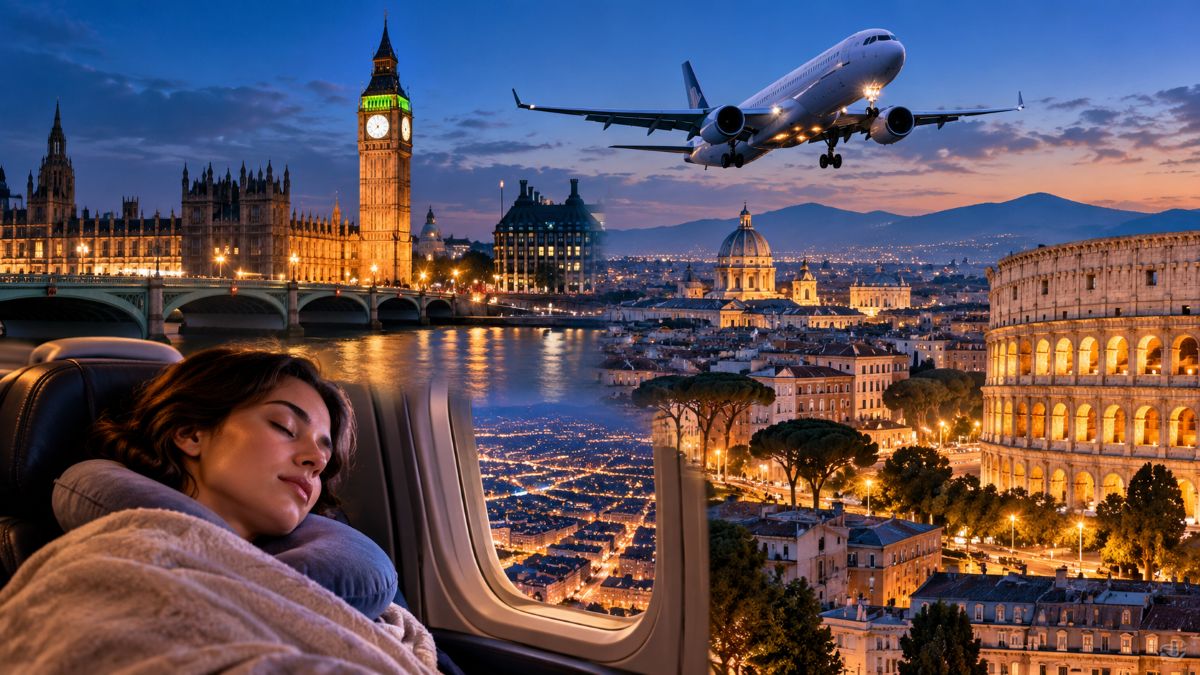
Image generated with Ai
Air quality has emerged as an overlooked yet decisive factor shaping international journeys, city breaks, and overnight comfort across major destinations. A landmark study spearheaded by researchers at the University of Cambridge has revealed that daily spikes in fine particulate air pollution directly trigger nocturnal coughing, unravelling the restorative sleep of residents and travellers alike. Published in autumn 2026, the comprehensive investigation evaluated anonymised telemetry from mobile sleep applications across thirty-two metropolitan centres in twelve nations, monitoring roughly ninety-eight thousand people each night over an eighteen-month timeframe. Rather than concentrating solely on severe respiratory conditions requiring emergency medical intervention, the research brings unprecedented analytical rigour to the mild, day-to-day irritations that quietly diminish visitor vitality and nightly rest.
The implications for international tourism and public health policy are profound, establishing that elevated ambient particulate concentrations prompt immediate biological reactions during resting hours. Modern holidaymakers and business travellers increasingly prioritise restorative sleep and physical well-being, yet ambient emissions can disrupt these priorities even within short-stay itineraries. Led by Professor Cecilia Mascolo, the interdisciplinary team demonstrated that respiratory irritation occurs across diverse geographical climates, cutting through confounding variables like seasonal influenza and shifting temperatures. As destinations compete on sustainability and visitor experience, clean air infrastructure now stands alongside heritage and hospitality as an indispensable pillar of modern travel management.
Scientific Revelations On Nocturnal Respiratory Irritation
The investigation breaks critical ground by tracking continuous physiological responses outside conventional hospital environments. By combining objective ambient monitoring with acoustic sleep sensor records, investigators observed that approximately half of tracked sleepers coughed overnight, with one in a hundred experiencing persistent bouts exceeding ten episodes per sleep cycle. Crucially, the statistical link between particulate matter smaller than two point five micrometres and sleep disturbance held firm even when accounting for seasonal viruses and meteorological shifts. Dr Tong Xia, a key investigator formerly at Cambridge and now based at Tsinghua University, observed that introducing the confounding factors of seasonal influenza trends failed to dilute the correlation, confirming particulate emissions as an independent physiological trigger.
Destinations renowned for cultural tourism registered distinct variations corresponding precisely to local environmental factors. In Northern Italy, the metropolitan centres of Milan and Monza within the Po Valley generated the highest nocturnal cough frequencies observed throughout the global dataset. The natural topography of the basin traps industrial exhaust and vehicular pollutants, creating stagnant conditions that irritate airways long after sunset. Consequently, visitors seeking historical architecture or high fashion in Lombardy may inadvertently experience fragmented sleep due to atmospheric particle accumulation.
Advertisement
Advertisement
| Destination Region | Primary Pollution Sources | Observed Respiratory Impact | Strategic Traveller Recommendation |
|---|---|---|---|
| Northern Italy (Milan, Monza) | Industrial emissions, topography trapping valley particulates | Highest sustained global nocturnal cough rates | Select accommodation featuring certified indoor HEPA filtration |
| Southern California (Los Angeles) | Seasonal wildfire plumes, transboundary haze spikes | Rapid thirteen per cent surge in nocturnal coughing | Monitor air quality indices and limit evening outdoor exertion |
| Greater London (United Kingdom) | Episodic fireworks, domestic burning, vehicle congestion | Noticeable cough spikes above baseline influenza activity | Plan low-emission routes and reserve rooms with active ventilation |
| Southeastern Australia (Sydney, Melbourne) | Episodic dust storms, low-level baseline urban traffic | Detectable airway reactivity below global safety thresholds | Prioritise coastal lodging and follow local air monitoring platforms |
Destination Airsheds And The Global Traveller Experience
The investigation highlighted that sharp air quality degradations produce immediate spikes in physical discomfort across diverse continents. In Southern California, the clear and acute impacts of seasonal wildfire smoke produced a thirteen per cent surge in nocturnal coughing among monitored subjects in Los Angeles. The respiratory effects lingered across several consecutive evenings, demonstrating that brief exposure to elevated particulates can disrupt sleep architecture for days after plumes disperse. Holidaymakers exposed to such environmental events face reduced stamina, diminished daytime focus, and general fatigue that degrades overall travel experiences.
Similarly, cultural celebrations within the United Kingdom provided clear evidence of short-term particulate spikes influencing airway sensitivity. Monitoring across Greater London during the early November bonfire and Guy Fawkes festivities revealed an unmistakable rise in night coughing. Despite low circulating influenza rates at the time, episodic surges in fine particulates caused immediate airway irritation across the urban area. Travellers visiting London during major outdoor spectacles are therefore susceptible to sudden shifts in nocturnal respiratory comfort, reinforcing the necessity of understanding seasonal pollution patterns when curating international holiday plans.
Advertisement
Advertisement
Rethinking Safety Thresholds Across Clean Havens
Perhaps the most significant revelation for the tourism industry is that airway irritation does not require catastrophic pollution spikes to manifest. In oceanic destinations like Melbourne and Sydney, which maintain comparatively pristine air basins under normal meteorological conditions, researchers identified positive correlations between particulate concentrations and nighttime coughing. Even when air pollution levels rested well below the stringent guidelines established by the World Health Organization, sensitive human airways exhibited measurable nocturnal reactions.
This finding challenges the widespread assumption that minor particle concentrations are entirely harmless to holidaymakers and residents. Professor Mascolo highlighted that potential health effects from low-level exposure demand sustained international attention rather than complacency once statutory baseline limits are achieved. Destinations marketing themselves as pure retreats must actively safeguard their airsheds, as refined sensory monitoring reveals that human bodies register subtle environmental shifts with remarkable fidelity.
Advertisement
Advertisement
Integrating Environmental Wellness Into Modern Itineraries
As health-conscious tourism gathers momentum worldwide, destinations and hospitality brands are adapting operational strategies to address atmospheric wellness. Premium accommodation providers increasingly treat indoor air filtration not as an unseen utility, but as a signature guest amenity essential for restorative sleep. In regions prone to seasonal stagnation, properties integrating medical-grade filtration provide verifiable sanctuaries for travellers sensitive to atmospheric pollutants.
Navigating contemporary travel requires incorporating air quality forecasts alongside traditional weather predictions. Engaging in outdoor dining, evening strolls, and night exploration enriches holiday memories, yet understanding microclimates allows travellers to minimise respiratory irritation. By coordinating itineraries around real-time atmospheric indices, international visitors can fully explore global capitals while preserving the deep, restorative rest that underpins rewarding travel experiences.
FAQs
How does particulate air pollution trigger nocturnal coughing during sleep? Fine particulates penetrate deep into human bronchial passages, causing physical friction and chemical irritation that prompts involuntary cough reflexes during recumbent resting hours.
Which global destination exhibited the highest coughing rates in the Cambridge study? The Po Valley region in Northern Italy, encompassing Milan and Monza, registered the highest nocturnal cough frequency due to concentrated industrial emissions and geography that traps particulates.
Advertisement
Advertisement
Can air pollution disrupt sleep even in destinations with relatively clean air? Yes, the research documented measurable increases in nocturnal coughing in cities like Sydney and Melbourne at concentrations well below standard international safety limits.
How severely did wildfire smoke influence respiratory comfort in North America? During Los Angeles wildfire episodes, monitored participants experienced a thirteen per cent increase in nighttime coughing, with symptoms lingering for multiple days following initial exposure.
Do seasonal viruses account for the spikes in night coughing observed by researchers? Statistical modelling demonstrated that while cold weather and influenza increase coughing, particulate air pollution remains an independent driver of nocturnal respiratory irritation regardless of viral trends.
Why are travellers uniquely vulnerable to episodic urban pollution events? Travellers often spend prolonged hours walking outdoors in unfamiliar urban centres, lack local acclimatisation, and stay in accommodations without personal control over indoor air purification systems.
What role do episodic cultural events play in urban air degradation? Festivities involving bonfires and fireworks, such as Guy Fawkes night in London, cause abrupt spikes in fine particulates that immediately elevate cough rates across metropolitan populations.
How are modern luxury hotels adapting to guest concerns regarding urban air quality? Leading hotels increasingly install multi-stage HEPA filtration, monitor indoor ambient air continuously, and design climate-controlled rooms to ensure deep, uninterrupted sleep.
Advertisement
Advertisement
What precautions can holidaymakers take when visiting cities prone to particulate haze? Travellers should review local air quality forecasts, minimise vigorous evening exercise during pollution spikes, book hotels with active air purification, and carry appropriate protective face coverings.
Why does this research shift broader international travel and health perspectives? The study proves that low-grade environmental factors exert measurable impacts on daily comfort and sleep, transforming clean air into an essential element of destination appeal and visitor wellness.
Advertisement
