
Africa’s Remote Work Visa Revolution Begins as South Africa and More Redefine Long-Stay Tourism

Published
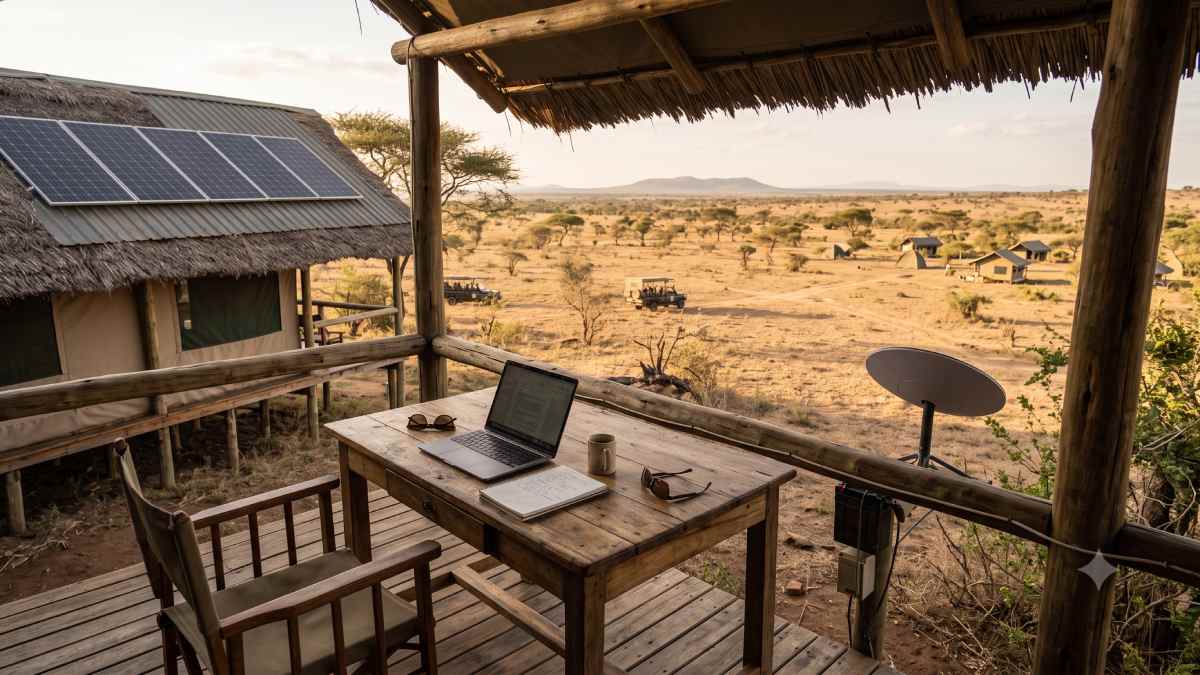
A structural transformation is quietly being seen as redefining the global extended travel economy across the African savannah and Atlantic archipelagos. Sovereign regulatory frameworks and innovative engineering are now converged so that African remote work visas are established as powerful instruments of capital import and economic diversification. By pairing progressive immigration reforms with satellite broadband constellations and autonomous solar microgrids, legacy municipal infrastructure constraints are bypassed entirely by visionary destinations. Conventional hospitality models are challenged, seasonal tourism lulls are eliminated, and foreign expenditure is redirected into secondary domestic corridors by this systemic shift. As borders become fluid for nomadic knowledge professionals, an enduring blueprint for sustainable international residency is actively being constructed by Africa.
The Geopolitical Shift in Extended Tourism and Knowledge Migration
Across the international travel landscape, destination marketing has historically been focused on transient leisure visitors whose domestic economic footprint remains compressed within brief, high-intensity holiday windows. While foreign exchange receipts were generated by this conventional paradigm, national economies were simultaneously exposed to extreme seasonal volatility, airline route disruptions, and concentrated geographical pressure on primary urban gateways. Over the opening half of this decade, how foreign-source capital is captured, retained, and regulated within national borders was prompted to be re-examined by sovereign administrations due to the global dispersion of enterprise knowledge work.
Advertisement
Advertisement
Rather than itinerant professionals being allowed to navigate immigration grey zones on short-term holiday authorisations, formal legislative pathways are being pioneered by progressive African administrations. Physical domicile is decoupled from local labour participation by these regulatory channels, granting non-citizens the legal prerogative to live within host nations while they are barred from entering domestic employment markets. The continent is positioned by this sovereign innovation as a compelling alternative to saturated long-stay destinations in Western Europe and Southeast Asia, with an unprecedented synthesis of wilderness immersion, environmental stability, and enterprise-grade connectivity being offered.
Fundamental realignments in international infrastructure and economic policy are reflected in the broader context of this migration. African states are no longer merely received as destinations of conventional packaged tourism; they are established as sophisticated jurisdictions where competition is actively mounted for high-earning software architects, venture capital partners, and technical consultants. Extended tourism is being transformed into an engine of regional capital formation through the intentional harmonisation of immigration rules with private investments in off-grid utilities.
Advertisement
Advertisement
Sovereign Policy Architecture: The Vanguard of African Remote Work Visas
Acute regulatory precision is demonstrated by the statutory design of remote work residency across Africa, ensuring substantial economic benefits are captured by host nations while vulnerable domestic labour markets are proactively shielded. Rather than uniform continental templates being adopted, entry thresholds have been calibrated by individual sovereign states to match distinct domestic macroeconomic objectives, currency requirements, and territorial spatial plans.
South Africa: The High-Earner Filter and Domestic Labour Safeguards
A landmark breakthrough in sovereign migration policy was achieved when South Africa’s long-awaited framework was formally gazetted by the Department of Home Affairs. The Third Amendment of the Immigration Regulations was officially enacted under Section 11(1)(b)(iv) of the Immigration Act, introducing the statutory remote work visitor visa. It was observed by the Minister of Home Affairs, Dr Leon Schreiber, that the objective points-based framework and remote work channel had been explicitly engineered to dismantle bureaucratic inefficiency, eliminate adjudicative discretion, and stimulate domestic commercial expansion, being characterised as a highly progressive regulatory overhaul.
Advertisement
Advertisement
To ensure incoming remote workers function exclusively as net economic contributors without undercutting the domestic workforce, a strict income qualification threshold was established by the South African framework. Verified gross annual earnings must be demonstrated by applicants. Affluent technical and corporate talent is welcomed by this statutory earnings floor while wage displacement in local metropolitan labour sectors is precluded. Residence permits extending up to several consecutive years may be secured by successful applicants under the gazetted provisions, with accompanying spouses and dependent family members being accommodated under the primary applicant’s status without independent work entitlements.
Clear boundaries regarding national revenue collection are established by the fiscal architecture governing the South African visa. Domestic personal income tax liabilities remain exempted for remote workers residing in South Africa for fewer than the statutory threshold period within an annual cycle, provided a Double Taxation Agreement is maintained with the Republic by their primary tax jurisdiction. Conversely, registration with the South African Revenue Service and compliance with domestic tax filing regulations are legally required for individuals whose physical stay crosses that designated threshold. Direct contributions to the public fiscus by prolonged residents are ensured by this statutory equilibrium, while foreign-earned revenue is allowed to be spent freely within the local economy by flexible seasonal professionals.
Namibia: Low-Density Workstations and Desert Overland Logistics
Pursuing an entirely distinct geographic strategy, expansive landscapes and low population density have been capitalised on by Namibia to present itself as a premier workstation for focused creative solitude. Having been formally introduced by the Namibia Investment Promotion and Development Board, an immigration pathway is provided by the Namibian Digital Nomad Visa for location-independent talent seeking refuge from dense urban environments. Approved applicants are permitted by the policy to reside in the country for an initial renewable duration, with further extensions being facilitated by administrative mechanisms.
A verified minimum foreign income must be demonstrated by an applicant under the financial entry criteria codified by the Namibian authorities, alongside additional monthly allowances for an accompanying spouse and dependent children, substantiated by continuous certified bank records. Modest administrative processing fees are maintained, payable upon arrival at national immigration posts.
National logistics, overland road infrastructure, and expansive desert solitude are promoted by the Namibian regulatory strategy rather than dense urban co-working centres being replicated. Supported by well-maintained trunk highways linking the capital city of Windhoek to coastal settlements and historic ports, high-earning software developers, independent researchers, and creative professionals who value physical security, expansive spaces, and reliable road connectivity are targeted.
Cabo Verde: The Mid-Atlantic Digital Bridge and Fiscal Exemption
In the central Atlantic Ocean, maritime geography has been leveraged by the archipelago nation of Cabo Verde to construct a digital bridge between Africa, Europe, and the Americas. Established by the national government and administered through the Cabo Verde Tourism Institute under the Remote Working Cabo Verde initiative, a seamless entry point is provided by this renewable visa for mobile knowledge workers.
Advertisement
Advertisement
An accessible financial entry barrier coupled with minimal administrative costs is offered by the program. An average monthly bank balance over preceding months must be demonstrated by individual applicants, alongside modest administrative application fees and standard airport security duties.
Crucially, complete domestic income tax exemption is established by Cabo Verdean decree for foreign-sourced revenue earned throughout the duration of the permit. Supported by strategic time-zone alignment and direct air links to Lisbon, natural Atlantic operating outposts have emerged across islands such as São Vicente and Sal for European and North American professionals seeking tropical stability without administrative friction.
Mauritius: Offshore Jurisdictional Maturation and Island Wealth Management
In the Indian Ocean, the benchmark for sovereign long-stay facilitation has been established by Mauritius through its Premium Visa, launched via the Economic Development Board. Tailored to location-independent executives, multi-asset investors, and seasoned technical founders, foreign nationals are allowed to reside on the island under integrated renewal mechanisms and multi-entry privileges.
Application processing charges were removed entirely by the Mauritian state, with the visa being offered free of charge to qualified foreign applicants upon provision of verified documentation demonstrating foreign income, supplemented by additional allocations per dependent child. It must be established by applicants that their core corporate enterprise, revenue generation, and balance sheets remain firmly rooted outside the domestic Mauritian economy.
High sophistication is exhibited in the fiscal governance of the Mauritian scheme under the Income Tax Act, where Premium Visa holders are taxed exclusively on a remittance basis. Capital spent within the domestic economy utilising international cards is legally classified as non-remitted foreign expenditure, granting immunity to remote workers from local tax exposure on daily living costs. Concurrently, long-term residency transitions are encouraged by permitting holders to evaluate broader investment frameworks while the protection of an established offshore banking ecosystem is enjoyed.
| Destination | Sovereign Visa Architecture | Minimum Financial Requirement | Domestic Tax Status | Primary Strategic Focus |
| South Africa | Remote Work Visitor Visa (Multi-year validity) | High statutory gross annual foreign earnings threshold | Exempt under statutory period via DTA; tax registration mandated thereafter | Capital capture, domestic labour protection, regional economic dispersal |
| Namibia | Digital Nomad Visa (Renewable term) | Verified monthly foreign income plus dependent allowances | Non-resident taxation; shielded foreign-source income | Low-density workstations, overland mobility, desert solitude |
| Cabo Verde | Remote Working Cabo Verde (Renewable term) | Verified average monthly foreign bank balance | Complete statutory exemption on foreign earnings | Mid-Atlantic connectivity, European time-zone alignment |
| Mauritius | EDB Premium Visa (Renewable term) | Verified monthly foreign income plus dependent allowances | Remittance-basis taxation; untaxed foreign card transactions | Luxury long-stay residency, offshore finance, investment conversion |
Engineering the Savannah: The Hybrid Infrastructure Tech Stack
Historically, operating extended knowledge-economy workflows across rural or wilderness African environments was fundamentally constrained by severe utility deficits. Deep-bush safari operations were relegated to short-term, disconnected leisure excursions by unreliable national electrical grids, frequent transmission interruptions, and the total absence of commercial terrestrial fibre-optic lines.
Advertisement
Advertisement
Over recent years, legacy state utility networks have been fundamentally bypassed by private safari operators and wilderness concessions. High-end conservation tourism has been successfully merged with high-performance digital workstations through the deployment of an autonomous, engineered technological stack that integrates off-grid solar microgrids with advanced satellite networks.
Low-Earth-Orbit Satellite Constellations and Frontier Connectivity
The rapid rollout and commercial licensing of low-Earth-orbit satellite networks across sub-Saharan Africa has served as the primary catalyst for this operational shift. Terrestrial bandwidth constraints have been dismantled as commercial operating licences have progressively been granted to satellite constellations by telecommunications regulatory authorities.
Across deep wilderness environments—including national parks, river deltas, private conservancies, and desert dunes—symmetrical broadband connectivity characterized by low latency and persistent high throughput is now delivered by safari lodges. Geographic penalties previously associated with wilderness travel are eliminated by enterprise-grade satellite connectivity, enabling live transatlantic video conferences to be attended and complex code repositories to be managed directly from open-air wilderness verandas by corporate executives and engineers.
Autonomous Renewable Microgrids and Grid Independence
Equally foundational to this infrastructural evolution is the maturation of decentralized energy storage. Luxury lodges have been decoupled from unreliable national distribution grids through aggressive investments in containerized, decentralized power generation.
Modern remote wilderness camps are powered by integrated solar photovoltaic arrays coupled with utility-scale battery energy storage systems. Extended thermal stability, deep discharge capabilities, and prolonged lifespans under intense ambient desert and bush conditions are offered by modern chemical cells. Intelligent inverters and automated generator failover synchronization are incorporated into these clean energy installations, ensuring uninterrupted power across all climate conditions. As a result, critical workstation hardware, high-performance local area network equipment, and personal communications systems are operated without micro-outages or voltage fluctuations.
Commercial Hospitality Evolution: The Rise of Work-Sprint Safaris
A structural reimagining of wilderness hospitality business models has been triggered by the convergence of satellite telecommunications and autonomous power. Traditional commercial safari arrangements had long been anchored to brief full-board itineraries characterized by extreme operational intensity, high guest turnover, and sharp vulnerabilities to seasonal fluctuations.
Advertisement
Advertisement
Packages are being restructured by forward-thinking wilderness properties to offer extended “work-sprint safaris” in recognition of the commercial value of the digital nomad economy. Extended stays during traditional shoulder seasons are accommodated under this framework. Tented suites are retrofitted with custom ergonomic hardwood desks, dedicated electrical circuits, directional microclimate cooling, and sound-dampening architectural elements designed for uninterrupted confidential communications.
Cash flows are stabilized, logistical costs associated with daily guest turnover are flattened, and consistent baseline revenues are generated for lodge operators, allowing year-round conservation operations and local anti-poaching security to be directly funded.
Urban Friction, Housing Dynamics, and Secondary Dispersal Corridors
While undeniable macroeconomic dividends are yielded by foreign capital inflows, severe socioeconomic friction has been created by the concentration of mobile professionals within major African urban centers. Domestic housing pressures have been exacerbated in primary metropolitan hubs by the rapid expansion of short-term vacation rentals, sparking intense local debates surrounding urban equity and spatial justice.
Steep residential rent increases have been driven by the conversion of long-term rental housing into lucrative short-term foreign tourist accommodation in prime coastal and metropolitan neighborhoods. Skilled domestic professionals and long-standing local residents have found themselves priced out of well-located urban cores, with public resentment being fostered. Parallel dynamics have emerged across major eastern hubs where residential rent escalations have been fueled by itinerant remote workers, prompting municipal conversations regarding zoning regulations.
Formal geographic dispersal mechanisms have been established by public tourism boards and private operators to counteract these metropolitan distortions. Targeted marketing and regional infrastructure investments are actively deployed to redirect nomadic traffic into dedicated secondary corridors. Foreign capital is retained across secondary and rural economies through this deliberate spatial redistribution, providing year-round occupancy, supporting independent suppliers, and reducing core urban cost-of-living inflation.
Mitigating Metropolitan Pressure: Secondary Havens
Digital nomad traffic is channeled into secondary coastal routes and surrounding wineland valleys by regional tourism authorities in southern territories. Sophisticated lifestyle amenities, medical facilities, road safety, and thriving café cultures are offered by historic inland centres and coastal settlements without severe housing saturation being experienced.
Advertisement
Advertisement
Simultaneously, mobile professionals are encouraged by domestic initiatives to venture beyond metropolitan ring roads toward Great Rift Valley settlements and coastal enclaves. Serene lakeside environments are provided within striking distance of capitals, while coastal settlements have evolved into dynamic, self-sustaining digital communities paired with marine recreation and high-speed co-working hubs.
Regional Economic Multipliers in Dispersal Corridors
The economic impact of this geographic dispersal is structurally transformative. Foreign currency is channeled directly into local micro-economies when prolonged periods are spent in secondary hubs rather than primary metros. Capital is distributed among domestic utility providers, independent grocers, artisanal makers, regional vehicle hire services, and domestic support networks, generating dispersed economic multipliers that build regional resilience.
Furthermore, secondary towns are engaged with on a civic level rather than the isolated posture of resort tourists being maintained. Residential properties are leased during off-peak seasons, provisions are purchased from municipal agricultural markets, and regional recreational facilities are patronised, providing stable commercial cash flow that protects rural businesses from seasonal insolvency.
The Pan-African Frontier: Borderless Mobility and the Continental Laptop Economy
Discussions regarding digital nomads in developing markets have often carried the implicit assumption that mobile knowledge workers originate exclusively from North America or Western Europe. However, a parallel, highly transformative trend is being driven by the rapid rise of an intra-continental remote workforce. Cross-border nomadism is being embraced by an entire generation of African founders, software developers, and creative consultants, stimulated by expanding tech ecosystems across the continent’s major capitals.
Regional ecosystems are rotated through by this demographic to seek new markets, professional networks, and lifestyle variations. Extended work periods are spent across regional creative hubs, cross-border flights are stimulated, and multi-city co-working subscriptions are maintained with regional flexible-office networks.
Multilateral Treaties and Frictionless Cross-Border Mobility
The proliferation of intra-continental remote work is deeply tied to broader political achievements in regional visa liberalization. Inter-African travel had historically been hindered by onerous visa restrictions, where travel across continental borders often presented greater bureaucratic friction for African passport holders than for foreign tourists.
Advertisement
Advertisement
This landscape has been markedly improved over recent years through initiatives monitored by continental development institutions. Significant proportions of intra-continental travel scenarios have been rendered visa-free, while digital electronic visa systems have been deployed across numerous nations to streamline border processing.
A prominent catalyst has been provided through the unilateral adoption of open-border policies by progressive sovereign administrations, with entry barriers being dismantled and unrestricted access granted to citizens of African Union member states. Dedicated remote residence provisions have been implemented to permit extended stays for qualified professionals with verified foreign incomes.
Simultaneously, coordinated multi-country travel instruments have been advanced by regional economic communities. Single-window permits granting multi-entry travel across partner states have been established without separate national visas being required. Multiple tech hubs are seamlessly linked by remote professionals utilising these joint instruments during continuous work sprints.
The Rise of Intra-African Tech Hub Rotation
A cyclical travel rhythm among African tech talent has been cultivated through the emergence of frictionless cross-border corridors. Engineering teams operating for venture-backed enterprises are frequently relocated during product deployment sprints to capitalize on stable civic infrastructure and high-speed municipal networks.
Powerful macroeconomic spillovers are yielded by this intra-continental circulation of talent. Banking links within continental payment rails are maintained, domestic service sectors are patronised, and the growth of cross-border financial technology applications is stimulated. Consequently, the pan-African laptop economy serves as a powerful grassroots catalyst for trade integration under regional free-trade frameworks, physically uniting talent with continental capital opportunities.
Macroeconomic Implications and Long-Term Strategic Outlook
A permanent evolution in how international travel is monetized by emerging economies is represented by the strategic codification of long-stay remote working frameworks. Foreign currency is captured directly while seasonal demand swings are moderated by transitioning toward multi-month stays. An expanded domestic tax base is generated through indirect taxation, consumption levies, and sustained demand across regional supply chains.
Advertisement
Advertisement
Beyond immediate fiscal receipts, profound secondary economic spillovers are observed. Informal knowledge transfer is fostered, cross-border investment networks are opened, and direct access to global professional mentors is provided to local technology ecosystems. Concurrently, productive capacity in rural areas is permanently expanded through operator investments in decentralized solar infrastructure and satellite communications, creating utility foundations capable of supporting community enterprises.
Sustained policy vigilance is required for the long-term viability of this developmental model. Double taxation agreements must continue to be refined, clear legal definitions for corporate permanent establishment must be established, and metropolitan housing pressures must be actively managed. As regulatory friction across borders continues to be dismantled, Africa is positioned by the integration of physical infrastructure, autonomous green utilities, and progressive immigration policies as a pioneering global frontier for the future of mobile knowledge work.
Continental tourism has been inaugurated into an unprecedented era through the convergence of autonomous utilities, targeted immigration statutes, and regional mobility protocols. Seasonal wilderness lodges and secondary municipalities are transformed into resilient knowledge hubs. Consequently, global professional productivity is anchored across the savannah, establishing an enduring sovereign economic blueprint.
Conclusion
Visa reforms for remote working in Africa are redefining extended tourism through immigration flexibility, sustainable energy use, and satellite technology. Whether it is Namibia’s desert or the island hubs of Mauritius, such reforms have brought in revenue from foreigners while benefiting local companies and increasing economic resilience. Nevertheless, sustainability will need cheap housing, regulation, and development.
Advertisement
