
Japan Stands Alongside Vietnam and Many Asian Destinations as Aviation Capacity Fuels a New Tourism Boom

Published
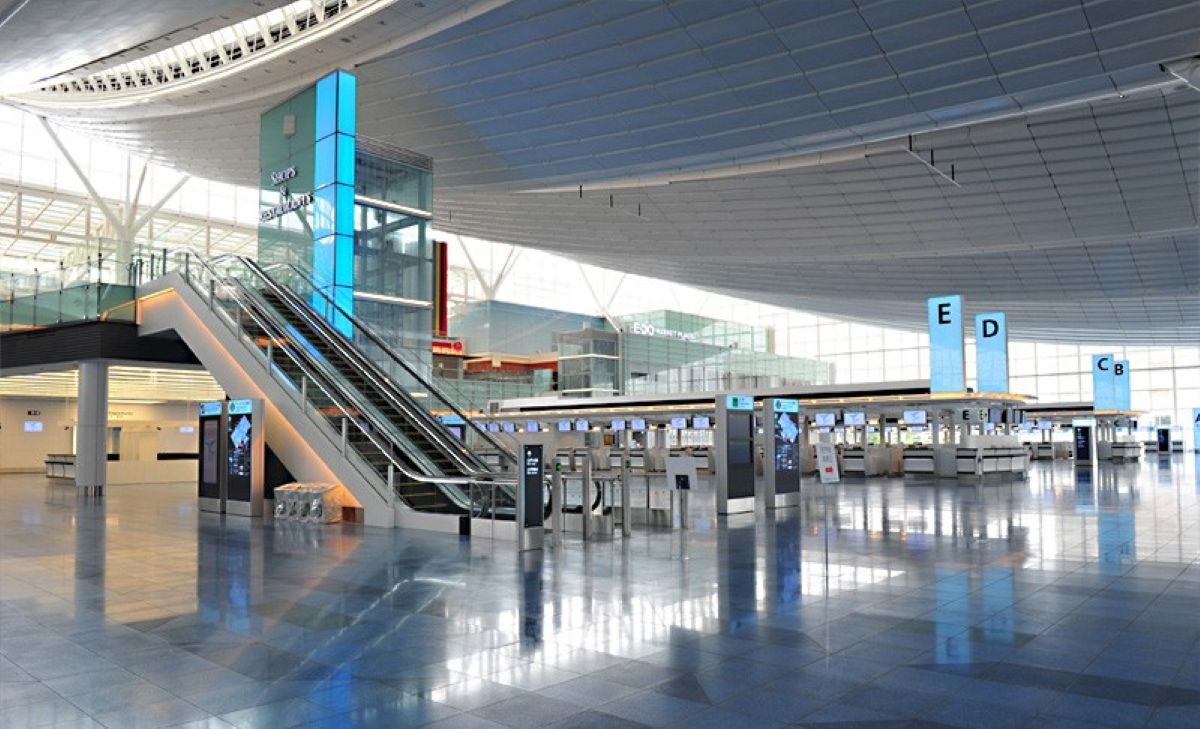
Japan, Vietnam, Thailand and Malaysia are entering a new phase of aviation-led tourism growth, with airports, airlines and governments expanding capacity to accommodate rising international demand. Japan recorded a record 42.68 million foreign visitors in 2025, while Vietnam welcomed nearly 21.2 million international arrivals. Thailand received 32.97 million visitors, and Malaysia recorded 42.2 million international visitors.
The numbers reveal a wider shift across Asia. Airport capacity is becoming a tourism asset, not merely transport infrastructure. New terminals, larger gateways, additional airline seats and long-haul services could determine which destinations capture the next wave of international travellers.
Advertisement
Advertisement
Asia’s Airports Are Becoming Tourism Gateways
The strongest signal is the sheer scale of aviation demand behind recent tourism growth. Vietnam recorded more than 17.8 million international arrivals by air in 2025, representing 84.3% of its total international visitors. Air arrivals increased 20.2% year on year.
Japan presents an even larger mature-market example. Foreign visitor numbers crossed 40 million for the first time in 2025, reaching 42.68 million. Japanese airlines also carried 22.92 million international passengers during the year, up 13.3%, although that figure covers Japanese carriers rather than the entire international airport market.
Advertisement
Advertisement
| Market | 2025 international visitors | Key aviation signal |
|---|---|---|
| Japan | 42.68 million | Foreign visitors exceeded 40 million |
| Vietnam | Nearly 21.2 million | 84.3% arrived by air |
| Thailand | 32.97 million | Long-haul arrivals exceeded 10 million |
| Malaysia | 42.2 million | Airport network handled 104.4 million passengers |
These markets therefore represent four different stages of aviation development. Japan is managing extraordinary demand through an established network, while Vietnam is adding capacity for future expansion. Thailand is strengthening an already powerful gateway system, and Malaysia is combining airport investment with network growth.
Japan’s Record Arrivals Are Raising Capacity Stakes
Japan’s tourism boom has created an infrastructure challenge that extends beyond Tokyo. The country’s 2025 visitor record also produced ¥9.46 trillion in inbound travel spending, according to preliminary government figures. Average visitor spending reached about ¥229,000, strengthening the economic case for expanding international access.
Advertisement
Advertisement
Narita remains particularly important to that expansion. Japan’s transport ministry says the airport handled about 12 million foreign entrants in 2025, equivalent to roughly 30% of the country’s foreign arrivals. Planned capacity enhancement aims to raise Narita’s annual aircraft movement capacity to 500,000.
That matters to travellers because airport congestion can constrain tourism even when demand remains strong. More movements allow airlines to add frequencies, introduce new city pairs and increase schedule flexibility.
Advertisement
Advertisement
Japan is also benefiting from stronger international airline activity. The country’s domestic scheduled aviation market carried 111.47 million passengers in 2025, while Japanese airlines’ international traffic climbed sharply. The underlying trend points towards a broader aviation ecosystem supporting both inbound and outbound travel.
For travellers, the next stage could mean greater choice beyond the traditional Tokyo–Osaka itinerary. Stronger airport capacity can support more regional gateways and make destinations outside Japan’s most famous cities easier to incorporate into international journeys.
Vietnam Is Building Its Next Aviation Chapter
Vietnam offers perhaps the clearest example of infrastructure being designed around future tourism ambitions. International arrivals reached nearly 21.2 million in 2025, up 20.4% from the previous year and 17.8% above 2019. Air travel accounted for more than four-fifths of those visitors.
The critical development is Long Thanh International Airport, which is designed to reduce pressure on the existing Ho Chi Minh City gateway and create a major aviation hub for southern Vietnam.
Advertisement
Advertisement
Phase one provides capacity for 25 million passengers annually, with two 4,000-metre runways and associated infrastructure. The complete project is designed around a much larger 100-million-passenger annual capacity across three phases.
| Long Thanh development | Planned capacity |
|---|---|
| Phase 1 passenger capacity | 25 million annually |
| Phase 2 capacity | 50 million annually |
| Full development | 100 million annually |
| Phase 1 cargo capacity | 1.2 million tonnes annually |
| Full cargo capacity | 5 million tonnes annually |
The significance extends beyond passenger numbers. A large international gateway can encourage airlines to establish new routes and increase frequencies. It can also improve access to southern Vietnam’s beaches, business centres and wider Mekong-region attractions.
For travellers, the airport’s eventual role could mean more direct international access to southern Vietnam. That could reduce reliance on connections through other Asian hubs.
Thailand Is Expanding a Mature Tourism Machine
Thailand’s challenge is different. It already possesses enormous international demand, but its aviation system must continuously accommodate that traffic while improving passenger flow.
The country welcomed 32.97 million international visitors in 2025, including a record 10.8 million travellers from long-haul markets. Tourism generated approximately 2.7 trillion baht.
Bangkok remains central to that system. Airports of Thailand reported passenger-handling capacity of 121 million passengers across its network in 2025, with Suvarnabhumi capable of handling 65 million annually. Don Mueang had capacity for 30 million, while Phuket stood at 12.5 million.
Advertisement
Advertisement
Thailand’s aviation strategy also increasingly connects directly with airline capacity. From January to June 2025, the country recorded more than 16.68 million international arrivals and 24.59 million inbound seats, up 7% year on year. TAT also worked with more than 50 airlines on route and capacity development.
The strategy is moving beyond Bangkok and Phuket. Thailand is promoting secondary destinations such as Chiang Rai, Kanchanaburi, Khao Yai and Sukhothai. Better air connectivity can help distribute demand away from the country’s most heavily visited gateways.
For travellers, that could produce an important benefit: more route choices and easier access to less crowded destinations.
Malaysia Is Turning Connectivity Into Capacity
Malaysia’s aviation story combines tourism recovery with a deliberate airport-modernisation programme. The country welcomed 42.2 million international visitors in 2025, up about 11.2% from 2024.
Its airport network recorded 104.4 million passengers in 2025, an 11.2% annual increase. Kuala Lumpur International Airport alone handled 63.3 million passengers, up 10.8%.
The next infrastructure cycle is substantial. Malaysia Airports has outlined a five-year capital programme exceeding RM11 billion. KLIA’s longer-term development plan targets capacity beyond 100 million passengers annually. Penang International Airport is planned to expand from 6.5 million to 12 million annual passengers.
Advertisement
Advertisement
That expansion coincides with route development. New services added during late 2025 included connections between Kuala Lumpur and Hangzhou, Qionghai, Osaka and several Southeast Asian cities. Such additions demonstrate how infrastructure and airline decisions reinforce each other.
For travellers, Malaysia’s strongest advantage could be its ability to function as both a destination and a multi-country Asian gateway. Stronger connections can make Kuala Lumpur useful for itineraries combining Malaysia with Thailand, Vietnam, Japan and other regional markets.
Four Markets, Four Aviation Strategies
The comparison becomes clearer when airport investment is viewed alongside tourism maturity and airline connectivity.
| Market | Primary aviation play | Tourism position | Traveller implication |
|---|---|---|---|
| Japan | Expand gateway capacity | Mature, high-value market | More international and regional access |
| Vietnam | Build new capacity | Rapid-growth market | Greater direct access to southern Vietnam |
| Thailand | Maximise existing gateways | Global mass-tourism leader | More frequencies and secondary-destination access |
| Malaysia | Expand hubs and regional airports | Major Southeast Asian gateway | Stronger multi-country itineraries |
The distinction is important. There is no single Asian aviation model emerging from this expansion. Each market is responding to a different combination of demand, geography, infrastructure constraints and tourism policy.
Japan needs additional capacity to absorb extraordinary visitor volumes. Vietnam is building ahead of further growth. Thailand is trying to increase efficiency within an established network, while Malaysia is preparing its gateways for another tourism cycle.
LCCs Are Quietly Rewriting Asian Itineraries
Low-cost carriers add another layer to the transformation. Their importance extends beyond cheaper tickets because they can make previously inconvenient city pairs commercially viable.
Advertisement
Advertisement
Airlines operating across the region are increasingly linking major hubs with secondary cities. This matters because travellers often choose destinations based on ease of access rather than attraction alone.
A new low-cost service can therefore change demand patterns quickly. It can turn a destination suited to specialist travellers into a practical short-break option.
The effect is especially important within Southeast Asia. Travellers can increasingly construct multi-stop itineraries rather than treating each country as a separate long-haul holiday.
That creates opportunities for airports outside capital cities. If airlines find enough demand, secondary gateways can attract more frequencies, which can then stimulate hotels, attractions, ground transport and local tourism businesses.
Long-Haul Links Could Change The Market
Regional connectivity is only one part of the equation. Long-haul aviation remains crucial for higher-spending international markets.
Thailand’s experience illustrates the potential. Long-haul visitors exceeded 10 million in 2025 for the first time, representing more than 30% of international arrivals by mid-December. TAT linked that performance partly to its airline-focused strategy for expanding capacity and year-round connectivity.
Advertisement
Advertisement
Japan also benefits from extensive long-haul demand from North America, Europe and Australia. Vietnam and Malaysia, meanwhile, are positioning their airports to support broader intercontinental networks.
For travellers, a nonstop flight can change the economics of a holiday. Lower journey friction can support longer stays, more direct bookings and greater destination choice.
What Airport Expansion Means For Travellers
Airport expansion does not automatically guarantee cheaper airfares. However, additional capacity can give airlines more room to add frequencies and compete for passengers.
The effect will differ by route. A popular city pair with several competing airlines may see stronger fare competition. A new monopoly route may instead provide convenience without delivering major price reductions.
Travellers should therefore watch frequency, aircraft size and airline competition, not airport capacity alone. These indicators provide a better picture of whether infrastructure investment will translate into practical travel benefits.
| Aviation change | Likely traveller benefit |
|---|---|
| More airport capacity | Fewer infrastructure bottlenecks |
| More airline seats | Greater booking availability |
| New LCC routes | More affordable regional trips |
| New long-haul routes | Fewer connections |
| Secondary-airport growth | Easier access beyond major cities |
| Higher route frequency | Greater flexibility around dates |
The New Asian Travel Equation
The region’s aviation expansion also exposes an important change in tourism policy. Governments increasingly treat airports as economic growth platforms, rather than isolated transport projects.
Advertisement
Advertisement
Japan’s record visitor spending strengthens the case for capacity expansion. Vietnam’s enormous Long Thanh project reflects expectations of sustained aviation demand. Thailand is pairing airport efficiency with airline partnerships, while Malaysia is committing billions of ringgit to a wider airport investment cycle.
At the same time, tourism strategies are becoming more selective. Thailand is shifting towards a value-over-volume model, while Malaysia’s Visit Malaysia 2026 campaign aims to attract 43 million international visitors.
This creates a more sophisticated travel landscape. The objective is no longer simply to bring more people through the terminal. It is increasingly about where those travellers go, how long they stay and how much economic value they create.
Why This Aviation Shift Matters Now
The numbers point to an Asian tourism market entering another infrastructure cycle. Japan’s visitor base has reached unprecedented levels, Vietnam is adding a new 25-million-passenger gateway, Thailand is upgrading a vast airport network, and Malaysia is preparing for capacity beyond 100 million passengers at KLIA.
For travellers, the most important change may happen gradually. More flights, better connections and additional gateways can make destinations that once required complicated journeys significantly easier to reach.
The broader lesson is equally important for the travel industry. Asia’s next tourism race will not be fought only over attractions or hotel rooms. It will increasingly be shaped by runway capacity, terminal space, airline seats and nonstop connections. The destinations that align those elements effectively will have the strongest chance of converting aviation growth into sustained visitor growth.
Advertisement
Advertisement
FAQs
1. Why is aviation becoming so important to Asia’s tourism growth?
Airport capacity and airline connectivity increasingly determine how easily international travellers can reach Asian destinations. More terminals, routes and seats can reduce travel friction and help emerging destinations capture demand.
2. Which Asian countries are expanding aviation capacity most significantly?
Japan, Vietnam, Thailand and Malaysia are among the notable markets investing in airport infrastructure and connectivity. Their strategies differ, ranging from expanding established gateways to developing entirely new airport capacity.
3. How could airport expansion benefit travellers?
Greater capacity can support more flight choices, higher route frequencies and improved access to secondary destinations. Where several airlines compete on the same routes, additional capacity may also strengthen fare competition.
4. Why are low-cost carriers important to Asian tourism?
Low-cost carriers can open new city pairs at relatively accessible fares. Their expanding networks make short breaks and multi-country Asian itineraries easier, particularly across Southeast Asia.
5. Will new airports automatically make flights cheaper?
Not necessarily. Airport expansion creates room for additional flights, but fares still depend on demand, competition, fuel costs, airline strategy and route economics. More capacity primarily improves connectivity and choice, while lower prices depend on competitive conditions.
Advertisement
