

Cairo in Egypt Faces a Defining Urban Challenge as Cultural Glory Meets Tourism and Housing Pressures

Updated
Published
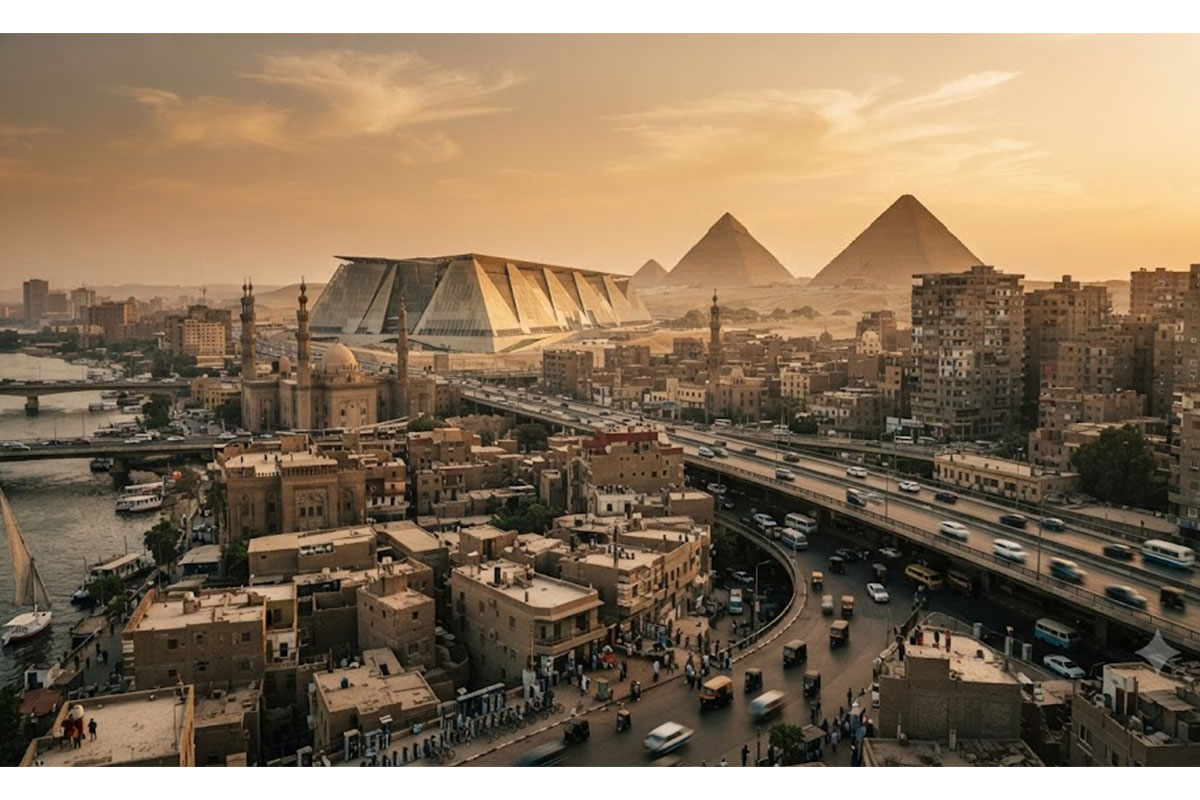
Cairo, the heart of Egypt, is currently navigating an unprecedented crossroads. As of October 2026, the metropolis faces a defining Cairo urban challenge, balancing its rich historical heritage with the surging demands of modern city living. A soaring influx of international visitors, driven by the opening of the Grand Egyptian Museum, has amplified tourism revenues to record highs. Simultaneously, unprecedented housing pressures are forcing a profound reimagining of the city’s real estate and infrastructure landscape. Navigating these competing forces requires strategic resilience. Understanding how government policies and urban developers respond is crucial to grasping Egypt’s transformative economic and cultural trajectory.
The Core Dynamics of the Cairo Urban Challenge in 2026
The Egyptian capital has long been a city defined by its staggering scale and profound historical resonance. However, as of late 2026, the Cairo urban challenge has evolved into a highly complex socio-economic phenomenon. The metropolis is no longer merely attempting to house a rapidly expanding population; it is fundamentally restructuring its spatial geography to accommodate a booming tourism sector and an increasingly sophisticated real estate market. The sheer density of Greater Cairo—home to over 22 million residents—creates an intense pressure cooker of infrastructural demands. Navigating this reality requires a delicate equilibrium between preserving the ancient cultural heritage that draws millions of global visitors and modernising the urban fabric to support a twenty-first-century economy.
At the epicentre of this transformation is the Egyptian government’s strategic mandate to decentralise the capital. For decades, the historic core of Cairo suffered from severe overcrowding, chronic traffic congestion, and a heavy strain on municipal resources. Today, the strategy has shifted dramatically towards the creation of new, integrated urban centres on the desert outskirts. This outward expansion is not merely a mechanism for population relief; it represents a comprehensive reimagining of how Egyptians live, work, and commute. As international investors look towards the Cairo real estate market, the city is redefining its identity, striving to become a sustainable, globally competitive hub while mitigating the inevitable friction that accompanies rapid urban expansion.
Unprecedented Population Density and Urban Sprawl
To fully comprehend the magnitude of the Cairo urban challenge, one must first analyse the relentless demographic pressures shaping the city. Egypt’s population growth remains robust, and a significant proportion of this demographic dividend is concentrated within the Greater Cairo metropolitan area. This continuous influx has historically resulted in informal settlements and unmanaged urban sprawl, which consumed valuable agricultural land and overwhelmed public utilities. In response, the official approach in 2026 has decisively shifted away from reactive containment toward proactive, master-planned urban expansion.
Advertisement
Advertisement
The government’s ambitious urban development initiatives, encapsulated within the broader Vision 2030 framework, aim to absorb this demographic surge by constructing advanced, self-sustaining satellite cities. These new urban agglomerations are designed to draw citizens away from the congested historic centre by offering superior infrastructure, integrated public transport, and vast employment opportunities. However, the transition is not without its hurdles. Persuading residents to relocate requires more than just building residential units; it necessitates the establishment of fully functional communities equipped with healthcare, education, and commercial hubs. The tension between the organic, historical growth of central Cairo and the structured, planned environments of the new cities remains a defining characteristic of the nation’s urban planning discourse in 2026.
The Intersection of Heritage Preservation and Modernisation
Historic Cairo is recognised globally as a UNESCO World Heritage site, boasting an unparalleled concentration of Islamic architecture, ancient monuments, and vibrant traditional markets. Protecting this irreplaceable cultural legacy while implementing modern infrastructure upgrades is perhaps the most delicate aspect of the Cairo urban challenge. The government faces the immense task of retrofitting ancient districts with contemporary sanitation, electricity, and telecommunications networks without compromising their historical integrity.
Advertisement
Advertisement
In 2026, these preservation efforts are increasingly intertwined with economic imperatives. The historic centre is not merely a museum; it is a living, breathing community and a vital engine for the nation’s tourism industry. Upgrading the urban environment in these areas involves strict zoning laws, meticulous restoration projects, and the pedestrianisation of key historical corridors. By reducing vehicular traffic and improving public realm accessibility, planners aim to enhance the tourist experience while simultaneously elevating the quality of life for local inhabitants. This dual-purpose strategy highlights the evolving mindset of Egyptian urban developers, who increasingly view heritage preservation not as an obstacle to modernisation, but as a foundational asset in the city’s sustainable development portfolio.
The 2026 Tourism Boom: An Economic Engine with Urban Consequences
As of August 2026, the Egyptian tourism sector has experienced an extraordinary renaissance, serving as a critical lifeline for the national economy. Official statistics released by the Ministry of Tourism and Antiquities confirm that Egypt recorded a remarkable 15.6 per cent increase in international tourist arrivals during the first quarter of 2026 alone. This surge translated into 6.1 million visitors traversing the nation in the first four months of the year, representing a 7 per cent rise compared to the same period in 2025. Consequently, tourism revenues reached an unprecedented high of $8 billion in the first half of 2026.
This financial windfall provides essential foreign currency and stimulates widespread job creation across the hospitality, transportation, and retail sectors. However, the sheer volume of visitors fundamentally exacerbates the Cairo urban challenge. The influx of international tourists places immense pressure on the city’s airports, road networks, and public transport systems. Furthermore, the rising demand for short-term accommodations has generated noticeable ripple effects within the local residential property market, driving up rental costs in central and historically significant neighbourhoods. Managing this tourism boom requires sophisticated urban logistics and a resilient infrastructure capable of absorbing seasonal fluctuations without disrupting the daily lives of millions of Cairenes.
Breaking Down the 2026 Tourism Statistics
The official figures from 2026 paint a picture of a nation successfully capitalising on its unique cultural assets. Egypt is aggressively pursuing a strategic goal of attracting 30 million international tourists annually by 2030. Achieving this ambitious target demands more than just aggressive marketing campaigns; it requires a structural overhaul of the hospitality ecosystem. The $8 billion generated in the first six months of 2026 underscores the immense profitability of the sector, but it also highlights the urgent need for continuous reinvestment into urban infrastructure.
The statistics indicate a diversification in the demographic of visitors, with significant increases in cultural tourists, business travellers, and conference attendees. This diversification necessitates a broader range of accommodation options, from luxury international hotel chains to boutique heritage lodgings. Consequently, urban planners must allocate vast tracts of land for hospitality developments while ensuring that these zones are adequately serviced by public utilities. The intersection of these statistical triumphs with the physical limitations of the city forms the crux of the ongoing urban debate, forcing policymakers to innovate rapidly to sustain this economic momentum.
The Grand Egyptian Museum and the Repositioning of West Cairo
One of the most consequential factors driving the 2026 tourism surge is the highly anticipated operational maturity of the Grand Egyptian Museum (GEM). Situated on the Giza plateau, in close proximity to the iconic Pyramids, the GEM has fundamentally altered the spatial dynamics of the tourism industry. The museum is not merely a repository of antiquities; it functions as a massive cultural and commercial anchor that has dramatically repositioned West Cairo on the national real estate map.
Advertisement
Advertisement
According to industry reports from August 2026, the opening of the GEM has triggered a profound surge in demand for tourism- and hospitality-linked real estate assets in the surrounding areas. West Cairo is undergoing a radical transformation, evolving from a predominantly residential and agricultural district into a premier global cultural destination. This repositioning has spurred a flurry of hotel constructions, commercial developments, and infrastructural upgrades, including expanded highway networks and improved public transit connections. While this injects billions into the local economy, it also raises the stakes for urban planners who must prevent the aggressive commercialisation of the Giza plateau from overwhelming local communities and undermining the region’s environmental stability.
Real Estate Transformations: New Cities and Gated Communities
The Cairo real estate market in 2026 is experiencing a paradigm shift. According to an extensive August 2026 analysis by Invest-Gate, the market is undergoing a “natural filtration process.” Investment liquidity is increasingly flowing toward robust development entities capable of delivering sustainable execution, stringent management, and reliable operational performance. The most significant conceptual shift observed in 2026 is that Egyptian property buyers are no longer searching merely for standalone residential units; they are actively seeking out comprehensive integrated urban systems.
This shift is fundamentally altering the architectural and demographic landscape of Greater Cairo. The demand for planned, gated communities situated within new satellite cities has become the primary engine of real estate growth. These developments offer a stark contrast to the chaotic vibrancy of central Cairo, providing residents with manicured landscapes, advanced security protocols, integrated retail centres, and self-contained educational and healthcare facilities. By prioritising master-planned environments, developers are responding directly to the middle and upper-middle classes’ desire for spatial order and infrastructural reliability, thereby accelerating the decentralisation of the capital.
East Cairo vs. West Cairo: A Tale of Two Development Hubs
The contemporary Cairo urban challenge is spatially defined by the contrasting development trajectories of East and West Cairo. In 2026, East Cairo continues to dominate the real estate market. Driven heavily by its proximity to the New Administrative Capital (NAC), the eastern corridor has become the epicentre of luxury residential developments, corporate headquarters, and extensive commercial zones. Major developers are continuously launching new residential phases across vast tracts of land, maintaining high standards for modern, cosmopolitan living.
Conversely, West Cairo has entered a distinct repositioning phase. While historically overshadowed by the rapid expansion in the east, the western suburbs—anchored by the Grand Egyptian Museum and the Sphinx International Airport—are now attracting massive investments. The focus here is increasingly on integrating high-end residential projects with cultural and hospitality assets. This geographic bifurcation creates a dynamic, multi-nodal metropolis, reducing the reliance on the historic downtown core and distributing economic activity more evenly across the broader metropolitan region.
Infrastructure Investments and the Rise of Integrated Urban Systems
The feasibility of these massive real estate shifts is entirely dependent on the government’s aggressive infrastructural investments. In 2026, the state continues to inject unprecedented capital into national infrastructure, functioning as the foundational catalyst for private sector expansion. The official data underscores this commitment: safe drinking water coverage has reached an impressive 99 per cent, and national sanitation coverage rose to 70 per cent by the end of 2025, with further expansions continuously underway.
Advertisement
Advertisement
These fundamental utilities are essential for the viability of the newly established integrated urban systems. Developers can only market these new cities effectively if they are supported by reliable power grids, advanced telecommunications, and robust water management systems. The synergy between public infrastructure spending and private real estate development is the cornerstone of Egypt’s strategy to resolve the Cairo urban challenge. By providing the necessary infrastructural backbone, the government empowers developers to build comprehensive communities that are resilient, sustainable, and capable of operating independently from the strained resources of the historic capital.
Housing Pressures and the Quest for Affordable Living
While the proliferation of luxury gated communities and high-end tourism assets signifies robust economic health, it simultaneously masks a severe housing affordability crisis. The rapid gentrification of certain districts, combined with inflationary pressures and the broader macroeconomic climate, has caused property prices in central Cairo to trend upwards significantly. For the average Egyptian citizen, securing affordable housing within a reasonable commute to major employment hubs remains an increasingly daunting aspect of the Cairo urban challenge.
The economic displacement of middle-to-lower-income families is a critical issue that urban planners must urgently address. As the city reorients itself to cater to international tourists and affluent property buyers, there is a palpable risk of exacerbating socio-economic segregation. The government is acutely aware of this disparity and has initiated several massive social housing programmes aimed at providing dignified, affordable living spaces for the broader populace. However, the sheer scale of the demand consistently outpaces supply. Balancing the lucrative, high-yield luxury real estate sector with the urgent moral and economic necessity of affordable housing is perhaps the most defining political and urban test for Egypt in 2026.
Government Policies and the Vision 2030 Framework
The Egyptian government’s response to these housing pressures is heavily anchored in its comprehensive Vision 2030 framework. This national agenda explicitly prioritises urban development and housing as fundamental pillars of sustainable economic growth. In May 2026, official government communications reiterated the state’s unwavering commitment to expanding urban development projects to accommodate the growing population and alleviate the density of the Nile Valley.
A significant legislative milestone in 2026 was the government’s decisive move to establish a Unified Entity to regulate the real estate sector. This initiative, strongly supported by major real estate developers, aims to standardise industry practices, protect consumer rights, and ensure the timely delivery of large-scale projects. By introducing stricter regulatory oversight, the state intends to eliminate fraudulent practices and stabilise the market, thereby fostering a more secure environment for both domestic homebuyers and international investors. These policy interventions are critical for maintaining long-term confidence in urban development across Egypt.
The Impact of Economic Reforms on the Real Estate Market
Egypt’s broader macroeconomic reforms have played a pivotal role in shaping the real estate landscape in 2026. Efforts to stabilise the currency, control inflation, and attract foreign direct investment have yielded tangible results. During investment roadshows, such as the prominent forum held in London in June 2026, Egypt successfully highlighted its major economic reforms, significantly reinforcing confidence among international institutional investors.
Advertisement
Advertisement
This renewed international confidence is translating into substantial capital inflows into the property market. Financial institutions are actively participating in the sector’s growth; for instance, 2026 saw cornerstone investment agreements and the launch of multi-issuance real estate investment funds targeting billions of Egyptian pounds. While this influx of capital accelerates the construction of world-class infrastructure and luxury developments, policymakers must implement robust fiscal mechanisms to ensure that this wealth generation also subsidises affordable housing initiatives, preventing the market from becoming entirely exclusionary.
Reimagining Urban Mobility: Egypt’s Active Mobility Strategy
Addressing the Cairo urban challenge is intrinsically linked to revolutionising how millions of people navigate the city daily. Chronic traffic congestion has historically exacted a severe toll on the economy, public health, and environmental quality. In a transformative shift, 2026 has witnessed Egypt officially prioritising people-centred cities through its comprehensive National Active Mobility Strategy. Championed by the Institute for Transportation and Development Policy (ITDP), this strategy represents a profound departure from the car-centric planning models of the past half-century.
The core philosophy of this mobility strategy is that planning for more pedestrian- and cyclist-friendly streets is absolutely crucial to improving accessibility, reducing carbon emissions, and enhancing the overall liveability of urban spaces. By centring people and environmental sustainability in its national transport policy, Egypt is taking bold, decisive steps toward building a healthier, more inclusive, and vastly more resilient metropolitan environment. This strategic pivot acknowledges that building more highways is no longer a viable long-term solution for a city of Cairo’s immense density.
The Expansion of Cairo Bike and Public Transit
A highly visible manifestation of this new mobility paradigm is the aggressive expansion of the Cairo Bike initiative. Initially launched in 2023 with the technical support of ITDP Africa, the bikeshare system has grown significantly by 2026, integrating seamlessly into the broader public transportation network. By providing a low-cost, zero-emission alternative for short-distance commutes, Cairo Bike acts as a vital last-mile connectivity solution, bridging the gaps between major transit hubs and residential or commercial zones.
Furthermore, this active mobility approach is heavily integrated with massive state investments in high-capacity public transit. The ongoing rollout of the Bus Rapid Transit (BRT) system on the Ring Road, alongside the expanding metro lines and the introduction of the monorail connecting East Cairo to the New Administrative Capital, represents a comprehensive overhaul of the city’s transport infrastructure. These systems are designed to operate symbiotically, encouraging citizens to leave their private vehicles at home and rely on a modern, efficient, and interconnected public transit web.
Reducing Congestion in the Historic Nucleus
The success of the Active Mobility Strategy is particularly critical for the preservation of Historic Cairo. The government has strategically implemented traffic calming measures and restricted heavy vehicular access in several highly sensitive heritage zones. By pedestrianising ancient thoroughfares and encouraging non-motorised transport, urban planners are drastically reducing the vibrational damage and air pollution that threaten priceless architectural monuments.
Advertisement
Advertisement
This approach also significantly enhances the tourism experience. Visitors can now navigate the historic markets and monument complexes in a safer, cleaner, and more aesthetically pleasing environment. The economic benefits of a walkable city are well-documented; pedestrian-friendly zones typically see increased retail footfall and higher dwell times, directly boosting local commerce. Therefore, the push for active mobility is not merely an environmental crusade; it is a highly pragmatic economic strategy designed to maximise the profitability of the historic centre while ensuring its long-term physical survival.
Broader Economic Implications of Cairo’s Urban Shift
The massive urban restructuring of Cairo in 2026 serves as a foundational anchor for the broader Egyptian economy. The real estate and construction sectors are among the largest contributors to the national Gross Domestic Product (GDP) and represent the most significant sources of employment for millions of citizens. The government’s strategy to resolve the Cairo urban challenge through the creation of new cities and infrastructure networks acts as a massive stimulus package, driving industrial production in domestic steel, cement, and manufacturing sectors.
Furthermore, the synergy between the booming real estate market and the record-breaking tourism sector creates a powerful economic multiplier effect. As tourism revenues soar to $8 billion in just six months, a significant portion of this capital is reinvested into the domestic economy, funding further infrastructural developments and subsidising public services. This cyclical economic growth model is essential for maintaining national stability and funding the state’s ambitious Vision 2030 objectives.
Job Creation and the Construction Sector
The sheer scale of the ongoing urban development projects requires an immense labour force. The construction of new satellite cities, the expansion of the public transit network, and the rapid development of hospitality infrastructure in West Cairo generate millions of direct and indirect jobs. This sustained employment generation is vital for absorbing the millions of young Egyptians entering the workforce annually. By maintaining a robust pipeline of mega-projects, the state effectively utilises the Cairo urban challenge as a mechanism for nationwide poverty alleviation and wealth distribution.
Managing Inflation and Resource Allocation
However, managing an urban transformation of this magnitude requires exceptional fiscal discipline. The enormous capital expenditure required to fund these mega-projects places considerable pressure on the national budget and can exacerbate inflationary trends if not carefully managed. The government must continuously balance its aggressive infrastructural spending with targeted monetary policies to stabilise the Egyptian pound and ensure that the cost of living remains manageable for the general population. The establishment of massive real estate investment funds, such as the EGP 2 Billion multi-issuance initiative by Beltone Asset Management, exemplifies the innovative financial engineering required to sustain this momentum without over-leveraging the state apparatus.
Expert Perspectives and Industry Impact
In 2026, the sentiment among industry experts, urban planners, and real estate developers is largely one of cautious optimism tempered by an acute awareness of operational realities. Major property developers have publicly voiced strong support for the government’s move to establish a Unified Entity to regulate the sector. They argue that rigorous regulatory frameworks are essential for weeding out speculative, undercapitalised players and ensuring that liquidity flows exclusively toward entities capable of delivering sustainable, high-quality urban environments.
Advertisement
Advertisement
Moreover, the marketing and cultural positioning of real estate has reached unprecedented levels of sophistication. Advertising campaigns, particularly those aired during the high-viewership Ramadan season, have become a powerful driver for the Cairo real estate market. These campaigns do not merely sell apartments; they sell highly curated lifestyle aspirations, heavily emphasising security, green spaces, and integrated community living. This psychological shift in consumer expectations forces developers to continuously innovate and elevate the quality of their projects to remain competitive.
The Future Outlook: Can Cairo Balance Its Dual Identities?
As Cairo looks towards the conclusion of the decade and the realisation of the Vision 2030 goals, the city stands at a pivotal juncture. The physical transformation of the metropolis is undeniable; the skyline is increasingly punctuated by modern skyscrapers, elevated transit systems, and sprawling, meticulously planned satellite cities. Yet, the soul of Cairo remains deeply rooted in its millennia-old heritage. The ultimate success of the government’s urban strategy will be judged not solely by the volume of concrete poured, but by its ability to seamlessly integrate the ancient with the avant-garde.
To conquer the Cairo urban challenge, stakeholders must remain deeply committed to sustainable, people-centric development. The aggressive expansion of public transport, the enforcement of rigorous real estate regulations, and the continuous preservation of historic sites are not isolated initiatives; they are interdependent components of a holistic survival strategy. If Egypt can successfully balance the immense economic pressures of its tourism boom with the fundamental housing needs of its citizens, Cairo will not merely survive its current growing pains. It will emerge as a definitive model of urban resilience, demonstrating how a historic megacity can adapt, thrive, and reinvent itself for the twenty-first century without losing its profound cultural identity.
Advertisement
