
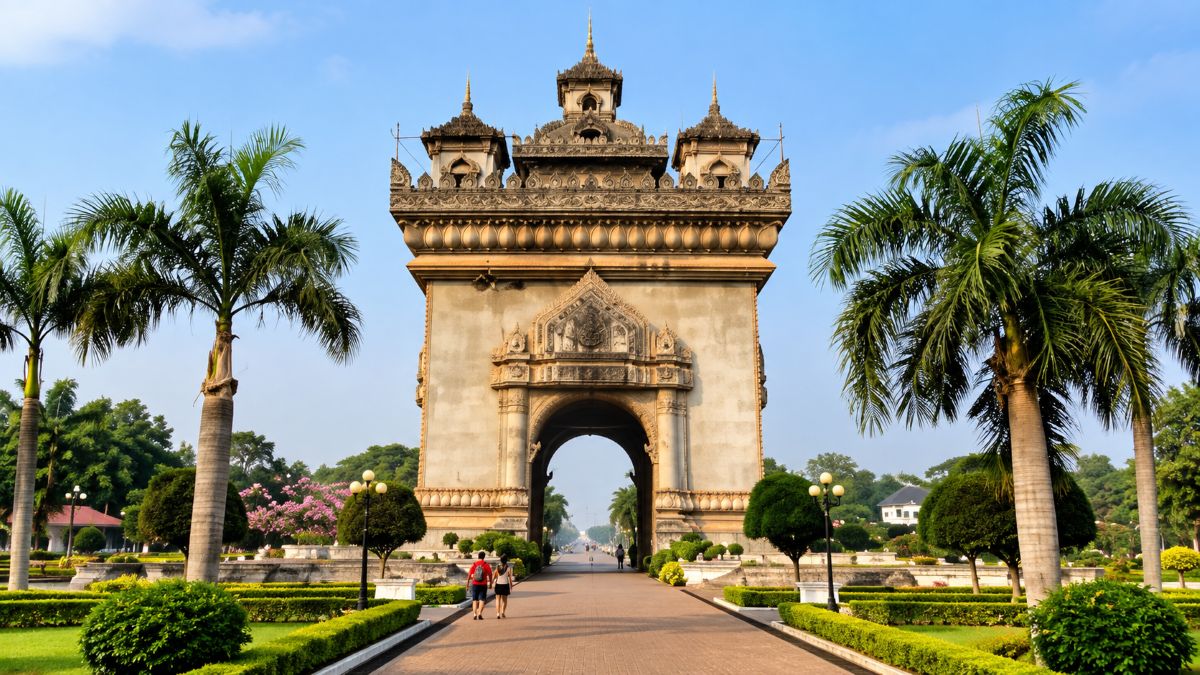
Laos is deepening its economic and regional connections with Thailand, Vietnam and other neighbouring markets as electricity exports continue to grow, creating an unusual challenge for a country increasingly dependent on tourism and modern infrastructure. Known as the “Battery of South-east Asia”, Laos has developed a major hydropower industry that supplies energy beyond its borders. Yet the expansion has exposed a difficult domestic contradiction: large volumes of electricity leave the country while households, businesses and public facilities can still experience disruptive power cuts.
For travellers, the issue is more than an energy-sector story. Electricity reliability increasingly affects hotels, restaurants, transport services, medical facilities, telecommunications and attractions, particularly in destinations such as Vientiane and Luang Prabang. Laos has made significant progress in expanding access to electricity, but ageing distribution infrastructure, seasonal hydropower fluctuations and rising urban demand are placing additional pressure on the domestic network. As the country seeks foreign investment and stronger regional connectivity, the quality and reliability of its infrastructure will become increasingly important to its tourism ambitions.
Advertisement
Laos has positioned hydropower at the centre of its economic development strategy. Rivers flowing through its mountainous landscape have provided the foundation for dozens of hydroelectric projects, enabling the country to sell substantial amounts of electricity to neighbouring economies.
Thailand remains a major market, while Vietnam has increased its role as it seeks additional sources of electricity for a growing manufacturing economy. Cross-border energy projects have also become part of wider regional plans to connect Southeast Asian electricity markets.
Advertisement
Advertisement
According to figures cited in the supplied report, Laos exported around two-thirds of its generated electricity in 2023. Official data also showed annual electricity exports rising from about 12 terawatt-hours in 2014 to 38 terawatt-hours in 2024, illustrating the dramatic expansion of the country’s export-oriented energy sector.
The government reported electricity export revenues of approximately US$2.65 billion in 2023. That income provides important economic support for a landlocked developing country, while foreign-funded energy projects can contribute to roads, transmission infrastructure and other investment.
However, the benefits are not distributed evenly. Some electricity-generating projects are linked directly to transmission lines serving foreign customers rather than being integrated into the domestic distribution system.
Tourism depends heavily on dependable infrastructure. Hotels need uninterrupted electricity for air conditioning, refrigeration, lighting, water systems and digital services. Restaurants require power for food storage and preparation, while airports, railway facilities, shops and attractions increasingly depend on electronic systems.
This makes electricity reliability an important part of the visitor experience in Laos.
Vientiane, the national capital, has experienced increasing electricity demand as apartment buildings, businesses and modern services expand. Infrastructure originally designed for a much smaller population and less energy-intensive economy is under pressure from urban development and widespread air conditioning.
The challenge becomes more complicated during the dry season, which typically extends from March to August. Hydropower accounts for a large share of Laos’ electricity production, and reduced water availability can affect generation.
For international visitors, short interruptions may be an inconvenience, but prolonged outages can have wider consequences. Digital payments, internet access, hotel services and transport communications can all be affected. In smaller communities, the impact may be more pronounced because alternative infrastructure and backup systems are limited.
Key Indicator Reported Situation Travel And Tourism Relevance Electricity exports About 38 TWh annually by 2024 Demonstrates Laos’ growing regional energy role Export share Around two-thirds of generation in 2023 Highlights the balance between domestic and external demand Export revenue About US$2.65 billion in 2023 Provides significant national economic income Hydropower share About 80% of production in 2024 Makes seasonal water availability important Electricity access Almost all of the population Shows major progress in national electrification Domestic grid Ageing in many areas Creates reliability concerns for communities and tourism businesses
Vientiane represents the changing face of Laos. The city is developing as a regional commercial and tourism centre, with new accommodation, restaurants, retail facilities and residential developments contributing to higher electricity consumption.
Yet the distribution network has not always expanded at the same pace.
The supplied report describes instances where power lines and transformers serving individual households have increasingly been required to support larger apartment developments. Such pressure can contribute to interruptions, especially when equipment reaches the limits of its capacity.
For travellers staying in Vientiane, reliable electricity is particularly important during hot weather. Laos’ tropical climate means that air conditioning is often a basic comfort rather than a luxury. During outages, residents may leave buildings to escape the heat, while visitors can face uncomfortable conditions in accommodation without adequate backup generation.
The issue also extends to essential services. A hospital in Vientiane reportedly experienced interruptions affecting equipment such as X-ray, ultrasound and ventilator systems before generators restored power. Such incidents demonstrate that electricity reliability is not simply a matter of visitor convenience but an essential infrastructure concern.
Laos’ tourism appeal extends well beyond the capital. Luang Prabang, a UNESCO World Heritage destination, attracts travellers with historic temples, traditional architecture, the Mekong River and surrounding landscapes. Smaller communities offer nature-based experiences, cultural tourism and access to rural areas.
These destinations can face different infrastructure challenges.
In rural areas, a damaged electricity line can reportedly affect an entire village when alternative connections are unavailable. Severe weather, falling trees and ageing infrastructure can therefore have a disproportionate impact on remote communities.
That matters for tourism because many visitors increasingly seek experiences outside major cities. Eco-lodges, guesthouses, restaurants and community tourism initiatives depend on reliable utilities while often operating far from major infrastructure hubs.
A resilient electricity system could therefore strengthen not only Laos’ urban economy but also its emerging rural tourism sector.
Laos’ electricity strategy is closely connected to its relationships with Thailand and Vietnam. Thailand remains its principal electricity export market, while Vietnam has been increasing imports as its energy needs grow.
The Monsoon Wind project, which became operational in 2025, adds another dimension to the regional energy picture. The project is described in the supplied report as the region’s largest wind farm, with its electricity destined for Vietnam rather than domestic Lao consumers.
This reflects a broader transformation in Southeast Asia. Energy is becoming increasingly interconnected, with countries buying and selling electricity across borders to manage demand, diversify supplies and support economic growth.
For Laos, the opportunity is considerable. Its geography gives it access to abundant renewable energy resources, while its position between major regional economies makes cross-border infrastructure strategically valuable.
But regional integration also creates a policy question: how much of the country’s energy capacity should serve export markets, and how much should be prioritised for domestic economic development?
Laos has significantly increased electricity access since the 1990s, when only a small proportion of the population had reliable access. Almost the entire population now has access to electricity, according to government figures cited in the report.
The next challenge is quality rather than simple availability.
An electricity network capable of supporting tourism requires more than connections to individual communities. It needs dependable transmission, modern transformers, maintenance capacity, backup systems and sufficient generation during periods of peak demand.
This becomes particularly important as Laos invests in tourism infrastructure. Hotels, airports, railways, restaurants and attractions increasingly depend on digital systems. The country’s tourism sector cannot easily separate visitor growth from infrastructure reliability.
Modernising the domestic grid could also help Laos capture more of the economic value generated by its expanding energy industry.
The central challenge for Laos is finding a sustainable balance between export revenue and domestic requirements. Electricity sales provide valuable foreign earnings and strengthen regional economic relationships, but shortages at home can undermine public confidence and business activity.
The situation is especially sensitive when Laos must import electricity despite being a major regional exporter. The supplied report notes that the country has at times struggled to meet domestic requirements and its export commitments, particularly during periods when hydropower generation falls.
For tourism, this creates a direct lesson. Natural resources can attract investment, but reliable infrastructure determines whether economic benefits translate into better everyday services.
Laos’ future as a tourism destination will therefore depend not only on its temples, rivers, mountains and cultural heritage but also on less visible systems such as electricity networks.
Visitors should not interpret occasional power interruptions as a reason to avoid Laos. The country remains an important Southeast Asian destination with strong cultural and natural attractions. Instead, travellers should understand that infrastructure conditions can vary considerably between urban and rural locations.
Accommodation with backup generators can provide greater resilience during interruptions. Travellers heading into remote regions should also expect fewer modern services and plan accordingly, particularly when relying heavily on electronic payments, internet connectivity or refrigerated medicines and food.
Tourism operators, meanwhile, have an opportunity to strengthen resilience through energy efficiency, backup generation and renewable-energy solutions. Such measures can protect businesses while reducing pressure on the national grid.
The wider story is ultimately about development. Laos is becoming more deeply integrated with neighbouring economies through energy, transport and tourism, but its infrastructure must evolve alongside those ambitions. The country’s success as the “Battery of South-east Asia” will have greater meaning if the energy transition also improves everyday life and supports a stronger, more dependable visitor economy.
Why is Laos known as the Battery of South-east Asia?
Laos is known by this nickname because it generates large quantities of electricity, particularly through hydropower, and exports substantial amounts to neighbouring countries.
Which countries buy electricity from Laos?
Thailand is the principal market, while Vietnam has increasingly expanded electricity imports from Laos.
Why does Laos experience power outages despite exporting electricity?
Some export projects are connected through dedicated transmission systems, while parts of Laos’ domestic distribution network are ageing and struggling to meet rising demand.
How important is hydropower to Laos?
Hydropower accounts for about 80 per cent of electricity production according to the figures cited in the supplied report, making water availability particularly important.
Does the electricity situation affect tourism in Laos?
Yes. Power interruptions can affect accommodation, restaurants, communications, digital payments, air conditioning and other services used by travellers.
Is Vientiane affected by electricity shortages?
The supplied report describes recurring outages in Vientiane, where rapid urban development and increased electricity consumption are putting pressure on ageing infrastructure.
Can electricity problems affect rural tourism?
Yes. Rural areas may have fewer backup connections, meaning damage to power lines can affect entire villages and businesses serving visitors.
What is the Monsoon Wind project?
It is a major wind-energy development in Laos whose electricity is destined for Vietnam, adding wind power to the country’s traditionally hydropower-focused energy sector.
Has electricity access improved in Laos?
Yes. Government figures cited in the report indicate that almost the entire population now has access to electricity, compared with only about 15 per cent in 1995.
What is the biggest infrastructure challenge for Laos tourism?
Beyond expanding access, Laos needs a more resilient domestic electricity grid capable of supporting growing urban demand, tourism development and modern businesses while maintaining its regional export commitments.
Advertisement
Advertisement
Advertisement














Sunday, September 13, 2026

Sunday, September 13, 2026

Sunday, September 13, 2026
Sunday, September 13, 2026
Sunday, September 13, 2026

Sunday, September 13, 2026

Sunday, September 13, 2026

Sunday, September 13, 2026