

Naga Fireball World Festival and Others Put Thailand’s Mekong Mystery Tourism on the Global Map

Published
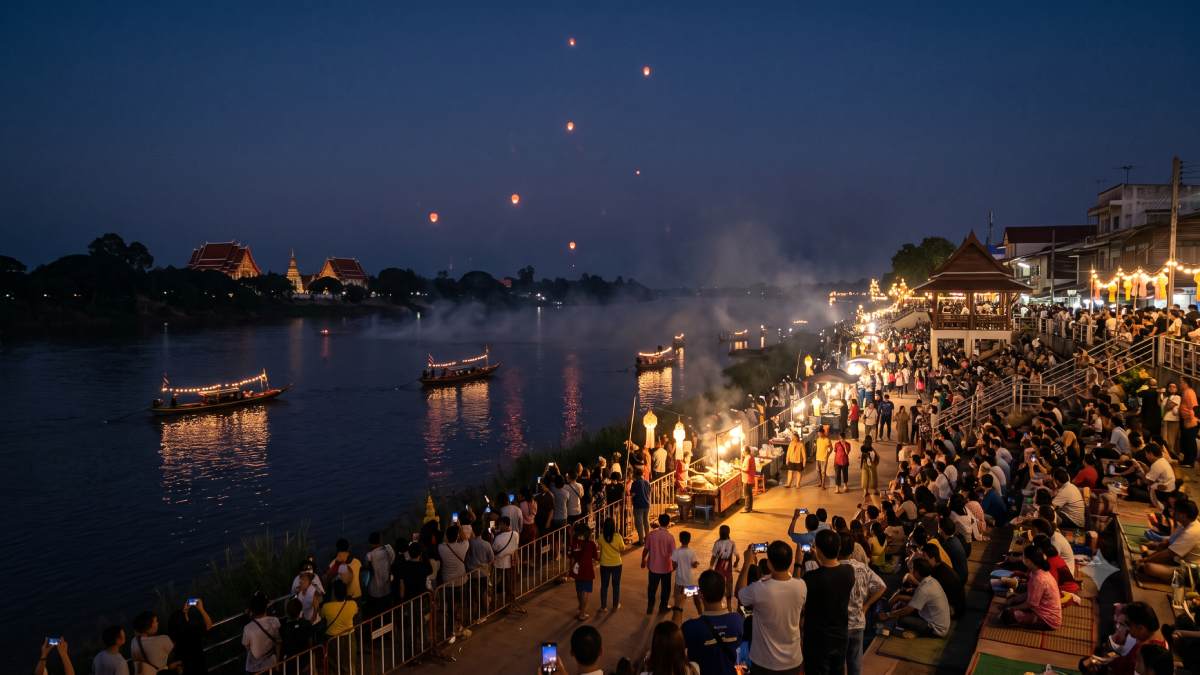
Tourism throughout East and Southeast Asia is being radically transformed by alterations in travel behaviors of younger generations. In the current travel context, new outbound travelers tend to avoid standard sightseeing and look for more immersive trips characterized by an engaging story. Against this backdrop, mysterotourism, which implies exploring mysterious environmental phenomena, esoteric environments, and regional myths, has become a tool for the creation of destination. The transformation of scientific uncertainty and folkloric elements into valuable storytelling tools has allowed secondary border regions to develop their economies by creating overnight economies.
Demographics and High-Yield East Asian Traveler Behaviour
A structural realignment is being experienced across the tourism ecosystem of East and Southeast Asia, driven by evolving consumer priorities among Gen Z and Millennial cohorts. Originating from high-yield outbound source markets including China, Japan, South Korea, and Singapore, passive mass-market sightseeing itineraries are increasingly being abandoned in favour of highly engaging, narrative-rich experiences. Active participation, cultural immersion, and social currency are prioritised over static monument viewing. Within this evolving paradigm, mysterotourism—defined as intentional travel centered around unexplained natural phenomena, esoteric landscapes, and localized folklore—has been established as a key growth driver for regional tourism boards.
A strong affinity is demonstrated by contemporary Asian travelers for experiences wherein intellectual curiosity is blended with atmospheric, nocturnal exploration. Rather than over-touristed urban hubs being visited, remote destinations offering a sense of mystery and scientific enigma are sought out. Consequently, core components of modern itineraries have become night photography, guided nocturnal eco-tours, cultural anthropology walks, and twilight river cruises. These trends are being capitalised upon by destination management organisations (DMOs) to attract free independent travelers (FITs), by whom longer average stays and higher direct expenditure in local host communities are typically recorded when compared to traditional group tour packages.
Scientific Ambiguity as a Destination Marketing Strategy
In conventional destination branding, unresolved scientific questions or ambiguous site characteristics were historically viewed as marketing liabilities. However, within the framework of mysterotourism in the Greater Mekong Subregion, scientific ambiguity is utilised as a high-value destination asset. When a definitive, single-cause scientific explanation is lacked by a natural occurrence, a dual-narrative dynamic is fostered that appeals simultaneously to rationalist, eco-focused travelers and spiritually inclined heritage tourists.
Advertisement
Advertisement
The manner in which international travel interest is generated by unresolved natural occurrences is exemplified by the annual manifestation of the Naga Fireballs (Bung Fai Paya Nak) along the Mekong River in northeastern Thailand. Each autumn, reddish luminous orbs are seen rising silently from the riverbed into the night sky before vanishing. It is suggested by geochemical hypotheses that the phenomenon is caused by the spontaneous combustion of marsh gas—predominantly methane mixed with trace phosphine compounds—released from decomposing organic matter in deep underwater river fissures during seasonal hydrostatic pressure changes. Conversely, it is held by local Theravada Buddhist and indigenous animist traditions that the fireballs represent sacred offerings made by the Phaya Nak, mythical serpent deities paying homage to the Lord Buddha as he descends from the Tavatimsa realm at the conclusion of the Buddhist Lent (Ok Phansa).
Far from conflict being created, the overall destination appeal is enhanced by these parallel scientific and spiritual narratives. Unresolved natural occurrences are effectively harnessed by tourism authorities, transforming them into dynamic storytelling catalysts through which visitor dwell times are extended and demand for specialized evening excursions is increased.
Advertisement
Advertisement
Engineering Rural Night Economies and Economic Decentralisation
Frameworks for Monetising Brief Temporal Phenomena
A recurring operational challenge for rural destination management is presented by the short duration and extreme seasonality of natural occurrences. In border districts along the Mekong River in Thailand’s Nong Khai Province—specifically Phon Phisai, Rattanawapi, Mueang Nong Khai, Sri Chiang Mai, and Sangkhom—the primary observation window for the Naga Fireballs is confined to a single full-moon evening in October. Left unmanaged, severe infrastructural congestion and transient economic surges can be created that fail to deliver sustainable long-term value for local residents.
To overcome these temporal constraints, event management has been restructured by municipal and provincial authorities around an expanded rural night-economy engineering framework. By establishing multi-day cultural events around the central observation night—such as the Naga Fireball World Festival and the “Miracle of Faith” festival—a single evening event is effectively converted into a week-long regional celebration. Strategic event programming includes illuminated boat processions, riverfront light-and-sound theatrical productions detailing regional folklore, synchronized traditional worship dances involving thousands of local residents, and multi-day street bazaars. Through this spatial and temporal expansion, visitor density is distributed across multiple days and adjacent municipalities, generating sustained commercial activity throughout the wider border corridor.
Advertisement
Advertisement
Micro-Economy Supply Chain Multipliers and Local Cash Velocity
The economic impact of mysterotourism in the Greater Mekong Subregion is extended directly into informal micro-economies and small and medium-sized enterprises across host districts. During peak festival periods, a high-velocity multiplier effect is triggered across fundamental service sectors, benefiting street-food vendors, family-operated homestays, river transportation operators, and local handicraft artisans.
| Economic Sector | Micro-Enterprise Activity | Local Multiplier & Revenue Impact |
| Gastronomy & Street Vending | Food stalls, night market vendors, pop-up riverfront dining | High velocity of cash transactions directly benefiting local agricultural producers and food suppliers. |
| Micro-Accommodation | Village homestays, temporary farm stays, local guesthouses | Direct financial yield retained by local households, limiting economic leakage to external hotel chains. |
| Local Transport Services | Songthaew drivers, long-tail boat operators, local tuk-tuks | Elevated daily fare revenue servicing visitor movement between transit hubs and viewing zones. |
| Artisanal Goods & Crafting | Handwoven Isan textiles, carved wooden souvenirs, Naga-themed amulets | Seasonal demand spikes incentivising year-round cottage industry production. |
| Cultural Performances | Youth performance groups, traditional musicians, ritual dance troupes | Direct remuneration for local cultural custodians, supporting intangible cultural heritage preservation. |
The scale of this localized economic activity is underscored by official tourism data recorded during peak observation periods. Official records show that during peak festival nights, fireball sightings—such as 240 fireballs recorded in Rattanawapi district and 20 in Phon Phisai district, contributing to totals of 260 to 280 observed fireballs statewide—attract over 400,000 visitors, generating significant seasonal revenue for northeastern Thailand. By ensuring that pop-up vendor spaces, temporary parking zones, and riverfront staging are managed by village committees, household income retention is maximised and strong community support for tourism activities is fostered.
Mitigation of Seasonality via Year-Round Heritage Trails
To prevent sharp economic declines following the conclusion of annual festival events, permanent, year-round “myth-and-mystery” heritage trails are being established by destination management organisations. By connecting physical sites associated with regional folklore, geological features, and sacred geography, steady tourism engagement across all four quarters is maintained by secondary border towns.
In Nong Khai and neighboring Bueng Kan provinces, year-round itineraries link sacred cave systems, ancient riverside temples displaying serpent-related relics, and geological sandstone formations associated with ancient legends. Independent travelers are enabled to explore these esoteric trails throughout the year via self-guided mobile applications, multilingual interpretative signage, and curated night-walk tours. Single-event visitors are thereby transformed into year-round heritage tourists, generating stable employment in hospitality, guiding, and local transport.
Advertisement
Advertisement
Cross-Border Synergy and the Greater Mekong Subregion Framework
Binational Infrastructure and Physical Transit Corridors
The long-term development of transboundary mysterotourism is underpinned by robust physical connectivity and coordinated cross-border management. The Mekong River serves as a shared ecological and economic corridor between Thailand and the Lao People’s Democratic Republic (Lao PDR). Under the Greater Mekong Subregion Economic Cooperation Program, launched in 1992 with the support of the Asian Development Bank (ADB), physical infrastructure integration has long been prioritized to enhance regional trade, transport, and tourism connectivity.
The First Thai-Lao Friendship Bridge, stretching 1.17 kilometres across the Mekong River between Nong Khai Province in Thailand and Vientiane Prefecture in Laos, acts as a primary entry point for international visitor flows. Operating daily between 06:00 and 22:00, seamless cross-border travel is facilitated via dedicated shuttle bus services, private vehicles, and rail links connecting Nong Khai Railway Station to Thanaleng and Khamsavath stations in Vientiane. During peak festival windows, efficient transit for tour coaches and independent travelers moving between riverbank viewing locations on both sides of the border is ensured through coordinated traffic management protocols between Thai and Lao border control agencies.
Furthermore, binational cooperation is extended to waterway management during night-time viewing events. Designated navigation channels are established by joint river patrols operated by Thai and Lao marine police, ensuring that local passenger craft and spectator boats operate safely without disrupting the riverbed environment or compromising public safety.
Policy Alignment, Visa Harmonisation, and Border Management
Physical transit infrastructure must be paired with streamlined border policies to foster a seamless regional tourism corridor. Under the GMS Cross-Border Transport Facilitation Agreement, measures have progressively been implemented to reduce administrative border friction, recognize driver documentation, and simplify vehicle transit permits.
To fully capture cross-border night-economy spending, the further harmonisation of visa policies between Thailand and Laos has been recommended by regional travel experts. The exploration of both riverbanks under a unified travel authorization is facilitated through the expansion of joint visa initiatives—frequently styled as “Two Kingdoms, One River.” Currently, eligible international visitors crossing the Thai-Lao Friendship Bridge can obtain a 30-day Tourist Visa on Arrival alongside online e-Visa processing. Border processing delays are significantly reduced and evening cross-border dining and cultural activities in both Nong Khai and Vientiane are encouraged when immigration checkpoint hours are extended until midnight during peak event nights, combined with dedicated fast-track lanes for registered tour groups.
Multilateral Development Interventions and Infrastructure Upgrades
Critical financial and technical support for tourism-related infrastructure projects along GMS economic corridors is provided by multilateral development partners, particularly the Asian Development Bank. Under the Second Greater Mekong Subregion Tourism Infrastructure for Inclusive Growth Project, targeted investments have been allocated to secondary towns across Cambodia, Lao PDR, and Thailand.
Advertisement
Advertisement
In Lao PDR’s Champasak and Vientiane provinces, as well as adjacent border areas, major infrastructure enhancements have been delivered through ADB-funded initiatives. Key project achievements include improving passenger ferry ports along the Nam Ngum 1 Reservoir, upgrading access roads to rural tourist sites (including 21.11 kilometres of improved roads around Don Det and Don Khone), paving urban access roads, constructing flood protection structures, and building modern sanitary landfills in Vang Vieng and Kep. Through these environmental and urban infrastructure upgrades, it is ensured that sudden influxes of event visitors can be managed by secondary border towns without local municipal services being overwhelmed or environmental degradation being caused.
Sustainable Carrying Capacity and Environmental Mitigation
Smart Crowd Dispersion and Spatial Management
Potential ecological risks, including riverbank erosion, vegetation damage, and structural strain on soft embankment soils, are presented by the concentration of large crowds along riverbank viewing locations. The management of these carrying-capacity risks requires proactive, data-driven spatial management strategies.
Digital crowd dispersion technologies and real-time traffic monitoring systems are increasingly being deployed by provincial tourism authorities. Visitor concentration along the river promenade is tracked in real time through the analysis of cellular network density data and GPS-enabled traffic monitoring. When maximum safe capacity is approached in specific viewing sectors, arriving vehicles are redirected to alternative viewing locations in nearby districts such as Phon Phisai, Rattanawapi, or Bueng Kan via automated digital road signage and mobile notification systems.
Physical infrastructure interventions further mitigate environmental impact. Soil compaction is prevented, native bank vegetation is protected, and safe, structured vantage points are provided for spectators through the installation of elevated timber boardwalks and tiered viewing platforms along high-density river stretches.
Nocturnal Ecological Protection and Pollution Mitigation
The management of light and noise pollution is vital when night-economy corridors are developed along sensitive aquatic ecosystems. Skyglow can be created by excessive artificial lighting along riverbanks, obscuring faint light occurrences—thereby diminishing the visitor experience—while nocturnal river fauna, fish navigation, and benthic species are disrupted.
Environmental management guidelines are enforced by municipal authorities along the Mekong corridor during festival periods:
Advertisement
Advertisement
- Directional Low-Kelvin Lighting: Shielded, downward-facing fixtures with warm color temperatures below 3,000 Kelvin are mandated for outdoor lighting along riverfront walkways, reducing light pollution and minimizing ecological disruption.
- Decibel Regulations: Strict decibel limits are enforced on amplified sound systems and public address equipment after 22:00, and acoustic baffling is required on riverfront performance stages.
- Solid Waste Management Protocols: Pop-up recycling and waste collection stations are placed every 100 metres along major viewing corridors, supported by overnight cleanup teams funded through local vendor permit fees.
Comparative Regional Benchmarks of Esoteric Natural Phenomena
Lessons from Comparative Asian Case Studies
The strategy of leveraging mysterious natural phenomena to foster rural economic growth is successfully utilized across several Asian destinations, illustrating diverse models for monetising esoteric, geological, acoustic, and atmospheric phenomena.
Aleya Ghost Lights (West Bengal and Bangladesh)
In the coastal wetlands and peat bogs of the Sundarbans, flickering marsh lights known as Aleya lights have long been observed by local fishermen. While they are viewed in folklore as spirits of deceased fishermen, the glow is attributed in scientific studies to the spontaneous ignition of marsh gas and phosphine produced by decaying organic matter in stagnant waters. A low-impact model for wetland-based mysterotourism has been demonstrated in West Bengal, where these occurrences have been incorporated by tourism operators into night-time kayak safaris and guided eco-tours.
Chir Batti (Gujarat, India)
In the Banni Grasslands bordering the Great Rann of Kutch salt desert, luminous spheres that change colours and move quickly across the dark desert plain—known as Chir Batti (“ghost lights”)—are frequently observed by local communities. The phenomenon has been successfully featured by Gujarat Tourism as a night-time draw alongside the annual Rann Utsav festival. Guided night desert safaris are offered to visitors staying in temporary tent cities near Dhordo, illustrating how broader regional tourism events can be enhanced by unexplained natural phenomena.
Khao Kala Mystery Lights (Nakhon Sawan, Thailand)
Located near Bueng Boraphet—Thailand’s largest freshwater lake—a reputation for unusual aerial light displays and alleged electromagnetic anomalies has been established by Khao Kala (Hill 145). The location has evolved into a niche hub for sky-watching enthusiasts, stargazing groups, and esoteric researchers. Designated camping zones, viewing platforms, and interpretative signage have been installed by local tourism committees, capturing regular weekend travel demand from nearby urban centers such as Bangkok.
Singing Sand Dunes (Altyn-Emel, Kazakhstan)
The potential of acoustic mysterotourism is demonstrated in Central Asia by the Singing Sand Dunes of Altyn-Emel National Park. When dry sand grains slide down the 150-metre dunes during windy weather, a deep, organ-like humming sound is created by friction. Structured eco-tourism protocols have been developed around the dunes by Kazakh national park authorities, requiring certified park guides, designated vehicle parking zones, and controlled footpaths so that the acoustic properties of the dunes are preserved while national park revenue is generated.
Peatland Luminescent Phenomena (Malaysia and Indonesia)
Across the tropical peat swamp forests of Borneo and Sumatra—such as Sarawak’s Bako National Park—natural luminescent phenomena, including bioluminescent fungi, glowing peatland vapors, and synchronized firefly colonies along riverbanks, are highlighted through nocturnal eco-tours. Silent, electric-powered boat tours are operated by local river communities, combining scientific explanations of tropical bioluminescence with indigenous river folklore.
Advertisement
Advertisement
Economic Implications, Expert Perspectives, and Future Outlook
Macroeconomic Impact and Policy Roadmap
A clear pathway for economic decentralization is provided by the strategic development of mysterotourism in the Greater Mekong Subregion, transferring tourism revenue from primary urban destinations to secondary border districts. Local employment is boosted, micro-enterprise growth is stimulated, and cross-border trade relationships are strengthened by regional authorities through the utilisation of natural phenomena to anchor multi-day night-economy corridors. The value of these regional cultural events as key components of national Soft Power strategies has been recognized by senior government officials, enhancing regional visibility and driving international tourism growth.
To maintain this growth trajectory, four strategic pillars should be prioritized by regional policymakers, destination managers, and international development agencies:
- Harmonise Cross-Border Visa Protocols: Joint visa mechanisms should be expanded by Thailand and Lao PDR during key festival periods, facilitating seamless passage across the First Thai-Lao Friendship Bridge. Checkpoint operating hours should be extended to midnight during major events, supported by increased shuttle transport capacity.
- Upgrade Municipal Infrastructure: Multilateral development funding—such as the ADB’s TIIGP2 program—should continue to be leveraged by governments to improve public transport access, construct elevated riverfront walkways, and build modern waste management facilities in secondary border towns.
- Enforce Environmental Safeguards: Clear lighting and noise regulations should be adopted by municipal authorities along river corridors, protecting nocturnal river ecosystems and preserving the visual quality of natural light phenomena for visitors.
- Promote Year-Round Heritage Corridors: Interconnected, year-round “myth-and-mystery” routes should be established by destination marketing organisations. Consistent tourism activity and stable income for host communities are ensured throughout the year by linking geological sites, sacred temples, and local heritage destinations.
A powerful strategy for decentralising rural growth along transboundary river corridors is provided by developing mysterotourism in the Greater Mekong Subregion. Temporary visitor spikes are converted into sustained economic opportunities when unexplained natural phenomena like the Naga Fireballs are transformed by regional authorities into structured multi-day festivals. Success depends on binational transport integration, streamlined border visa procedures, and dynamic crowd dispersion systems that protect fragile riverbank environments. As Asian consumer demand shifts toward experiential and enigma-driven travel, high-value tourism expenditure will be captured by secondary border towns through coordinated regional governance, while their natural landscapes and cultural heritage are preserved for long-term sustainability.
Conclusion
The practice of mysteriotourism in the Mekong region corridor shows that there is a way through which scientific ambiguity and cultural legends can be systemically transformed to drive decentralization in the economy of rural areas. Through transit cooperation, balanced nightlife program and environmental protection measures, secondary border regions manage to attract expensive tourist spending.
Advertisement
