
Afghanistan Faces Visa Brakes Along With Other Nations Amid Surging Asylum Claims And Stricter Border Controls

Published
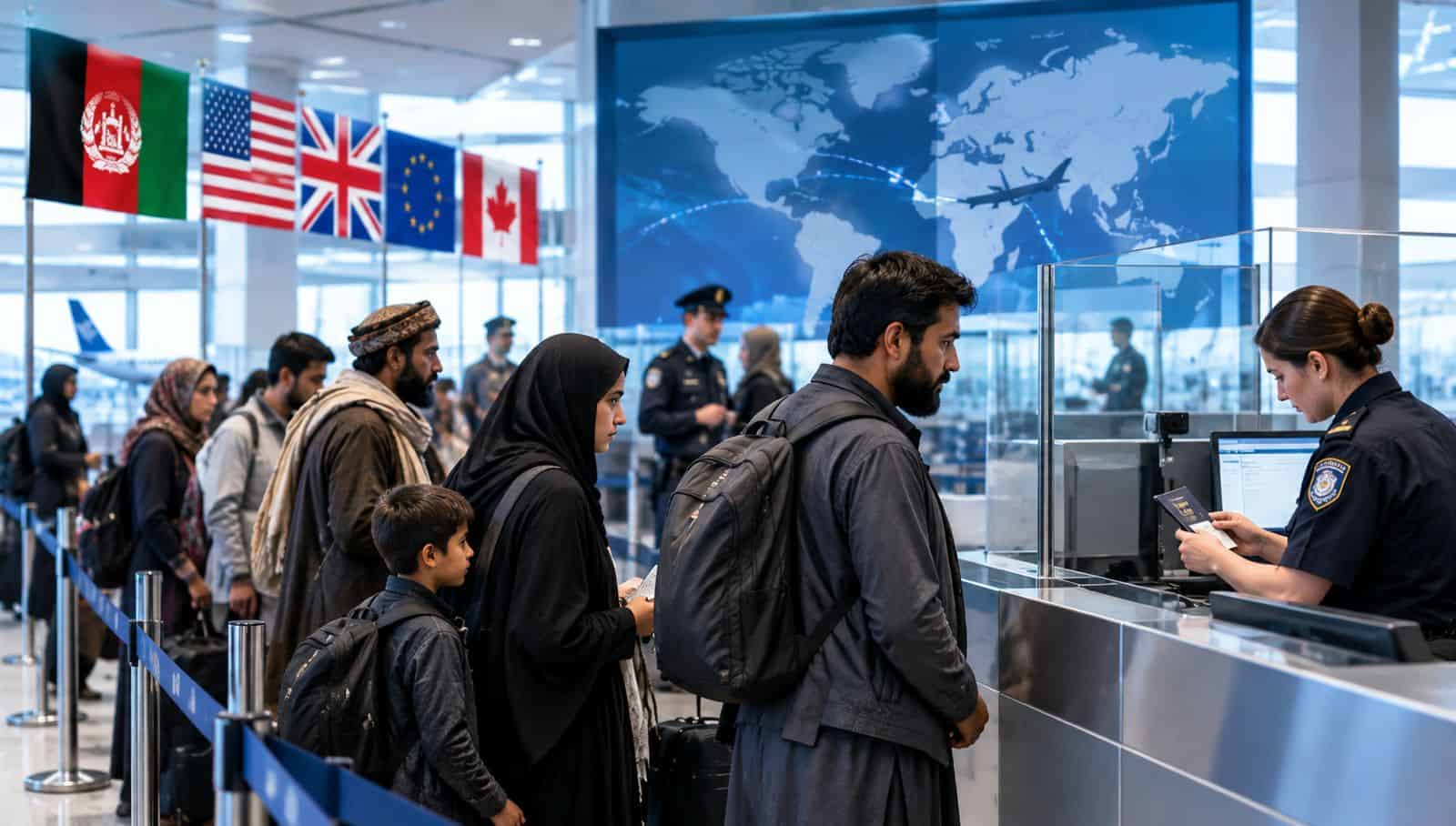
As governments worldwide adopt stricter migration policies, Afghanistan and other nations experience visa restrictions as countries impose emergency brakes on an influx of asylum seekers and tighten border controls. Authorities have imposed emergency limits to try to restrict the growing number of protection applications. As a result, traditional consular channels for study and work visas are encountering unprecedented interference.
Governments implemented emergency visa brakes to address unexpected surges in post-arrival asylum claims and to protect domestic infrastructure from systemwide administrative strain. Governments are restricting the number of entries due to the rapid conversion of temporary legal entrants into long-term protection applicants. Policymakers believe that imposing strict quantitative thresholds is essential to maintain the viability of legal immigration channels in the long term.
The international immigration landscape is encountering unprecedented friction as host nations impose stringent emergency visa brakes and curbs to address post-arrival asylum conversions and surges in travel numbers. Recent immigration policy overhauls target specific nationalities within study and temporary work categories due to disproportionate protection claims presented following their legal entry. Consequently, countries such as Afghanistan, Cameroon, Myanmar, and Sudan find themselves at the epicenter of global debates over border controls, legal entry channels, and humanitarian responsibilities.
Why Are Certain Nations Facing Sudden Visa Bans?
Global migration authorities have introduced emergency visa restrictions to combat systemic loopholes where temporary permits serve as conduits for permanent settlement applications. International policymakers argue that these mechanisms are necessary to preserve the integrity of legal immigration routes and protect domestic infrastructure from unexpected surges. However, critics maintain that blanket restrictions fail to address the root causes of displacement and penalize legitimate students and workers fleeing volatile regions. Furthermore, diplomatic tensions often arise when destination countries unilaterally sever consular services without providing clear transitional frameworks for affected applicants.
Advertisement
Advertisement
Recent data compiled by immigration watchdogs reveals that destination countries such as the United Kingdom have tightened thresholds to a strict percentage of total visa issuances. When asylum applications from a specific country of origin exceed predetermined administrative limits within a single fiscal period, emergency brake protocols are automatically triggered. This reactive approach has sparked considerable debate among legal experts regarding its long-term viability and compliance with international human rights standards. Ultimately, governments must balance national security interests with their moral obligations to international students and economic contributors from developing economies.
What Impact Do These Restrictions Have on Global Mobility?
The abrupt implementation of emergency visa freezes creates severe logistical hurdles for applicants who have already secured university admissions or employment contracts abroad. Academic institutions and corporate employers frequently find themselves scrambling to fill vacant positions or manage unexpected enrollment drops caused by sudden consular policy shifts. Additionally, students who have invested significant financial resources into standardized tests and application fees face devastating setbacks when visas are withheld at the final stage. This climate of uncertainty discourages talented professionals from seeking opportunities in countries perceived as having volatile or unpredictable immigration policies.
Advertisement
Advertisement
Educational hubs across Europe and North America report that international student revenues are vital for maintaining institutional financial stability and funding advanced research programs. When key source countries are abruptly blacklisted, universities experience immediate budgetary shortfalls that force them to restructure department offerings and tuition fees. At the same time, prospective scholars are forced to pivot toward alternative destinations like Germany, Japan, or regional education centers that offer more stable immigration frameworks. Consequently, traditional superpower nations risk losing their competitive edge in attracting top global talent due to increasingly rigid and reactionary border controls.
How Are Humanitarian Crises Intersecting With Visa Rules?
Navigating the intersection of humanitarian protection and strict economic migration controls remains one of the most complex challenges facing contemporary foreign policy ministries. Nationals escaping active civil wars, military coups, or widespread political persecution often rely on student and work visas as their only viable means of escaping physical danger. When host nations block these legal pathways under the guise of preventing asylum exploitation, vulnerable populations are effectively trapped in dangerous environments with no safe outlet. Humanitarian organizations continually argue that denying visa access to individuals from conflict zones directly contradicts international commitments to protect refugees and asylum seekers.
Advertisement
Advertisement
Governments defend these measures by asserting that the conventional asylum system was never intended to run parallel to traditional educational and economic migration channels. They emphasize that maintaining orderly borders requires distinct separation between humanitarian resettlement programs and merit-based visa categories to prevent administrative gridlock. Nevertheless, human rights advocates point out that legal entry routes have steadily shrunk over the past decade, leaving desperate individuals with virtually no lawful alternatives. Resolving this profound policy dilemma will require international cooperation, transparent data sharing, and modernized frameworks that protect genuine refugees without compromising national sovereignty.
“Recent data reveals that emergency visa brakes and strict data-driven thresholds introduced by migration authorities are fundamentally altering global mobility patterns. By penalizing destination countries with disproportionate post-arrival asylum conversions, policies targeting nations like Afghanistan, Cameroon, Myanmar, and Sudan establish a complex administrative precedent. While governments defend these quantitative limits as vital safeguards for domestic processing capacity and border integrity, critics argue that blunt restrictions effectively sever lawful pathways for vulnerable populations. Consequently, academic institutions, corporate recruiters, and international travelers must navigate an increasingly unpredictable consular landscape where ordinary student and work permits are subject to sudden, reactive freezes based on shifting geopolitical metrics and rolling historical data windows.”
— Anup Kumar Keshan, Founder and Editor-in-Chief, Travel And Tour World
What Lies Ahead for International Immigration Frameworks?
The future of global mobility depends heavily on how effectively destination countries can reform their visa processes to be both secure and adaptable. Policymakers are increasingly exploring biometric pre-screening, advanced data analytics, and bilateral cooperation agreements to filter out potential policy abuses before applicants depart their home countries. By investing in sophisticated risk assessment tools, governments hope to avoid blunt instruments like blanket visa bans that alienate entire populations and strain diplomatic relations. Collaboration between destination nations and countries of origin will be paramount in establishing sustainable migration corridors that benefit all participating economies.
Advertisement
Advertisement
As geopolitical tensions and climate pressures continue to drive global displacement, immigration systems must evolve beyond reactionary measures to address structural realities. Experts suggest that creating flexible, tiered visa programs tied to verifiable return agreements could alleviate the pressures that currently trigger emergency brakes. Ultimately, the success of international travel frameworks will be measured by their ability to maintain public trust while upholding the fundamental values of fairness, mobility, and human dignity.
| Country | Primary Visa Restriction Type | Core Driver for Implementation |
| Afghanistan | Study and Skilled Worker Visas | High volume of post-arrival protection claims exceeding Home Office tolerance thresholds. |
| Cameroon | Study Visas | Steep escalation in study-to-asylum conversion rates over comparative baseline metrics. |
| Myanmar | Study Visas | Statistical spikes in individuals seeking refuge following legal educational entry. |
| Sudan | Study Visas | Significant surge in protection applications lodged after arrival on student permits. |
The UK Home Office enforces its emergency visa brake policy using a specific, data-driven quantitative threshold model to evaluate migration routes. This mechanism monitors how frequently temporary entry permits convert into post-arrival asylum or protection claims. Consequently, immigration officials rely on strict statistical formulas rather than subjective assessments to determine when a country of origin faces entry restrictions.
What Numerical Thresholds Trigger the Emergency Visa Brake?
The official regulatory framework mandates that a specific nationality and visa route combination must cross two distinct quantitative criteria to activate the emergency brake. First, a minimum baseline volume of at least 100 individuals of a particular nationality must have entered the United Kingdom via a specific legal route and subsequently lodged an asylum claim. Second, those resulting protection claims must account for 15% or higher of the total number of visas issued for that specific immigration pathway over the measured reference period.
Government impact assessments utilize Home Office immigration statistics to calculate these conversion metrics across rolling historical windows. When analyzing data leading up to the policy implementation, certain affected nations drastically exceeded these minimum legal limits. For instance, official reviews recorded extraordinarily high conversion percentages for specific routes, demonstrating why emergency interventions were formally triggered.
How Are Conversion Rates Calculated Across Routes?
The Home Office calculates the conversion rate by comparing the total volume of entry clearance visas issued to nationals of a specific country against the total volume of asylum applications filed by holders of that exact visa type. This statistical evaluation treats each designated category—such as Student visas or Skilled Worker visas—as an independent pathway. Government statisticians aggregate data over annual and multi-year monitoring cycles to spot sudden statistical anomalies or systemic escalations in post-arrival protection claims.
Official impact metrics highlighted extreme statistical divergences that heavily influenced the policy rollout. Afghan nationals applying via Skilled Worker and Student routes showed conversion rates exceeding 100%, driven by complex administrative tracking where recorded asylum applications outpaced baseline entry clearances during specific review cycles. Meanwhile, Cameroon and Myanmar registered study-to-asylum conversion metrics of 32% and 16% respectively, comfortably surpassing the baseline 15% threshold required to mandate a formal visa freeze.
Advertisement
Advertisement
For complete official details on current visa policies, consular frameworks, and migration statistics, consult the UK Home Office Guidance Portal.
What Data Sources Drive Ongoing Policy Reviews?
The administrative data governing these restrictions is drawn directly from centralized border control databases, visa processing platforms, and asylum intake registers managed by UK Visas and Immigration. These comprehensive data systems cross-reference biometric identifiers and passport nationalities to track individual migration journeys from initial entry clearance to potential secondary protection filings. Regular quarterly statistical publications provide the empirical foundation required to evaluate whether existing restrictions should remain active or be lifted.
Immigration analysts note that this data-centric approach gives the Home Office immense flexibility to adjust its targeted restrictions dynamically. As periodic administrative reviews take place, the government can theoretically introduce new national restrictions or lift existing bans depending on fluctuating quarterly conversion data. Ultimately, this metric-driven model transforms ordinary consular operations into a reactive risk-management tool designed to protect domestic processing capacities.
The active civil conflicts, substantial economic disturbances, and political persecution are the leading factors influencing these rising asylum trends among vulnerable populations towards safer regions. Many individuals take advantage of student or work permits as an alternative way out of the unsafe environment that they are currently living in. It is the lack of appropriate humanitarian channels which ends up forcing most of these displaced people to turn to economic migration channels as the primary means of obtaining refuge.
Tightened border controls lead to limited legal entry opportunities and cause significant disruptions to both university enrollment and corporate staffing on a global scale. The restricted access to prospective students and skilled workers experience excruciating uncertainty as the visa application windows are being closed down abruptly or completely eliminated. As a result, many of the affected talents are choosing to redirect their attention to other more welcoming destinations.
Advertisement
