
Ethiopia Expands Boeing 737 MAX Fleet as Addis Ababa Drives Faster African Network Growth

Published
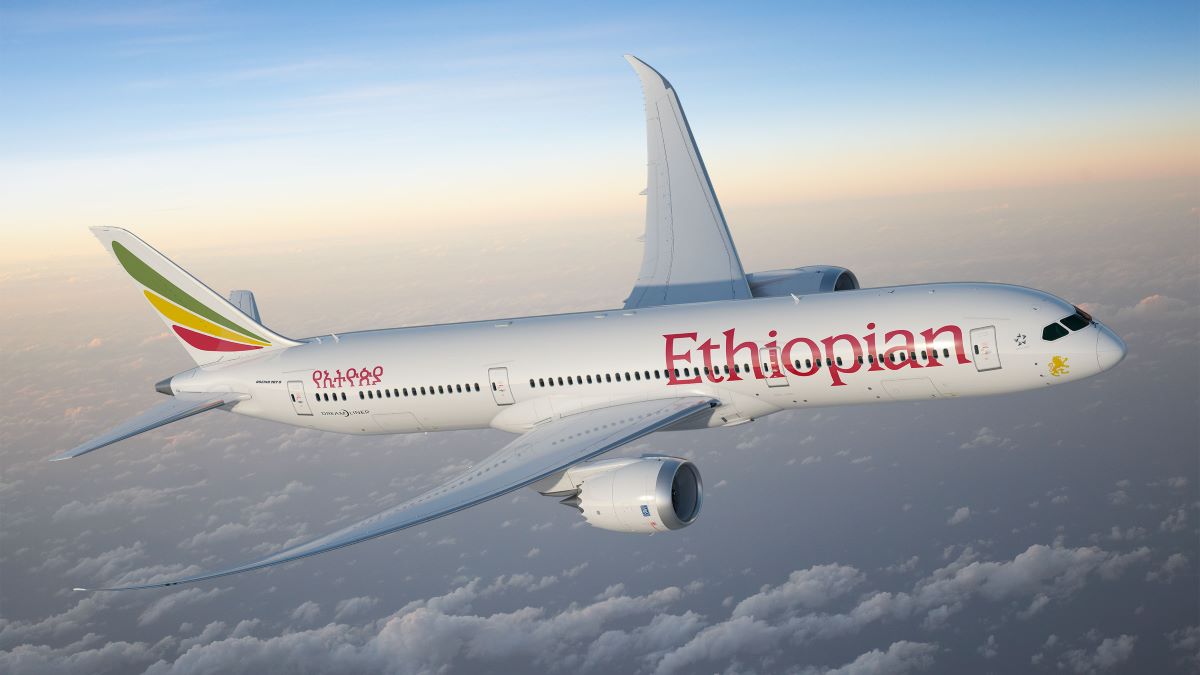
Ethiopia is expanding its Boeing 737 MAX fleet as Addis Ababa drives faster African network growth, strengthening Ethiopian Airlines’ ability to connect regional and medium-haul markets with its main hub. The carrier continues to build its single-aisle fleet while maintaining a substantial backlog of additional Boeing 737 MAX aircraft. The strategy matters well beyond the number of jets Ethiopian operates. Narrow-body aircraft give the airline capacity to connect African cities with Addis Ababa, where passengers can transfer onto an extensive network of African, European, Asian, Middle Eastern and American services. With additional MAX aircraft committed and leased capacity supporting expansion, Ethiopian is positioning its Addis Ababa hub for another period of network development.
Ethiopian continues building its 737 MAX operation
Ethiopian Airlines has made the Boeing 737 MAX an important component of its medium-range passenger fleet.
The airline’s current official fleet information lists 23 owned Boeing 737 MAX aircraft. It also shows a substantial future commitment to the type.
Ethiopian currently lists 44 Boeing 737 MAX 8 aircraft on order.
Advertisement
Advertisement
That order pipeline underlines how important the aircraft family has become to the carrier’s long-term planning.
| Ethiopian 737 MAX development | Verified position |
|---|---|
| Current owned MAX fleet listed by Ethiopian | 23 aircraft |
| MAX 8 aircraft listed on order | 44 |
| Additional Boeing commitment announced in November 2025 | 11 737-8s |
| Additional CDB Aviation lease agreement | 2 737 MAX 8s |
| Main hub | Addis Ababa |
| Primary strategic role | Medium-range and regional/international network growth |
The exact number of aircraft available operationally can differ from the owned-fleet figure because airlines can use both owned and leased aircraft. That distinction is particularly important when comparing commercial fleet databases with an airline’s official published fleet information.
Advertisement
Advertisement
Eleven more Boeing jets strengthen the growth pipeline
Ethiopian made another major commitment at the Dubai Airshow on 17 November 2025.
Boeing and Ethiopian Airlines announced an agreement covering 11 additional 737-8 aircraft.
Boeing said the deal would enable Ethiopian to expand both its regional and international networks while strengthening its Addis Ababa hub.
Group Chief Executive Officer Mesfin Tasew said the agreement supported Ethiopian’s wider growth plans and long-term strategy.
Boeing also described Ethiopian as Africa’s largest carrier and said it had the largest backlog of Boeing aircraft on the continent at the time of the announcement.
That makes the MAX expansion part of a much bigger fleet programme rather than a stand-alone aircraft purchase.
Advertisement
Advertisement
CDB Aviation adds another source of aircraft
Leasing is also supporting the expansion.
On the same day as the Dubai Airshow Boeing announcement, CDB Aviation confirmed lease agreements with Ethiopian Airlines covering another two Boeing 737 MAX 8 aircraft.
The lessor said the aircraft were scheduled for delivery during the first half of 2026.
CDB Aviation described the deal as supporting Ethiopian’s fleet-growth strategy and its position in the African aviation market.
This mix of directly ordered and leased aircraft gives Ethiopian another way of expanding capacity while managing fleet requirements over different time periods.
Why narrow-body aircraft matter for African connectivity
The commercial importance of the MAX fleet becomes clearer when looking at Ethiopian’s network.
Advertisement
Advertisement
Africa presents unusual aviation challenges.
Distances between important commercial centres can be substantial, yet demand between individual city pairs may be smaller than on major European, Asian or North American corridors.
That makes aircraft capacity important.
A narrow-body aircraft can be suited to many regional and medium-range markets where deploying a large twin-aisle aircraft would provide more seats than the route can consistently support.
The 737 MAX can therefore complement Ethiopian’s wide-body fleet rather than replace it.
Ethiopian’s current fleet includes Boeing 787s, Boeing 777s and Airbus A350s for longer-range passenger operations, while the MAX sits within its medium-range fleet.
Advertisement
Advertisement
The result is a hub system in which different aircraft can perform different roles.
Addis Ababa remains at the centre of the strategy
The expansion ultimately supports Addis Ababa Bole International Airport.
A hub airline depends on more than individual point-to-point routes.
Passengers arrive from several origins, connect at the hub and continue towards other destinations. That allows an airline to combine demand from numerous markets onto onward flights.
For example, recent operational data show Ethiopian 737 MAX aircraft being deployed from Addis Ababa to destinations including:
- Entebbe;
- Kigali;
- Dar es Salaam;
- Lagos;
- Accra;
- Bujumbura;
- Kinshasa;
- Lilongwe;
- Djibouti;
- Abuja.
The type also operates beyond Africa to markets in the Middle East, South Asia and the eastern Mediterranean.
Advertisement
Advertisement
This demonstrates why describing the MAX simply as an African regional aircraft would be too restrictive. Ethiopian uses the type flexibly across regional and medium-range international sectors.
More aircraft can create opportunities for greater frequency
Additional fleet capacity gives an airline several strategic options.
It can launch a destination, increase frequencies on an existing route, replace another aircraft type or provide additional operational resilience.
For travel agencies, frequency can be particularly valuable.
A route operating several times each week offers more flexibility than a service operating only once or twice weekly. Daily or multiple-daily schedules can create more connecting combinations and reduce the time passengers may have to wait for the next available flight following a disruption.
However, aircraft deliveries do not automatically mean that any particular route will receive additional flights.
Advertisement
Advertisement
Future frequencies and destinations should only be treated as confirmed once Ethiopian publishes them through its official schedule or route announcements.
Ethiopian operates Africa’s youngest fleet
Ethiopian Airlines describes its aircraft operation as the youngest fleet in Africa.
Its current official commercial fleet information lists 147 owned aircraft across passenger, cargo, regional and domestic operations.
The airline’s fleet is highly diverse.
Long-haul operations include:
- Airbus A350-900 and A350-1000 aircraft;
- Boeing 787-8 and 787-9 Dreamliners;
- Boeing 777 passenger aircraft.
Medium-range operations include Boeing 737-700s, 737-800s and the expanding 737 MAX fleet.
Advertisement
Advertisement
For shorter regional and domestic services, Ethiopian also operates Dash 8-400 turboprops.
This layered structure allows the airline to match aircraft more closely with route distance and expected demand.
Ethiopian’s order book points towards further expansion
The 737 MAX is only one part of Ethiopian’s future aircraft pipeline.
The airline’s official fleet page currently lists 109 aircraft on order across several categories.
Alongside the 44 MAX 8s, its published future fleet includes additional Airbus A350-900s, Boeing 787-9s and Boeing 777-9s.
This gives Ethiopian capacity for expansion at both ends of its network.
Advertisement
Advertisement
Narrow-body aircraft can strengthen feeder and medium-range routes into Addis Ababa, while additional wide-body jets can carry connecting passengers onwards over longer distances.
That combination is central to the economics of a hub-and-spoke airline.
Regional partnerships extend Ethiopian’s influence
Ethiopian’s wider African strategy is not limited to flights carrying its own brand.
The group has built relationships with other African carriers and aviation businesses over several years.
One of the best-known examples is ASKY Airlines, based in Lomé, Togo. Ethiopian has been a strategic partner in ASKY, helping create additional connectivity across West and Central Africa.
This approach allows Ethiopian’s wider aviation ecosystem to reach markets that do not necessarily depend entirely on nonstop services from Addis Ababa.
Advertisement
Advertisement
The airline has also pursued partnerships and aviation investments elsewhere on the continent.
Fleet expansion at the main Ethiopian operation therefore needs to be considered alongside this broader pan-African strategy.
What the fleet expansion means for travel companies
Travel agencies and tour operators should focus on schedules rather than aircraft totals alone.
A larger narrow-body fleet becomes commercially meaningful when it produces better connectivity.
Travel businesses can watch for:
- new African destinations;
- higher frequencies on existing services;
- improved Addis Ababa connection times;
- additional same-day regional connections;
- seasonal capacity increases;
- changes from wide-body to narrow-body operation;
- new codeshare or partner-airline connections.
Corporate travel managers may also want to review itineraries that currently require lengthy routings outside Africa.
Advertisement
Advertisement
Where practical schedules exist through Addis Ababa or other African hubs, additional regional capacity can create alternative options.
Fleet growth does not remove Africa’s other aviation barriers
Aircraft alone cannot solve the continent’s connectivity problems.
Visa requirements, airport infrastructure, taxes, air-service agreements, foreign-exchange constraints and operating costs continue to influence which routes airlines can operate profitably.
Airport capacity is another important factor.
More aircraft and passengers flowing through Addis Ababa require sufficient terminal, baggage, transfer and airfield capacity.
Ethiopian’s fleet programme must therefore develop alongside its wider airport and infrastructure strategy.
Advertisement
Advertisement
Conclusion: Ethiopia expands Boeing 737 MAX fleet as Addis Ababa drives faster African network growth
Ethiopia’s expanding Boeing 737 MAX fleet as Addis Ababa drives faster African network growth represents much more than an aircraft acquisition programme. Ethiopian Airlines is building additional medium-range capacity that can support the feeder network surrounding one of Africa’s most important aviation hubs.
The airline officially lists 23 owned Boeing 737 MAX aircraft and another 44 MAX 8s on order, while Boeing’s November 2025 agreement added 11 aircraft to its commitments and CDB Aviation agreed to lease another two jets for delivery in 2026.
The real impact will emerge through the timetable. Additional narrow-body capacity gives Ethiopian the flexibility to add frequencies, develop routes and feed passengers from African and nearby international markets into its extensive long-haul network.
For travel businesses, that makes future schedule announcements worth watching closely. If Ethiopian converts its large aircraft pipeline into stronger frequencies and carefully selected routes, Ethiopia’s Boeing 737 MAX expansion and the Addis Ababa hub could play an increasingly important role in faster African network growth and more practical intra-African travel.
Advertisement
