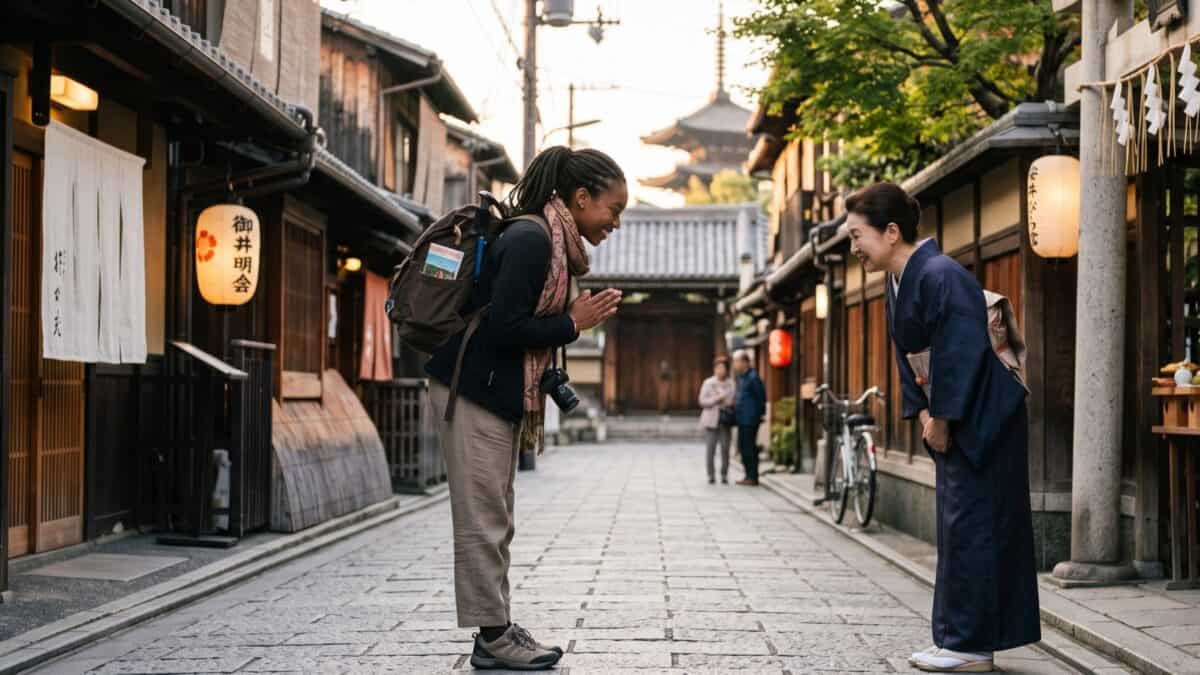
Image generated with Ai
Japan welcomes millions of international travellers every year, but understanding its social customs and practical systems can transform a first visit into a smoother experience. These Japan travel tips for first-time visitors help travellers navigate etiquette, transport, safety procedures and everyday interactions with confidence.
Japan’s unique combination of advanced infrastructure, traditional culture and strict social harmony makes preparation essential. From railway behaviour to emergency awareness, visitors who understand local expectations can enjoy a more rewarding journey. Official tourism agencies provide detailed guidance to help international guests experience Japan responsibly while respecting its culture and communities.
Advertisement
Japan has developed one of the world’s most organised tourism environments, supported by efficient transport networks, visitor services and multilingual information systems. However, the country’s social rules can feel unfamiliar to international visitors. Simple actions such as speaking quietly on trains, following temple customs and understanding payment habits can significantly improve the travel experience.
The Japan National Tourism Organization (JNTO) provides official guidance covering transport, accommodation, safety, customs and travel planning for overseas visitors. The organisation encourages travellers to prepare before arrival so they can better understand local practices and move confidently around the country.
Advertisement
Advertisement
For anyone First time visiting Japan, preparation is not about learning every cultural detail. It is about understanding the basic behaviours that support Japan’s emphasis on respect, cleanliness and consideration.
Understanding Japan travel etiquette is one of the most important steps for international visitors. Japanese society places strong importance on harmony, personal space and avoiding inconvenience to others.
Public behaviour is especially important. Travellers should avoid loud conversations on trains, unnecessary phone calls in crowded areas and blocking entrances at stations. Japan’s railway systems carry millions of passengers daily, making orderly behaviour essential.
Visitors should also observe local practices when using escalators, entering shops and interacting in public spaces. Instead of assuming international habits apply, travellers should watch local behaviour and adapt.
Advertisement
Advertisement
Japan’s cultural traditions also influence experiences at temples, shrines and historical locations. Visitors are expected to follow signs, respect restricted areas and avoid treating sacred places only as photography opportunities.
A basic understanding of Japan local customs creates better interactions and allows travellers to experience the country beyond famous landmarks.
Japan’s railway system is famous worldwide for reliability and efficiency, but it can appear complicated for newcomers. Major cities operate extensive networks combining trains, underground systems and buses.
The official Japan travel guide from JNTO recommends planning routes carefully and understanding available transport options before travelling. International visitors can use rechargeable IC cards, including widely accepted transport payment systems, to simplify many daily journeys.
Major stations such as Tokyo Station and Shinjuku Station contain multiple platforms, operators and underground connections. First-time visitors should allow extra time when changing trains.
Travellers should also avoid carrying oversized luggage during peak commuter periods. Morning and evening rush hours can become extremely crowded, particularly in major metropolitan areas.
Luggage delivery services are another useful option. They allow visitors to move between destinations without carrying heavy bags through busy stations.
These practical steps make Japan travel tips for first-time visitors especially valuable for travellers exploring multiple cities.
Japan is considered a safe destination, but visitors must understand the country’s natural environment. Earthquakes, typhoons, heavy rain and volcanic activity are part of Japan’s geographical reality.
Official agencies provide emergency information systems designed to support residents and international travellers. JNTO recommends visitors use official safety resources, including disaster information services, to receive accurate updates during emergencies.
Important emergency numbers include:
The official JNTO emergency guidance explains that travellers should remain calm, follow official instructions and use reliable information sources during unexpected situations.
The best Japan safety tips for tourists include downloading safety applications, checking weather forecasts and keeping important travel documents accessible.
Preparation does not reduce the excitement of travelling in Japan. Instead, it allows visitors to explore with greater confidence.
Japan is a technologically advanced country, but cash remains important in many situations. International visitors should not rely only on digital payments.
Cash can still be useful at:
Travellers should carry Japanese yen alongside international payment cards. Large hotels, airports, shopping centres and convenience stores generally provide wider electronic payment options.
Convenience stores are among Japan’s most valuable resources for visitors. They offer food, drinks, basic travel items, ATMs and other everyday services.
For travellers creating a Japan travel guide for themselves, understanding payment habits can prevent unnecessary difficulties.
The combination of modern technology and traditional payment practices represents one of Japan’s unique travel characteristics.
Japanese cuisine is one of the country’s strongest tourism attractions, but dining customs may differ from international expectations.
Visitors should understand several important practices.
Chopsticks should not be placed vertically into rice because this resembles a funeral tradition. Food should also not be passed from chopstick to chopstick, as this is associated with memorial customs.
Before eating, many Japanese people say “Itadakimasu” to express appreciation for the meal. After finishing, “Gochisousama deshita” is commonly used to thank those involved in preparing the food.
Another important difference is tipping. Japan generally does not follow the tipping culture common in some other countries. Leaving extra money may create confusion rather than appreciation.
For anyone First time visiting Japan, respecting dining traditions provides a deeper connection with Japanese culture.
Japan’s temples, shrines and historic districts represent centuries of cultural heritage. These locations attract millions of visitors, but preservation depends on responsible tourism.
Travellers should:
Shrines and temples are not only tourist attractions. They remain active cultural and spiritual spaces for local communities.
The Japan Tourism Agency promotes sustainable and respectful tourism practices that encourage visitors to appreciate cultural resources while reducing negative impacts.
Responsible behaviour helps protect important destinations for future generations.
Language differences can be one of the biggest concerns for visitors, especially outside major tourist centres.
Japan offers increasing multilingual support in airports, stations and major attractions. However, travellers should still prepare basic communication tools.
Useful preparation includes:
Learning simple phrases such as “thank you”, “excuse me” and “please” can improve daily interactions.
The goal is not perfect Japanese fluency. It is showing respect and creating smoother communication.
A practical Japan travel guide should always include language preparation because small efforts often create better experiences.
Japan continues improving its tourism environment through better information services, transport support and visitor accessibility.
Government-backed tourism initiatives focus on welcoming international travellers while protecting local communities and cultural resources.
As global tourism continues evolving, travellers increasingly seek authentic experiences rather than only famous attractions. Japan’s combination of traditional heritage, modern cities and organised infrastructure positions it strongly in international tourism.
Future visitors will benefit from greater digital support, improved multilingual services and stronger safety communication.
The principles behind Japan travel tips for first-time visitors will remain important because successful travel depends on preparation, respect and cultural understanding.
Japan is a dream destination for many travellers and offers a wealth of opportunities for those who prepare before their trip. Having a good understanding of these travel tips will truly help comprehend not just the ‘how’ but also the ‘when’ and the ‘why’ about etiquette, transport, payment, safety and cultural aspects of travelling to Japan.
Advertisement
Tags: Japan Safety Tips for Tourists, Japan Travel Etiquette and Local Customs, Japan Travel Guide for First-Time Visitors, Japan travel tips, Japan Travel Tips and tricks
Advertisement
Advertisement













Saturday, September 5, 2026

Friday, September 4, 2026

Saturday, September 5, 2026

Friday, September 4, 2026

Thursday, September 3, 2026

Wednesday, September 2, 2026
Friday, September 4, 2026