
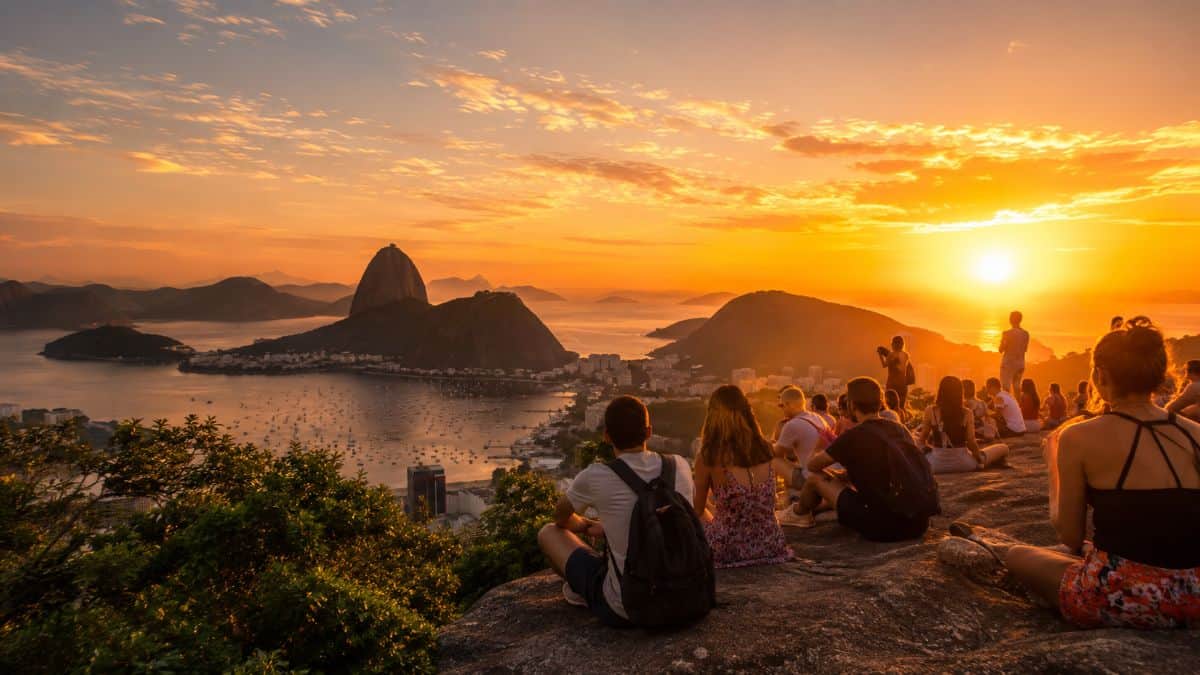
Image generated with Ai
The golden hour attracts amateur travelers who wish to explore beyond the typical tourist boxes. Journeyscape’s latest study reports that Canada ranks first with 7 golden hour destinations. Journeyscape looked at golden hour beauty and the lengthy civil twilight; sunset duration and the length of twilight between sunset and darkness.
This study also includes some neat, factual summaries for people traveling during the summer. It discusses how the northern regions are blessed with many long evenings and twilight hours. Whitehorse, Yukon shows an average civil twilight of 76 minutes. After Whitehorse are Anchorage, U.S.A. and Reykjavik, Iceland. The rest of the top 10 is dominated by Canada. They are Jasper, Banff, Calgary, Whistler, Kelowna, and Vancouver. The list is ideal for adventure enthusiasts, photographers, and people who appreciate and enjoy evenings and unique getaways.
Canada’s dominance is the central finding of the study, with seven destinations appearing in the top 10. The geographical spread is particularly notable because the locations offer very different travel experiences.
Whitehorse represents Canada’s northern wilderness, Jasper and Banff showcase the Canadian Rockies, Calgary combines urban travel with access to Alberta’s landscapes, while Whistler and Kelowna bring contrasting British Columbian experiences. Vancouver completes the list with its distinctive combination of city, mountains and ocean.
Advertisement
Advertisement
The results demonstrate that golden hour is not limited to one type of destination. Travellers can experience prolonged evening light in remote wilderness, mountain resorts, wine-country landscapes and major cities.Rank Destination Country Average Civil Twilight 1 Whitehorse Canada 76.0 minutes 2 Anchorage United States 72.2 minutes 3 Reykjavik Iceland 72.0 minutes 4 Juneau United States 59.9 minutes 5 Jasper Canada 43.2 minutes 6 Banff Canada 40.3 minutes 7 Calgary Canada 40.1 minutes 8 Whistler Canada 38.7 minutes 9 Kelowna Canada 38.4 minutes 10 Vancouver Canada 37.6 minutes
Whitehorse takes first place with an average civil twilight duration of 76 minutes. During summer, sunset occurs at around 10:54 p.m., giving visitors an unusually long evening in which to enjoy the destination’s northern surroundings.
The Yukon capital is particularly compelling for travellers seeking a combination of wilderness, outdoor adventure and dramatic skies. The extended light can make evening excursions feel considerably longer, allowing visitors more time to explore scenic areas or simply watch the landscape change as daylight gradually fades.
For photographers, the extended twilight offers additional opportunities to capture changing colours and shadows without having to rush back before darkness. For leisure travellers, it can make a late evening outdoors feel like an integral part of the holiday rather than the end of the day.
Advertisement
Advertisement
Anchorage ranks second with 72.2 minutes of average civil twilight. The largest city in Alaska experiences around 16 hours of daylight during summer, with sunset at approximately 10:59 p.m.
Its position reinforces a clear geographical pattern across the ranking. Anchorage combines a northern setting with mountains, coastal scenery and access to Alaska’s expansive wilderness, creating a strong environment for evening sightseeing.
Reykjavik ranks third with approximately 72 minutes of golden-hour light and summer sunsets occurring around 11:03 p.m. Iceland’s capital offers travellers a different visual setting, where urban architecture and dramatic northern landscapes can be experienced under prolonged evening light.
Juneau takes fourth place with 59.9 minutes of average civil twilight. Its mountainous surroundings and wilderness character add another dimension to the list, demonstrating how extended twilight can complement destinations where scenery is a major part of the tourism proposition.
Jasper ranks fifth globally with an average 43.2 minutes of civil twilight. It is the highest-ranked Canadian Rockies destination in the study and offers travellers a powerful combination of mountain scenery, forests, lakes and expansive wilderness.
Banff follows in sixth place with 40.3 minutes. The destination is internationally recognised for its dramatic alpine scenery, and the extended evening light can add another layer to the visual appeal of its landscapes.
The ranking is particularly relevant for scenic tourism because the quality of golden hour is strongly influenced by surroundings. Mountain peaks can catch the final sunlight while valleys and lakes gradually transition into deeper evening tones, creating changing compositions throughout the twilight period.
For visitors, this means the golden-hour experience does not necessarily end when the sun disappears. The remaining natural light can continue to illuminate the landscape and support outdoor activities.
Calgary ranks seventh with 40.1 minutes of average civil twilight. Its inclusion demonstrates that visitors do not have to choose between a major city and extended northern evening light.
Calgary provides an urban base from which travellers can explore Alberta while also enjoying the city’s own evening atmosphere. The longer summer twilight can extend opportunities for city walks, outdoor dining, photography and sightseeing.
Its position also broadens the appeal of Canada’s golden-hour destinations. Rather than being concentrated exclusively in remote areas, the ranking includes an urban destination capable of attracting visitors who prefer city-based holidays.
Whistler ranks eighth with an average civil twilight window of 38.7 minutes. The destination’s mountains, forests and lakes create a naturally photogenic environment for evening travel.
Its strong outdoor tourism identity makes the additional daylight particularly useful. Visitors can spend more time enjoying the surrounding landscape before darkness arrives, while photographers can use the changing light to capture different moods across the mountains and forests.
Kelowna ranks ninth with 38.4 minutes. Located in British Columbia’s Okanagan Valley, it offers a distinctly different landscape dominated by Okanagan Lake, vineyards and rolling scenery.
Golden hour can be especially appealing in a destination where water and vineyards provide reflective and layered foregrounds. The combination of lake views and wine-country tourism also creates opportunities for relaxed evening experiences centred on scenery and hospitality.
Vancouver occupies tenth place with 37.6 minutes of average civil twilight. Its ranking adds a major coastal city to Canada’s impressive representation.
The city’s appeal comes from its unusual geographical setting. Mountains rise behind an urban skyline, while the Pacific coastline provides another visual dimension. During golden hour, changing sunlight can transform the relationship between these elements, creating opportunities for striking photographs and memorable sightseeing.
Vancouver also illustrates why golden-hour travel is not necessarily about escaping cities. Urban travellers can experience dramatic natural light without leaving a major metropolitan destination.
The concentration of northern destinations is not accidental. Latitude plays a significant role in the duration of daylight and twilight, particularly during summer.
At higher northern latitudes, summer days can become exceptionally long. As sunset approaches, the sun moves below the horizon at a shallower angle, contributing to longer periods of twilight.
Civil twilight is therefore an important measurement for travellers. It provides a more useful indication of how long natural light remains after sunset than the sunset time alone.
However, the ranking should not be interpreted as a definitive judgement on the beauty of each destination’s sunsets. Weather, cloud formations, landscape, viewing position and seasonal conditions can all affect the actual experience.
The growing interest in golden-hour travel reflects a wider shift towards experience-led tourism. Travellers increasingly want moments that are visually distinctive, emotionally memorable and connected to the character of a destination.
Golden hour naturally fits this demand. It can transform a familiar landscape into something dramatically different for a short period, encouraging travellers to slow down and appreciate their surroundings.
The phenomenon also supports several forms of tourism simultaneously. Photography, scenic travel, outdoor recreation, romantic escapes and nature-based holidays can all benefit from extended evening light.
For destinations, this creates opportunities to develop evening-focused experiences around viewpoints, waterfronts, trails and cultural areas.
Travellers should check the precise sunset and civil twilight times for their chosen destination and travel dates because conditions change throughout the year. Summer generally provides the strongest advantage for northern destinations.
Arriving at a viewpoint before sunset is also important, particularly at popular locations. This allows visitors to experience the transition from daylight through golden hour and into twilight rather than arriving after the most dramatic light has passed.
Weather should also be considered. Clear skies may produce strong direct light, while clouds can create dramatic colours and textures. Visitors exploring mountainous or wilderness areas should prioritise local safety guidance and remain aware that conditions can change quickly.
The Journeyscape study captures how travel in Canada can benefit from its geography and The 7 destinations in the top 10 of the world show multiple choices of places to experience the ‘golden hour’, from Yukon through to the Rocky Mountains, vineyards, lakes and coastal cities.
Whitehorse coming in 1st is impressive, but the overall performance of Canada in tourism is arguably more important. In one country, travelers can choose from remote adventurous travel, holidaying in the mountains and wine country, and combining them with urban travel while having extended summer evenings.
The research findings show that ‘sunset travel’ is about so much more than witnessing the sun going down. It is about the timing, the scenery, and the overall feel. Travelers want to experience travel that offers memorable experiences, and Canada’s long summer evenings provide an advantage to travelers and will turn everyday travel into an amazing experience.
Which destination was named the world’s best golden hour location?
Whitehorse in Canada’s Yukon ranked first with an average civil twilight duration of 76 minutes.
How many Canadian destinations entered the global top 10?
Seven Canadian destinations made the ranking: Whitehorse, Jasper, Banff, Calgary, Whistler, Kelowna and Vancouver.
Which Canadian destination has the longest civil twilight?
Whitehorse has the longest average civil twilight in the study at 76 minutes.
Why does Canada perform so strongly in the ranking?
Canada’s northern latitude contributes to long summer daylight and extended twilight, while its diverse landscapes provide highly scenic settings.
What is civil twilight?
Civil twilight is the period of natural light after sunset before darkness becomes sufficiently established.
Which Canadian Rockies destination ranked highest?
Jasper ranked fifth overall with an average civil twilight duration of 43.2 minutes.
How long is golden hour in Banff according to the study?
Banff records an average civil twilight period of 40.3 minutes.
Why is Vancouver a strong golden-hour destination?
Vancouver combines mountains, ocean and an urban skyline, creating a varied setting for experiencing evening light.
Is summer the best season for golden hour in northern Canada?
Summer generally offers the greatest advantage because northern destinations experience much longer daylight and twilight periods.
Are these rankings only useful for photographers?
No. Extended twilight can benefit sightseeing, walking, outdoor recreation, scenic travel, wildlife experiences and evening leisure.
How should travellers plan a golden-hour experience?
Visitors should check local sunset and twilight times, arrive early at viewpoints and account for weather and local safety conditions.
Advertisement
Tags: Banff travel, best golden hour locations, Calgary tourism, Canada summer travel, canada travel
Advertisement
Advertisement













Saturday, September 5, 2026

Friday, September 4, 2026
Saturday, September 5, 2026

Saturday, September 5, 2026

Thursday, September 3, 2026

Wednesday, September 2, 2026

Saturday, September 5, 2026

Saturday, September 5, 2026


