
Air New Zealand Probes Alleged Off-Duty Pilot Altercation After Shocking 14-Hour San Francisco Delay

Published
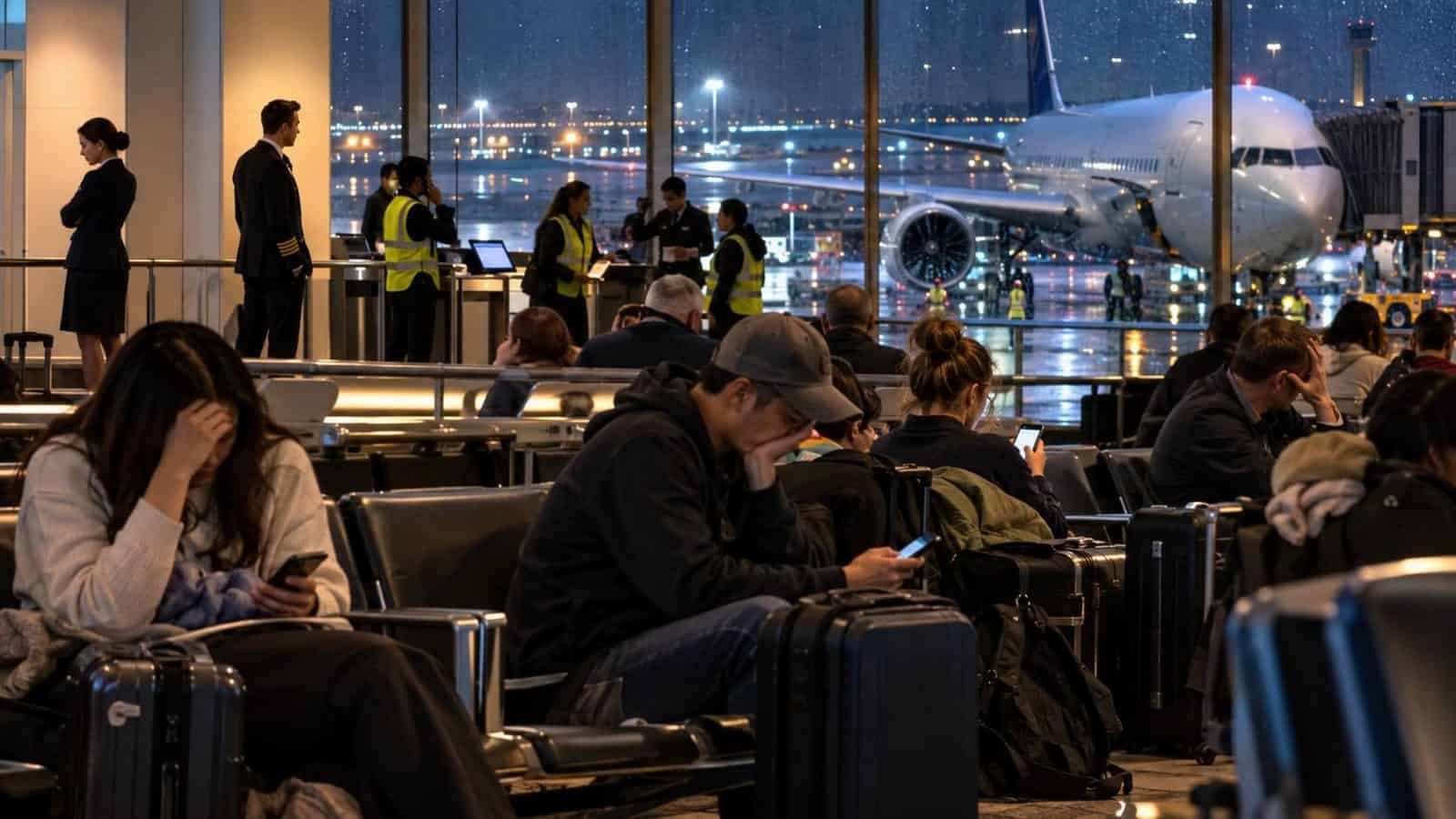
Image generated with Ai
Air New Zealand is looking into an incident that happened with two of its off-duty pilots during a layover in San Francisco, after their customers experienced a layover of more than 14 hours. According to a company statement provided to the media, the airline operates a San Francisco-Auckland route, and during September 2026 experienced an incident beyond its control. The airline also said that it is important for its crew to have mandatory rest periods and that situations beyond its control may impact the service it offers. Some of its customers may experience lengthy layovers. The CAA has been notified, and the airline is also carrying out an investigation. Since it is not clear what happened, and evidence is still to be established, the best course of action is to be neutral while the CAA and the Airline do the same.
Air New Zealand confirms an internal investigation
Air New Zealand has confirmed that it is examining a matter involving two off-duty crew members during a layover in San Francisco. The airline has not publicly identified the employees or released a detailed account of the reported incident.
Advertisement
Advertisement
The carrier also made an important distinction. It said there was no incident aboard the aircraft.
That clarification separates the reported off-duty matter from the safety of passengers during a flight. It also means claims about how the alleged confrontation began, where it escalated and who was responsible should not be presented as established facts.
Advertisement
Advertisement
The San Francisco Chronicle reported that two pilots were allegedly involved in an altercation. The publication said the matter affected flights from San Francisco to Auckland in early September 2026.
Advertisement
Advertisement
Those allegations remain subject to investigation. Air New Zealand has not publicly released the findings of its inquiry or confirmed whether either pilot has faced employment action.
What happened to the San Francisco passengers?
The operational disruption centred on Air New Zealand’s long-haul service between San Francisco International Airport and Auckland Airport.
Flight records cited in published reporting showed disruption to departures on 6 and 7 September. Passengers booked on the 7 September service reportedly faced a delay of more than 14 hours.
Advertisement
Advertisement
A replacement pilot had to be brought to San Francisco. That crew member then needed to complete a mandatory rest period before operating the aircraft, according to the information supplied to affected travellers.
This point matters. An airline cannot simply place an available pilot in the cockpit immediately after a long positioning journey. Crew members must be properly qualified, fit for duty and compliant with applicable flight-time and rest requirements.
Advertisement
Advertisement
The delay was therefore not just a scheduling problem. It reflected the strict safety controls surrounding long-haul crew deployment.
| Confirmed or attributed development | Current status |
|---|---|
| Air New Zealand is investigating a crew-related matter | Confirmed through a company statement supplied to news organisations |
| The matter involved two off-duty crew members in San Francisco | Confirmed by the airline |
| No incident occurred aboard the aircraft | Confirmed by the airline |
| Passengers faced a delay exceeding 14 hours | Reported through flight information and passenger communications |
| A replacement pilot required mandatory rest | Reported as part of the operational response |
| A physical confrontation occurred | Alleged and not established by a published investigation |
| Disciplinary action has been imposed | Not publicly confirmed |
| The pilots have been permanently grounded | Not publicly confirmed |
Why mandatory pilot rest could not be shortened
Flight crew rest is a safety requirement, not an optional benefit. Long-haul flying crosses time zones and can involve extended duty periods, overnight work and disrupted sleep.
New Zealand’s civil aviation system requires operators to control the risks created by fatigue. Airlines must plan rosters and duties so pilots can perform safety-critical work without unacceptable tiredness.
The Civil Aviation Authority of New Zealand oversees aviation safety and compliance in the country. The authority has reportedly been informed about the San Francisco matter.
Air New Zealand could not lawfully solve the disruption by asking a replacement pilot to fly before completing the necessary rest. Doing so could introduce a separate and potentially more serious safety concern.
Advertisement
Advertisement
This is why an airline may have an aircraft, passengers and airport slot available but still be unable to depart. Every required crew member must remain within the applicable duty and rest limits.
For passengers, that can make a disruption feel unusually slow. However, the rest requirement protects everyone aboard the aircraft.
San Francisco is a strategically important gateway
The San Francisco–Auckland route is more than a point-to-point air service. It connects New Zealand with one of the most important aviation and business gateways on the United States West Coast.
Passengers use Auckland as an arrival point for New Zealand and as a connection hub for domestic destinations. San Francisco also provides onward access to cities across the United States through connecting airline networks.
A major delay can therefore spread beyond one flight. Travellers may miss domestic connections, hotel bookings, tours, cruise departures, meetings or onward international services.
Advertisement
Advertisement
The route also serves several passenger groups:
- Holidaymakers travelling between the United States and New Zealand
- New Zealand residents returning from North America
- Business travellers using the trans-Pacific corridor
- Families visiting relatives across the two countries
- Passengers connecting through Auckland or San Francisco
Long-haul services are harder to recover than short domestic flights. A suitable replacement pilot must hold the required qualification and be legally able to operate the aircraft after accounting for previous duties, positioning travel and rest.
Why crew disruption can produce a long delay
Airlines build contingency plans for illness, technical faults, bad weather and airport restrictions. Yet long-haul crew replacement remains difficult, especially at an overseas station far from the carrier’s home base.
A replacement captain or first officer cannot always be sourced locally. The airline may need to position a qualified employee from another city or country.
Several factors can extend the recovery period:
Advertisement
Advertisement
- Availability of a pilot qualified for the aircraft type
- The replacement pilot’s recent duty history
- Flight-time and fatigue restrictions
- Positioning time to the departure airport
- Aircraft and airport-slot availability
- Cabin-crew duty limits
- Passenger rebooking and baggage handling
- Connecting-flight arrangements
These controls help explain how a personnel matter can become a significant San Francisco flight delay. They do not determine responsibility for the original disruption, which remains under investigation.
Passenger assistance during the disruption
Published accounts said affected passengers were offered rebooking, accommodation, reimbursement of reasonable expenses or refunds, depending on their circumstances.
Travellers should rely on the written options supplied with their individual booking. Eligibility can vary according to the type of disruption, ticket conditions, journey and whether the passenger accepts alternative transport.
Anyone affected should retain:
- The original booking confirmation
- Boarding passes and baggage receipts
- Delay or cancellation notifications
- Hotel, meal and ground-transport receipts
- Records of missed connecting flights
- Copies of messages exchanged with the airline
- Travel-insurance documents
Passengers should submit claims through the airline’s official customer-service channels. Receipts should show the date, amount, currency and item purchased.
Advertisement
Advertisement
The United States Department of Transportation generally requires a refund when an airline cancels a flight or makes a significant change and the passenger chooses not to accept the alternative offered. Whether a particular itinerary qualifies depends on the facts of the booking and the remedy selected by the traveller.
A passenger who accepts rebooking will not necessarily receive the same refund available to someone who declines further travel. Travellers should read the proposed arrangement before confirming it.
The investigation has two distinct questions
The case contains an employment question and an operational question.
The employment inquiry concerns what happened between the off-duty crew members. That process may consider conduct rules, witness information, hotel records and statements from the people involved.
The operational review concerns how the matter affected crew availability and passenger services. It may examine whether contingency procedures worked as intended and whether communication with travellers was timely and clear.
Advertisement
Advertisement
These questions should not be merged. An operational delay does not prove every allegation about the off-duty incident.
The Civil Aviation Authority’s role is also different from the airline’s role as an employer. A regulator may consider whether any conduct raises licensing, fitness or aviation-safety issues, while the company decides matters governed by its workplace procedures.
What remains unverified
Some public reports have carried detailed descriptions of the alleged encounter. Air New Zealand has not publicly verified all those claims.
There is no publicly available final investigation report establishing:
- Which crew member initiated the alleged dispute
- Whether the reported confrontation became physical
- Whether alcohol was involved
- Whether police attended
- Whether criminal allegations were made
- Whether either pilot has been suspended
- Whether permanent disciplinary action will follow
These details should not be stated as facts without confirmation from the airline, regulator or relevant law-enforcement agency.
Advertisement
Advertisement
The headline therefore uses the word “alleged”. That qualification is essential for accuracy and fairness.
Wider implications for Air New Zealand
The case arrives when operational reliability remains a major issue across international aviation. Airlines continue to manage aircraft availability, maintenance pressures, fuel costs, crew positioning and unpredictable disruption.
A single long-haul cancellation or extended delay can be expensive. The carrier may face hotel, meal, transport, refund, rebooking and staffing costs.
There can also be indirect consequences. Passengers may lose confidence if they receive late or inconsistent information, even when the airline is following mandatory safety requirements.
The immediate commercial effect of this particular disruption has not been disclosed. Air New Zealand has not published a cost estimate or indicated how many passengers were affected.
Advertisement
Advertisement
Any claim about a major impact on the airline’s annual revenue, employment or New Zealand’s tourism economy would therefore be unsupported. The available evidence concerns a limited operational disruption and an ongoing internal investigation.
Effect on tourism and travel businesses
New Zealand depends on long-distance aviation to connect with major international markets. Reliable trans-Pacific links support hotels, attractions, tour operators, rental-car companies and regional airlines.
A 14-hour disruption can affect several parts of a traveller’s itinerary. A late arrival in Auckland may lead to a missed domestic flight, delayed hotel check-in or the loss of a prepaid tour.
Local businesses may then need to alter bookings at short notice. Smaller operators can be especially exposed when they have limited capacity or strict departure times.
However, there is no official evidence that this incident caused a measurable fall in visitor arrivals, tourism revenue or employment. It should not be portrayed as a national tourism crisis.
Advertisement
Advertisement
Its importance comes from the passenger impact and the questions it raises about overseas crew resilience. It also shows how quickly a staffing problem can affect a long-haul travel chain.
Air New Zealand pilot investigation and the safety context
The off-duty pilot investigation does not indicate that the aircraft itself was unsafe. Air New Zealand explicitly said no incident took place aboard the plane.
The operational response also demonstrates that crew rules continued to apply during the recovery. The replacement pilot had to rest before taking control of the aircraft.
That requirement may have prolonged the wait, but it maintained the separation between commercial pressure and flight-safety obligations.
Passengers should distinguish between three issues:
Advertisement
Advertisement
- The alleged off-duty conduct, which remains under investigation.
- The resulting crew-availability problem, which affected operations.
- The safety controls that prevented an unrested replacement pilot from flying.
Treating these as separate issues produces a clearer and more responsible account.
What Air New Zealand needs to clarify
The airline’s investigation should establish the facts before further conclusions are drawn. Passengers will also expect clarity about the operational response.
Important questions include:
- When did the airline first know that its scheduled crew might be unavailable?
- When were passengers informed?
- How quickly was a replacement pilot arranged?
- What accommodation and rebooking options were offered?
- Were connecting passengers given additional assistance?
- Will the carrier change its standby arrangements at overseas stations?
- Has the regulator requested any further action?
Air New Zealand has not provided public answers to all these questions. Until it does, reporting should remain limited to confirmed information and clearly attributed allegations.
Future outlook must follow official findings
The internal inquiry and any regulatory review will determine whether further action is required. Air New Zealand has not announced a timetable for publishing its findings.
Advertisement
Advertisement
There is also no official confirmation that the event will lead to changes in flight schedules, staffing levels or the San Francisco–Auckland route.
Passengers should therefore avoid assuming that future services will be disrupted. They should check their own flight status through official airline channels before travelling.
If Air New Zealand or the Civil Aviation Authority releases a final finding, that document should become the main basis for any follow-up report. Until then, claims about punishment, regulatory breaches or wider operational changes would be premature.
Frequently Asked Questions
Is the San Francisco–Auckland route still operating?
Air New Zealand has not announced the suspension of the route because of this incident. Passengers should check the status of their specific flight through the carrier’s official website or booking notifications.
What should passengers do after a long Air New Zealand delay?
Keep every notification and receipt. Ask the airline for written confirmation of the delay, available rebooking choices, accommodation arrangements and the procedure for claiming reasonable expenses.
Advertisement
Advertisement
Did the alleged altercation happen aboard an Air New Zealand aircraft?
Air New Zealand said no incident occurred aboard the aircraft. The reported matter involved two off-duty crew members during a San Francisco layover and remains under investigation.
Conclusion
Air New Zealand’s current dispute provides a good case study in the challenges posed by long haul travel and off-duty crew issues. It is understood passengers on one of the carrier’s long haul services awaited over 14 hours for a replacement pilot. To accentuate the seriousness of the situation, passengers reportedly had to be re-accommodated on a later flight. Air New Zealand has confirmed an internal investigation. Until then, it would be prudent to rely on the Airline to confirm no irregularities occurred onboard the aircraft. Where passengers have suffered a loss as a result of delays, they are entitled to claim compensation via the processes notified to them by the Airline. It would be inappropriate to speculate on other potential consequences prior to the results of the Airline’s investigation being made available.
Advertisement
