
New York City Marathon 2026 Alters Bronx Course for First Time in 15 Years as US Sports Tourism Draws Global Runners

Published
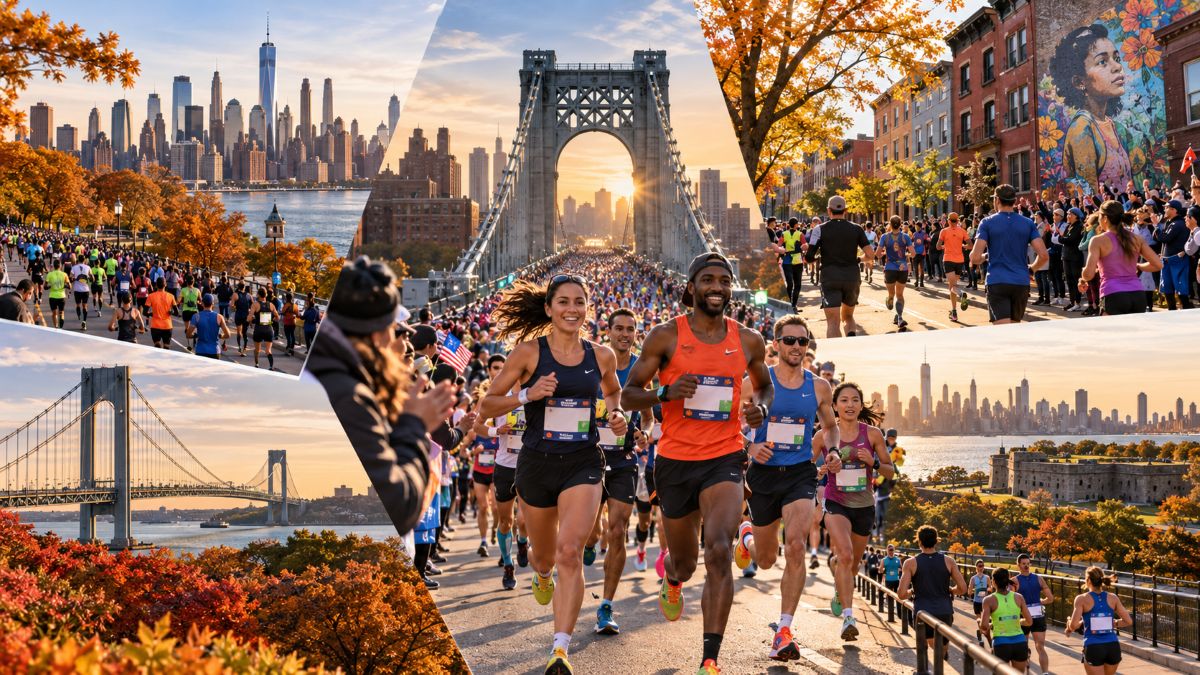
Image generated with Ai
The New York City Marathon 2026 will introduce its first course change in 15 years, altering a section through the Bronx between miles 20 and 21. The adjustment reduces turns from seven to five and avoids a block containing a supermarket and 24-hour laundromat. The race returns on 1 November 2026, marking 50 years since the marathon expanded across New York’s five boroughs.
For international runners and sports travellers, the change offers more than a minor route adjustment. It shows how major sporting events can adapt to residential communities while preserving their tourism value. The 2024 marathon generated $692 million in economic impact, with substantial visitor spending on accommodation, dining, shopping, attractions and local transport.
Advertisement
Advertisement
A Smaller Route Change With Wider Tourism Meaning
New York Road Runners has redesigned the Bronx section after working with local communities and city authorities. The change comes during a milestone year for an event that has become one of the world’s most recognisable urban sporting spectacles.
The 26.2-mile race still crosses all five boroughs and retains its defining bridges and Central Park finish. However, runners now face a more direct passage through Mott Haven during the late stages of the race.
Advertisement
Advertisement
The adjustment is particularly significant because the marathon has historically transformed New York’s streets into a temporary tourism corridor. It connects Staten Island, Brooklyn, Queens, the Bronx and Manhattan through one sporting narrative.
Advertisement
Advertisement
For visitors, that makes the race different from a conventional stadium event. The destination itself becomes part of the experience, while neighbourhoods become temporary stages for spectators, runners and international media.
The Bronx change therefore carries a broader message for sports tourism. Successful mega-events increasingly depend on balancing visitor demand with everyday urban life.
The New Bronx Section Explained
The revised route affects a relatively short section. Yet it arrives at one of the most demanding points of the marathon, when competitors have already covered around 20 miles.
Advertisement
Advertisement
After crossing the Willis Avenue Bridge, runners will turn onto East 135th Street and then Alexander Avenue. Instead of turning towards East 138th Street, they will continue along Alexander Avenue towards East 141st Street.
They will then turn onto Third Avenue before returning to East 138th Street. From there, the field continues towards the Madison Avenue Bridge and back into Manhattan.
Advertisement
Advertisement
The previous configuration contained seven turns within the Bronx section. The new arrangement reduces that number to five.
| Feature | Previous Route | 2026 Route |
|---|---|---|
| Affected borough | Bronx | Bronx |
| Approximate section | Miles 20–21 | Miles 20–21 |
| Turns | Seven | Five |
| Alexander Avenue | Turned towards East 138th Street | Continues towards East 141st Street |
| East 141st Street | Not part of the revised sequence | Added |
| Third Avenue | Part of previous route configuration | Retained in revised sequence |
| Madison Avenue Bridge | Route to Manhattan | Route to Manhattan |
| Overall marathon distance | 26.2 miles | 26.2 miles |
| Five-borough structure | Retained | Retained |
The overall marathon distance remains unchanged, while the iconic five-borough structure also remains intact.
For runners, the difference may appear modest on a map. At mile 20, however, fewer turns can make the route feel more straightforward.
For sports tourists, the practical difference is equally important. The revised section changes where spectators and residents encounter the race, which can influence viewing plans and neighbourhood access.
Why Mott Haven Became Central To The Change
The old route passed around a block containing a Western Beef supermarket and a 24-hour laundromat. Race-day road restrictions made access difficult for residents and customers for much of the day.
Advertisement
Advertisement
The Patterson Houses sit across Morris Avenue from the affected businesses. The residential complex contains almost 1,800 units, adding considerable local significance to access during marathon day.
New York Road Runners has said the revised route aims to minimise the marathon’s impact on the Bronx. The organisation also pointed to changing residential patterns in the neighbourhood as part of the reason for reconsidering the route.
That distinction matters for tourism planners. A major sporting event does not operate in isolation from its host destination.
Race organisers must coordinate road closures, policing, public transport, businesses, residents and spectators. Even a one-mile adjustment can therefore become part of a wider conversation about sustainable event management.
The change also demonstrates how sports tourism has evolved. Destination events increasingly need to generate visitor value without placing unnecessary pressure on host communities.
Advertisement
Advertisement
A Marathon That Sells The Entire City
The commercial significance of the race extends well beyond entry fees and merchandise. New York Road Runners’ latest economic study found that the 2024 TCS New York City Marathon generated $692 million in incremental economic impact for New York City.
Out-of-town visitors generated approximately $425 million in spending, according to the study. Accommodation accounted for $178 million, while food and drinks generated $109 million.
Shopping generated another $51 million. Museums and leisure attractions accounted for $29 million, while local transportation generated $19 million.
| 2024 Marathon Visitor Economy | Economic Impact |
|---|---|
| Total marathon economic impact | $692 million |
| Out-of-town spending | $425 million |
| Accommodation | $178 million |
| Food and drinks | $109 million |
| Retail shopping | $51 million |
| Museums and attractions | $29 million |
| Local transportation | $19 million |
These figures demonstrate why marathon tourism matters to the wider travel industry. Visitors do not simply attend the race. They book rooms, eat in restaurants, use transport, shop and visit attractions.
That creates a multi-day tourism ecosystem around a single sporting event.
Advertisement
Advertisement
International Runners Drive Destination Demand
The marathon’s global appeal provides another reason for travel businesses to watch the 2026 edition closely. More than 55,000 athletes from nearly 150 countries took part in the 2025 event, according to New York Road Runners.
Demand for participation has also remained exceptionally strong. NYRR received more than 200,000 applications for the 2025 marathon drawing, representing a 22 per cent increase from the previous year.
That demand creates opportunities across accommodation, aviation, hospitality, ground transportation and visitor attractions.
It also changes the way destinations market sporting events. A marathon runner may arrive several days before race day and stay beyond the event.
That creates opportunities for pre-race sightseeing, post-race leisure and extended city breaks. Families and supporters can further increase the length and value of those trips.
Advertisement
Advertisement
For travel advisers and destination marketers, the marathon therefore represents a travel product rather than simply a sporting fixture.
New York Tourism Adds A Powerful Backdrop
The marathon’s economic role becomes even clearer against New York’s wider tourism performance. New York City welcomed 65 million visitors in 2025, according to NYC Tourism + Conventions.
Tourism generated $84.7 billion in total economic impact and $55.6 billion in direct spending. The sector supported approximately 397,000 jobs and generated $7.5 billion in tax revenue.
The marathon operates within that enormous visitor economy. Its advantage is its ability to combine sport with one of the world’s strongest urban tourism brands.
For international travellers, the event can become the centrepiece of a broader New York itinerary. Visitors can combine race-related activities with museums, Broadway, restaurants, shopping and neighbourhood exploration.
Advertisement
Advertisement
That integration gives sports tourism a distinct advantage over isolated event travel.
The Five Boroughs Remain The Main Attraction
The marathon’s five-borough identity remains central to its appeal. The modern course was introduced in 1976, replacing the earlier Central Park format that had dominated the event’s first years.
The 2026 race therefore marks the 50th anniversary of the five-borough marathon. NYRR describes the route as a journey through five boroughs, five bridges, city parks, commercial streets and residential neighbourhoods.
That geography creates an unusual tourism proposition. The race effectively turns the city into a continuous sporting venue.
Runners experience different neighbourhoods as they progress through the course. Spectators can also choose locations based on accessibility, atmosphere and proximity to transport.
Advertisement
Advertisement
The Bronx segment has traditionally offered a particularly emotional moment. At around mile 20, runners are approaching the point where fatigue becomes increasingly important.
The Madison Avenue Bridge then carries competitors back into Manhattan. They continue through Harlem before moving towards Fifth Avenue and Central Park.
What Travellers Should Know For Race Day
Visitors attending the 2026 marathon should plan around extensive road restrictions and large crowds. The race begins on Staten Island before moving through Brooklyn, Queens, the Bronx and Manhattan.
The final stages take runners towards Central Park, where the race finishes. The official 2026 course remains 26.2 miles, with runners receiving fluids and amenities through designated stations along the course.
| Traveller Consideration | 2026 Implication |
|---|---|
| Race date | 1 November 2026 |
| Race distance | 26.2 miles |
| Route coverage | All five boroughs |
| Bronx adjustment | Miles 20–21 |
| Bronx turns | Reduced from seven to five |
| Final bridge | Madison Avenue Bridge |
| Finish | Central Park |
| Key planning issue | Race-day road and access restrictions |
Spectators should therefore plan their viewing point before race day. Moving across boroughs during the race can become difficult because bridges and streets operate under temporary restrictions.
Advertisement
Advertisement
Travellers staying in Manhattan should also allow additional time for journeys. Public transport can offer a practical alternative to taxis when road closures affect surface traffic.
Visitors should consult official race information shortly before travelling. Operational arrangements can change as authorities finalise race-day plans.
A Useful Signal For Sports Tourism
The Bronx adjustment offers a valuable lesson for other destination events. Sports tourism cannot be measured only through visitor numbers or hotel occupancy.
The quality of the relationship between an event and its host community also matters. A race that attracts international visitors must still preserve reasonable access for residents and local businesses.
The New York example shows how route design can support that balance. Instead of removing the Bronx from the marathon, organisers have modified a small section while retaining the borough within the event.
Advertisement
Advertisement
That approach protects the destination story while addressing a practical community concern.
The economic evidence also supports the wider tourism case. NYRR’s 2025 economic study found its 34 races contributed $934 million in incremental spending to New York City’s economy during FY25. Those events attracted more than one million out-of-town runners, guests and spectators.
The marathon represents the largest component of that ecosystem.
A More Responsive Race For 2026
The 2026 adjustment does not rewrite the New York City Marathon. Instead, it subtly modernises one of its most established urban passages.
For runners, the Bronx section becomes more direct. For residents, access to important local businesses should become easier during the event. For tourism stakeholders, the change demonstrates how an international sporting spectacle can evolve without sacrificing its destination identity.
Advertisement
Advertisement
The timing makes the development especially notable. Fifty years after the five-borough course transformed the marathon, organisers are still adapting it to the city around it.
That may be the most important sports tourism lesson from the 2026 route. New York’s marathon remains globally attractive because it showcases the city itself. Yet its future depends on ensuring that the city continues to function for residents while welcoming the world.
Advertisement
