
Brazil Catalyses International Commerce with Strategic Interior Airport Capitalisation, Eco-Certified MICE Directives and New Swift Visa Turnarounds

Published
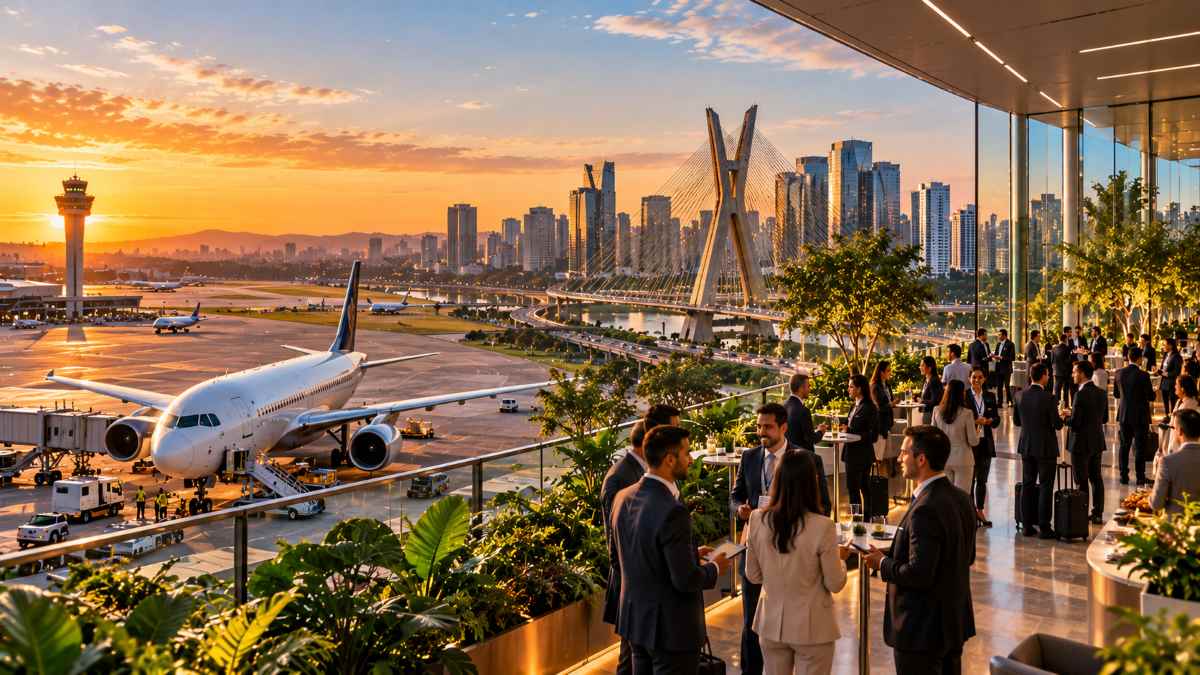
Brazil will access relevant initiatives related to international business travel, with investment in airport infrastructure, strengthening of environmental requirements for events, and the digitalisation of visa procedures. Businesses, conference attendees and corporations operating in all parts of the country could benefit from enhanced connectivity and administration. Despite being reported initially as one programme built around three claims, the measures are in fact separate government and industry initiatives. The strongest development deals with airport facilities. The federal government of Brazil has investment plans for regional airports and big passenger gateways. Meanwhile, the legislation in São Paulo State demands adequate waste management at public and private events. Brazil has decided to implement electronic issuance of certain temporary visas, starting September 2026. Overall, this publication reflects the country’s drive to improve transport infrastructure and business climate. However, it does not support claims concerning a BRL 400 million agricultural-airport runway fund, a new carbon-offset rule for large convention bookings or 48-hour universal approval of business visa applications.
Brazil Commits Billions to Regional Airport Infrastructure
Brazil’s Ministry of Ports and Airports announced a regional airport investment portfolio worth approximately BRL 1.8 billion in December 2025 for the 2026–2027 cycle. The programme covers 34 projects across 31 airports in 16 states, with the objective of improving infrastructure, strengthening regional connectivity and addressing areas with limited access to air transport.
Advertisement
Advertisement
The investment portfolio is divided into several categories. Approximately BRL 531 million is allocated to projects considered sufficiently advanced to proceed towards construction. More than BRL 1 billion is assigned to new priority projects expected to begin from 2026, while around BRL 250 million is intended for remote areas and the Legal Amazon.
The programme is relevant to Brazil’s agricultural and regional economies because better airport infrastructure can improve connections between interior cities and major commercial centres. However, the government announcement does not identify the entire BRL 1.8 billion as a runway-expansion fund for agricultural trade airports. Individual project scopes must be checked before attributing specific runway works to the programme.
Advertisement
Advertisement
BRL 400 Million Financing Forms Part of a Wider Airport Package
A separate airport-modernisation announcement helps explain the BRL 400 million figure. In February 2026, the National Bank for Economic and Social Development (BNDES) detailed financial support for Aena Brasil’s airport investment programme.
The financing included BRL 4.24 billion through debenture subscriptions and a BRL 400 million loan under its Finem credit line. Together, these represented BRL 4.64 billion in BNDES support within a broader investment package expected to reach BRL 9.2 billion.
Advertisement
Advertisement
The programme covers 11 airports across São Paulo, Minas Gerais, Mato Grosso do Sul and Pará. Congonhas in São Paulo is a major beneficiary, with plans for a larger passenger terminal, additional boarding bridges, expanded aircraft parking and improved passenger facilities. Regional airports including Uberlândia, Uberaba, Montes Claros, Campo Grande, Ponta Porã, Corumbá, Santarém, Marabá, Carajás and Altamira are also included.
The distinction is important: BRL 400 million is a financing component of a wider airport investment arrangement, not a standalone fund specifically approved for agricultural airport runways.
Advertisement
Advertisement
São Paulo Strengthens Environmental Rules for Events
Environmental management is another relevant consideration for Brazil’s meetings, incentives, conferences and exhibitions sector. São Paulo State Law 17,806, dated 17 October 2023, establishes requirements for the proper management of solid waste generated at public, private and public-private events.
The legislation covers congresses, seminars, workshops, trade fairs, conventions, corporate meetings, music festivals and sporting events. Organisers and venues must provide the necessary infrastructure for appropriate waste disposal and prepare a Solid Waste Management Plan in accordance with applicable legislation.
The law also prioritises preventing and reducing waste generation, alongside appropriate collection, treatment, transport and final disposal.
This provides a legal framework for more responsible event operations across São Paulo State. However, it should not be described as a newly introduced carbon-offset requirement for convention bookings involving more than 1,000 attendees. Waste management and carbon offsetting are different environmental measures, and the cited law does not establish the claimed threshold.
Advertisement
Advertisement
Brazil Moves Certain Temporary Visas to Electronic Issuance
Brazil’s immigration procedures have also undergone a digital change. From 1 September 2026, certain temporary visas, known as VITEM categories, for nationals of countries exempt from Brazil’s visitor-visa requirements are being issued electronically.
The change allows eligible applicants to submit supporting documents through the Ministry of Foreign Affairs’ Integrated Consular System. Once authorised, the visa is sent electronically to the applicant’s registered email address. As a general rule, eligible applicants no longer need to submit their passports or physical documents, although consular posts may still impose specific requirements.
The change is relevant to international companies managing employees travelling to Brazil for temporary assignments. It can simplify document handling, particularly for employees whose passports are needed for other international journeys.
However, the update does not automatically apply to every nationality or visa category. It also does not guarantee approval within 48 hours. Applicants must still meet the requirements for their specific visa category and obtain any necessary prior authorisation.
For Indian business travellers, the Brazilian Consulate-General in Mumbai publishes a separate application process for business e-visas. Its instructions require applicants to complete the relevant forms, upload supporting documents and submit their applications through the consular platform. The consulate retains authority to assess applications and may request additional documentation or an interview.
Business Travel Benefits Depend on Implementation
Together, these factors cover different topics of a corporate travel package to Brazil. The investment in airports, the event-waste legislation and the electronic issuance of the visa. The investment in local airports will facilitate the delivery of tourists to other destinations in a country. The rather formal rules on what is environmentally acceptable for the mega events will clarify the expectations of event managers. The papers that the applicants will carry will be less processed if the applicants are eligible. Ultimately, it depends on how long the construction takes, how rapidly the event requirements are met and which works are linked to the immigration regulations of specific countries. So, Brazil’s value will matter, and how Brazil’s initiatives are perceived is what corporate travellers and MICE organisers can expect.
Advertisement
