
UAE Aligns with Saudi Arabia and Qatar as Winter Vacations in the Middle East Pit Dubai’s Global Village Against Riyadh Season

Published
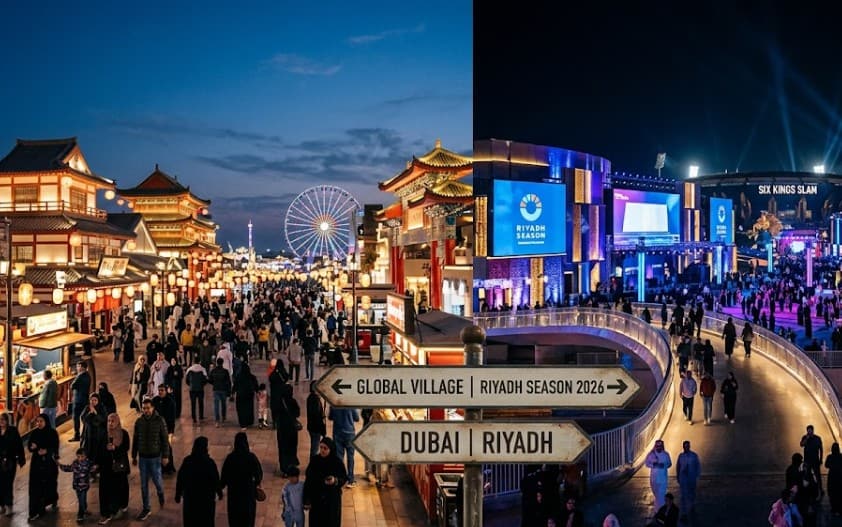
The landscape for Middle East winter vacations 2026 is officially heating up as regional tourism giants like the United Arab Emirates, Saudi Arabia, and Qatar unveil their most ambitious seasonal events to date. As temperatures drop across the Arabian Peninsula, global travellers are now spoilt for choice. Will you choose the diverse pavilions and thrilling new rides at Dubai’s iconic Global Village, or will the sporting spectacles and elite entertainment zones of Riyadh Season capture your imagination? Meanwhile, Qatar’s expansive calendar ensures it remains a highly formidable contender today. This winter, the battle for tourism supremacy promises truly unforgettable experiences.
The Rise of Middle Eastern Winter Tourism
For decades, the Middle East was primarily perceived by international tourists as a luxury stopover destination or a hub for business travel. However, sweeping economic diversification strategies across the Gulf Cooperation Council (GCC) have radically transformed the region into a global epicentre for leisure, entertainment, and cultural exploration. The concept of Middle East winter vacations 2026 represents the pinnacle of this transformation. With the blistering summer heat making way for mild, pleasant winters, nations like the UAE, Saudi Arabia, and Qatar have strategically positioned their cooler months as the ultimate window for grand festivals and mega-events.
The 2026 winter season marks a watershed moment in this regional tourism rivalry. We are witnessing an unprecedented scale of investment, innovation, and international collaboration. From mega-theme parks and cultural pavilions to high-stakes sporting championships and music festivals featuring global icons, the offerings have never been more diverse. This healthy regional competition is not just about attracting the highest visitor numbers; it is fundamentally about soft power, economic resilience beyond oil, and showcasing a modern, welcoming Arabian Peninsula to the world.
Dubai Global Village Season 31: A Legacy of Multicultural Entertainment
When discussing winter tourism in the UAE, the conversation invariably begins with Dubai’s Global Village. Slated to open on 14 October 2026, Season 31 of this iconic multicultural family destination promises to build upon its impressive 30-year legacy. Global Village has consistently been a cornerstone of the UAE’s winter tourism strategy, blending affordable entertainment with a unique global shopping and dining experience.
Advertisement
Advertisement
Latest Official Developments and Attractions
For the 2026 season, Global Village is pulling out all the stops. Visitors will have access to 29 meticulously designed pavilions representing diverse cultures from around the world. Notable updates include refreshed experiences at the Sri Lanka, Russia, and Azerbaijan pavilions, alongside entirely renewed façades for the Syria and Kuwait pavilions.
One of the most highly anticipated additions for thrill-seekers is the “Tokyo Rush” roller coaster. Slated to debut later in the season, this new attraction features high-speed action, sharp turns, and a dramatic loop, significantly enhancing the destination’s adrenaline-pumping offerings at the Carnaval zone. The Carnaval will also see the return of the Festival Wheel with refreshed carts, alongside fan favourites like The Dragon Kingdom, The Horror Hotel, Secrets of the Lost City, and Exo Planet City.
Advertisement
Advertisement
To encourage exploration, Global Village has introduced a newly designed Season 31 Passport and a dedicated Kids Passport, allowing visitors to collect unique stamps from every pavilion they visit.
Culinary Innovations and Entertainment
Food remains a massive draw for Global Village. This season, the destination will offer over 250 dining options, firmly cementing its status as a global street food haven. New additions to the Restaurant Plaza include Trabzon Turkish Restaurant, Robo Al Sham (serving Levantine cuisine), Hawawshi Al Rabie (Egyptian food), and Chicking. The popular Dessert District has also received a refreshed façade to welcome visitors seeking sweet treats.
On the entertainment front, Global Village promises an astonishing 40,000 shows throughout Season 31. The opening night alone will feature a spectacular 600-drone aerial display and a Parade of the World. New theatrical productions include the true-crime-inspired “Bank Heist,” featuring high-octane acrobatics, and “Bollywood Idol,” a musical drama following two brothers. For children, the Kids Theatre will host returning favourites like Care Bears and PJ Masks.
Ticketing and Infrastructure Upgrades
In a move to maintain accessibility, official ticket prices for Global Village 2026 remain highly competitive. Weekday tickets are priced at AED 25 ($6.81), while weekend (Friday to Sunday) and public holiday tickets are AED 30 ($8.17).
Infrastructure improvements have also been officially announced to ensure a seamless visitor experience. These include a new VIP parking self-payment system, expanded ticketing capacity at the Happiness Gate, additional family washrooms accommodating People of Determination, and a newly themed Sharjah tunnel providing access to the venue.
Riyadh Season 2026: Saudi Arabia’s ‘Big Time’ Global Spectacle
While Dubai relies on established cultural charm, Saudi Arabia is dominating the luxury, sports, and elite entertainment sectors with Riyadh Season. Under the slogan “Big Time,” the seventh edition of Riyadh Season officially launches on 21 October 2026. Directed by the General Entertainment Authority (GEA), this 10-week festival is a cornerstone of Saudi Vision 2030, designed to position the capital as a premier global entertainment hub.
Advertisement
Advertisement
Unprecedented Sporting Events
Riyadh Season 2026 is setting a new benchmark for sports tourism in the Middle East. The opening week kicks off with the highly anticipated “Six Kings Slam,” an elite tennis exhibition featuring global superstars such as Novak Djokovic, Carlos Alcaraz, and Jannik Sinner. This event alone is expected to draw thousands of international tennis fans to the newly constructed Riyadh Season Stadium at KAFD.
The sporting calendar does not stop there. The season will host a major WWE Crown Jewel event on 7 November, alongside unannounced but confirmed Ultimate Fighting Championship (UFC) bouts and world-class boxing matches. These events highlight Saudi Arabia’s aggressive and highly successful strategy of securing exclusive rights to global sporting spectacles, forcing international tourists to look toward Riyadh for premier sports entertainment.
Expanding Entertainment Zones
Riyadh Season is renowned for its massive, immersive zones. Boulevard World returns as the principal destination, bringing together global cultures, landmarks, and experiences in a single, colossal location. Boulevard City has been upgraded with fresh content, including interactive gaming zones and e-sports arenas that cater to the booming global gaming community.
For families, Wonder Garden offers a vast array of rides and activities, while specialized zones like The Groves, the Farmers’ Market, and the exclusive Ana Arabia exhibition at VIA Riyadh cater to luxury shoppers and those seeking refined cultural experiences. Furthermore, the Riyadh Zoo has been expanded to feature over 1,300 animals across 190 species, including the rare red panda, making it a must-visit for wildlife enthusiasts.
Government Announcements and Vision 2030 Integration
The official announcements surrounding Riyadh Season 2026 emphasize its critical role in Saudi Arabia’s broader economic goals. GEA Chairman Turki Alalshikh has consistently highlighted that the event is designed not just for domestic consumption, but to attract a massive influx of international tourists. This aligns perfectly with the kingdom’s recent initiatives to simplify the tourist visa process and expand its aviation network.
Qatar’s 2026-2027 Calendar: 560 Events for Year-Round Tourism
Not to be outdone by its larger neighbours, Qatar is leveraging the world-class infrastructure it built for the 2022 FIFA World Cup to establish itself as a sophisticated, family-friendly destination. Qatar Tourism has officially launched its “Winter in Qatar 2026” campaign alongside a massive 2026-2027 events calendar featuring more than 560 distinct events spanning culture, sports, art, and food.
Advertisement
Advertisement
A Cohesive Tourism Strategy
Qatar’s approach differs slightly from the concentrated mega-festivals of Dubai and Riyadh. Instead, it offers a sustained, curated calendar designed to provide continuous engagement throughout the winter months. Working with nearly 780 stakeholders, Qatar Tourism has ensured that the entire nation is activated.
Major highlights include Art Basel Qatar, bringing elite international contemporary art to the region, and high-octane sporting events like the Formula 1 Qatar Grand Prix at the Lusail International Circuit. To facilitate seamless travel for tourists, Qatar Tourism is launching a unified digital ticketing platform in late 2026 and has partnered with Qatar Rail to heavily promote the use of the Doha Metro and Lusail Tram for event access.
Policy Implications and Government Initiatives
The fierce but friendly competition for tourists during the Middle East winter vacations 2026 is underpinned by robust government policies across all three nations.
In the UAE, the ‘UAE Tourism Strategy 2031’ aims to attract AED 100 billion in additional tourism investments and push visitor numbers to 40 million annually. Global Village acts as a reliable, high-volume anchor for this strategy, drawing millions of residents and international visitors each season. Furthermore, the recent rollout of the ‘UAE Grand Tour’ and a unified ‘Visit UAE’ identity heavily promotes the country as an interconnected destination.
Saudi Arabia’s Vision 2030 is arguably the most aggressive economic restructuring program in the world today. The kingdom aims to welcome 150 million visitors annually by 2030. Riyadh Season is the ultimate showcase of this vision, demonstrating that Saudi Arabia can successfully host secular, world-class entertainment and sporting events, thereby changing global perceptions and attracting vital foreign direct investment (FDI).
Qatar National Vision 2030 similarly targets tourism as a critical non-hydrocarbon revenue stream. By subsidising and coordinating over 560 events, the Qatari government is ensuring that its state-of-the-art stadiums, museums, and hotels remain highly profitable and internationally relevant long after the World Cup spotlight has moved on.
Advertisement
Advertisement
Industry and Economic Impact
The economic implications of the 2026 winter tourism boom are staggering. The hospitality, aviation, retail, and transportation sectors are witnessing massive surges in demand.
Aviation and Hospitality Surges
Airlines such as Emirates, Saudia, Riyadh Air (preparing for its full commercial launch), and Qatar Airways are heavily promoting winter packages. Flight frequencies to Riyadh, Dubai, and Doha have been significantly increased to handle the influx of event-goers.
In the hospitality sector, hotel occupancy rates in Dubai and Riyadh are projected to peak at near-capacity levels during key event weeks, such as the Six Kings Slam in Riyadh or the opening week of Global Village. Furthermore, the retail sector benefits immensely. Events like the Ana Arabia exhibition in Riyadh and the 29 cultural pavilions at Global Village drive massive retail expenditure, supporting small and medium enterprises (SMEs) alongside global luxury brands.
Job Creation and Skill Development
These mega-events are massive employers. Riyadh Season and Global Village collectively create tens of thousands of temporary and permanent jobs, ranging from event management and security to hospitality and performing arts. This is crucial for local skill development, empowering the youth in these nations with invaluable experience in the global tourism and entertainment industries.
Future Outlook
The outlook for Middle East winter vacations 2026 and beyond is overwhelmingly positive. As Europe and North America face harsh winters, the Arabian Peninsula will increasingly be viewed as the default destination for premium winter holidays.
The rivalry between Dubai’s Global Village, Riyadh Season, and Qatar’s expansive calendar is a net positive for the global consumer. This competition forces continuous innovation, prevents pricing stagnation, and ensures that the quality of attractions remains at the absolute cutting edge.
Advertisement
Advertisement
Looking forward, we can expect greater integration of technology, with AI-driven ticketing and augmented reality experiences becoming standard. Furthermore, as the planned GCC unified tourist visa (the “GCC Grand Tours” visa) comes into full effect, tourists will no longer have to choose between Dubai, Riyadh, or Doha. Instead, they will be able to seamlessly travel between all three, attending a tennis match in Saudi Arabia on Friday, shopping at Global Village on Saturday, and exploring Art Basel in Qatar on Sunday.
Advertisement
