
Green Lanes Revolutionize Mega Tourism Development as Fast-Track Approvals Unlock Billions in Global Hospitality Investment Across Philippines, Thailand and More

Published
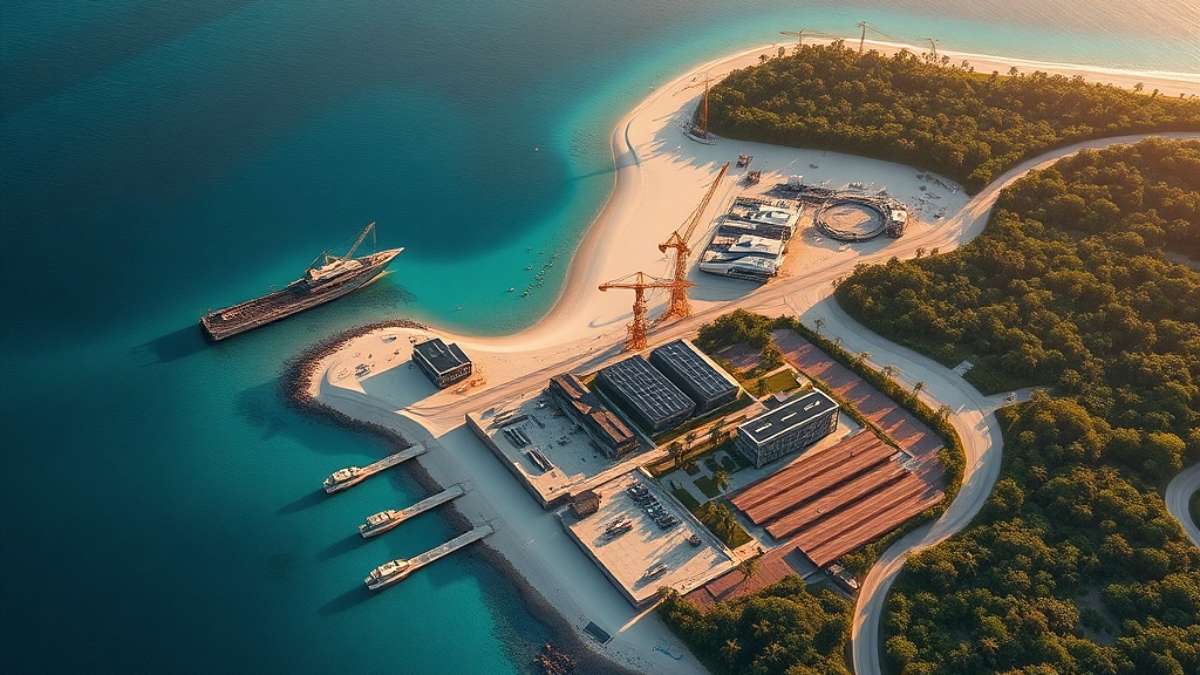
Mega tourism projects have entered a new phase as governments jostle to attract big hospitality investment, without letting bureaucracy bog down schemes. From island resorts and coastal destinations to integrated transport and energy projects, investors are demanding faster and more predictable approval systems to make complex schemes viable. The emerging Green Lanes approach brings agencies together to shorten administrative timeframes, and allow multiple approvals to proceed simultaneously. The Philippines, Thailand, Malaysia, Indonesia, Vietnam, Saudi Arabia, Greece and the Maldives are all pushing different variations of the model, and are transforming the way major tourism developments progress from investment proposals to actual construction.
Unravelling the Regulatory Bottleneck in Mega Tourism Development
The capital requirements for establishing world-class hospitality destinations are inherently substantial. Beyond standard superstructure engineering, major resort developments in pristine coastal environments and isolated island archipelagos require extensive infrastructure investment. Private investors are routinely required to fund off-grid energy generation, seawater desalination facilities, advanced wastewater treatment systems, marina berthing, and private air access routes. Historically, the primary obstacle facing foreign direct investment in hospitality was not construction complexity, but administrative attrition.
Across primary emerging markets, major hospitality developments typically endured regulatory delays ranging from 24 to 36 months before site preparation could begin. A standard island resort proposal required sequential approvals across dozens of government entities, including municipal local government units, land management bureaus, maritime authorities, environmental compliance departments, and power grid operators. Under traditional public administration frameworks, these regulatory reviews operated linearly. A developer could not apply for building permits or utility interconnection rights until foreshore lease agreements and environmental clearance certificates were formally issued.
This linear permitting system created severe financial risks for private equity funds and hotel operators. Land holding fees, shifting macroeconomic conditions, material inflation, and political turnover frequently compromised project viability while capital remained tied up in pre-development limbo. Recognizing that administrative red tape was diverting institutional capital to more agile markets, sovereign governments began restructuring their regulatory frameworks. The resulting solution—the Green Lanes Strategy—replaces multi-year administrative hurdles with a fast-tracked, predictable execution pathway designed to attract high-value foreign direct investment.
Advertisement
Advertisement
| Development Phase | Traditional Sequential Framework | Accelerated Green Lanes Strategy |
| Pre-Development Clearances | 24 to 36 Months | 12 to 18 Months |
| Inter-Agency Coordination | Fragmented across individual bureaus | Centralised via dedicated Account Officers |
| Processing Timeframes | Discretionary with frequent delays | Enforced statutory limits (3, 7, and 20 days) |
| Environmental & Land Reviews | Sequential approval dependencies | Parallel evaluation of land, building, and eco-permits |
| Investor Entry Point | Multiple national and local agencies | Unified One-Stop Action Center (OSAC-SI) |
Core Mechanics: How the Green Lanes Strategy Works for Mega Projects
The Green Lanes Strategy replaces fragmented regulatory pathways with an integrated administrative architecture. Rather than requiring developers to navigate independent government departments, fast-track frameworks anchor the project lifecycle around three core operational pillars: centralized single point-of-entry hubs, statutory processing windows, and parallel inter-agency evaluation.
One-Stop Inter-Agency Action Hubs
Central to the green lane architecture is the consolidation of regulatory oversight within a single institutional entity, such as the One-Stop Action Center for Strategic Investments (OSAC-SI) established under the Board of Investments (BOI). Rather than requiring investors to interface independently with municipal boards, environmental departments, and tax offices, the single-window hub acts as the exclusive liaison.
Advertisement
Advertisement
When a project receives strategic investment endorsement, the investor is assigned a dedicated Account Officer. This officer manages the permitting workflow across all national agencies and local government units, actively monitoring progress, resolving inter-agency conflicts, and ensuring compliance with statutory schedules.
Enforced Statutory Processing Limits
To eliminate administrative inertia, fast-track legislation establishes mandatory processing windows that legally bind government offices. Under standard Ease of Doing Business statutes integrated into green lane decrees—such as Republic Act No. 11032 in the Philippines—regulatory agencies must act on applications within fixed timeframes:
Advertisement
Advertisement
- Simple Transactions: Maximum processing window of 3 working days.
- Complex Transactions: Maximum processing window of 7 working days.
- Highly Technical Transactions: Maximum processing window of 20 working days, specifically covering complex land-use conversions, foreshore leases, and environmental compliance certificates.
If an agency fails to act within the prescribed window without legal justification, anti-red tape mandates trigger administrative penalties and can invoke automatic approval provisions.
Simultaneous Parallel Processing Protocols
The most impactful operational shift in the Green Lanes Strategy is the transition from sequential permitting to simultaneous parallel processing. Under fast-track protocols, government agencies review project components concurrently rather than waiting for prior approvals.
While the environmental management bureau conducts baseline ecological evaluations, maritime agencies simultaneously process foreshore lease applications, local government units review structural plans, and energy departments evaluate microgrid grid-connection specifications. This parallel workflow compresses total pre-development lead times by 50% to 70%, enabling developers to reach groundbreaking status within 12 to 18 months.
Primary Case Study: The Philippines Blueprint and Executive Order 18
The Philippines offers a compelling blueprint for leveraging fast-track administrative pathways to attract major hospitality and island infrastructure capital. On 23 February 2023, President Ferdinand R. Marcos Jr. issued Executive Order No. 18 (EO 18), formally establishing “Green Lanes for Strategic Investments” across all national government agencies, regional offices, and local government units.
Advertisement
Advertisement
Designed to support national socio-economic objectives, Executive Order No. 18 mandates the creation of dedicated Green Lane desks within every permitting authority to expedite strategic foreign and domestic capital deployments.
Institutional Structure and Investment Portfolio Scale
The implementation of EO 18 is managed by the Board of Investments through the One-Stop Action Center for Strategic Investments (OSAC-SI). The impact of this institutional shift on capital deployment has been significant. Official data released by BOI Director Ernesto delos Reyes demonstrates rapid growth in the green lane investment pipeline across clean energy, digital infrastructure, manufacturing, and luxury hospitality.
As of June 2025, total investments endorsed under the green lane framework reached PHP 5.239 trillion across 210 strategic projects. These projects are projected to generate over 309,000 jobs, supported by PHP 1.66 trillion in direct foreign investment.
| Project Implementation Phase | Total Project Count | Investment Value (PHP) | Operational Impact & Milestones |
| Fully Operational Projects | 12 | PHP 203.63 Billion | Slashed pre-development timelines from 5 years to 18 months |
| Pre-Operation Phase | 3 | PHP 2.24 Billion | Operational testing and workforce recruitment |
| Active Construction Phase | 36 | PHP 360.42 Billion | Active superstructure and civil engineering works |
| Pre-Development Phase | 159 | PHP 4.67 Trillion | Undergoing accelerated parallel permitting |
| Total Green Lane Portfolio | 210 | PHP 5.239 Trillion | Anticipated >309,000 direct jobs created[cite: 2] |
Concrete operational data validates the efficiency of the framework. Operational projects that previously anticipated pre-development permitting schedules of three to five years successfully secured all required national and local clearances within 18 months.

Integration with PHISAP and Fiscal Reform Frameworks
The deployment of Executive Order No. 18 aligns directly with the Philippine Hotel Industry Strategic Action Plan (PHISAP), which targets adding over 120,000 hotel rooms and resort keys across growth hubs. The green lane mechanism ensures that private resort developments, master-planned eco-lodges, and auxiliary infrastructure projects receive priority clearance across primary leisure corridors, including Palawan, Siargao, Bohol, Cebu, and emerging coastlines in Mindanao.
To maximize investor yield, the Green Lanes Strategy intersects directly with major fiscal reform legislation, including the CREATE MORE Act (Republic Act No. 12066) and the Public-Private Partnership (PPP) Code of the Philippines (Republic Act No. 11966). As highlighted by Special Assistant to the President for Investment and Economic Affairs Frederick D. Go, the CREATE MORE Act enhances fiscal incentives by extending corporate income tax holidays, reducing maximum tax rates, and offering enhanced deductions for power consumption—a significant operational cost for off-grid island resorts.
Advertisement
Advertisement
Strategic green lane designation extends beyond resort superstructures to clear private sector infrastructure proposals, including:
- Island Power Microgrids: Floating solar arrays, off-grid solar-battery storage installations, and localized power distribution systems.
- Foreshore & Marine Infrastructure: Private marina construction, passenger ferry terminals, and deep-water cruise ship berthing facilities.
- Aviation & Regional Transport: Provincial airport runway expansions, private terminal lounges, and helipad network approvals.
Comparative Regional Benchmarks: Fast-Track Pathways Across Asia
Nations across Southeast Asia are deploying accelerated administrative pathways to capture global hospitality and infrastructure capital. By establishing competitive fast-track legislation, regional economies are tailoring policy frameworks to remove administrative barriers for high-impact developments.
| Country | Primary Policy Framework | Key Hospitality & Infrastructure Impact |
| Philippines | Executive Order No. 18 (OSAC-SI) | Reduced pre-development permitting timelines from 5 years to 18 months |
| Thailand | BOI Thailand FastPass Framework | Total investment applications surged 139% YoY to $32.5B in H1 2025 |
| Malaysia | Special Tourism Investment Zones (STIZ / RMK13) | Fast-tracked land conversions and expedited MOTAC labor quotas |
| Indonesia | Special Economic Zones (SEZs) & OSS Platform | Simplified land acquisition and single-submission licensing in Mandalika/Likupang |
| Vietnam | Priority FDI Clearances (National Tourism Areas) | Accelerated transport and coastal connectivity infrastructure (e.g., Cat Ba) |
Thailand: BOI FastPass and High-Impact Investment Clearances
The Board of Investment of Thailand utilizes the Thailand FastPass framework to streamline regulatory approvals for high-value foreign direct investments. Integrated across primary executive agencies, Thailand FastPass shortens standard regulatory timelines by 20% to 50% for complex developments, luxury eco-tourism resorts, and integrated entertainment complexes.
Official BOI statistics indicate that investment promotion measures drove a 139% year-on-year surge in investment applications during the first half of 2025, reaching 1.06 trillion baht (~$32.5 billion). Investors qualifying under target activity categories—such as medical tourism and high-value sustainable resort development—receive corporate income tax exemptions of up to 8 years (under Category A1/A2 promotions) along with import duty exemptions on capital machinery.
Malaysia: Special Tourism Investment Zones (STIZ)
Under the National Tourism Policy 2020–2030 and reinforced within the 13th Malaysia Plan (RMK13), Malaysia has institutionalized Special Tourism Investment Zones (STIZ). Designed to attract global private capital into master-planned tourism corridors, Special Tourism Investment Zones provide expedited land-use conversions, tax concessions, and fast-tracked environmental licensing in priority destinations across Johor, Melaka, and Sarawak.
Furthermore, the Ministry of Tourism, Arts and Culture (MOTAC) collaborates with the Ministry of Home Affairs via dedicated One-Stop Centres (OSC) to streamline foreign worker quota approvals and technical management recruitment for hospitality operators within STIZ jurisdictions.
Advertisement
Advertisement
Indonesia: Tourism Special Economic Zones and the OSS System
Indonesia accelerates integrated mega-resort development through designated Special Economic Zones (SEZs), such as the Mandalika SEZ in Lombok and the Likupang SEZ in North Sulawesi. SEZ investors register through the Online Single Submission (OSS) platform, a unified digital portal that consolidates business licensing, spatial usage permits, and environmental impact statements.
Beyond corporate tax holidays, Indonesia’s tourism SEZs offer non-fiscal advantages, including simplified land acquisition processes, fast-tracked customs clearance for imported building materials, and extended operational land-rights leases for foreign investment consortia.
Vietnam: Priority Administrative Clearances for Coastal Infrastructure
Vietnam utilizes targeted Decrees to grant priority administrative clearances to foreign direct investments focused on coastal infrastructure, luxury island connectivity, and integrated entertainment hubs. Priority destination corridors, such as Phu Quoc Island and the Cat Ba archipelago in Hai Phong, receive state support through fast-tracked public-private infrastructure investments. Under these accelerated administrative measures, major transport connectivity projects—including airport modernizations, deep-water passenger ports, and access expressways—are prioritized to ensure public infrastructure keeps pace with private resort construction.
Global Parallels: Accelerated Benchmarks Outside Asia
The application of fast-track administrative pathways for major hospitality developments extends beyond Asia. Sovereign jurisdictions in the Middle East, Southern Europe, and the Indian Ocean actively deploy strategic investment frameworks to attract international luxury capital.
Saudi Arabia: Tourism Investment Enabler Program and Giga-Projects
As part of Vision 2030, Saudi Arabia established the Tourism Investment Enabler Program (TIEP) alongside custom Special Economic Zone regulations for giga-projects such as Red Sea Global and NEOM. To bypass conventional bureaucratic delays, the Saudi government established unified development authorities empowered with independent regulatory oversight. These authorities directly issue environmental clearances, building permits, and maritime development rights within dedicated geographic zones, enabling luxury resort operators to execute complex, multi-island developments under unified administrative frameworks.
Greece and Southern Europe: Strategic Investment Status
Greece provides an established European benchmark through its “Fast-Track” Law for Strategic Investments, administered by Enterprise Greece. Private hospitality developments exceeding €50 million in total capital expenditure—or designated high-impact investments—can apply for formal Strategic Investment Status.
Advertisement
Advertisement
Once endorsed by the Inter-Ministerial Committee on Strategic Investments, projects enter an expedited licensing pathway. Key benefits include:
- Special Spatial Development Plans (ESCHASE): Automated spatial planning approvals and simplified land-use designations.
- Tax Stabilization Guarantees: Protection against changes in national corporate tax structures for up to 12 years.
- Fast-Track Environmental Licensing: Statutory deadlines for Environmental Impact Assessments enforced by executive decree.
Landmark hospitality projects utilizing this framework include the Skorpios island redevelopment, luxury mixed-use resorts on Ios island, the Varko Resort in Western Greece, and multi-asset developments across Crete and Kea Island.
Maldives: One-Stop Island Leasing and Bundled EIAs
In the Indian Ocean, the Ministry of Tourism of the Maldives operates a One-Stop Island Leasing Portal to accelerate resort development across uninhabited islands. The Maldivian framework streamlines pre-development by bundling Environmental Impact Assessments (EIAs) directly into competitive bidding and head-lease allocation contracts. By providing pre-surveyed baseline environmental data and streamlined lease agreements, the Ministry enables international hotel chains to begin island construction rapidly following lease execution.

The Eco-Guardrail Balance: Maintaining Environmental Standards Amid Speed
A common critique of administrative fast-tracking is the potential risk of compromising environmental standards in ecologically sensitive coastal and island environments. However, modern fast-track frameworks demonstrate that accelerating approvals does not require regulatory compromise. Instead, contemporary Green Lanes Strategy models deploy digital technologies and structured conditionalities to maintain strict Environmental, Social, and Governance (ESG) standards.
Digitized EIAs and Pre-Cleared Zoning Maps
To prevent administrative backlogs in environmental bureaus, fast-track systems incorporate digitized Environmental Impact Assessment portals. By leveraging high-resolution Geographic Information System (GIS) mapping, satellite remote sensing, and pre-existing regional environmental baselines, regulatory authorities assess spatial risks rapidly.
When an investor submits a resort masterplan within a pre-cleared tourism development zone, regulatory agencies evaluate the proposal against pre-mapped environmental carrying capacity datasets. This digital verification model allows environmental officers to issue conditional Environmental Compliance Certificates within weeks rather than months, without waiving statutory ecological protections.
Advertisement
Advertisement
ESG-Linked Qualifying Criteria and Green Certifications
In competitive investment jurisdictions, fast-track privileges are explicitly contingent on developers committing to sustainable construction and operational benchmarks. Rather than lowering standards, green lane frameworks enforce sustainability criteria as a mandatory prerequisite for administrative acceleration:
- International Green Building Standards: Qualifying resorts must commit to achieving recognized green certifications, such as LEED (Leadership in Energy and Environmental Design), EDGE, or ISO 14000 standards.
- Decarbonized Energy Integration: Projects must integrate renewable energy technologies, such as rooftop or floating solar photovoltaic systems, battery energy storage, and energy-efficient building enclosures.
- Advanced Resource Management: Operators must incorporate closed-loop zero-waste wastewater treatment plants, onsite reverse-osmosis desalination, and strict single-use plastic elimination protocols.
By linking fast-track privileges to ESG performance, sovereign governments ensure that rapid resort construction aligns with long-term climate resilience and marine conservation goals.
Developer Playbook: Capital Requirements and Qualifying Steps
For private equity consortia, hotel management companies, and institutional real estate developers seeking to capitalize on green lane legislation, navigating the qualification process requires a clear operational roadmap. While specific criteria vary by jurisdiction, the qualification sequence follows standardized steps:
- Capital Threshold Verification: Developers must confirm that the proposed project meets statutory minimum investment thresholds. Qualifying projects typically require direct capital investments ranging from $10 million for boutique eco-lodges to over $50 million for master-planned island resorts and marina complexes. Proposals must also demonstrate clear economic multipliers, including direct job creation, local supply chain integration, and regional infrastructure contributions.
- Application Dossier Preparation: Applicants submit a unified project dossier to the national investment promotion agency (e.g., DTI-BOI in the Philippines, BOI in Thailand, or Enterprise Greece). The dossier includes a formal Letter of Intent, corporate registration documents, master architectural plans, a comprehensive permitting inventory, and an ESG sustainability strategy.
- Inter-Agency Technical Evaluation: The single-window action center conducts a technical review of the dossier. Upon approval, the investment authority issues a formal Certificate of Endorsement (or Green Lane Certificate).
- Account Officer Assignment and Parallel Review: Following certification, a dedicated Account Officer is assigned to manage inter-agency coordination. The officer enforces mandatory statutory processing windows (e.g., 3, 7, or 20 days) and oversees simultaneous parallel evaluations across all national and local permitting authorities.
Conclusion
The international luxury real estate and chain hotel construction market is changing under the influence of Green Lanes Strategy modernization programs which countries worldwide are implementing. Governments are eliminating roadblocks by streamlining bureaucratic procedures through introducing specific investment attraction policies while attracting billions of dollars into the global hospitality industry. Authorities in Asia, European nations, and the Middle East are prioritizing the acceleration of approval processes by any available means. Resort owners, private equity, and franchisers may benefit from the new regulation by cutting costs and reducing delays in bringing their multi-million products to the market.
Advertisement
