

India Accelerates the Future of Travel with Its First 320-Kmph Bullet Train Set for 2027 Launch Unlocking a Powerful High-Speed Rail Revolution Across the Nation

Published
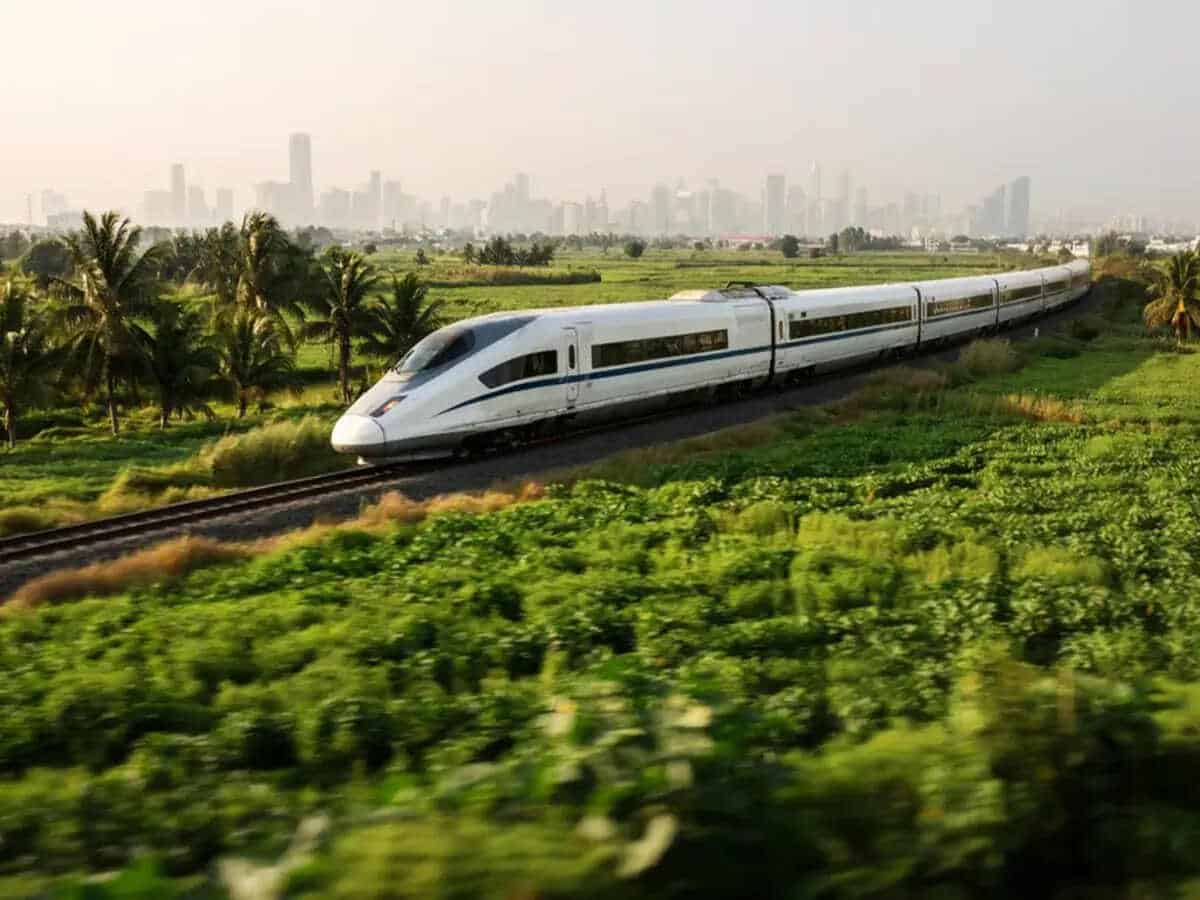
India is set to accelerate the future of travel by launching its first 320-kmph bullet train in 2027, marking the beginning of a high-speed rail revolution that will transform journeys across the country. The first Surat–Bilimora section of the Mumbai–Ahmedabad High Speed Rail corridor will become operational before the remaining phases open gradually. With trains capable of reaching 320 kmph and ambitious plans to expand new bullet train corridors centred on Hyderabad, the project will significantly reduce travel times, strengthen connectivity, boost tourism, support business travel, and reshape the way millions of people travel across India.
India is preparing to transform the future of rail travel with the launch of its first-ever bullet train service, marking a historic milestone in the country’s transport sector. The Surat–Bilimora section of the Mumbai–Ahmedabad High Speed Rail (MAHSR) corridor will become the nation’s first operational high-speed rail route from 15 August 2027, opening the door to a faster, more connected travel experience. As work continues on the remaining sections of the corridor, the project is also laying the foundation for an even larger national high-speed rail network. At the same time, ambitious plans to develop Hyderabad into a major bullet train hub promise to reshape travel across western and southern India, dramatically reducing journey times between several of the country’s largest cities.
Advertisement
Advertisement
India’s entry into the world of high-speed rail represents one of the country’s biggest transportation upgrades in recent decades. Instead of opening the complete corridor at once, authorities have chosen a phased approach to ensure services begin as early as possible while construction continues on the remaining sections.
The first operational segment will connect Surat and Bilimora, forming the opening phase of the 508-kilometre Mumbai–Ahmedabad High Speed Rail corridor. This launch will introduce passengers to India’s first dedicated bullet train service and mark the beginning of a new era in domestic transportation.
Advertisement
Advertisement
The remaining portions of the corridor will gradually enter service as engineering work reaches completion. This phased commissioning strategy allows travellers to begin benefiting from the project before the entire network is finished.
Government updates indicate that approximately 80 percent of the Mumbai–Ahmedabad bullet train project has already been completed. This significant construction progress keeps the project aligned with its planned launch schedule and highlights the rapid pace of infrastructure development taking place across the corridor.
Advertisement
Advertisement
Once the full route becomes operational, the new generation of bullet trains is expected to operate at speeds of up to 320 kilometres per hour. Such speeds will dramatically reduce travel times while providing passengers with faster, smoother and more reliable journeys between two of India’s busiest economic regions.
The project also represents a major investment in India’s long-term transport infrastructure. High-speed rail is expected to improve regional mobility, support business travel, strengthen tourism, and create stronger economic links between major urban centres.
While the Mumbai–Ahmedabad corridor remains India’s flagship bullet train project, planning has already begun for the next stage of expansion.
A major focus of these future plans is Hyderabad, which is expected to become one of India’s most important high-speed rail hubs. The proposed network aims to connect Hyderabad with several major metropolitan regions through dedicated bullet train corridors, creating entirely new travel opportunities across southern and western India.
The planned corridors include:
- India – Surat–Bilimora: The country’s first operational bullet train section, scheduled to begin services on 15 August 2027 as part of the Mumbai–Ahmedabad High Speed Rail corridor.
- India – Mumbai–Ahmedabad: The complete 508-kilometre high-speed rail corridor will be opened in multiple phases as construction progresses toward full completion.
- India – Pune–Hyderabad: The proposed bullet train corridor is expected to reduce travel time to approximately 2 hours, significantly improving connectivity between Maharashtra and Telangana.
- India – Hyderabad–Chennai: The planned high-speed route aims to complete the journey in approximately 3 hours, offering a much faster alternative to current travel options.
- India – Hyderabad–Bengaluru: Passengers are expected to travel between the two technology hubs in approximately 2 hours and 35 minutes once the proposed corridor becomes operational.
- India – Hyderabad–Mumbai: High-speed rail services are expected to reduce travel time to approximately 2 hours and 50 minutes, creating faster links between two major commercial centres.
- India – Hyderabad–Amaravati: The proposed route is expected to cut travel time to only 1 hour and 10 minutes, significantly improving regional accessibility.
These proposed corridors demonstrate that India’s bullet train programme extends far beyond a single railway line. Instead, it forms part of a broader strategy to build an integrated high-speed transportation network connecting multiple regions across the country.
Advertisement
Advertisement
Shorter travel times are expected to encourage greater business movement, improve tourism flows, strengthen regional economies, and offer passengers a practical alternative to conventional rail and short-haul domestic flights.
The phased expansion strategy also allows future high-speed corridors to be developed while operational experience is gained from the first Mumbai–Ahmedabad service. Lessons learned during the initial rollout can help improve efficiency for future projects across the country.
For travellers, the introduction of bullet trains promises greater convenience, predictable journey times, and modern railway infrastructure designed to international high-speed standards. Businesses could benefit from quicker intercity connectivity, while tourism destinations may become more accessible to both leisure and corporate travellers.
The development of Hyderabad as a future high-speed rail hub further signals India’s intention to expand bullet train connectivity well beyond its first corridor. By linking major commercial, industrial and technology centres, the proposed network has the potential to reshape domestic mobility for millions of passengers in the years ahead.
India’s first 320-kmph bullet train, launching in 2027, will usher in a new era of high-speed travel, cutting journey times and transforming connectivity while driving tourism, business, and economic growth across the nation.
As construction progresses and additional corridors move from planning to implementation, India’s first bullet train project is becoming more than a single transportation initiative. It is evolving into the foundation of a nationwide high-speed rail system that could redefine how people travel across the country. Beginning with the Surat–Bilimora launch in August 2027, India is preparing to enter a new chapter of faster, smarter and more connected rail transportation, with future expansion plans positioning Hyderabad as one of the country’s leading gateways for high-speed travel.
Advertisement
