

Canada Revises Hours at Nine British Columbia Border Crossings From November for Winter Travel to the US

Published
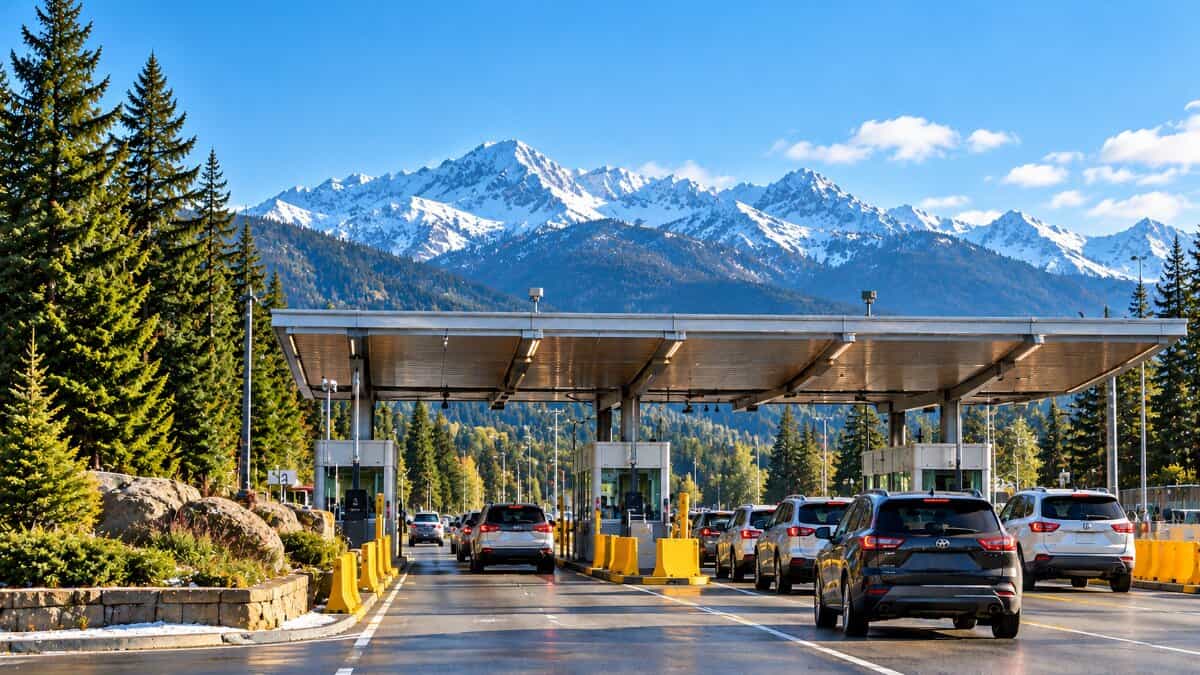
Canada will introduce revised operating hours at nine British Columbia land border crossings from 1 November 2026 until 14 March 2027. The Canada Border Services Agency has confirmed that the adjustments will coordinate Canadian inspection services with neighbouring United States crossings following British Columbia’s adoption of permanent daylight saving time. The development affects travel routes connecting Canada with Washington and Alaska. Winter road-trippers, international visitors, travel agencies and tour operators must check revised schedules, account for time-zone differences and plan border arrivals carefully.
Canada Introduces New Winter Border Crossing Hours Across British Columbia
Canada is preparing an operational adjustment at nine international land border crossings in British Columbia, introducing a revised winter timetable that will influence how travellers organise journeys between Canada and the United States.
Advertisement
Advertisement
According to the Canada Border Services Agency, the changes will begin at 2 am Pacific Time on 1 November 2026 and remain in effect until 2 am Pacific Time on 14 March 2027.
The federal agency confirmed the decision on 9 October 2026, establishing new opening and closing times designed to keep Canadian customs operations coordinated with neighbouring American border facilities.
Advertisement
Advertisement
Seven affected crossings connect British Columbia with Washington state, while two serve international road corridors linking the province with Alaska.
The change does not represent a general closure of Canadian border facilities, a reduction in international travel eligibility or the introduction of new immigration restrictions.
Advertisement
Advertisement
Instead, it responds to a difference in seasonal timekeeping between British Columbia and the United States.
For the tourism industry, the immediate priority is ensuring that border operating hours displayed in holiday itineraries, self-drive packages, transport schedules and traveller communications correspond with the correct local time.
Advertisement
Advertisement
Nine British Columbia Border Crossings: Complete November 2026 to March 2027 Operating Timetable
The revised timetable covers passenger vehicles and commercial processing, with significant differences between some services.
The CBSA has confirmed that passenger processing will remain available seven days a week at all nine locations during their respective opening periods.
However, commercial operating hours at six crossings will be restricted to weekdays, excluding holidays.
Official Winter Border Crossing Schedule
| Canadian crossing and neighbouring US port | Traveller operating hours | Commercial operating hours |
|---|---|---|
| Aldergrove – Lynden, Washington | 9 am–1 am next day, daily | 9 am–1 am next day, daily |
| Carson – Danville, Washington | 9 am–9 pm, daily | 9.30 am–5.30 pm, Monday–Friday |
| Cascade – Laurier, Washington | 9 am–9 pm, daily | 9 am–6 pm, Monday–Friday |
| Chopaka – Nighthawk, Washington | 10 am–6 pm, daily | 10 am–6 pm, Monday–Friday |
| Fraser – Skagway, Alaska | 9 am–1 am next day, daily | 9 am–1 am next day, daily |
| Midway – Ferry, Washington | 10 am–6 pm, daily | 10 am–6 pm, Monday–Friday |
| Nelway – Metaline Falls, Washington | 9 am–7 pm, daily | 9.30 am–5.30 pm, Monday–Friday |
| Pleasant Camp – Dalton Cache/Haines, Alaska | 9 am–1 am next day, daily | 9 am–1 am next day, daily |
| Waneta – Boundary, Washington | 10 am–6 pm, daily | 10 am–5.30 pm, Monday–Friday |
Important: All Canadian operating hours are expressed in British Columbia Pacific Time. Monday-to-Friday commercial schedules exclude holidays. US port names identify the corresponding crossings, but travellers must independently verify American operating hours.
Advertisement
Advertisement
The Canadian timetable comes directly from the CBSA announcement. Corresponding Washington crossing locations can also be identified through the US Federal Highway Administration’s official cross-border transport documentation.
Three Canadian ports, Aldergrove, Fraser and Pleasant Camp, will offer 16-hour daily traveller windows. Carson and Cascade will provide 12-hour windows, Nelway will operate for 10 hours, while Chopaka, Midway and Waneta will each provide eight hours.
These differences create an important distinction between routes suited to later arrivals and border facilities that require earlier journey completion.
Why British Columbia’s Permanent Daylight Saving Time Is Changing Canada-US Border Travel
The adjustments originate from British Columbia’s decision to stop changing clocks twice a year.
According to the Government of British Columbia, the province moved to permanent daylight saving time following its final seasonal clock adjustment on 8 March 2026.
Previously, most of British Columbia alternated between Pacific Daylight Time during the warmer months and Pacific Standard Time during winter.
Advertisement
Advertisement
Under the new arrangement, the province will retain a fixed UTC−7 time offset throughout the year.
The provincial government subsequently introduced PCT, the abbreviation for its year-round Pacific Time standard, in September 2026.
The provincial time-zone announcement established this designation to provide consistency across public information, business operations and scheduling systems.
However, the United States will continue its seasonal clock changes.
The US National Institute of Standards and Technology confirms that American daylight saving time ends on 1 November 2026.
Consequently, Washington will move to Pacific Standard Time, while British Columbia will remain on UTC−7.
Advertisement
Advertisement
This creates a one-hour difference between neighbouring communities that traditionally shared the same clock time during winter.
Existing mountain-time arrangements in certain northern and southeastern British Columbia communities remain unaffected by the provincial transition.
The Hidden One-Hour and Two-Hour Differences International Travellers Must Understand
The most important practical consequence is the need to distinguish Canadian operating times from those shown on the American side.
From November, Washington state will be one hour behind British Columbia. Alaska will be two hours behind British Columbia.
The following table demonstrates the differences.
| Location | Winter time standard | UTC offset | Local time when British Columbia reaches 10 am |
|---|---|---|---|
| British Columbia, affected crossings | Pacific Time, PCT | UTC−7 | 10 am |
| Washington state | Pacific Standard Time, PST | UTC−8 | 9 am |
| Alaska | Alaska Standard Time, AKST | UTC−9 | 8 am |
Aldergrove and Lynden Demonstrate Why Border Clock Conversion Matters
An important example involves Aldergrove in British Columbia and Lynden in Washington.
Advertisement
Advertisement
The CBSA’s revised Aldergrove timetable specifies operations from 9 am until 1 am the following day, using British Columbia time.
Meanwhile, the Washington State Department of Transportation lists Lynden’s regular operating hours as 8 am until midnight.
During winter, these schedules describe equivalent periods in absolute time because Washington will be one hour behind British Columbia.
A traveller approaching the crossing must therefore understand which country’s clock is being used.
This distinction is especially relevant to visitors booking transport arrangements on both sides of the border, including pre-booked transfers, day excursions and multi-destination road trips.
Tour operators should also distinguish general inspection hours from dedicated NEXUS or other specialised lane schedules, which may operate during different periods.
Advertisement
Advertisement
Washington Road Trips Face New Timetable Considerations Around Aldergrove and Southern British Columbia
Cross-border travel between British Columbia and Washington remains an important part of the region’s visitor economy.
The Aldergrove crossing connects British Columbia’s Fraser Valley with the Lynden area of northern Washington through Highway 13 and State Route 539.
Its 16-hour service window provides considerable scheduling flexibility compared with smaller southern British Columbia crossings.
However, the new Canadian clock standard makes accurate itinerary communication particularly important.
Travellers staying in Washington before entering Canada could encounter a different local time immediately after crossing the international boundary.
Tour operators arranging airport pick-ups, accommodation check-ins or onward travel should therefore specify Canadian local time in booking confirmations.
Advertisement
Advertisement
Alternative Crossings Provide Options, but Not Guaranteed Faster Journeys
Washington’s transport department identifies several major international crossings that operate around the clock, including Peace Arch, Pacific Highway and Sumas.
These facilities may provide alternatives when a traveller cannot reach Aldergrove during its operating window.
Nevertheless, an alternative border crossing does not automatically offer the quickest journey.
Road distance, traffic congestion, weather conditions, inspection requirements and the traveller’s final destination can change the suitability of a route.
The CBSA publishes Canadian-bound border wait information for major crossings. The availability and freshness of information vary by location.
Travel planners should evaluate the complete journey rather than selecting a border based solely on its operating hours.
Advertisement
Advertisement
Southern British Columbia’s Smaller Border Crossings Require Earlier Winter Journey Planning
The changes also affect the Boundary Country, Similkameen and Kootenay regions.
These areas contain smaller international crossings that connect rural Canadian communities with Washington.
Chopaka, Midway and Waneta will each operate between 10 am and 6 pm under the revised Canadian timetable.
Their eight-hour traveller windows require careful planning when itineraries involve long-distance driving, remote destinations or unpredictable mountain weather.
Carson and Cascade will provide longer passenger-processing periods until 9 pm, while Nelway will remain available until 7 pm.
The distinction matters for independent travellers who might otherwise assume that all land border crossings operate continuously.
Advertisement
Advertisement
For example, visitors travelling through the Christina Lake area towards Cascade, or along Highway 6 towards Nelway, need to consider both the remaining driving distance and the applicable border closing time.
The British Columbia government’s official numbered highway directory identifies Highway 6 as a corridor connecting the international boundary at Nelway with communities including Salmo and Nelson.
During winter, a late departure or prolonged interruption on connecting roads could make it impossible to complete a planned crossing that evening.
For travel agencies, these smaller ports require route-specific scheduling rather than a standard Canada-US border arrival assumption.
Alaska Tourism Routes Through Fraser and Pleasant Camp Remain Important for Northern Road Adventures
Two affected Canadian facilities hold particular importance for journeys between Alaska and the Canadian highway network.
Fraser serves the South Klondike Highway corridor connecting Alaska’s Skagway area with Canada’s Yukon region.
Advertisement
Advertisement
Pleasant Camp serves the Haines Highway corridor, supporting journeys between Haines, Alaska, and destinations reached through British Columbia and Yukon.
Both will operate daily from 9 am until 1 am the following day under British Columbia’s winter clock.
According to the official Travel Alaska Golden Circle itinerary, travellers can explore a road-and-ferry circuit linking Haines, Haines Junction, Whitehorse and Skagway.
The itinerary highlights the international character of northern journeys, where visitors can cross national boundaries while travelling between connected tourism destinations.
For travellers, the revised timetable adds another scheduling consideration alongside weather, available daylight and seasonal transport connections.
Northern Winter Travel Requires More Than Checking Customs Opening Times
The official Travel Alaska road-travel guidance identifies winter driving challenges including snow, ice, limited visitor services and the importance of planning accommodation alternatives.
Advertisement
Advertisement
Visitors travelling between Alaska and Canada should confirm that their entire journey remains practical, including onward roads and any scheduled ferry arrangements.
A late border opening on the Canadian clock must not be interpreted as a guarantee that every connecting road or tourism service will remain available late into the evening.
For international touring programmes, the two-hour winter difference between Alaska and British Columbia makes explicit local-time labelling especially important.
Winter Road Safety Creates Additional Pressure on Canada’s Cross-Border Tourism Itineraries
Border operating hours represent only one part of winter journey planning.
According to the British Columbia Ministry of Transportation and Transit, most provincial highways include sections where winter conditions can develop rapidly, particularly around higher elevations.
Snowfall, freezing conditions and reduced visibility can affect journey times even when a border facility remains open.
Advertisement
Advertisement
British Columbia requires winter tyres or chains on designated routes from 1 October through 30 April. On certain routes, the seasonal requirement ends on 31 March.
The province also identifies avalanche risks extending from November into May, with December through March among the busiest months for avalanche hazards.
These official conditions are especially relevant to tourists unfamiliar with British Columbia’s mountain road network.
Travellers should consult DriveBC for road restrictions, closures, highway conditions and traveller alerts before beginning a journey.
A border timetable cannot compensate for an inaccessible mountain road.
For this reason, tour operators should avoid building itineraries around arrivals immediately before closing time, particularly when journeys involve mountain passes or remote highways.
Advertisement
Advertisement
Canada’s Cross-Border Visitor Economy Explains Why Timetable Reliability Matters
The operational changes arrive during a period of renewed growth in Canada-bound international travel.
According to Statistics Canada, arrivals by United States residents increased during July 2026, including growth in automobile travel.
The latest complete monthly international travel figures available as of 11 October 2026 provide important market context.
Official Canadian Cross-Border Tourism Indicators
| Tourism indicator | Official reported figure | Relevance to the tourism industry |
|---|---|---|
| US-resident trips to Canada, July 2026 | Approximately 3.5 million, up 9.1% year on year | Demonstrates the scale of the Canada-bound American visitor market |
| US-resident automobile arrivals, July 2026 | Approximately 2.1 million, up 7.5% year on year | Highlights the importance of road-based international travel |
| Overnight share of US automobile arrivals, July 2026 | 56.5% | Shows the significance of overnight stays within road-based visitor movements |
| Preliminary US-resident air and automobile arrivals, August 2026 | 2,433,730, up 2.4% year on year | Provides a more recent indication of continuing cross-border activity |
The August preliminary figure comes from Statistics Canada’s international arrivals leading indicator.
These figures cover Canada nationally, rather than traffic at the nine British Columbia border crossings. The preliminary August indicator also uses a narrower transport-mode definition than the complete July arrivals total.
They must therefore not be interpreted as evidence of a specific increase in traffic, congestion or spending at the affected ports.
Advertisement
Advertisement
Nevertheless, they demonstrate why dependable land-border information remains important to Canada’s wider tourism system.
British Columbia’s Long-Term Tourism Growth Ambitions Strengthen the Case for Reliable Access
British Columbia’s tourism economy provides further context.
According to the provincial government’s March 2026 Tourism Sector Action Plan announcement, tourism generates approximately C$23 billion in annual revenue and contributes around C$8 billion to provincial GDP.
The sector supports more than 113,000 direct jobs and includes nearly 17,000 visitor-serving businesses.
The province has also established a strategic objective of doubling tourism revenue to C$48 billion by 2036.
Achieving that ambition involves multiple factors, including destination development, investment, visitor demand, transport connectivity and tourism infrastructure.
Advertisement
Advertisement
The border timetable changes are not presented by government as a tourism investment programme or a new transport-capacity expansion.
Their relevance lies in supporting predictable movement across existing international travel corridors.
For businesses selling multi-country holidays, that operational predictability is an important component of service quality.
The Overlooked Tourism Risk: Booking Systems and Traveller Clocks May Describe the Same Border Journey Differently
The most consequential implication for the travel trade may not be a change in the total number of hours a crossing operates. Instead, it is the possibility of mismatched time information across different stages of a customer’s journey.
A traveller may begin the day in Washington, receive an itinerary prepared in British Columbia and rely on a mobile navigation application while approaching the border. All three sources may refer to the same arrival without displaying the same local clock time.
An itinerary that specifies a border arrival at 9 am without identifying the country or time zone leaves unnecessary room for confusion.
Advertisement
Advertisement
Travel management companies should therefore examine how their booking platforms store local appointment times, particularly where the same reservation combines accommodation, road transport and international sightseeing.
A second consideration involves itinerary recovery when travel plans change. A delayed attraction visit or weather interruption may leave sufficient time to reach one border crossing but not another. An apparently convenient alternative may require a substantial diversion.
Travel agents can reduce this exposure by building route-specific contingency arrangements and preserving a clear distinction between border operating hours and estimated driving times.
These are forward-looking operational risks identified through analysis of official border and time-zone policies. They are not evidence that booking systems are currently malfunctioning or that border delays will necessarily increase.
How Revised Border Hours Could Affect Tour Operators, Transfers and Multi-Stop Holiday Packages
Tourism businesses operating across the international boundary should assess how the changes interact with their existing products.
Self-drive holidays, family sightseeing packages, independent touring arrangements, adventure travel and privately organised transfers may all involve crossing times that require explicit confirmation.
Advertisement
Advertisement
The practical risks differ by product.
| Travel product or operational activity | Principal planning risk | Recommended industry response |
|---|---|---|
| Self-drive Canada-US holidays | Incorrect local-time interpretation | Display Canadian and US local times separately |
| Escorted cross-border tours | Arriving after passenger-processing hours | Introduce realistic arrival buffers |
| Alaska-Yukon touring itineraries | Two-hour Alaska-BC winter time difference | Use location-specific time-zone labels |
| Rural British Columbia excursions | Limited daily crossing windows | Confirm the border before finalising route plans |
| Commercial support transport | Different weekday and holiday service arrangements | Verify the applicable commercial schedule |
| Accommodation and transfer bookings | Missed connections after weather disruption | Maintain flexible supplier arrangements |
| Online travel booking platforms | Time-zone conversion or schedule-display inconsistency | Review date, time-zone and daylight-saving configurations |
For tourism wholesalers, this assessment also highlights the importance of communicating itinerary changes through the entire distribution chain.
A correctly planned schedule can still create confusion if its timing is altered or omitted when transferred between tour operators, travel agencies, transport providers and customers.
Accordingly, standardised timing information may become more valuable as international self-drive tourism increasingly depends on digital booking and navigation systems.
Revised Canadian Border Hours Do Not Change Passport or Visa Requirements
The announcement concerns operating hours rather than immigration policy.
Travellers entering Canada must continue to satisfy the entry and identification rules applicable to their nationality, residence status and travel circumstances.
Advertisement
Advertisement
According to the CBSA’s official travel identification guidance, American citizens and permanent residents have specific document requirements when entering Canada, while other international visitors must meet the relevant Canadian entry conditions.
Travellers planning to enter the United States should also consult the Government of Canada’s official US travel advisory and the relevant American authorities.
The revised border schedule does not introduce new visitor visa categories, passport exemptions or permission to cross outside staffed opening hours.
Furthermore, the CBSA’s arrangements with emergency services for exceptional situations should not be treated as a normal after-hours border-crossing option for holidaymakers.
Essential Winter Border Travel Checklist for Travel Agents and Tour Operators
Travel businesses preparing departures between 1 November 2026 and 14 March 2027 should incorporate the following operational safeguards:
- Verify every affected crossing: Confirm the Canadian port’s published opening and closing times before issuing final travel documents.
- Identify the correct time zone: Apply British Columbia Pacific Time, Washington Pacific Standard Time or Alaska Standard Time as appropriate.
- Check both sides of the border: Confirm the operating arrangements of the relevant American facility rather than relying exclusively on the Canadian schedule.
- Separate passenger and commercial information: Review applicable weekday, holiday and vehicle-processing restrictions.
- Allow for winter driving conditions: Monitor DriveBC, weather alerts and road restrictions before departure.
- Avoid last-minute arrivals: Build a practical buffer for inspections, weather interruptions and unexpected journey delays.
- Prepare alternative routes: Identify suitable crossings with operating hours compatible with the itinerary and the destination.
- Verify travel documentation: Check passport, immigration and entry requirements before customers begin their journeys.
- Update digital itineraries: Review booking confirmations, tour schedules and customer-facing systems for accurate time-zone information.
- Recheck the spring transition: Review operating schedules ahead of 14 March 2027, when the announced winter arrangements end.
What Canada’s Winter Border Timetable Means for the Future of International Road Tourism
Canada’s revised British Columbia border operating hours represent a targeted administrative response to a changing regional time-zone system.
Advertisement
Advertisement
The immediate tourism significance lies in traveller information, reliable route planning and coordination between Canadian and American inspection services.
The adjustments do not create new border crossings, increase highway capacity or introduce new international tourism routes.
Nevertheless, they demonstrate how policy decisions outside the tourism sector can have direct operational consequences for visitor mobility.
For destinations dependent on international road access, transport reliability involves more than infrastructure alone. It also depends on accurate schedules, dependable information systems, coordinated border procedures and realistic travel planning.
British Columbia’s permanent time standard may provide greater year-round scheduling consistency within much of the province, while simultaneously requiring additional coordination with neighbouring American jurisdictions during winter.
Over time, the experience could offer practical lessons for travel technology providers, destination management organisations and international tour operators handling journeys across differing regional time standards.
Advertisement
Advertisement
For the 2026–27 winter season, the central requirement remains straightforward: travellers must understand when their chosen Canadian border crossing is operating, which local clock applies and whether road conditions allow them to reach it safely.
With British Columbia pursuing substantial long-term tourism growth, dependable international land access will remain one element of a wider strategy to support visitor confidence, regional connectivity and sustainable development of the cross-border travel market.
Advertisement
