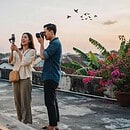
Image generated with Ai
The City of Kuwait is proceeding with the re-energising of the coastal tourism precinct along Arabian Gulf Street and the precinct surrounding the Kuwait Towers, through the creation of leisure amenities and expansion of public areas, waterfront restaurants and modern art installations. This is creating a greater capacity for one of the most prominent coastal locations in the capital to become a site of interest for local and regional tourists who wish to enjoy the pleasures of dining, recreation, sightseeing and culture. With its combination of public spaces, views of the Gulf, hospitality facilities and landmark architecture, the waterfront becomes a site for short recreational visits and weekend excursions.
Arabian Gulf Street forms an important part of Kuwait City’s coastal landscape, running alongside the waterfront and connecting several major attractions and leisure areas.
The continuing urban upgrades are expanding pedestrian plazas and public areas designed to support visitors spending time along the coast. Additional pedestrian-focused spaces provide room for walking, sightseeing and outdoor leisure while improving connections between waterfront attractions.
For domestic visitors, the waterfront provides an accessible setting for short outings, particularly during evenings and weekends. Regional travellers can also incorporate the coastal district into city itineraries focused on Kuwait’s architecture, dining and cultural attractions.
Advertisement
The waterfront environment allows visitors to experience Kuwait City beyond enclosed commercial and hospitality venues, creating a more extensive public-facing tourism area along the Arabian Gulf.
The Kuwait Towers precinct continues to serve as one of the capital’s most recognisable tourism areas.
The towers are closely associated with Kuwait City’s waterfront identity and provide an established landmark around which leisure and visitor activity can develop. Their location beside the Arabian Gulf makes the precinct particularly suited to sightseeing itineraries combining architecture, coastal views and public spaces.
The surrounding revitalisation is expanding the visitor environment beyond the landmark itself. Pedestrian plazas, dining venues and art installations create additional reasons for travellers to spend more time within the precinct.
Advertisement
Advertisement
This wider approach enables visitors to combine landmark sightseeing with food, outdoor recreation and cultural experiences during a single waterfront visit.
Waterfront dining is becoming an important component of the revitalised coastal environment.
Restaurants and hospitality venues along the waterfront provide visitors with opportunities to combine meals with views of the Arabian Gulf. Dining can form part of short evening visits or longer weekend itineraries, particularly for domestic and regional travellers.
The addition of pedestrian areas around dining locations also supports a more integrated leisure experience. Visitors can walk between restaurants, public plazas, waterfront viewpoints and nearby attractions rather than treating each venue as an isolated destination.
For regional tourists visiting Kuwait City for short stays, the waterfront provides a convenient location where sightseeing and dining can be combined within one area.
The development of waterfront hospitality also contributes to the wider growth of leisure tourism by increasing the number of activities available outside traditional indoor attractions.
Modern art installations are introducing an additional cultural element to Kuwait City’s waterfront.
Public art can provide visitors with visual attractions integrated directly into pedestrian areas, allowing cultural experiences to become part of everyday sightseeing. Installations positioned around public spaces and waterfront routes can also create additional stopping points for visitors exploring the district.
The inclusion of contemporary art complements Kuwait City’s existing architectural landmarks and gives the waterfront a more modern cultural identity.
For travellers interested in design and contemporary culture, the installations can become part of a broader city itinerary combining architecture, public spaces, galleries, museums and dining.
The integration of art into open urban areas also allows cultural tourism to extend beyond traditional indoor institutions and into the public realm.
The expansion of pedestrian plazas is central to the waterfront improvements.
More pedestrian-oriented areas can encourage visitors to spend additional time walking along the coast and moving between attractions. Open public spaces also provide locations for sitting, gathering, photography and outdoor recreation.
For families and groups, these spaces create opportunities for informal leisure without requiring a scheduled attraction or ticketed activity. For visitors on short city breaks, they provide flexible additions to sightseeing itineraries.
The emphasis on pedestrian areas also connects different elements of the waterfront experience, including restaurants, landmarks, art installations and coastal viewpoints.
Kuwait City’s waterfront revitalisation is particularly relevant to domestic and regional weekend tourism.
The capital’s coastal attractions can be visited within short leisure itineraries, allowing travellers to combine waterfront walks, dining, sightseeing and cultural experiences without requiring extended stays.
For regional visitors, the waterfront can complement shopping, hospitality and city sightseeing, while domestic visitors can use the area for evening and weekend leisure.
The concentration of attractions around Arabian Gulf Street and the Kuwait Towers precinct also makes the area suitable for multi-generational visits, with dining, open spaces, architecture and public art providing different experiences within the same destination.
These waterfront renovations are adding further elements to the leisure tourism facilities of Kuwait City through one of its most recognisable seaside areas. Additional pedestrian plazas, dining and art installations are being added to the Arabian Gulf Street and Kuwait Towers area, thereby making it a more diverse place for tourists. These renovations link the already famous places of the city with modern urban attractions, which will give domestic and regional travellers another choice of short leisure tourism circuits. With the continued development of the waterfront, Kuwait City is making itself a more attractive city destination where tourists can have their coastal sightseeing, dining, art and recreational activities all in one tourism circuit.
Advertisement
Advertisement
Advertisement












Tuesday, September 1, 2026

Tuesday, September 1, 2026

Tuesday, September 1, 2026
Tuesday, September 1, 2026
Tuesday, September 1, 2026
Tuesday, September 1, 2026
Tuesday, September 1, 2026
Tuesday, September 1, 2026