
Qatar Airways Calls Iran Conflict Its Biggest Crisis in 30 Years as Middle East Flights Recover

Published
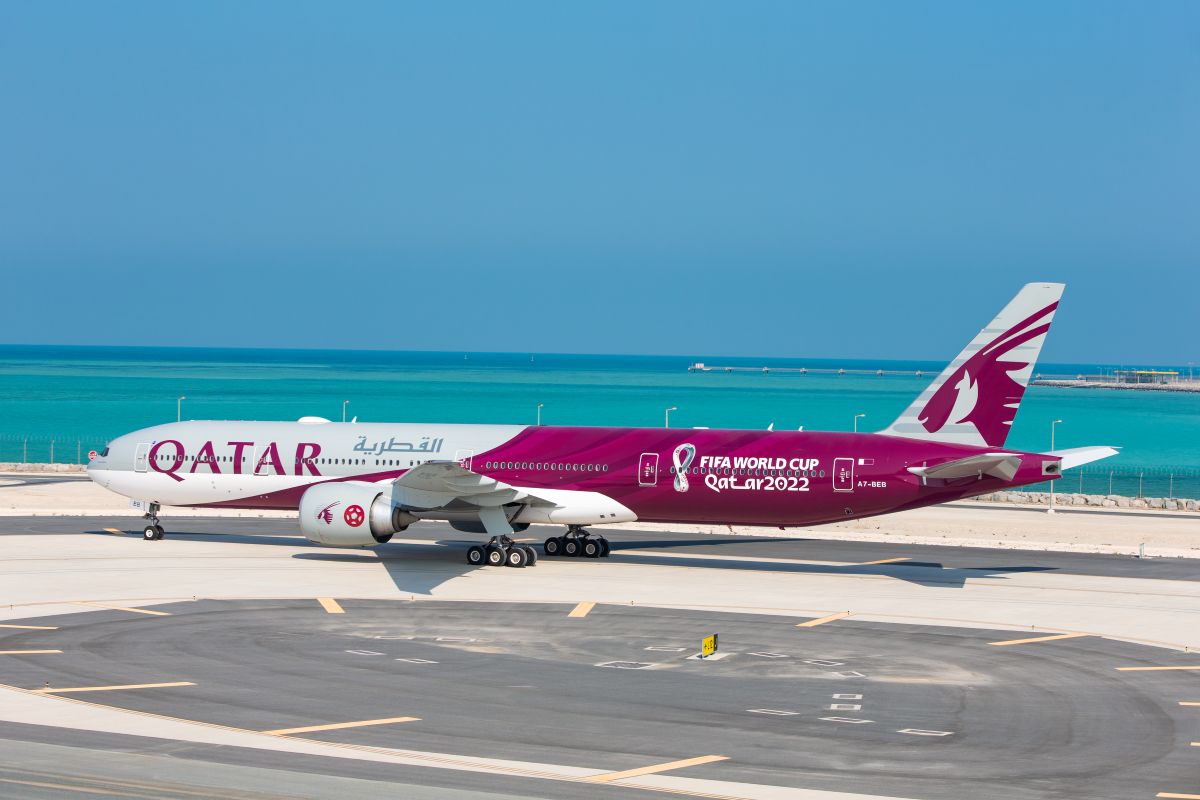
Qatar Airways is confronting the biggest crisis in its more than 30-year history as the Iran conflict continues to reshape Middle East aviation. Chief Executive Officer Hamad Al-Khater described the disruption as the airline’s “single largest crisis in our history” during a Bloomberg TV interview on September 20. The upheaval has affected airspace access, flight schedules, aircraft deployment, passenger booking behaviour and operating costs. Yet, the carrier is rebuilding its network while demand remains relatively resilient. Qatar Airways has also restored its network towards pre-crisis levels after severe restrictions disrupted operations. Meanwhile, jet fuel prices have surged, creating another pressure point for airlines and travellers across the region.
A Crisis That Reaches Beyond Flight Schedules
The scale of the disruption becomes clearer when viewed through Qatar Airways’ position in global aviation. Doha serves as a major connecting hub between Europe, Asia, Africa, the Middle East and the Americas. Consequently, restrictions affecting Gulf airspace can create consequences far beyond the immediate region.
Advertisement
Advertisement
Al-Khater said geopolitics has become something Qatar Airways deals with daily. However, he described the current crisis as the carrier’s largest operational challenge since its establishment more than three decades ago. The assessment covers the combined effect of disrupted flying, altered passenger behaviour and higher energy costs.
The crisis also arrived after Qatar Airways had delivered a strong financial year. The airline group reported QAR7.08 billion in post-tax profit, equivalent to about US$1.94 billion, for the 2025/26 financial year. It carried 41.8 million passengers and generated QAR83.75 billion in revenue.
Advertisement
Advertisement
| Qatar Airways Indicator | FY2025/26 Figure |
|---|---|
| Group profit | QAR7.08 billion |
| Operating profit | QAR15.2 billion |
| Total revenue | QAR83.75 billion |
| Passengers carried | 41.8 million |
| Cargo carried | More than 2.8 million tonnes |
| Aircraft | More than 300 |
| Employees | More than 57,800 |
| Starlink-connected passengers | More than 14 million |
These figures provide important context. The current challenge is not emerging from a prolonged period of weak corporate performance. Instead, it has struck a large international airline during an aggressive phase of network development and recovery.
Doha’s Hub Faces a Changing Travel Map
The Gulf’s importance to international aviation makes regional airspace disruption particularly consequential. Qatar Airways uses Hamad International Airport as its principal global connecting hub, linking long-haul markets through Doha.
Advertisement
Advertisement
When routes through the region become restricted, airlines must reconsider flight paths, aircraft rotations and connecting schedules. Travellers can consequently experience longer journeys, altered departure times and fewer convenient connections.
Qatar Airways had already demonstrated the scale of its recovery effort before the latest assessment. In June, the group said it had restored 85 per cent of pre-crisis network levels, with more than 140 daily departures from Doha to more than 160 destinations.
Advertisement
Advertisement
By September, the airline had moved further. Its winter programme is scheduled to cover more than 170 destinations, with over 186 weekly flights across Africa, Asia Pacific, Europe, the Americas and the Middle East.
| Network Recovery Stage | Published Qatar Airways Position |
|---|---|
| June 2026 | 85% of pre-crisis network restored |
| June 2026 | More than 140 daily Doha departures |
| June 2026 | More than 160 destinations |
| September 2026 winter plan | More than 170 destinations |
| Winter 2026/27 | More than 186 weekly flights |
This progression shows that network restoration has continued despite the wider uncertainty. However, restoring routes does not automatically remove the commercial risks surrounding them.
Fuel Prices Add a Second Shock
Fuel has emerged as one of the most significant financial pressures facing global airlines. Al-Khater said Qatar Airways had not yet passed the full increase in fuel prices directly to passengers, despite a substantial rise since the beginning of the year. The Peninsula reported that jet fuel prices had increased by 90 per cent over that period.
The wider industry data also shows how quickly the cost environment has changed. IATA’s latest fuel monitor put the global average jet fuel price at US$194.90 per barrel, up 7.4 per cent from the previous week.
Advertisement
Advertisement
IATA has separately warned that fuel could account for almost one-third of airline operating costs in 2026. Its August analysis estimated industry fuel spending at about US$350 billion for the year.
| Fuel Pressure | Implication for Travellers |
|---|---|
| Higher jet fuel prices | Greater pressure on airfares |
| Increased price volatility | Less predictable ticket pricing |
| Higher operating costs | Airlines may adjust capacity |
| Longer diversions | Potentially higher fuel consumption |
| Weak demand on selected routes | Greater risk of schedule changes |
The financial mathematics therefore matter for passengers. Airlines can absorb some cost increases, hedge fuel purchases or adjust capacity. However, sustained increases eventually influence fares, frequencies and route economics.
Why Booking Behaviour Matters Now
The crisis has also changed the way some passengers purchase air tickets. Al-Khater said travellers have been booking later than usual, making demand forecasting more difficult.
That shift creates a delicate planning problem. Airlines must decide aircraft allocation and flight frequencies months ahead. Yet late bookings can make conventional forecasting less reliable.
For passengers, this environment may create both opportunities and risks. Travellers who book early may secure better availability on popular routes. However, those booking far ahead should also monitor schedule changes when travelling through geopolitically sensitive hubs.
Qatar Airways has repeatedly advised passengers to check its website or application for updated flight information. It has also urged customers to keep contact details current so operational notifications can reach them.
Advertisement
Advertisement
The Network Is Expanding Again
The recovery has not been limited to headline destinations. Qatar Airways has progressively restored services across the Middle East and other international markets.
In April, the airline resumed daily services to Dubai and Sharjah, while Damascus followed in May. Abu Dhabi also returned with twice-daily passenger services, expanding Qatar Airways’ UAE presence to three destinations.
The airline subsequently announced additional Saudi Arabian network growth for winter. Qassim, Taif, Yanbu and Tabuk are scheduled to return, taking Qatar Airways’ Saudi services above 155 weekly flights during the winter season. That represents an increase of more than 10 per cent compared with summer operations.
These developments are significant for regional tourism. More frequencies can improve access to Doha while restoring connections between secondary cities and international long-haul markets.
Emirates Shows a Parallel Recovery
Qatar Airways is not rebuilding its network in isolation. Other Gulf carriers have also been restoring operations following the disruption.
Emirates has reported substantial restoration of its network and capacity. This parallel recovery matters because Gulf aviation operates as an interconnected ecosystem rather than a collection of isolated airlines.
Advertisement
Advertisement
Doha, Dubai and Abu Dhabi compete for international transfer passengers. At the same time, they collectively support connectivity between major global markets and destinations across the Middle East.
For travellers, this means the recovery of one hub can provide alternatives when another route becomes constrained. However, airlines still face different exposure levels depending on their networks, fuel strategies and aircraft utilisation.
What the Crisis Means for Travellers
For international passengers, the immediate concern is reliability rather than headline network size. A carrier may restore hundreds of routes while individual flights remain vulnerable to regulatory, security or operational changes.
Travellers connecting through Doha should therefore distinguish between network restoration and guaranteed schedule stability. Qatar Airways’ own operational notices state that schedules can change because of operational, regulatory, safety or other circumstances beyond its control.
The practical implications are particularly relevant for passengers travelling with tight onward connections. A disruption affecting one sector can have consequences across an entire itinerary.
| Traveller Concern | Practical Consideration |
|---|---|
| Connecting through Doha | Allow sufficient connection time |
| International long-haul journey | Check flight status before departure |
| Travel during geopolitical disruption | Monitor official advisories |
| Flexible travel plans | Review airline change conditions |
| Regional connections | Check each sector separately |
| Winter travel | Reconfirm schedules closer to departure |
Passengers should rely on official airline notifications rather than social-media speculation. They should also retain booking references and ensure the airline has a working telephone number and email address.
Advertisement
Advertisement
Gulf Tourism Faces a Confidence Test
The impact extends beyond aviation. Middle Eastern tourism depends heavily on air connectivity, particularly for international visitors travelling through Gulf hubs.
Travel advisories can influence consumer confidence even when airports and airlines continue operating. A traveller may postpone a holiday because of uncertainty surrounding a region rather than because their destination itself faces disruption.
That creates a second-order effect for hotels, attractions, restaurants and tour operators. Lower visitor confidence can reduce bookings, while aviation capacity may recover faster than tourism demand.
At the same time, Qatar Airways says demand remains relatively strong as travel advisories ease. High load factors suggest that passengers continue to use available capacity, even though regional transit volumes remain affected.
What Airline Capacity Could Signal
The carrier’s capacity decisions provide another useful indicator for the travel market. Suspending weaker routes while protecting stronger services allows airlines to preserve cash and improve aircraft utilisation.
That strategy also reflects a broader change in airline economics. During periods of elevated costs, maintaining market share at any price becomes less attractive than concentrating capacity where demand and yields remain stronger.
Advertisement
Advertisement
For Qatar Airways, this approach coincides with substantial fleet and network ambitions. The group reported more than 300 aircraft and continues to expand its international schedule despite the geopolitical shock.
The winter programme therefore carries significance beyond additional destinations. It signals the carrier’s intention to keep rebuilding international connectivity while retaining greater discipline around costs and demand.
How Qatar Airways Compares With Earlier Disruptions
Qatar Airways has experienced other major disruptions, including the 2017 Gulf blockade and the COVID-19 pandemic. Yet the present crisis differs because the airline must operate while simultaneously dealing with network, geopolitical and fuel-market pressures.
The pandemic produced a historic collapse in international passenger demand. The current environment is different because demand has not disappeared. Instead, passengers are continuing to travel while booking patterns, routes and risk perceptions have changed.
The 2017 blockade also forced Qatar Airways to redesign parts of its network. The current disruption, however, affects a wider aviation environment and coincides with significant volatility in energy markets.
| Disruption | Primary Aviation Effect | Demand Environment |
|---|---|---|
| COVID-19 | Global border and flight restrictions | Severe demand collapse |
| 2017 Gulf blockade | Regional route restrictions | International demand continued |
| 2026 Iran conflict | Airspace, capacity and fuel disruption | Demand remains comparatively resilient |
This distinction helps explain why the current challenge is commercially complex. Qatar Airways must continue rebuilding rather than simply waiting for a global travel market to reopen.
Advertisement
Advertisement
What Comes Next for Doha Travellers
The next phase will depend on how regional security conditions, fuel markets and passenger confidence evolve. Qatar Airways has already demonstrated a clear preference for restoring capacity progressively rather than pursuing expansion without regard to costs.
Its winter schedule points towards continued network growth. At the same time, the airline’s comments on profitability indicate that individual routes will remain under scrutiny.
For travellers, Doha remains a major international gateway. However, passengers should treat published schedules as changeable during periods of regional uncertainty and verify their itinerary before travelling.
The Qatar Airways Iran conflict has therefore become more than an airline story. It illustrates how geopolitics can rapidly influence aircraft movements, fuel economics, tourism demand and global passenger connectivity.
A Recovery Still Shaped by Risk
Qatar Airways entered the crisis from a position of considerable financial strength, carrying 41.8 million passengers and reporting record operating profit for 2025/26. Yet the airline now faces a difficult combination of geopolitical uncertainty, elevated fuel costs and changing booking behaviour.
Its network recovery demonstrates that international demand remains present. Nevertheless, rebuilding routes does not remove the commercial risks created by volatile fuel markets and regional security concerns.
Advertisement
Advertisement
For travellers, the message is practical. Doha connectivity is expanding, but flight plans should remain flexible and regularly checked. For the industry, Qatar Airways’ response offers a wider indication of how Gulf carriers may manage capacity when demand remains strong but operating conditions remain unpredictable. The Qatar Airways Iran conflict has exposed the vulnerability of even highly connected global hubs, while the airline’s expanding winter schedule shows that recovery can continue alongside substantial uncertainty.
Advertisement
