

Over 670 Cancellations and 3,479 Delays Disrupted Asia Travel at Istanbul, Guangzhou and More Airports

Published
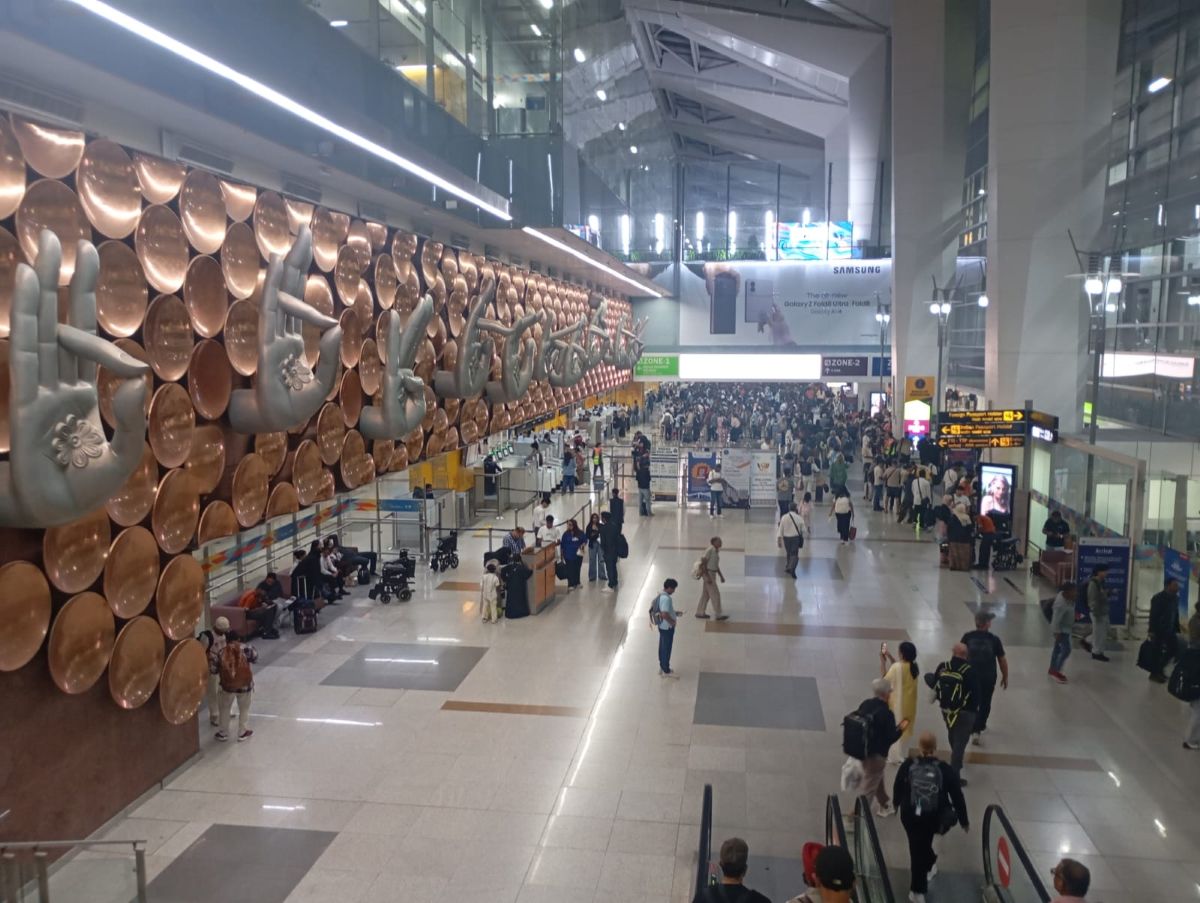
Travel throughout Asia was severely disrupted by over 670 cancellations and 3,479 delays at key airports, including Istanbul, Guangzhou, and other aviation hubs. As airlines scrambled to maintain operations and made schedule adjustments, thousands of customers faced uncertainty. International aviation networks are under additional strain due to increased security concerns in the Middle East, regional airspace limitations, and airline rerouting. Additionally, even if their direct effects were not established, unfavorable weather, air traffic jams, and operational difficulties continued to be potential contributory factors at a number of airports. There were a lot of delays in Istanbul and a lot of cancellations and schedule interruptions in Guangzhou. As a result, passengers had to deal with extended wait periods, missed connections, and unforeseen trip modifications. The extensive interruption brought attention to the mounting strain on interconnected aviation networks in several nations.
Saudi Arabia: Missile Attacks and Aviation Security Restrictions
The strongest documented explanation concerns Saudi Arabia, particularly King Khalid International Airport in Riyadh.
Advertisement
Advertisement
Reuters reported on 9 October that Houthi missile attacks targeted Riyadh airport on 8 October, killing three people and damaging an aircraft. The European Union Aviation Safety Agency subsequently expanded its warning concerning Saudi airspace. International carriers suspended some Riyadh services because of the heightened security risk
UAE, Qatar and Türkiye: Regional Airspace Risks and Airline Rerouting
An aviation update published on 9 October reported that EASA had renewed its conflict-zone advisory covering Gulf airspace, including areas associated with the UAE, Qatar, Bahrain, Kuwait and Oman. Some airlines have postponed services or adjusted routes because of the evolving security environment.
Advertisement
Advertisement
Assessment: Airspace restrictions, rerouting and disrupted aircraft rotations are plausible contributors, especially for flights connecting through the Gulf. Nevertheless, I found no evidence establishing them as the specific cause of all the reported disruptions at Dubai, Doha or Istanbul.
China: Weather Conditions and Airport Operations
Advertisement
Advertisement
China’s Civil Aviation Administration identifies low cloud, reduced visibility and other adverse weather conditions as potential aviation hazards. Its published aviation-weather information highlights low visibility in parts of southern and southwestern China
Which Asian Airports Recorded the Highest Flight Delays and Cancellations?
India’s Indira Gandhi International Airport in Delhi recorded the highest number of delays, with 429 delayed flights and five cancellations. Mumbai’s Chhatrapati Shivaji Maharaj International Airport reported 166 delays and nine cancellations, while Bengaluru registered 90 delays and nine cancellations.
Advertisement
Advertisement
Indonesia’s Jakarta Soekarno-Hatta International Airport recorded 294 delays and 15 cancellations.
In China, Shanghai Pudong International Airport reported 165 delays and 10 cancellations. Guangzhou Baiyun International Airport registered 80 delays and 29 cancelled flights, while Shenzhen Bao’an International Airport experienced 56 delays and 40 cancellations.
Beijing Capital International Airport recorded 45 delays and 30 cancellations. Chengdu Tianfu International Airport reported 38 delays and 19 cancellations.
These figures highlight the scale of disruption across important Asian business, tourism and connecting hubs.
Advertisement
Advertisement
How Did Saudi Arabia, Türkiye and the UAE Experience Cancellations?
Saudi Arabia’s King Khalid International Airport in Riyadh recorded 292 delays and 108 cancelled flights, representing the highest cancellation count among the listed airports.
Jeddah’s King Abdulaziz International Airport reported 188 delays and 25 cancellations, while Dammam’s King Fahd International Airport registered 67 delays and 17 cancellations.
Türkiye also experienced considerable disruption. Istanbul Airport recorded 278 delays and 26 cancellations, while Istanbul Sabiha Gökçen International Airport registered 129 delays and 12 cancellations.
Dubai International Airport reported 220 delays and 33 cancellations. Sharjah International Airport recorded 79 delays and five cancellations, while Qatar’s Hamad International Airport registered 115 delays and 10 cancellations.
These airports serve important international connections, meaning schedule changes can complicate onward journeys.
| Airport (code) | Origin cancelled % | Destination cancelled % |
|---|---|---|
| Abha Regional (AHB) | 11% | 10% |
| Queen Alia Int’l (AMM) | — | 2% |
| Bengaluru Int’l (BLR) | 1% | 1% |
| Chatrapati Shivaji Int’l (BOM) | 0% | 1% |
| Guangzhou Baiyun Int’l (CAN) | 1% | 1% |
| Jakarta-Soekarno-Hatta Int’l (CGK) | 1% | 0% |
| Zhengzhou Xinzheng Int’l (CGO) | — | 1% |
| Chongqing Jiangbei Int’l (CKG) | 1% | 0% |
| Chengdu Shuangliu Int’l (CTU) | — | 0% |
| Changzhou Benniu (CZX) | 6% | 9% |
| Indira Gandhi Int’l (DEL) | 0% | — |
| Dalian Zhoushuizi Int’l (DLC) | 2% | 1% |
| King Fahd Int’l (DMM) | 6% | 5% |
| Hamad Int’l (DOH) | 0% | 1% |
| Al Maktoum Int’l (DWC) | 6% | — |
| Dubai Int’l (DXB) | 3% | 3% |
| Fuzhou Changle Int’l (FOC) | — | 1% |
| Haikou Meilan Int’l (HAK) | 1% | — |
| Hefei Xinqiao Airport (HFE) | 3% | 2% |
| Hangzhou Xiaoshan Int’l (HGH) | 1% | 1% |
| Hong Kong Int’l (HKG) | — | 0% |
| Harbin Taiping Int’l (HRB) | 1% | 1% |
| Istanbul Airport (IST) | 1% | 1% |
| King Abdulaziz Int’l (JED) | 3% | 2% |
| Kunming Changshui Int’l (KMG) | 0% | 0% |
| Navi Mumbai International (NMI) | 4% | 8% |
| Nanjing Lukou Int’l (NKG) | 2% | 2% |
| Nanning Wuxu Int’l (NNG) | 3% | — |
| Nantong (NTG) | 14% | 15% |
| Beijing Capital Int’l (PEK) | 2% | 2% |
| Beijing Daxing International Airport (PKX) | 1% | 0% |
| Shanghai Pudong Int’l (PVG) | 0% | 0% |
| King Khalid Int’l (RUH) | 14% | 14% |
| Istanbul Sabiha Gokcen Int’l (SAW) | 0% | 1% |
| Shanghai Hongqiao Int’l (SHA) | 1% | 2% |
| Shenyang Taoxian Int’l (SHE) | 1% | — |
| Sharjah Int’l (SHJ) | 1% | — |
| Jieyang Chaoshan International Airport (SWA) | — | 2% |
| Shenzhen Bao’an Int’l (SZX) | 3% | 3% |
| Qingdao Jiaodong Int’l (TAO) | — | 1% |
| Chengdu Tianfu Int’l (TFU) | 2% | 1% |
| Ta’if Regional (TIF) | 25% | — |
| Jinan Yaoqiang (TNA) | 1% | — |
| Tianjin Binhai Int’l (TSN) | 1% | 1% |
| Urumqi Diwopu Int’l (URC) | 1% | 0% |
| Wenzhou Int’l (WNZ) | — | 2% |
| Wuhan Tianhe (WUH) | — | 1% |
| Wuxi (WUX) | 6% | 7% |
| Xiamen Gaoqi Int’l (XMN) | 1% | 1% |
| Xi’an Xianyang Int’l (XIY) | 0% | 0% |
| Penglai International (YNT) | 5% | 5% |
| Yangzhou Taizhou (YTY) | 6% | — |
Which Airlines Reported the Most Cancellations and Delays?
Chinese and Indian Airlines Face Significant Schedule Disruption
Shenzhen Airlines recorded 96 cancelled flights, representing 13% of its reported flights, alongside 14 delays at 1%.
Advertisement
Advertisement
Air China registered 40 cancellations (2%) and 50 delays (3%). Tianjin Airlines reported 28 cancellations (8%) and 25 delays (7%), while China Eastern recorded 26 cancellations (1%) and 117 delays (4%).
India’s IndiGo reported 480 delays (21%) and 12 cancellations (0% when rounded), the highest delay count among the listed airlines.
Akasa Air recorded 22 cancellations (9%) and 30 delays (12%). Air India reported two cancellations (0% rounded) and 130 delays (21%), while SpiceJet registered six cancelled flights (9%) and 24 delays (37%).
Middle Eastern and International Airlines Report Widespread Delays and Cancellations
Saudia recorded 49 cancellations (9%) and 196 delays (37%).
Turkish Airlines registered 23 cancellations (1%) and 280 delays (17%), while Pegasus Airlines reported eight cancellations (1%) and 152 delays (20%).
Emirates recorded 20 cancellations (3%) and 113 delays (21%). Qatar Airways registered 10 cancellations (1%) and 102 delays (16%).
Advertisement
Advertisement
Meanwhile, flydubai reported seven cancellations (2%) and 72 delays (23%), while Air Arabia recorded five cancellations (2%) and 77 delays (32%).
Vietnam Airlines registered six cancellations (1%) and 110 delays (29%). Batik Air reported 15 cancellations (4%) and 94 delays (30%).
What Can Affected Passengers Do Now?
- Travellers should check their flight status directly through airline websites or mobile applications before leaving for the airport.
- Passengers facing cancellations should contact their airlines to request rebooking, refunds or alternative travel arrangements, subject to applicable rules and ticket conditions.
- Those travelling through Delhi, Jakarta, Riyadh, Istanbul, Dubai, Shanghai and Guangzhou should allow additional time for connections and monitor departure information.
- Passengers should also retain booking confirmations, airline notifications and receipts for unexpected expenses.
- Travel insurance may cover eligible disruption-related costs, depending on policy terms.
What Does the Disruption Mean for Asian Air Travel?
The airport data records 4,150 reported disruption instances, comprising 3,479 delays and 671 cancellations. Separately, the 34 listed airlines reported 2,591 delays and 434 cancellations.
These datasets represent different reporting categories and should not be added together, as airport and airline figures may overlap.
The disruption illustrates operational pressure across interconnected Asian aviation networks. For travellers, timely flight updates, flexible arrangements and direct communication with airlines remain essential.
Data Verification Notice
The flight disruption data presented in this report has been carefully compiled and verified by our editorial team using real-time aviation statistics recorded on 9 October 2026 at 3:23 PM Eastern Time (ET), USA, corresponding to 10 October 2026 at 3:25 AM China Standard Time (GMT+8).
Advertisement
Advertisement
Primary Source: FlightAware, Local Correspondent
Editorial Verification Process: Our editorial team has independently examined and cross-checked the reported flight delays and cancellations to ensure accuracy and reliability. Timestamped aviation records, historical data logs and real-time feed snapshots have been securely archived for future reference, fact-checking and editorial accountability.
Important Note: Flight-tracking statistics are continuously updated as airlines and airports adjust their operations. Consequently, minor differences may appear between the figures published in this report and those displayed on airline websites, airport information systems or departure boards.
Yesterday, air travel across Asia faced major disruptions, with 4,749 flight delays and 782 cancellations. Click here to read the full report.
Advertisement
Verified by Rana Pratap
