
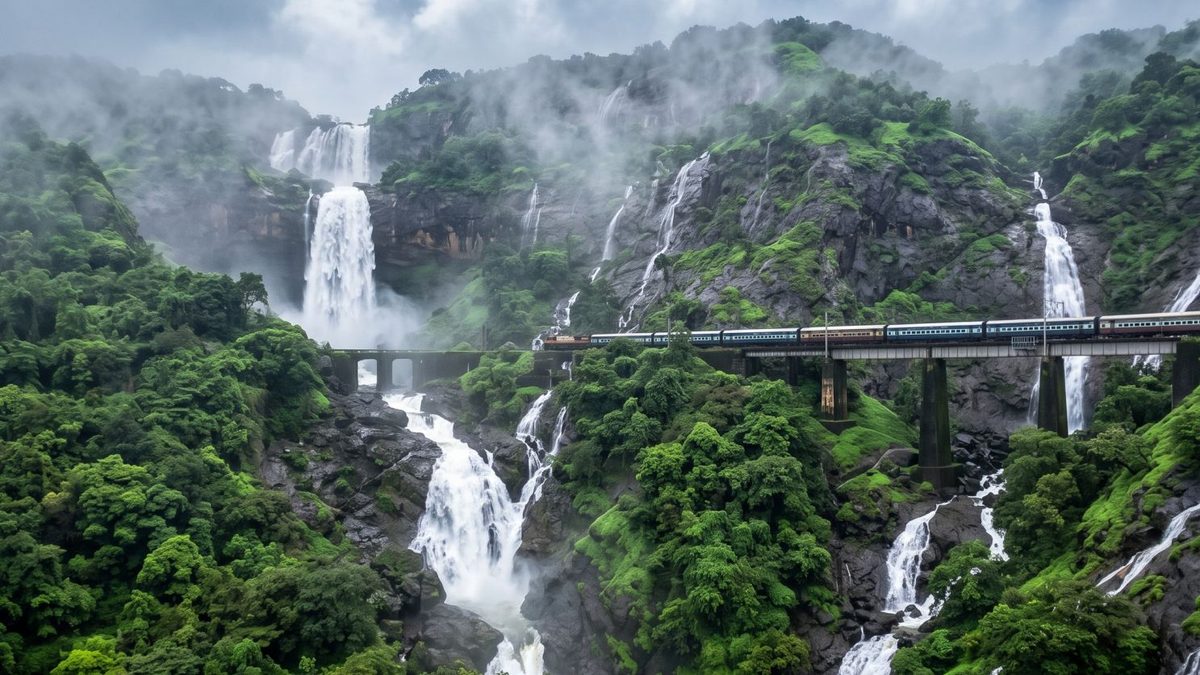
Image generated with Ai
KP Falls Maharashtra has emerged as a visually stunning monsoon attraction where cascading water meets a dramatic railway landscape in Khopoli, Maharashtra. The waterfall’s unique setting near a railway bridge has captured attention among trekkers, photographers and nature lovers seeking unusual experiences near Mumbai and Pune.
Unlike developed tourist sites, KP Falls remains a naturally formed location discovered largely through traveller experiences and social media visibility. Its growing popularity highlights the rising demand for hidden places near Mumbai for monsoon travel, while also raising questions about safety, responsible tourism and visitor management.
Advertisement
The dramatic appeal of KP Falls Maharashtra comes from its rare combination of flowing monsoon water, rugged Western Ghats scenery and railway infrastructure. Located near Khopoli in Maharashtra’s Raigad district, the waterfall has gained attention because visitors can witness water cascading around a railway bridge along the scenic Karjat–Lonavala railway corridor.
Unlike traditional waterfalls promoted through tourism campaigns, KP Falls developed its reputation organically. Traveller videos, photographs and trekking reports transformed the location into a sought-after monsoon experience. The visual contrast between a powerful waterfall and moving trains created a cinematic attraction that quickly spread among adventure travellers.
Advertisement
Advertisement
The location represents a wider change in Indian tourism behaviour. Travellers are increasingly searching for lesser-known landscapes rather than only visiting established destinations. Social media has accelerated this trend by bringing remote natural locations into public attention.
However, the popularity of KP Falls also requires careful interpretation. It is not currently listed as a government-managed tourism destination with official visitor infrastructure. The attraction remains largely dependent on natural conditions, local knowledge and responsible visitor behaviour.
The Free Bird trek documentation describes KP Falls as a railway bridge waterfall on the Karjat–Lonavala railway line and notes that the scene of trains crossing near the waterfall contributes to its popularity.
The rise of the Khopoli waterfall experience reflects Maharashtra’s long-standing attraction as a monsoon destination. The Western Ghats receive heavy rainfall during the southwest monsoon, creating temporary streams, waterfalls and green landscapes across the region.
Khopoli has become associated with waterfall tourism because of its location near the Sahyadri mountain range. The region’s combination of hills, forests and seasonal water flows makes it attractive for weekend travellers from Mumbai and Pune.
KP Falls fits into the growing category of hidden places near Mumbai for monsoon travel. These locations attract visitors looking for short-distance nature escapes away from crowded urban areas.
The waterfall’s appeal is not based only on its size. Its uniqueness comes from the setting. A railway bridge, mountain terrain and flowing water create a landscape that feels different from conventional waterfall destinations.
Traveller documentation suggests that KP Falls can be approached through trekking routes from the Khopoli side. The Free Bird guide mentions a trek route beginning near Datta Mandir in Khopoli and describes the journey as involving forest paths and uneven terrain.
The growing popularity of such destinations shows how domestic tourism in India is moving towards experiential travel. Visitors increasingly seek adventure, photography opportunities and authentic landscapes rather than only traditional sightseeing.
The railway connection is the defining feature that separates KP Falls from many other Maharashtra monsoon waterfalls. The waterfall is associated with the railway route between Karjat and Lonavala, a mountain corridor known for tunnels, bridges and challenging terrain.
The railway line passes through the Western Ghats, where engineering solutions were required to overcome steep gradients and difficult geography. This infrastructure has become part of the visual identity of the region.
At KP Falls, the presence of the railway bridge creates a rare interaction between human engineering and natural surroundings. Water flowing near railway structures gives visitors a distinctive viewing experience.
Visual documentation shared online frequently highlights trains crossing the railway section while the waterfall flows nearby. Such images and videos have played a major role in increasing awareness of the location.
However, the railway connection also creates safety responsibilities. Railway bridges and tracks remain operational infrastructure, not recreational spaces. The attraction’s popularity has increased attention on the need for visitors to maintain distance from railway operations.
The appeal of KP Falls demonstrates how transport infrastructure can unintentionally become part of tourism experiences. Similar patterns can be seen in several mountain railway regions where bridges, tunnels and landscapes attract photographers.
The growth of KP Falls reflects the influence of digital travel discovery in modern India. Before social media, many natural locations remained known mainly among local communities and trekking groups. Today, a single video can transform an unknown landscape into a popular travel destination.
KP Falls gained attention because it offers a visually powerful combination:
Travel platforms have described KP Falls as a waterfall across a railway bridge near Mumbai, highlighting its unusual landscape.
The attraction has particularly appealed to younger travellers searching for unique photography locations. Short videos showing trains crossing the bridge have contributed to its viral identity.
This trend has broader implications for tourism in India. Lesser-known natural attractions can create new economic opportunities for nearby communities through transport services, local guides and small businesses.
However, viral popularity can also create pressure on fragile environments. Natural locations without visitor facilities may struggle with waste management, overcrowding and safety challenges.
KP Falls demonstrates both sides of modern tourism growth. It shows the power of digital discovery while highlighting the importance of responsible travel practices.
The increasing popularity of KP Falls Maharashtra has also brought attention to safety challenges. The waterfall area includes slippery rocks, uneven terrain and strong monsoon water flow.
Travel documentation warns that some approaches involving railway tracks and tunnels are risky. The Free Bird guide specifically highlights that routes through railway tunnels from certain directions involve dangerous conditions and recommends approaching from the Khopoli side instead.
Safety concerns became more visible after incidents reported in 2026.
A Times of India report stated that a 23-year-old trekker died after slipping at KP waterfall in Khopoli during monsoon conditions.
Another report highlighted a rescue operation involving an 18-year-old trekker who fell while taking a selfie near KP Waterfall.
These incidents underline the risks associated with monsoon adventure tourism. Wet rocks, fast-flowing water and difficult terrain require caution.
The popularity of natural attractions should be balanced with safety awareness. Visitors should avoid dangerous photography positions, stay away from active railway infrastructure and follow local guidance.
Despite its popularity, KP Falls does not currently appear to have a dedicated government tourism development programme or official visitor management system.
This means there are no confirmed official visitor statistics, tourism revenue figures or government-led infrastructure announcements specifically linked to KP Falls.
The attraction remains different from established destinations that have:
Its growth has happened mainly through traveller experiences and online visibility.
This situation creates both opportunities and challenges. Maharashtra has significant potential for nature-based tourism, especially across the Western Ghats. Locations like KP Falls could contribute to local tourism economies if developed responsibly.
However, any future development would need to balance tourism growth with environmental protection. The Western Ghats are ecologically sensitive, and uncontrolled visitor expansion can damage natural areas.
For now, KP Falls remains an example of a modern travel phenomenon where a hidden natural site becomes nationally recognised through digital platforms rather than traditional tourism promotion.
The future of KP Falls Maharashtra depends on how authorities, communities and travellers respond to its growing popularity.
The location demonstrates the increasing demand for nature-based tourism in India. Travellers are searching for authentic experiences, short weekend escapes and visually impressive landscapes.
If managed carefully, destinations like KP Falls could support local tourism while protecting natural resources. Potential measures could include safety awareness campaigns, environmental protection initiatives and responsible visitor practices.
The attraction also reflects a broader trend across Maharashtra. The state’s monsoon landscapes continue attracting visitors seeking waterfalls, trekking routes and scenic mountain experiences.
However, the absence of official tourism infrastructure means visitors must take personal responsibility. Respecting nature and railway safety will remain essential.
KP Falls is likely to continue attracting adventure seekers because its appeal comes from something simple yet powerful: the meeting point of water, mountains and railway heritage.
KP Falls Maharashtra has become a remarkable example of how hidden natural attractions can gain national attention through digital discovery. The Khopoli waterfall’s dramatic railway bridge setting has transformed it into one of the fascinating Maharashtra monsoon waterfalls experiences for travellers.
Advertisement
Tags: Hidden places near Mumbai for monsoon travel, Khopoli waterfall, KP Falls Maharashtra, Maharashtra monsoon waterfalls, Waterfalls near Mumbai and Pune
Advertisement
Advertisement













Saturday, September 5, 2026

Friday, September 4, 2026

Saturday, September 5, 2026

Saturday, September 5, 2026

Thursday, September 3, 2026

Wednesday, September 2, 2026

Saturday, September 5, 2026

Saturday, September 5, 2026


