
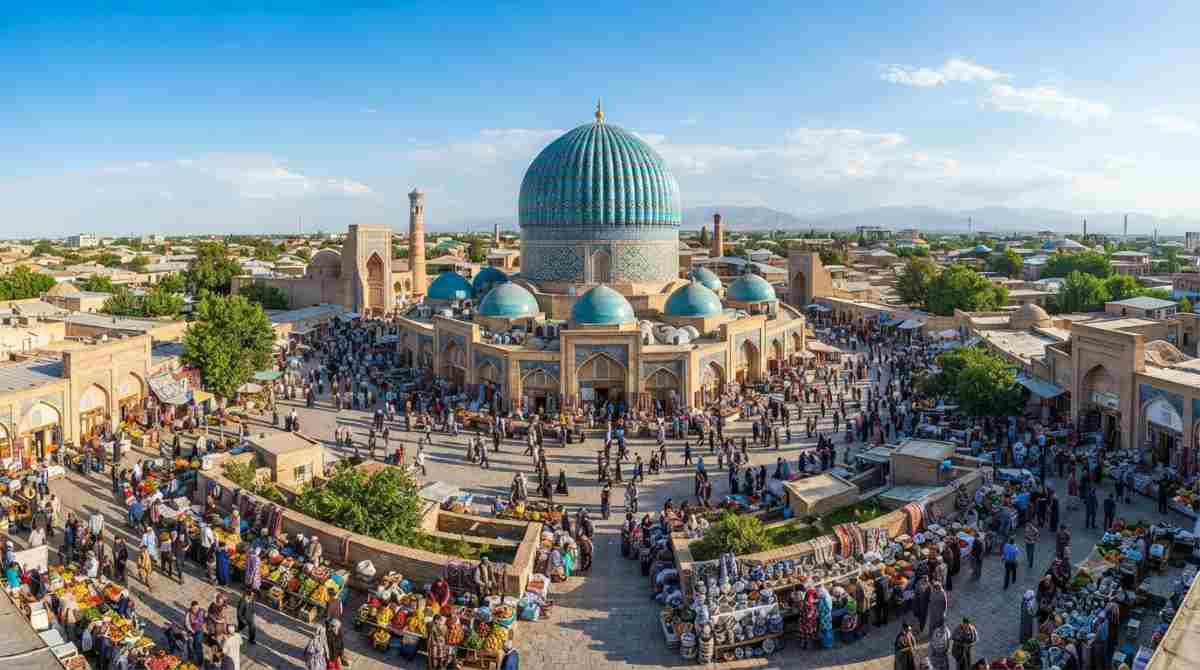
Image generated with Ai
When travelers embark on a journey to Tashkent, Uzbekistan, a unique synthesis of ancient history and urban development is discovered. As the capital, this city serves as a vital gateway for Central Asia travel. The echoes of the historic Silk Road tourism routes are felt throughout the modern landscape. Visitors are encouraged to fly to Tashkent. It is a city that balances Soviet-era heritage with rapid, forward-thinking modernization. Through the exploration of the Amir Timur Square and local parks, a deeper understanding of culture is cultivated. Furthermore, the sensory experience provided by the Chorsu Bazar serves as an essential component for understanding the local rhythm of life.
Tashkent has long functioned as a primary anchor of civilization. Historically known as Chach or Shash, the city has evolved through centuries of conquest and trade. It is essential to recognize that the city’s identity is rooted in resilience. Following a catastrophic earthquake in 1966, a massive reconstruction process occurred. Wide boulevards and monumental architecture now define the current cityscape. This background is critical for travelers. The environment reflects a deliberate effort to preserve historical landmarks. For instance, the Amir Timur Square statue is carefully maintained to honor national history.
Advertisement
The traveler experience in Tashkent is profoundly shaped by the city’s atmosphere. The initial arrival is marked by a sense of scale. Large parks and massive monuments provide a stark contrast to more congested global capitals. Travelers often report that the accessibility of green spaces enhances their visit. These public gardens offer a necessary respite from urban activity. The emotional impact of visiting sites like the Amir Timur Square is frequently noted as a highlight. By engaging with these spaces, visitors observe the intersection of daily life and state history.
From a tourism perspective, Tashkent has become a focal point for investment. The hospitality sector has witnessed considerable expansion. New hotels and improved transport networks accommodate an influx of international interest. Market analysis indicates that the city is positioned as a hub for Silk Road tourism. The revitalization of traditional hubs like the Chorsu Bazar demonstrates a strategic approach. Traditional economic activities are maintained within a modern regulatory framework. Experts note that this transition is handled with attention to the aesthetic value of city landmarks.
Advertisement
To ensure a seamless travel experience in Tashkent, visitors should carefully consider several logistical and practical factors before and during their trip. The primary point of entry for international travelers is the Islam Karimov Tashkent International Airport, which is conveniently situated in close proximity to the city center, allowing for quick transit upon arrival. Once within the city, navigating the landscape is straightforward, as public transportation is both highly accessible and exceptionally efficient.
For a more comprehensive understanding of local travel logistics, please refer to the following essential guidance:
A distinct shift toward liberalization and tourism promotion is observed. In previous decades, bureaucratic barriers hindered the ease of travel. Recent policy reforms, such as visa-free regimes, have catalyzed a surge in tourism. The city was previously characterized by a closed, institutional atmosphere. The contemporary Tashkent is defined by an emphasis on hospitality. The maintenance of historical sites has transitioned from simple preservation to active integration. Infrastructure projects have prioritized connectivity between the historic center and newer districts.
No visit to Tashkent is complete without an immersion into the Chorsu Bazar. This landmark is a vital cultural institution. It is housed under a massive blue-domed structure. This architectural feat stands as a symbol of the city’s trade history. Within this space, aromatic profiles of exotic spices and fresh bread create a unique environment. Travelers are invited to observe the craftsmanship of local artisans. They sell handmade ceramics, textiles, and wood carvings. This interaction provides an intimate view of the regional economy. It also highlights the enduring nature of bazaar culture in the life of citizens.
Advertisement
Advertisement
Advertisement
Advertisement
Advertisement













Saturday, September 5, 2026

Friday, September 4, 2026
Saturday, September 5, 2026

Saturday, September 5, 2026

Thursday, September 3, 2026

Wednesday, September 2, 2026

Saturday, September 5, 2026

Saturday, September 5, 2026


