
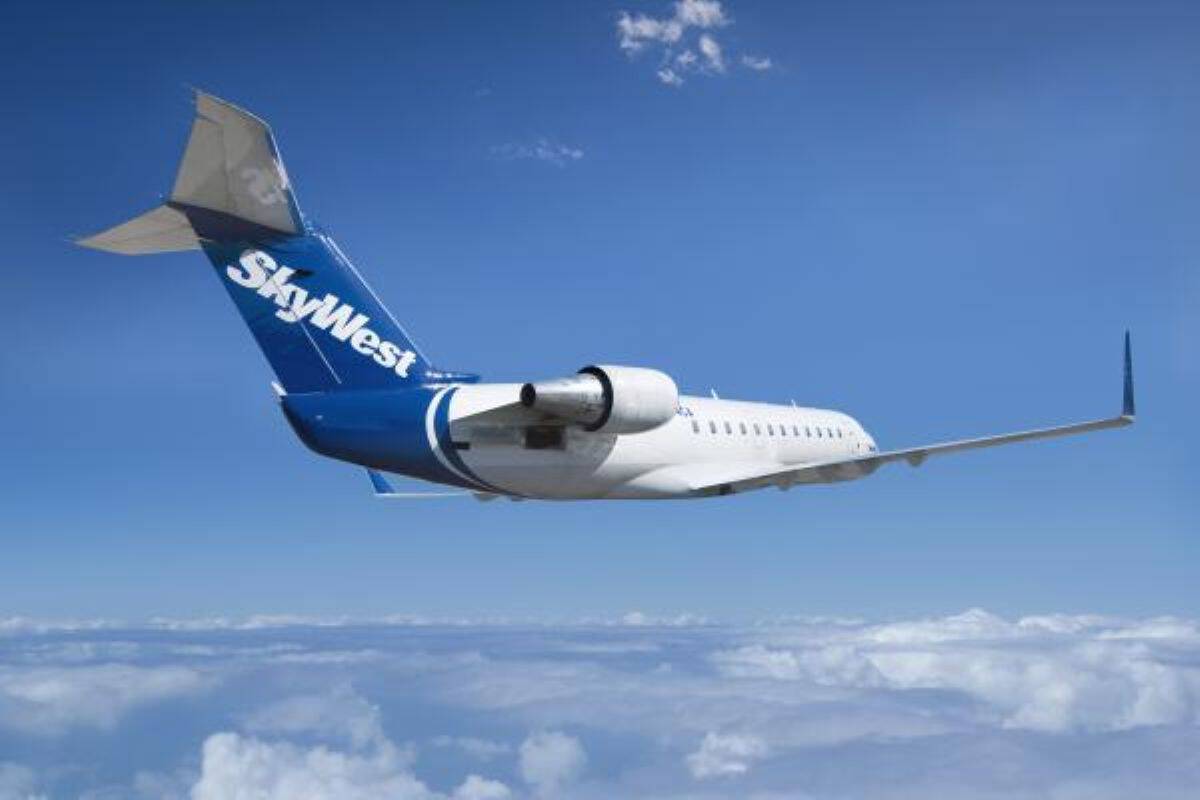
SkyWest Operated United Airlines Flight SKW5805, a Canadair Regional Jet CRJ-700 from Rapid City to Denver, Diverts to Grand Junction Regional Airport, Colorado, United States on 3rd August, Here’s The Latest Update. On August 3rd, at 5:10 PM STA SkyWest Airlines operated United Airlines flight SKW5805, a CRJ-700, from Rapid City to Denver, which on account of an unexpected operational decision, had part of its journey scheduled to fly into Grand Junction Regional Airport of the state of Colorado, USA. Based on the latest updates, the flight did not continue on to Denver International Airport and proceeded to land at Grand Junction Regional Airport. While the exact cause of the flight diversion is yet to be made public, diversions are usually made for safety related issues of which there are multiple like technical issues, weather conditions, medical issues, and various operational issues. Passengers affected by the flight diversion are encouraged to check on the latest information provided by United Airlines to see the latest updates for the diversion.
A regional flight operating from Rapid City Regional Airport (RAP), South Dakota, to Denver International Airport (DEN), Colorado, diverted to Grand Junction Regional Airport (GJT) on 3 August 2026. The aircraft involved was a Bombardier CRJ700 (CRJ7) with registration N716EV.
The flight was scheduled to depart Rapid City at 3:31 PM and arrive in Denver at 5:10 PM. However, after departing at 3:43 PM, the aircraft changed its planned route and landed at Grand Junction instead.
The exact reason for the diversion has not been publicly released. Airlines generally do not confirm operational details immediately unless an investigation or official statement is completed.
Advertisement
Advertisement
A diversion is a standard aviation procedure used when continuing towards the original destination may not be the safest option. Pilots and airline operations teams assess multiple factors before selecting an alternative airport.
Possible reasons include:
The diversion to Grand Junction allowed the aircraft to land at a suitable airport with facilities capable of supporting passengers and regional aircraft operations.

The aircraft involved was a Bombardier CRJ700 regional jet, a commonly used aircraft type for short and medium-distance flights across the United States.
Advertisement
Advertisement
The confirmed flight details include:Category Details Date 3 August 2026 Route Rapid City to Denver Aircraft Bombardier CRJ700 Registration N716EV Scheduled Departure 3:31 PM Actual Departure 3:43 PM Scheduled Arrival 5:10 PM Diversion Airport Grand Junction Regional Airport
The CRJ700 is designed for regional connectivity, often linking smaller communities with major aviation hubs. Rapid City provides access to South Dakota’s Black Hills region, while Denver International Airport serves as one of the largest connecting hubs in the United States.
Grand Junction Regional Airport was selected as the alternative destination, providing a suitable location for the aircraft to land and for passengers to receive support.

Weather is one of the most common reasons for flight diversions, particularly during summer months when conditions can change quickly across the Rocky Mountain region.
Flights operating around Colorado and neighbouring states can encounter:
Denver International Airport’s location near the Rocky Mountains means weather patterns can sometimes affect flight operations. Airlines regularly monitor weather conditions and may adjust routes when necessary.
However, there is currently no confirmed information stating that weather caused this specific diversion.
Other possibilities include technical checks or operational considerations. Aircraft crews are trained to make precautionary decisions whenever they identify circumstances that require additional assessment.
Until the operating airline or airport authorities provide further information, the cause remains unknown.
Passengers travelling from Rapid City to Denver likely experienced delays because Grand Junction was not their intended destination.
A diversion can affect passengers through:
Airlines normally assist affected passengers by providing updated information and arranging recovery options where required.
Passengers impacted by diversions should:
Travellers should avoid making separate arrangements before receiving official guidance, as assistance depends on the reason behind the disruption and airline policies.
Flight diversions are an important part of aviation safety procedures rather than an indication that something has gone seriously wrong.
Commercial aircraft operate under strict safety regulations, and pilots have the authority to make decisions based on changing conditions.
For passengers, the priority after a diversion is staying informed and following airline instructions. Airport teams and airline staff coordinate aircraft movements, passenger assistance and onward travel arrangements.
Travellers can reduce disruption stress by:
The regional flight from Rapid City to Denver diverted to Grand Junction on 3 August 2026 after an unexpected operational decision changed the planned journey. The cause remains unconfirmed, but the diversion reflects normal aviation safety procedures designed to protect passengers and crew. The answer for affected travellers is to follow airline updates, confirm revised arrangements and remain patient during recovery operations. The reason behind such decisions is simple: airlines prioritise safety over completing a scheduled route when unexpected technical, medical, weather or operational factors arise. The latest update highlights how aviation systems respond quickly while maintaining passenger protection.
Advertisement
Tags: Colorado, Denver, Denver International Airport, Grand Junction, Grand Junction Regional Airport
Advertisement
Advertisement













Saturday, September 5, 2026

Friday, September 4, 2026

Saturday, September 5, 2026

Saturday, September 5, 2026

Thursday, September 3, 2026

Wednesday, September 2, 2026

Saturday, September 5, 2026

Saturday, September 5, 2026


