
Image generated with Ai
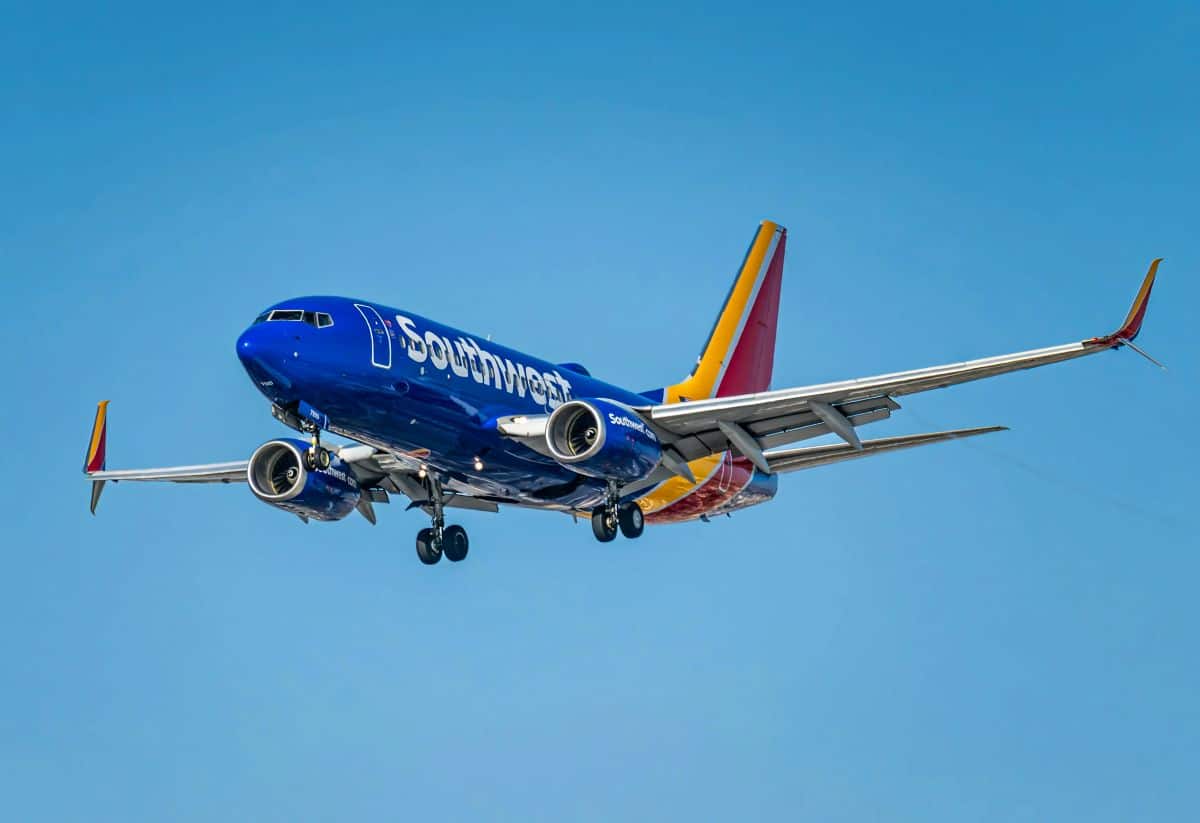
Southwest Airlines Flight SWA3121, a Boeing 737 MAX 8, took an unexpected turn on August 1 when the flight from Oklahoma City to Chicago diverted to St. Louis Lambert International Airport, United States. The Southwest Airlines flight diversion immediately raised questions about what happened during the journey and why Chicago was no longer the aircraft’s destination. However, the precise reason for the diversion remains unconfirmed. Meanwhile, passengers faced an unplanned change to their travel plans. Travel And Tour World urges readers to explore the complete story for the latest confirmed details, aircraft information, route changes and key facts surrounding Southwest Airlines Flight SWA3121.
Southwest Airlines Flight SWA3121 was scheduled to fly from Oklahoma City to Chicago Midway on August 1, but the Boeing 737 MAX 8 did not continue to its planned destination and instead diverted to St. Louis Lambert International Airport. The flight was listed with a scheduled departure of 5:00 a.m. and a scheduled Chicago arrival of 6:55 a.m., while the information available for the operation records a departure at about 5:11 a.m.
The diversion created an unexpected change for passengers who had been travelling towards Chicago, although the available records do not establish that the aircraft encountered an emergency or safety-critical event. Flight-tracking information currently has limitations for this specific historical operation, so the diversion details should be separated from assumptions about what prompted the crew’s decision.
The aircraft involved was Boeing 737 MAX 8 registration N8992L, an aircraft operated by Southwest Airlines and identified by the B38M type code. FAA records list N8992L as a Boeing 737 MAX 8 with serial number 69918 and identify Southwest Airlines as its operator, providing an authoritative confirmation of the aircraft’s identity.
Advertisement
Advertisement
Aircraft records also show that N8992L entered service with Southwest in November 2025, making it a relatively young member of the airline’s MAX 8 fleet at the time of the reported diversion. The aircraft is listed as active, and available fleet information identifies it specifically as a Boeing 737 MAX 8 rather than an older Boeing 737 variant.

Image generated with Ai
The most important unanswered question is why SWA3121 diverted from Chicago to St. Louis, because no authoritative public source reviewed for this report confirms the precise cause. A diversion can occur for many operational reasons, including weather, airport conditions, medical situations, technical concerns, air-traffic restrictions or other circumstances, but none of those possibilities should be attributed to this flight without confirmation.
St. Louis Lambert International Airport provided a practical alternative for an aircraft operating in the central United States, allowing the crew to land away from the originally planned Chicago destination. However, the choice of STL alone does not prove that Chicago weather, aircraft equipment or any other particular factor caused the diversion, and further information from Southwest or aviation authorities would be needed to establish the reason.
Weather remains one possible explanation for an unexpected diversion, particularly because summer weather across the central and Midwestern United States can produce thunderstorms, strong winds, visibility changes and temporary airport restrictions. However, available weather information by itself cannot establish that conditions at Chicago Midway caused SWA3121 to divert, because pilots and dispatchers consider several operational factors before changing an aircraft’s destination.
Advertisement
Advertisement
For that reason, it would be misleading to describe the incident as a confirmed weather diversion at this stage. The available evidence establishes that the aircraft was diverted to St. Louis, but it does not establish whether thunderstorms, airport congestion, wind, visibility or another weather-related factor influenced that decision, leaving the precise cause unresolved.
N8992L had been operating across Southwest’s network before the reported incident, demonstrating that the aircraft was an active part of the carrier’s fleet rather than an aircraft permanently assigned to one route. Flight-tracking records show the same registration operating multiple Southwest services during July, including flights involving airports such as Orlando, Washington, St. Louis, Houston, Las Vegas, Kansas City and Denver.
Those records also show that the aircraft had previously operated Chicago Midway services, including a July operation from Chicago to Ontario, California. Its operational history therefore indicates that N8992L was regularly deployed around the Southwest network, although previous flights cannot explain why SWA3121 specifically diverted on August 1.
For passengers aboard Southwest Airlines Flight SWA3121, the diversion meant that their planned Oklahoma City-to-Chicago journey changed unexpectedly, with St. Louis becoming the aircraft’s destination instead of Chicago Midway. The final consequences for passengers, including onward arrangements, delays or possible rebooking, depend on what happened after the aircraft reached St. Louis and cannot be established from the available flight-tracking information alone.
Southwest’s operational response would normally depend on the circumstances surrounding the diversion and the aircraft’s subsequent availability, while passengers could also face knock-on effects if their onward plans were connected to the original Chicago arrival. Until the airline provides additional information, the most reliable conclusion is that SWA3121 experienced an unplanned diversion rather than a normal completion of its scheduled route.
The confirmed facts are straightforward: Southwest Airlines Flight SWA3121 was scheduled to operate from Oklahoma City to Chicago Midway on August 1, 2026, using Boeing 737 MAX 8 N8992L, and the flight was reported as diverted to St. Louis Lambert International Airport. FAA records independently confirm the aircraft registration, aircraft type and Southwest operation, while flight-tracking records provide additional background on N8992L’s recent fleet activity.
What remains unresolved is the cause of the diversion. No authoritative source reviewed for this report confirms whether weather, a technical matter, an operational issue, a medical situation or another factor prompted the change, so those explanations should not be presented as established facts. For now, the St. Louis diversion itself is the confirmed development, while the reason awaits further clarification from Southwest Airlines or relevant aviation authorities.
Advertisement
Advertisement
Advertisement













Saturday, September 5, 2026

Friday, September 4, 2026

Saturday, September 5, 2026

Saturday, September 5, 2026

Thursday, September 3, 2026

Wednesday, September 2, 2026

Saturday, September 5, 2026

Saturday, September 5, 2026


