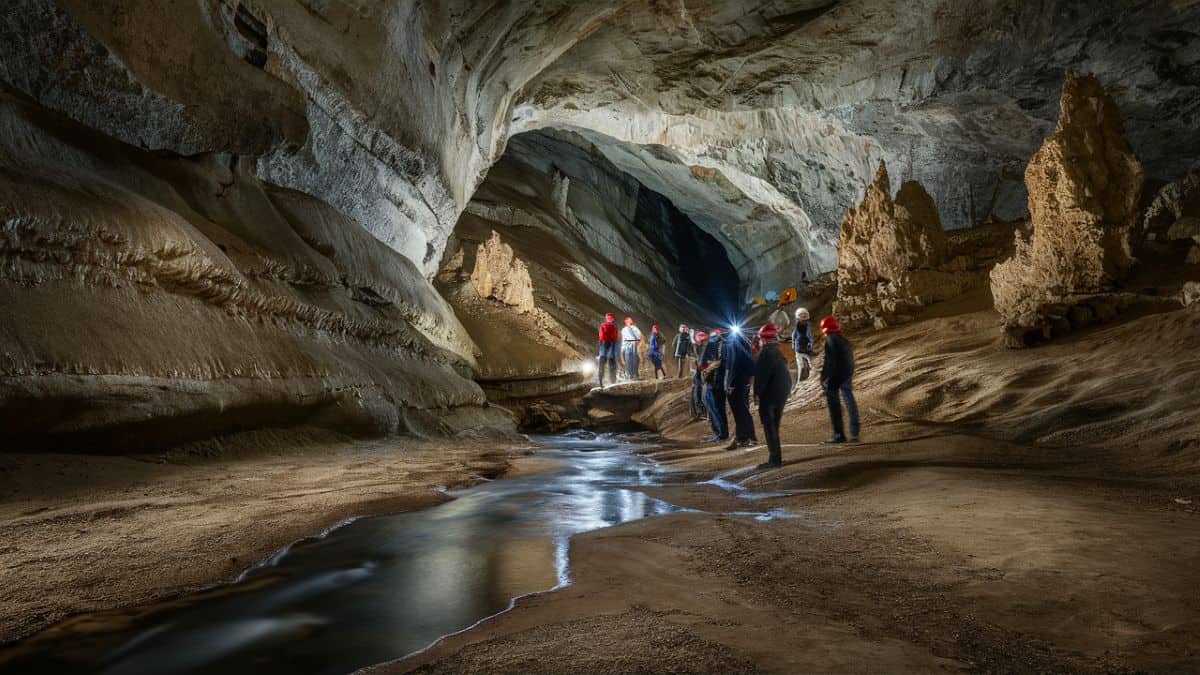
Image generated with Ai
Sevierville in Tennessee is emerging as a high-interest destination in United States adventure tourism with the introduction of guided wild cave experiences at a private underground system known as Sojourn Grotto. Positioned near the Smoky Mountains, the initiative adds a new dimension to regional travel by combining accommodation-led hospitality with structured geological exploration. According to the US National Park Service, the Great Smoky Mountains region is one of the most visited national parks in the country, attracting millions of visitors annually due to its biodiversity, mountain landscapes and outdoor recreation opportunities.
The introduction of curated cave tours reflects a broader trend in US domestic tourism where experiential travel is becoming central to visitor demand. Sevierville, already known as a gateway community to the Smoky Mountains, is strengthening its position through immersive underground activities that extend beyond traditional hiking and sightseeing routes.
Advertisement
Sevierville’s tourism economy benefits significantly from its proximity to protected federal lands and outdoor recreation corridors managed by national agencies. The National Park Service highlights that the Smoky Mountains region supports hiking, wildlife viewing and cultural heritage experiences, making it a cornerstone of Appalachian tourism development.
The introduction of guided cave tourism adds a new layer to this ecosystem. Unlike surface-level attractions, subterranean tours introduce visitors to geological formations shaped over thousands of years. The Smoky Mountains region is characterised by limestone and dolomite formations, which contribute to karst landscapes and underground cave systems. These geological conditions support underground streams, mineral deposits and natural chambers that define caving environments across Tennessee.
Advertisement
Sevierville’s positioning as a hospitality base allows travellers to combine lodging with structured adventure activities, supporting longer stays and diversified tourism spending in the region.
Cave tourism in Tennessee is strongly linked to the broader geological identity of the Appalachian region. The Tennessee Department of Tourist Development notes that outdoor recreation, including hiking, rafting and underground exploration, plays a significant role in the state’s tourism economy.
Karst topography, which is common in parts of Tennessee, forms when soluble rocks such as limestone are gradually dissolved by groundwater. Over time, this creates underground passages, sinkholes and caverns. These formations support unique ecosystems that are sensitive to environmental change and human activity. National Park Service research also emphasises the importance of protecting cave ecosystems due to their fragile biodiversity and slow natural regeneration cycle.
Guided cave experiences in the Smoky Mountains region are typically designed to balance visitor access with conservation principles. Structured tours help reduce environmental impact while offering educational insight into geology, hydrology and subterranean biology.
Advertisement
Advertisement
Sevierville’s accommodation sector is evolving toward experience-led hospitality, where lodging is integrated with curated activities. This model aligns with broader US tourism trends that prioritise immersive stays over passive accommodation. By combining access to underground cave systems with resort-style lodging, the destination enhances its appeal for adventure travellers, couples and small groups seeking differentiated travel experiences.
The Smoky Mountains region already benefits from strong domestic tourism flows due to its national park designation, scenic drives and seasonal foliage tourism. The addition of underground exploration strengthens its competitive positioning in the adventure tourism segment, which continues to grow across North America. Experience-based travel is increasingly associated with higher visitor satisfaction, longer stays and increased local economic impact.
Cave environments require strict safety and conservation protocols due to their sensitive nature. National Park Service guidelines for cave management emphasise minimal impact exploration, controlled access and environmental education as essential components of sustainable tourism.
Visitors engaging in cave tours in regions such as the Smoky Mountains are typically guided through structured pathways to avoid damage to formations and ecosystems. Underground environments can include narrow passages, wet surfaces and low-light conditions, requiring appropriate equipment and trained supervision.
Responsible tourism practices are essential to ensure long-term preservation of geological features. This includes limiting physical contact with formations, avoiding disturbance to wildlife and maintaining stable environmental conditions within caves.
The development of guided cave tourism in Sevierville reflects a broader transformation in Smoky Mountains travel experiences. By integrating accommodation with geological exploration, the destination is aligning itself with modern tourism demand for immersive, educational and nature-based activities.
Backed by the natural appeal of the Great Smoky Mountains National Park region and supported by established tourism infrastructure, Sevierville is positioning itself as a key gateway for adventure-driven travellers in the United States. Underground tourism adds depth to the visitor experience and reinforces Tennessee’s reputation as a leading destination for outdoor and experiential travel.
Advertisement
Tags: Appalachian region USA, Great Smoky Mountains National Park, Sevier County tourism, Sevierville Tennessee, Smoky Mountains USA
Advertisement
Advertisement













Saturday, September 5, 2026

Friday, September 4, 2026

Saturday, September 5, 2026

Friday, September 4, 2026

Thursday, September 3, 2026

Wednesday, September 2, 2026

Friday, September 4, 2026