
Finland’s Middle East Route Shake Up Raises New Questions for Winter Travellers

Updated
Published
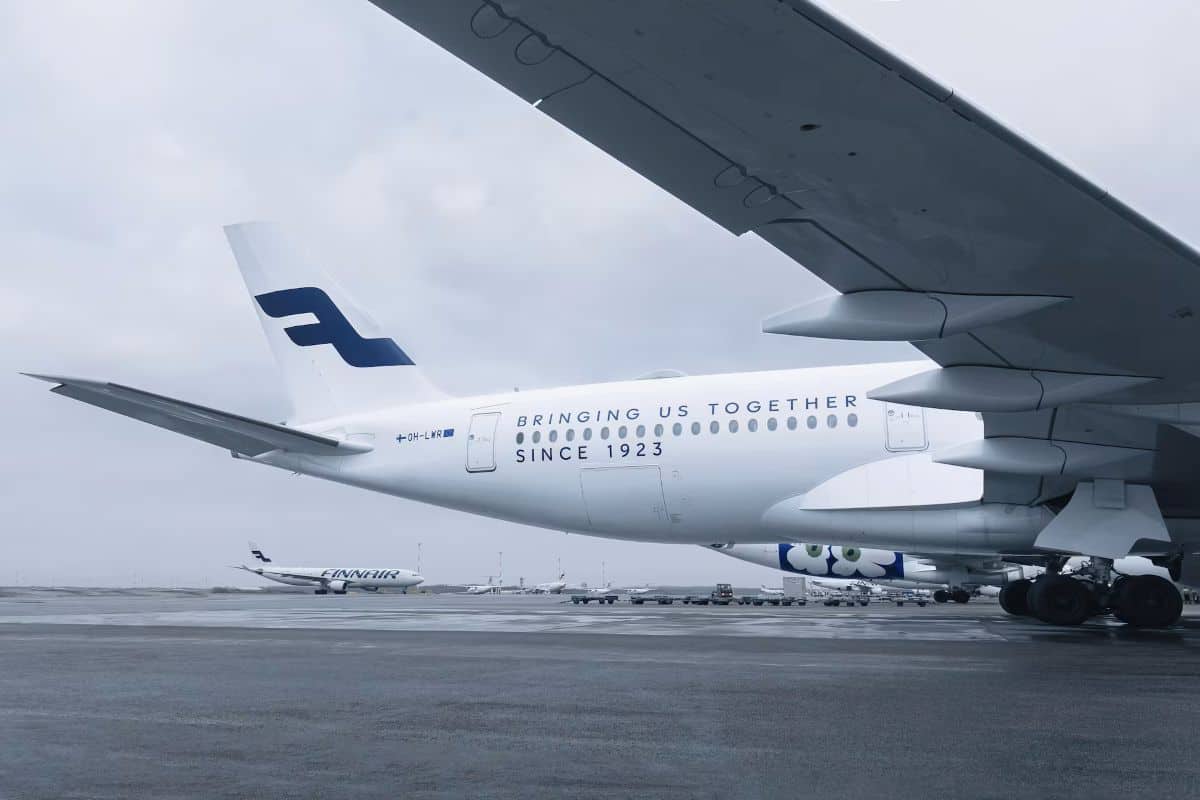
Finland’s Middle East routes have created new concerns for winter travelers due to the adjustments made by airlines. Finnair has canceled the flights from Helsinki to Dubai for winter, but the cancellation of flights to Doha is a result of a different business strategy. Other airlines have announced different dates of cessation or resumption of flights to the area. Additionally, the EASA (European Aviation Safety Agency) has also revised its recommendations regarding the region’s airspace. Thus, travelers need to be careful when making their reservations. They should verify their flights, read the travel recommendations, and take notes of any changes made.
Finnair’s Dubai and Doha decisions have different causes
Finnair’s Dubai suspension is set to affect the whole winter travel season. The Finnish airline says it will cancel flights between Helsinki and Dubai from 25 October 2026 until 27 March 2027. It links the decision to an unstable security situation in the Middle East. The airline says it will contact affected passengers and work on alternative travel plans, but warns that replacement seats may be limited.
Advertisement
Advertisement
Finnair’s Doha route has a different story. The airline says it will not operate flights between Helsinki and Doha from 3 October through the winter season for commercial reasons. It says customers booked on the route until 27 March 2027 will be rerouted, mostly on Qatar Airways-operated flights.
That difference matters. A route can disappear because an airline judges the operating environment too uncertain. It can also disappear because the airline no longer considers the service commercially viable. Those are not the same decision, even if both leave travellers facing a changed itinerary.
Advertisement
Advertisement
The distinction also makes a more useful story than a simple list of cancellations. Finnair’s own notices show that one airline can respond to different routes in different ways. Travellers should check the reason and the options for their specific flight, rather than assume every change comes from the same regional event.
KLM’s pause has a shorter published timeline
KLM’s travel alert, updated on 6 October, says the airline has paused flights to and from Dubai, Riyadh and Dammam through 24 October 2026 inclusive. It says its schedule in the region has been adjusted and that it is monitoring developments. Travellers with affected bookings can review the airline’s rebooking and refund options.
Advertisement
Advertisement
This timeline differs from Finnair’s winter-long Dubai suspension. It also shows why the word “suspended” needs a date beside it. An airline’s pause may last for days, weeks or an entire season. A published end date is the airline’s current plan; it does not guarantee that flights will restart immediately afterwards.
KLM has also resumed service between Amsterdam and Tel Aviv, but with a change to the journey. The airline says flights make a technical stop in Larnaca, Cyprus, where the crew stays overnight. That arrangement means a restored route may not offer the same direct journey a passenger had expected.
Advertisement
Advertisement
For passengers, the practical questions are simple: Is the flight operating on the booked date? Does it include a stop? Has the airline changed the arrival time or connection? A route may appear available while its schedule or flight path differs from the original plan. Checking the booking itself is essential.
EASA’s warnings are specific to each area of airspace
The European Union Aviation Safety Agency, or EASA, does not issue one single warning covering every country and every flight. Its advisories describe different risks in specific airspaces and give different recommendations to operators.
On 30 September, EASA issued an advisory for Saudi Arabia, valid until 16 November unless reviewed earlier. It advises operators not to fly in a defined part of Saudi airspace and to exercise caution in the remainder of the Jeddah flight information region. The agency cites missile and drone attacks, air-defence activity and the risk of falling debris.
EASA’s Jordan advisory, also revised on 30 September, recommends that operators do not fly in the Amman flight information region at any altitude or flight level. The notice says renewed attacks in early September showed that risks could rise quickly. It is valid until 16 October unless reviewed earlier.
Advertisement
Advertisement
A separate advisory covers parts of the Persian Gulf and Gulf of Oman. It recommends avoiding specified airspace over the Gulf’s waters, while allowing the operations necessary for arrivals and departures at airports in the affected areas under the stated conditions. It also advises caution over certain land areas. That notice is valid until 16 November unless reviewed earlier.
These details help explain why airlines may take different decisions. They also warn against claiming that every airport in the region is closed. EASA’s advisories concern defined airspaces and operators within its remit. They do not automatically confirm that a particular commercial flight has been cancelled or will operate. Passengers still need to check directly with their airline.
Announced winter restarts need fresh checks
Some airlines have also announced plans to bring services back. On 10 September, Wizz Air said it planned to restore 12 routes and 49 weekly flights to four Middle Eastern destinations during the winter season. The airline forecast 470,000 seats and included routes such as Budapest–Dubai and Budapest–Abu Dhabi from 25 October. Wizz Air said the services remained subject to operational and security assessments.
That announcement came before EASA’s 30 September revisions to its airspace advisories. The timing creates an important reporting point: a route announced for a future date should be checked again as that date approaches. The plan shows what the airline intended to offer when it published the notice. It does not, by itself, prove that every flight will operate as scheduled.
Lufthansa Group also published a 29 September update describing plans to resume or increase services involving Riyadh and Amman. The company said it would continue to monitor the security situation and that changes could occur for individual airlines.
For a winter travel story, compare the date of the airline announcement with the latest safety advisory and the current booking status. This is especially important for routes involving airspace covered by EASA warnings. Travellers should treat a future timetable as a plan that may change, not as a guarantee.
Advertisement
Advertisement
Europe’s wider air network is still operating
The route suspensions are serious for people booked on the affected services. But they do not mean that European aviation as a whole has stopped.
EUROCONTROL recorded an average of 35,279 flights a day across its network between 21 and 27 September 2026. That was 2.9 per cent higher than in the same week of 2025. Arrival punctuality was 77 per cent, while departure punctuality stood at 71.7 per cent. Both measures were better than a year earlier.
This wider view helps keep the story in proportion. Specific links between Europe and the Middle East may face cancellations, altered schedules or fewer direct options. At the same time, the broader European flight network remains active and carried more flights than a year earlier during the period covered by the report.
Those figures end on 27 September. They do not describe every route, airport or flight in October. They also do not show how many passengers were affected by Middle East cancellations. Use them as network context, not as proof that individual journeys are running smoothly.
Higher fuel costs add pressure to airline planning
EUROCONTROL also reported that jet fuel prices rose sharply in September. The monthly average reached US$4.63 per gallon, more than twice the US$2.26 average recorded in January and February. Prices peaked at US$4.92 per gallon on 18 September.
This is relevant background for a story about airline schedules. Carriers must plan routes while balancing safety, operating costs and demand. But the fuel figures do not prove that every airline will raise fares, nor do they show that any specific suspension was caused by fuel prices. Finnair, for example, identifies security concerns for Dubai and commercial reasons for Doha.
Advertisement
Advertisement
A careful article can explain that the airline industry is facing a difficult operating picture without claiming that passengers will automatically pay more. To report a fare increase, compare actual ticket prices for the same route, dates and fare conditions. Otherwise, present fuel costs as one part of the wider planning environment.
Passengers may still have rights when flights are cancelled
For eligible journeys covered by EU air passenger rules, a cancellation can give passengers a choice between a refund and rerouting. Travellers may also be entitled to care while waiting, such as meals or accommodation where required.
European Commission guidance on Middle East flight disruption says that a voucher can replace a cash refund only if the passenger agrees. It also explains that security risks may count as extraordinary circumstances that remove an airline’s duty to pay additional compensation. However, that assessment depends on the particular flight and circumstances. A cancellation does not automatically remove the passenger’s right to assistance or rerouting.
EU rules apply to flights departing from the EU, whether the airline is based in the EU or elsewhere. They also apply to flights arriving in the EU from outside the bloc when an EU airline operates them. The operating carrier and the route therefore matter when a passenger is rerouted onto another airline.
Passengers should save their booking confirmation, cancellation notice, receipts and messages with the airline. They should check the proposed rerouting before accepting it and contact the airline or ticket seller if the booking was made through an agent. Compensation claims should be assessed separately from refund, rerouting and care rights.
Government advice and airline updates serve different purposes
A flight may still appear in a booking system while government advice warns of possible disruption. The UK Government’s United Arab Emirates travel advice, marked current on 9 October, tells British nationals to prepare for possible flight cancellations and periodic airspace closures. It also advises travellers to monitor local updates and keep departure plans under review.
Advertisement
Advertisement
Government advice helps travellers assess broader risks and prepare for sudden changes. An airline notice explains what that carrier plans to do with its own flights. Neither source replaces the other.
Before travelling, passengers should check the latest government advice for their destination, the airline’s route-specific notice and the live status of their flight. They should make sure their contact details are current in the booking and avoid travelling to the airport unless the airline confirms that the flight is operating. A plan made weeks earlier may no longer reflect the latest conditions.
Europe’s winter travel map is changing route by route
Winter travel across Europe is set to undergo a route revolution due to changes to Middle Eastern services by airlines. Finnair has cut back its flights from Dubai while the discontinuation of Doha flights has been made purely on commercial grounds. On the other hand, KLM has decided to put an end to its temporary suspension period on some of its routes while EASA has issued updated information regarding Gulf region airspace risks. As such, travelers will find that they can get to the destination but via the airline’s partner or making an additional stopover. This is before traveling; travelers should verify this by contacting the carrier as well as checking travel advice.
Advertisement
