
Chicago O’Hare International Airport Chaos Erupts as FAA Ground Stop Triggers Flight Delays Across Top USA Hub

Published
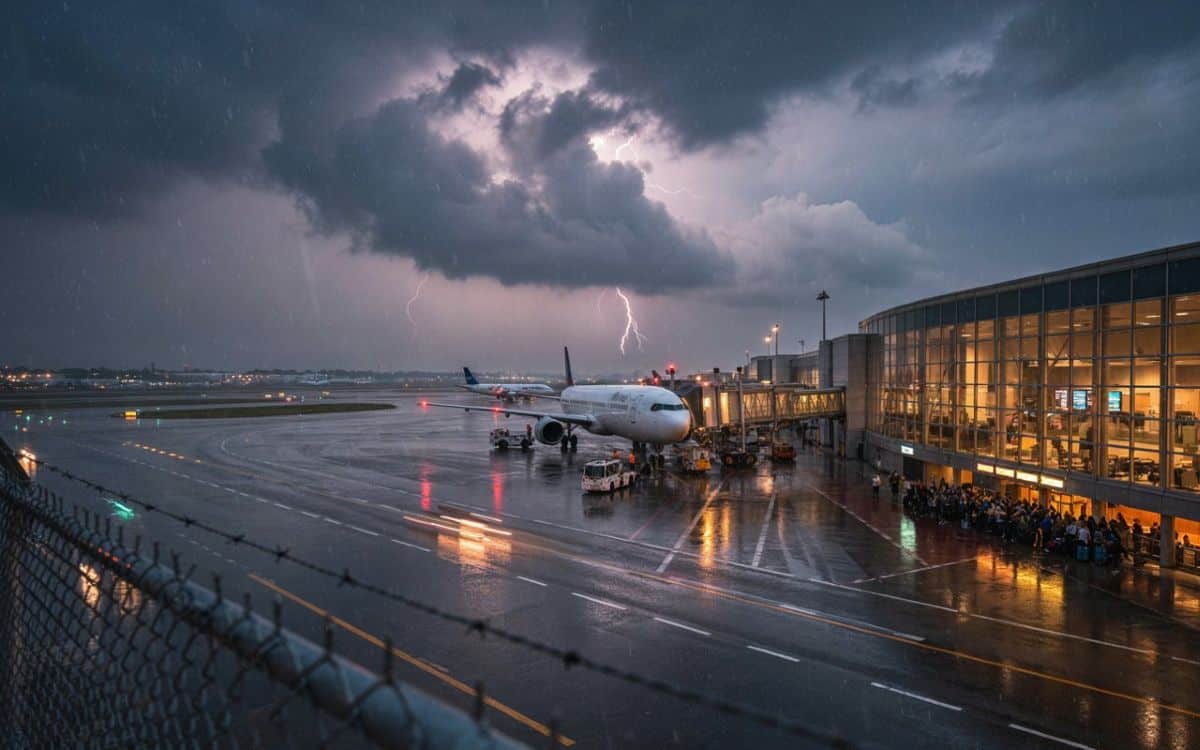
Image generated with Ai
Chicago O’Hare International Airport faced disruptive weather and a ground stop order issued by the FAA disrupted flights to on August 30, 2026. While the ground stop ensured flights to Chicago O’Hare remained gate bound to allow controllers to clear the restricted airspace and deal with congestion, O’Hare International did not close, and the open stop order did not completely cancel flights to the airport. During the stop order, 851 arrivals and departures were delayed, although airport data is dynamic and can change as flight schedules become more defined. The ground stop order put stress on the airlines and disrupted passenger connections. The stop order also affected flight connections, both national and international, that route through Chicago O’Hare, one of the major U.S. aviation hubs.
Chicago O’Hare Ground Stop Restricts Incoming Traffic
The Chicago O’Hare ground stop began as thunderstorms interfered with normal flight paths around northern Illinois. An FAA operational advisory identified thunderstorms as the reason for the restriction and confirmed that reroutes were active around Chicago.
Advertisement
Advertisement
The measure initially appeared in the FAA’s national operations plan through 18:45 UTC. Officials also considered introducing a ground delay programme if poor weather continued to reduce the number of aircraft O’Hare could safely accept.
Storms moving eastwards across western Illinois threatened to block important airspace routes used by arriving and departing aircraft. The FAA warned that changing conditions could reduce O’Hare to a two-runway arrival configuration.
Advertisement
Advertisement
That reduction would limit the number of aircraft controllers could safely handle during each hour. A busy schedule would then exceed the airport’s temporary operating capacity, creating delays even without a formal closure.
Advertisement
Advertisement
What the FAA Restriction Actually Means
A ground stop does not always mean that every aircraft at an airport must remain parked. It mainly controls flights travelling to an affected destination.
The FAA’s official air-traffic glossary explains that flights bound for the affected airport remain at their departure points during a ground stop. This prevents additional aircraft from entering congested or weather-restricted airspace.
FAA rules state that a ground stop takes priority over other traffic-management measures. An affected aircraft cannot receive permission to depart for the restricted airport until the authority responsible for the programme releases it.
Flights already at O’Hare may still take off when their routes and runways remain safe. However, those departures can experience gate holds, taxi queues and schedule changes if incoming aircraft or flight crews arrive late.
Calling the event an airport-wide shutdown would therefore be inaccurate. O’Hare continued operating, but at a restricted and disrupted level.
Advertisement
Advertisement
Official Data Shows 851 Delayed Flights
The Chicago Department of Aviation delay tracker recorded 851 delayed arrivals and departures at O’Hare on 30 August. The hourly data showed disruption building during the morning before reaching its highest recorded level around late morning.
The tracker listed:
- 110 delayed flights during the 10 a.m. hour
- 130 delayed flights during the 11 a.m. hour
- 91 delayed flights during the noon hour
- 80 delayed flights during the 1 p.m. hour
- 57 delayed flights during the 2 p.m. hour
A separate Chicago Department of Aviation cancellation tracker listed four cancellations for the date at the captured update. This distinction matters because a delayed flight has not necessarily been cancelled.
Airport data can also differ from commercial flight-tracking platforms. Each system may use a different reporting period, update time or method for classifying a disruption.
News reports should identify the source and retrieval time beside live figures. Daily numbers can change when airlines cancel services, reinstate flights or move delayed departures into later operating periods.
Advertisement
Advertisement
Why Thunderstorms Cause Serious Aviation Disruption
Thunderstorms present more than a visibility problem. The FAA identifies turbulence, wind shear, icing, lightning, hail and rapidly changing winds as recognised hazards around convective weather.
The FAA Aeronautical Information Manual states that a convective weather advisory can indicate severe turbulence, severe icing and low-level wind shear. Aircraft must avoid the most dangerous storm cells rather than fly directly through them.
Avoidance routes reduce the amount of usable airspace. Several flights may then compete for fewer safe corridors into or out of a major airport.
Thunderstorms can also interrupt work on the ground. Lightning near an airport may temporarily stop baggage loading, refuelling and other ramp activities to protect employees.
The FAA explains that persistent storms can force aircraft to enter holding patterns or divert to alternative airports. Diversions may require additional fuel, new landing arrangements and longer working hours for crews.
Advertisement
Advertisement
O’Hare’s Network Spreads Delays Beyond Chicago
O’Hare acts as a hub for United Airlines and American Airlines, according to the official airport website. Many other domestic and international airlines also operate from its terminals.
The airport listed approximately 1,161 daily direct flights to 197 US cities and about 141 daily services to 69 international destinations as of August 2026. That scale allows a local interruption to affect journeys far beyond Illinois.
An aircraft arriving late in Chicago may depart late for another city. Its crew can also approach federal working-time limits, while passengers may miss onward connections.
Operational consequences can include:
- Late aircraft arriving for their next service
- Congested gates and taxiways
- Missed domestic and international connections
- Delayed baggage transfers
- Flight crews reaching duty-time limits
- Aircraft and employees ending the day in the wrong city
- Disruption continuing after the weather improves
Restoring a timetable takes longer than lifting the original restriction. Airlines must clear queues while continuing to handle flights scheduled for later in the day.
Advertisement
Advertisement
What Passengers Should Do During an O’Hare Delay
Passengers should check their booking directly through their airline’s website or mobile application. The Chicago Department of Aviation advises travellers to contact their carrier for the most current flight-specific information.
Travellers should also examine the status of the aircraft operating their flight. A departure may still appear on time even when its incoming aircraft has not reached O’Hare.
Passengers connecting through Chicago should:
- Confirm every flight in the booking
- Ask the airline about alternative connections
- Avoid cancelling independently before reviewing the fare conditions
- Keep medicines and travel documents in cabin baggage
- Save receipts for meals, hotels and local transport
- Allow additional time when changing terminals
- Monitor gate information throughout the delay
O’Hare has four passenger terminals used for connections: Terminals 1, 2, 3 and 5. International passengers may require extra time for immigration, baggage collection, security screening or a terminal transfer.
Refunds and Weather-Related Passenger Rights
The US Department of Transportation states that a passenger can receive a refund when an airline cancels a flight or significantly changes it and the traveller rejects the alternative journey. The right applies regardless of the original reason for the cancellation.
Advertisement
Advertisement
The Department of Transportation refund guidance also covers certain significantly delayed flights when the passenger chooses not to travel. Refunds should return to the original form of payment when the legal conditions apply.
Meals, hotels and ground transport follow different rules. The DOT customer-service dashboard mainly lists airline commitments for disruptions within a carrier’s control.
Bad weather usually falls outside airline control. Passengers should still ask what assistance is available because individual policies, elite benefits, travel insurance or credit-card protection may provide support.
Chicago O’Hare Ground Stop Leaves a Wider Travel Impact
As the Chicago O’Hare ground stop demonstrated, something as simple as thunderstorms can quickly shut down the aviation network. The FAA restriction ordered aircraft to hold. This was done to allow airlines time to adjust to active but unpredictable flight routes. Although O’Hare was not closed, the ground stop caused 851 delays and put connecting flights in jeopardy. Passengers should check their flight status directly on their airlines’ sites, established that weather delays should be differentiated from delays that are out of the control of the airline, and saved their receipts while waiting for the airlines to process their reimbursements. Due to O’Hare’s domestic and international flights, disruptions on the local network may have a large impact outside Chicago. Because of this, anyone traveling through O’Hare should pay close attention to the official travel updates.
Advertisement
