
Greece Joins Turkey And Italy to Navigate The Perilous Tourism Labyrinth At The Temple of Poseidon at Cape Sounion

Published
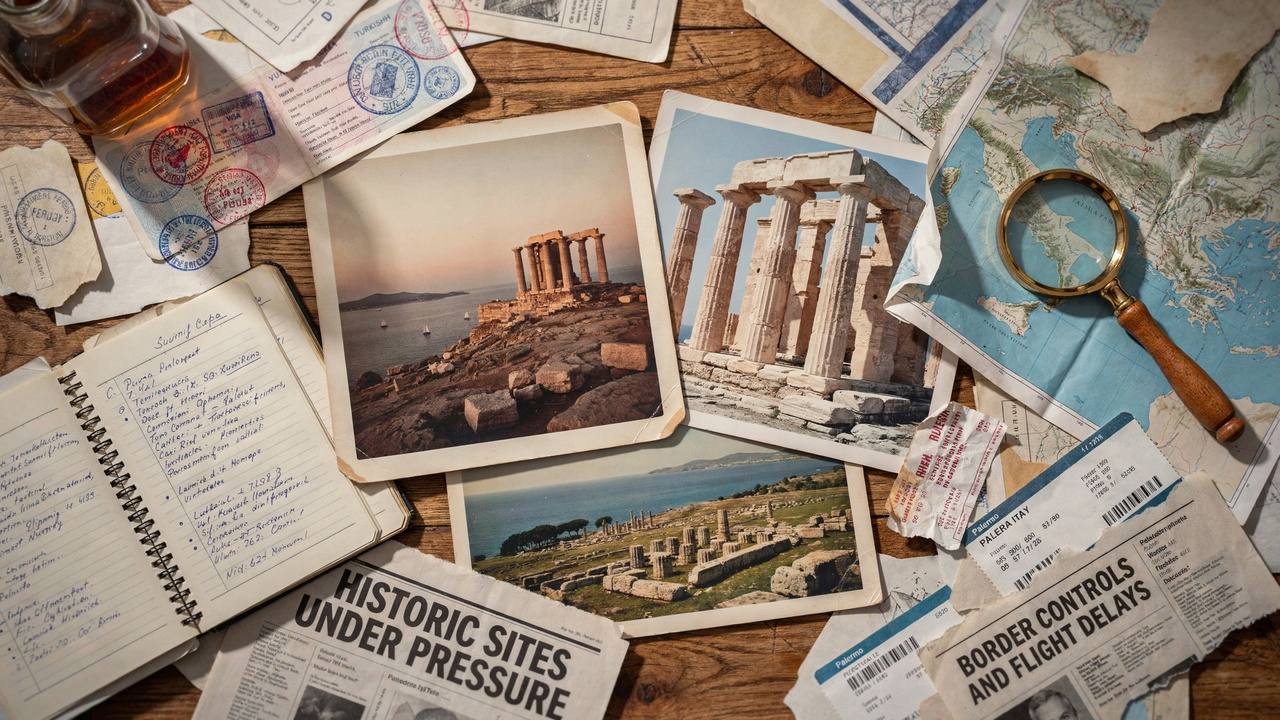
The Temple of Poseidon at Cape Sounion Greece triggers severe tourism pressures across Greece, Turkey, and Italy. This ancient monument highlights a monumental infrastructure crisis shadowing the Mediterranean coastline. Millions of international travellers navigate perilous transit chokepoints to witness these breathtaking coastal sanctuaries. Authorities continually struggle to balance urgent conservation efforts with relentless global tourist demand. This investigation exposes the resulting operational realities and complex passenger rights frameworks impacting modern journeys.
The Reality of Coastal Heritage Tourism
Definition: Ancient Mediterranean maritime heritage tourism relies on marketing fragile archaeological sites as premier travel destinations.
Coastal archaeological sites present a unique operational challenge for modern tourism. These ruins were intentionally built in geographically isolated, prominent coastal positions. Today, reaching them requires navigating complex logistical hurdles. Greece, Turkey, and Italy possess the most significant collections of these maritime monuments. The Hellenic Ministry of Culture reports unprecedented visitor volumes pushing sites to their absolute physical limits. The Turkish Ministry of Tourism faces identical operational pressures along its Aegean coastline. The Italian Ministry of Cultural Heritage struggles with chronic structural underinvestment in Sicily. Consequently, international tourists face frequent delays, strict regulations, and transport bottlenecks.
Architectural Connections Across Borders
Definition: Transnational architectural heritage reflects the historical spread of specific engineering and aesthetic principles across different sovereign borders.
Advertisement
Advertisement
Greece, Turkey, and Italy share a profoundly interconnected maritime architectural lineage. Ancient civilisations projected territorial power through monumental coastal engineering. Classical Greek and Hellenistic styles dominate the eastern and central Mediterranean basin. Sounion features stark Doric architecture commanding the Aegean Sea. Didyma showcases a colossal Hellenistic Ionic temple layout. Selinunte boasts a massive array of archaic and classical Doric ruins. Understanding this shared history requires extensive cross-border travel today. Tourists must navigate distinct national transport grids to see these connected sites. European transport ministers acknowledge these cross-border logistical frictions continually.
Temple of Poseidon at Cape Sounion Greece
Definition: The Temple of Poseidon is a classical Athenian monument positioned on a steep craggy spur 65 metres above the sea.
Advertisement
Advertisement
The Greek National Tourism Organisation promotes this site relentlessly. Columns of local marble glow brilliantly against the Aegean sky. Athens International Airport processes massive passenger flows specifically for this heritage site. Most coach groups reach the cape between 4pm and 6:30pm. This causes dangerous, immovable traffic congestion on the coastal roads. Travellers face severe delays returning to central Athens nightly. Local police must frequently manage traffic flow to prevent gridlock. Visitors can expect a 15 to 30 minute wait just to enter during the summer.
Greek Aviation and Road Logistics
Definition: Road logistics encompass the complex scheduling and physical movement of passenger vehicles across regional highway networks.
Advertisement
Advertisement
Greek transport networks operate near their absolute maximum capacity. Cape Sounio is about 70 km from central Athens. The coastal route takes roughly one hour and fifteen minutes in normal traffic. However, peak evening traffic significantly extends this journey time. The Hellenic Civil Aviation Authority implements strict summer air traffic slot restrictions. Sounion tourists frequently miss scheduled evening flights due to road gridlock. Flag carrier Aegean Airlines struggles to maintain punctual late schedules. The Hellenic Ministry of Tourism urges travellers to utilise official transport. Standard guided tours cost around €35.
The Temple of Apollo at Didyma Turkey
Definition: Didyma was a sacred site famous for a colossal Temple of Apollo and a highly influential oracle.
Turkey offers a parallel, monumental coastal heritage experience. The Temple of Apollo at Didyma was the second largest in the region. The Turkish Directorate General of Civil Aviation manages regional access via nearby airports. The temple was built as a dipteros, surrounded by a double colonnade. The outer colonnade originally featured 112 columns. This ancient site draws immense international crowds via the nearby coastal resorts. Tourists can visit daily, with summer hours from 8:00 am to 6:30 pm. Entry currently costs 15 TL.
Turkish Regional Transport Networks
Definition: Border transport networks facilitate the secure and efficient movement of international tourists across sovereign checkpoints and regional hubs.
Advertisement
Advertisement
Turkish transport infrastructure requires careful navigation by international tourists. Road networks connecting regional resorts to Didyma experience heavy tourist traffic. This frequently causes severe local transit friction during the summer. Severe summer heat exacerbates transit issues, causing frequent vehicle breakdowns. Local authorities must constantly monitor heavy coach traffic near the archaeological zones. The Directorate General of Civil Aviation warns of airspace congestion over the Aegean. Tourists frequently combine visits to Didyma with nearby Miletos and Priene. This places further strain on the local road networks.
The Temple of Hera at Selinunte Italy
Definition: The Temple of Hera (Temple E) is a classical peripteral temple located in the ancient Greek city of Selinus, Sicily.
Italy manages the spectacular coastal ruins at Selinunte. The site lies on the south west coast of Sicily, overlooking the sea. Temple E is the best conserved of the temples at Selinunte. This is largely due to controversial reconstruction work performed in 1959. The temple has a peristyle measuring 25.33 by 67.82 metres. The Italian Civil Aviation Authority (ENAC) monitors Sicilian airport capacities carefully. Reaching Selinunte requires exhaustive road journeys from major hubs like Palermo.
Sicilian Infrastructure and Logistical Realities
Definition: Transit realities describe the actual operational conditions and delays passengers experience compared to published theoretical itineraries.
Sicilian transport systems suffer from decades of structural underinvestment. Access roads to Selinunte are notoriously underdeveloped and frequently damaged. Tourists face significant transit delays during the peak summer season. The Italian Ministry of Transport frequently prioritises commercial freight over tourism traffic. Train services connecting major hubs to the southern coast remain inadequate. International tourists must rely almost entirely on private coach operators. Mandatory rest periods for drivers frequently delay scheduled tourist itineraries. The WTTC urges Italy to modernise southern transport links urgently.
Coastal Monument Conservation Efforts
Definition: Monument conservation efforts employ structural interventions to protect ancient ruins from aggressive weathering and mass overtourism.
Advertisement
Advertisement
Preserving these maritime temples requires immense national resources. Wind, salt, and foot traffic aggressively erode the ancient stone facades constantly. The Greek Ministry of Culture severely restricts physical access to Sounion’s stylobate. Turkish authorities manage similar preservation challenges at the Didyma sanctuary. Italian authorities must continually monitor structural stability around the reconstructed Selinunte temples. International heritage bodies fund advanced laser scanning projects across these sites. UN Tourism guidelines mandate sustainable visitor management protocols strictly. These conservation mandates directly impact daily tourist access schedules and ticketing.
Heritage Protection and Capacity Limits
Definition: Capacity limits are statutory regulations restricting daily visitor numbers to preserve the physical integrity of vulnerable monuments.
Unregulated foot traffic destroys ancient stone foundations rapidly. Sovereigns prioritise monument preservation over commercial tourism profits firmly. Greece, Turkey, and Italy all utilise strict ticketing systems. Capacity limits mean tourists are frequently denied entry entirely. Pre-booking tickets is an absolute operational necessity everywhere. The IATA notes these restrictions complicate airline holiday packages immensely. Tour operators struggle to synchronise flights with strict monument entry times. Missing a pre-booked entry slot ruins the heritage holiday experience entirely.
Aegean Sea Sunset Cultural Corridors
Definition: Sunset cultural corridors are dedicated travel routes optimising evening visits to coastal monuments for aesthetic lighting purposes.
Sunset viewings absolutely dominate Mediterranean heritage travel itineraries. Sounion, Didyma, and Selinunte all face extreme evening operational surges. A sunset tour of Sounion focuses almost entirely on these evening views. Regional transport corridors must accommodate these highly synchronised travel patterns. This creates significant safety hazards on steep cliffside access roads. Authorities must implement rigid evening ticketing quotas to combat this. Independent travellers frequently fail to secure evening access entirely. The WTTC advocates for staggered visitation schedules urgently.
Managing Peak Evening Surges
Definition: Capacity surges occur when concentrated volumes of tourists attempt to access transport networks and monuments simultaneously.
Advertisement
Advertisement
Evening surges stretch regional emergency services to their limits. Greek police direct chaotic traffic away from Cape Sounion nightly. Turkish gendarmerie and Italian Carabinieri secure their respective sites simultaneously. Airports experience reciprocal surges as coaches return late at night. Late arrivals frequently cause passengers to miss vital outbound flights. Flag carriers warn against booking tight evening flight connections. Risk mitigation requires booking morning flights the following day. This necessitates expensive additional local hotel accommodations.
Global Tourism Infrastructural Bottlenecks
Definition: Global tourism infrastructural bottlenecks represent critical failures in transport networks when regional demand exceeds maximum operational capacity.
Infrastructure limits severely threaten the Mediterranean heritage tourism sector globally. The IATA identifies severe airspace congestion over the Aegean Sea. Greek, Turkish, and Italian air traffic control systems struggle constantly. Summer passenger volumes stretch terminal capacities to their breaking point. Road transport is equally compromised across these ancient coastal sites. Sounion suffers from a highly restrictive coastal approach road. Didyma lacks sufficient heavy vehicle parking facilities entirely. Selinunte requires major highway upgrades to handle modern tourist coaches.
European Travel Passenger Rights Frameworks
Definition: Passenger rights frameworks are statutory regulations compelling airlines to provide financial compensation during severe transit disruptions.
Travellers must understand their statutory protections thoroughly before flying. The UK Civil Aviation Authority (CAA) enforces strict compensation rules globally. EU Regulation 261/2004 protects passengers departing Greece and Italy firmly. Turkish SHY-PASS regulations provide parallel legal protections for Didyma visitors. Severe delays trigger mandatory financial compensation payouts immediately. Airlines must also provide essential, comprehensive duty of care. This includes providing meals, hotel accommodation, and communication facilities. Claiming compensation requires meticulous record-keeping by the affected passenger.
Comparing Statutory Compensation Rules
Definition: Statutory compensation frameworks outline the specific financial remedies legally available to passengers suffering from flight delays.
Advertisement
Advertisement
Different jurisdictions apply varying compensation levels based on flight distance.
| Disrupted Route | Delay Length | EU261 / UK261 Payout | Turkish SHY-PASS |
| Under 1500km | 3+ Hours | €250 / £220 | €250 equivalent |
| 1500km to 3500km | 3+ Hours | €400 / £350 | €400 equivalent |
| Over 3500km | 4+ Hours | €600 / £520 | €600 equivalent |
Airlines frequently cite extraordinary circumstances to deny valid compensation claims. Air traffic control strikes in Italy disrupt Selinunte trips frequently. Severe weather delays in Greece impact Cape Sounion access operations.
Legal and Immigration Repercussions
Definition: Immigration repercussions involve civil or criminal penalties imposed upon travellers who violate sovereign border regulations.
Border systems vary wildly across these three Mediterranean nations. Greece and Italy enforce the strict Schengen Area border code. UK citizens face a strict 90-day rolling visitation limit. Overstaying this limit carries severe financial and legal penalties immediately. Turkey operates entirely outside the European Schengen zone geographically. This requires careful itinerary management for transnational tourists visiting Didyma. Ignorance of border laws provides no legal defence against deportation. The WTTC urges travellers to consult official embassy guidelines exclusively.
Visa Processing and Border Control
Definition: Visa processing involves the statutory assessment of foreign nationals seeking legal entry for tourism or business.
Turkish border authorities mandate electronic visas for many international travellers. Entering Turkey to see Didyma requires advanced online preparation. Crossing between Greece, Turkey, and Italy causes severe logistical friction. Cruise ships face intense border inspections at major Aegean ports. Immigration delays frequently cause passengers to miss scheduled shore excursions. Tourism bodies lobby aggressively for streamlined Mediterranean transit visa protocols. Passengers must hold valid passports with six months remaining validity. Failure to comply results in immediate boarding denial by airlines.
Advertisement
Advertisement
Accommodation and Transit Limitations
Definition: Transit limitations define the physical constraints of local transport and hotel networks serving remote heritage locations.
Hotel capacity severely limits heritage tourism expansion across the Mediterranean. Sounion, Didyma, and Selinunte lack sufficient luxury hotel beds. Room prices surge exponentially during the peak summer travel window. Budget travellers are pushed into unregulated short-term rental markets constantly. This strains local residential housing supplies across all three nations. Transport networks fail when day-trippers cannot find overnight lodging locally. Sustainable regional development requires massive private sector hotel investment urgently. Sovereign ministries must offer tax incentives to stimulate hotel construction.
Mitigating Peak Season Travel Risks
Definition: Risk mitigation involves strategic itinerary planning to avoid known transport bottlenecks and severe logistical disruptions.
Travellers must adopt proactive strategies to ensure holiday success. Visiting these temples requires avoiding the peak August travel window. Morning visits, especially between 9:30am and 11am, are noticeably calmer. Early visits completely avoid the severe sunset traffic gridlock. Comprehensive travel insurance is an absolute operational necessity today. Policies must cover severe delays and missed transit connections fully. The CAA recommends booking flights with reputable flag carriers only. Careful planning protects the integrity of the Mediterranean holiday experience.
Final Industry Takeaway
Ancient monuments remain the ultimate cornerstone of Mediterranean tourism globally. Managing visitor flows requires unprecedented international governmental coordination today. Transport infrastructure must evolve to handle immense modern passenger loads. Tourists must respect local conservation rules and capacity limitations strictly. Travellers must remain vigilant regarding their legal statutory rights always. Delays and transport bottlenecks will persist across these coastal regions. Proper preparation remains the absolute defence against logistical travel failure. The Temple of Poseidon at Cape Sounion Greece continues to justify the demanding journey.
Advertisement
