
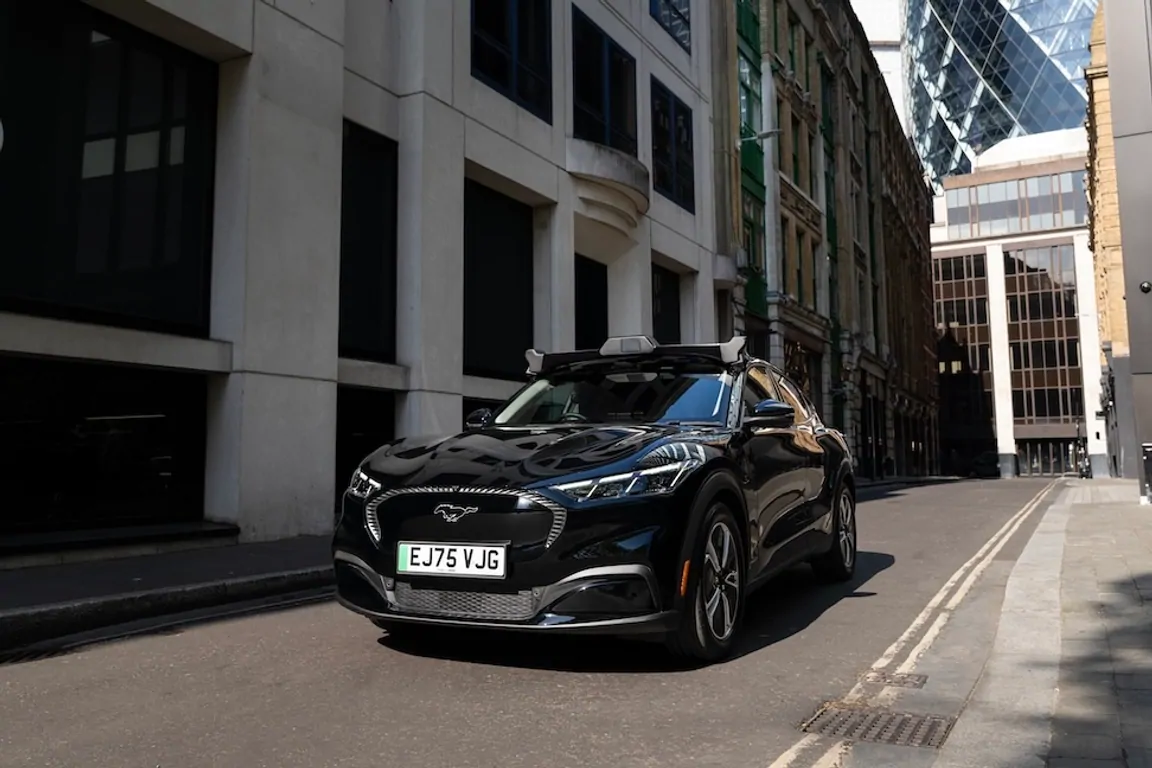
Uber and British self-driving technology firm Wayve have introduced the UK’s first self-driving ride-hailing service in London, giving people a chance to experience the benefits of autonomous vehicle technology by using the Uber application. The introduction took place on September 3, 2026, when self-driving electric cars Ford Mustang Mach-E were introduced to the market, equipped with Wayve’s AI Driver technology.
This new transport option is being offered to those travelling around central London, but it operates in a controlled environment at present. Safety drivers with private hire licenses issued by Transport for London (TfL) continue sitting in self-driving vehicles to monitor their operation and take control if needed.
Passengers will be able to use the same Uber app while using the new service. Travellers who book an UberX, Uber Electric, or Uber Comfort service can find themselves in a Wayve car without any extra cost for them, as the price will be provided to travellers in advance.
The introduction marks a major step in the development of autonomous mobility in Britain. While self-driving technology has been tested in different locations around the world, London’s busy streets provide a particularly challenging environment because of dense traffic, pedestrians, cyclists, and complex urban road conditions.
Advertisement
Uber and Wayve are starting with a carefully controlled rollout rather than a large-scale deployment. The companies plan to increase the number of vehicles gradually based on passenger demand, operational readiness, infrastructure development, and regulatory progress.Service Detail Information Launch date September 3, 2026 Location London, United Kingdom Platform Uber app Technology partner Wayve Vehicle type Ford Mustang Mach-E electric vehicle Initial operation Supervised autonomous rides Safety requirement TfL-licensed private hire driver onboard Available ride categories UberX, Uber Electric, Uber Comfort Additional passenger cost No extra charge Current coverage Central London excluding airports
The launch does not mean fully driverless taxis are now operating in London. Instead, it represents an early stage where autonomous technology handles driving functions while a trained professional remains responsible for supervision and safety.
The service has been integrated into Uber’s existing booking system, allowing passengers to request rides in the same way they normally book a journey.
When a traveller selects one of the eligible ride categories, Uber may assign a Wayve-equipped vehicle if one is available nearby. Passengers will see the estimated price before confirming their booking.
The company has also introduced an option inside the Uber app that allows users to increase their chances of receiving an autonomous vehicle.Passenger Action Purpose Open Uber app Access ride preferences Go to “Ride Requests” or ride preferences section Manage vehicle preferences Enable autonomous vehicle option Increase chances of receiving a Wayve vehicle
More than 140,000 users have already activated this preference, showing strong public interest in experiencing autonomous transportation in London.
Passengers will still have control over their journey choice. If matched with a Wayve vehicle, riders can accept the autonomous ride or choose another available vehicle option before the trip begins.
The vehicles used for the service are fully electric Ford Mustang Mach-E cars fitted with Wayve’s autonomous driving technology.
Each vehicle includes:
Passengers can unlock the vehicle through the Uber app and follow their planned route through an in-car screen during the journey.
The electric vehicle approach also supports wider efforts to reduce emissions from urban transportation. By combining battery-electric cars with artificial intelligence-based driving systems, Uber and Wayve are testing a new model for future city mobility.
However, the current service remains limited in scope. Airport journeys are not included, and availability depends on the number of vehicles operating in the area.
Founded in the United Kingdom in 2017, Wayve specialises in artificial intelligence systems designed for autonomous vehicles.
Unlike some traditional autonomous driving approaches that depend heavily on high-definition maps and expensive hardware systems, Wayve is developing AI technology that learns from driving experience and adapts to different environments.
The company’s approach focuses on creating flexible autonomous systems that can operate across different locations without requiring extensive changes for every city.
Wayve has been developing and testing its technology on UK roads, using London as one of its key environments because of its complex transport conditions.Wayve Technology Focus Details Artificial intelligence AI-based driving system Mapping approach Designed to reduce reliance on high-definition maps Hardware approach Designed to work without expensive specialised hardware Development base United Kingdom Founded 2017
The company has also attracted investment from major technology and mobility companies, including SoftBank Group, as it develops future autonomous transportation solutions.
For visitors and residents, the launch creates a new way to experience London’s transport network.
Travellers using Uber may now have the opportunity to ride in an autonomous electric vehicle while travelling across central London. The service could become particularly relevant for visitors interested in emerging technology, sustainable transport, and future mobility solutions.
However, passengers should understand that the service currently has several limitations:
For tourists arriving in London, traditional transport options such as taxis, public transport, and standard ride-hailing services remain available.
The launch represents an important test for how autonomous vehicles could become part of everyday urban transport.
London’s roads present one of the most demanding environments for self-driving technology, making the city a significant proving ground for AI-powered mobility.
Uber and Wayve are expected to continue expanding the service carefully while monitoring passenger response, technology performance, and regulatory developments.
The companies have not announced a timeline for removing safety drivers, meaning the current supervised model will remain the focus during the early phase.
For travellers, the arrival of Wayve vehicles on Uber marks the beginning of a new chapter in London transportation — one where artificial intelligence, electric vehicles, and traditional mobility services are starting to operate together.
Wayve’s debut self-driving taxi service in London is one of the earliest glimpses into the future of travel within UK cities. Although riders will initially have to travel with experienced safety drivers in the first phase of operations, the launch provides travellers with an initial peek into the future of transportation using artificial intelligence and electric cars. As the project moves forward depending on demand and infrastructure availability, among others, London will become one of the testing grounds for the future of travel.
Advertisement
Advertisement
Advertisement













Saturday, September 5, 2026

Friday, September 4, 2026

Saturday, September 5, 2026

Saturday, September 5, 2026

Thursday, September 3, 2026

Wednesday, September 2, 2026

Saturday, September 5, 2026

Saturday, September 5, 2026


