
Trump’s Reported 100,000USD OPT Visa Fee Could Upend America’s International Education Travel Boom, Leaving Indian and Global Students Rethinking Their US Dream – Exclusive Report

Published
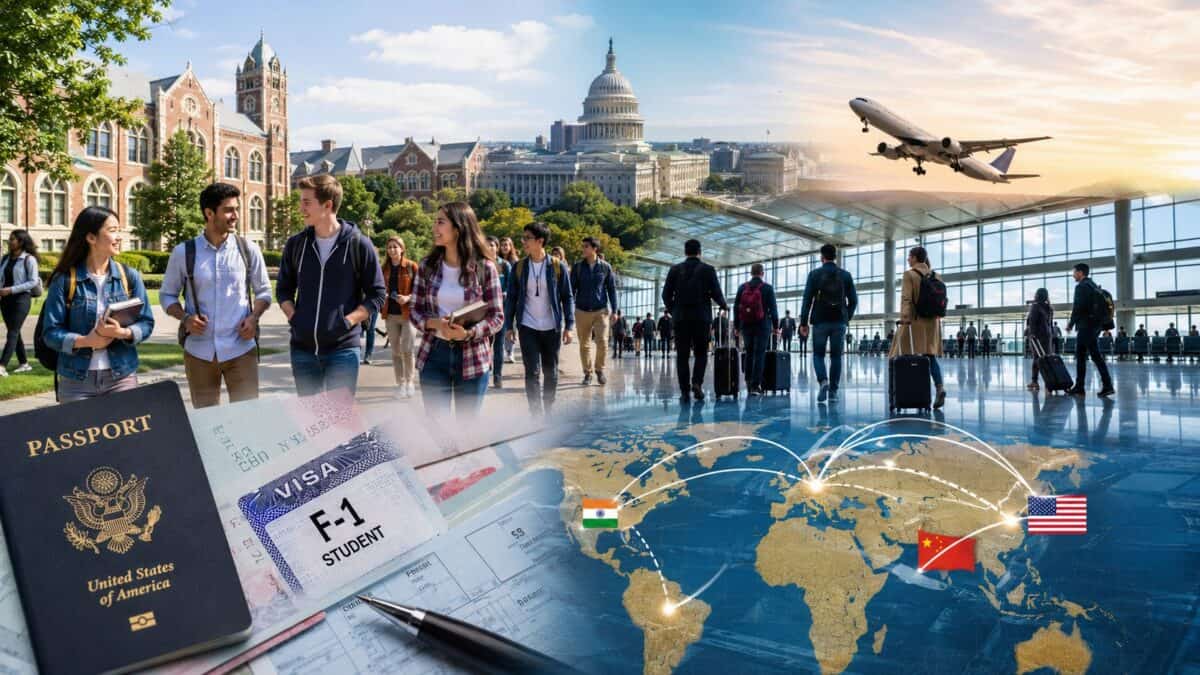
Image generated with Ai
The United States could be on the verge of introducing one of the most consequential immigration-related measures for international education in decades, with the Trump administration reportedly considering a US$100,000 fee for Optional Practical Training (OPT) visas. If implemented, the proposal would dramatically increase the cost of remaining in America after graduation, potentially altering the travel decisions, university enrolments and long-term mobility of hundreds of thousands of international students each year. For the global travel and tourism industry, the implications extend well beyond immigration policy, reaching airlines, hotels, destination marketing organisations, universities, local visitor economies and business travel linked to higher education. The proposed measure is currently under internal consideration and has not been formally announced by the US Department of Homeland Security (DHS).
The reported proposal arrives at a pivotal moment for the American visitor economy. International students represent one of the highest-spending categories of long-stay travellers, generating sustained demand for accommodation, domestic aviation, public transport, food services, attractions and regional tourism throughout their academic journey. With more than one million international students studying in the United States during the 2023–24 academic year, according to official higher education data, any significant increase in post-study employment costs could reshape global education travel patterns. Universities, tourism businesses and destination economies are now closely monitoring developments as policymakers examine broader changes affecting legal immigration, employment pathways and international competitiveness.
Washington’s New Proposal Places Post-Study Travel Under Fresh Scrutiny
The proposed Trump OPT visa fee centres on the Optional Practical Training programme, which allows eligible international graduates holding F-1 student visas to remain in the United States and gain professional work experience directly related to their field of study.
Unlike traditional work visas, OPT has long served as an extension of academic travel, enabling graduates to transition from university life into professional employment without immediately securing another immigration category.
Advertisement
Advertisement
The programme currently permits most graduates to work for up to twelve months after completing their degree, while eligible science, technology, engineering and mathematics (STEM) graduates may receive an additional twenty-four-month extension.
Should the proposed US$100,000 fee become official policy, it would represent an unprecedented financial barrier for graduates seeking to remain in the country after completing their education.
Advertisement
Advertisement
Although officials have reportedly discussed the proposal internally, no final policy has been announced, and the Department of Homeland Security has indicated that discussions alone should not be interpreted as confirmed government action.
Why International Students Matter to the Travel Economy
International education is far more than an academic sector. It is a significant pillar of global tourism.
Unlike conventional leisure travellers, international students often remain in their destination for several years, creating continuous economic activity across multiple sectors.
Their spending extends well beyond tuition fees. Students purchase airline tickets, stay in hotels during arrival and graduation periods, rent accommodation, travel domestically during holidays, welcome visiting family members and frequently explore national parks, cultural attractions and neighbouring states.
Parents and relatives travelling for university admissions, graduations and family visits also contribute substantially to inbound tourism.
According to official figures published by NAFSA: Association of International Educators, international students contributed more than US$43 billion to the US economy during the 2023–24 academic year, supporting hundreds of thousands of jobs across education, hospitality, transport, retail and tourism-related sectors.
Advertisement
Advertisement
For destinations such as New York, Boston, Los Angeles, Chicago, San Francisco, Seattle and Orlando, international students have become an integral part of the visitor economy rather than simply participants in higher education.
International Education’s Contribution to US Travel and Tourism
| Indicator | Latest Available Data |
|---|---|
| International students in the US (2023–24) | More than 1.1 million |
| Estimated annual economic contribution | Over US$43 billion |
| Jobs supported | More than 378,000 |
| OPT participants (2024) | Approximately 419,000 |
| Primary visa category | F-1 Student Visa |
| OPT duration | Up to 12 months (36 months for eligible STEM graduates) |
Potential Ripple Effects Across Airlines, Hotels and Destinations
If graduates decide that the proposed fee makes post-study employment financially unrealistic, the impact could gradually spread through multiple travel sectors.
Universities may experience declining enrolment from price-sensitive markets.
Airlines could eventually see lower demand on major education routes connecting the United States with India, China, South Korea, Vietnam, Nigeria, Brazil and several Middle Eastern countries.
Hotels situated near university campuses may experience reduced occupancy during orientation weeks, graduation ceremonies and family visits.
Conference organisers, educational fairs and campus tourism providers could also encounter changing demand if fewer students choose American institutions.
Advertisement
Advertisement
Travel insurance providers, airport retailers, rail operators and intercity bus companies may likewise experience indirect effects over time.
For destination marketing organisations, international students represent repeat travellers who often return as tourists with friends and relatives long after graduation.
That long-term tourism relationship could weaken if post-study opportunities become significantly more expensive.
How the Proposal Compares with Existing OPT Rules
| Policy Area | Current Framework | Proposed Change Under Consideration |
|---|---|---|
| Student Visa | F-1 | No reported change |
| Post-study work | OPT available for eligible graduates | OPT would reportedly require US$100,000 fee |
| STEM Extension | Up to 24 additional months | No reported change to duration |
| Policy status | Operational nationwide | Proposal under discussion, not final |
A Broader Shift in US Immigration Strategy
The reported OPT proposal follows broader discussions within Washington regarding legal immigration fees.
Earlier efforts sought to impose a similar US$100,000 fee on H-1B visas, although that proposal was subsequently struck down by a US court.
Officials are also reportedly examining whether certain applicants seeking permanent residence outside the United States could be required to provide a substantial financial bond before relocating.
Advertisement
Advertisement
Together, these discussions indicate a wider policy review focused on increasing financial requirements within parts of the legal immigration system.
For international education, however, the OPT proposal carries particular significance because post-study employment has become one of the strongest reasons students choose the United States over competing destinations.
Universities increasingly market graduate employability alongside academic excellence, making any change to OPT particularly influential in global recruitment.
The Global Competition for International Students Is Intensifying
The proposed Trump OPT visa fee also arrives as several competing destinations continue expanding opportunities for international graduates.
Countries including Canada, Australia, the United Kingdom, Germany and Ireland have strengthened post-study work pathways in recent years to attract skilled global talent.
These destinations increasingly promote graduate employment as an integral component of their education tourism strategy.
Advertisement
Advertisement
For prospective students comparing international study options, post-graduation employment opportunities often influence destination selection almost as much as university rankings or tuition costs.
If remaining in the United States after graduation becomes substantially more expensive, education consultants believe some students could reassess where they pursue higher education.
From a travel perspective, that could gradually redirect long-haul education travel towards alternative destinations that combine quality universities with comparatively accessible employment pathways.
Why the OPT Programme Has Become a Cornerstone of US Education Travel
The Optional Practical Training programme has evolved into far more than an immigration mechanism. Over the past two decades, it has become one of the defining features of the United States’ international education offering. For many prospective students, the opportunity to gain professional experience after graduation significantly enhances the value of an American degree.
Unlike short-term study abroad programmes, degree-seeking international students typically invest several years in the United States. During that period, they travel extensively across the country, contribute to local economies and frequently invite family members to visit. The possibility of remaining in the country temporarily after graduation through OPT has strengthened America’s position as one of the world’s leading education tourism destinations.
According to official Open Doors data published by the Institute of International Education (IIE), international student enrolment in the United States exceeded 1.1 million during the 2023–24 academic year, marking continued recovery and growth after pandemic-related disruptions.
Advertisement
Advertisement
The majority of these students originate from Asia, with India and China accounting for the largest shares, followed by South Korea, Canada, Taiwan, Vietnam, Nigeria, Bangladesh, Brazil and several Middle Eastern countries. These markets also represent some of the world’s fastest-growing outbound travel segments, making education closely connected to broader tourism flows.
How the Proposal Could Influence Traveller Behaviour
Although the reported fee remains under consideration, its potential impact extends beyond students alone.
Families planning overseas education frequently evaluate the complete financial journey rather than tuition fees in isolation. Accommodation, transport, insurance, healthcare, food, local travel and future employment opportunities collectively shape destination decisions.
If graduates perceive post-study employment as financially unattainable, some prospective applicants may reconsider studying in the United States altogether.
This behavioural shift could influence several travel segments simultaneously.
| Travel Segment | Possible Effect if Proposal Is Implemented |
|---|---|
| International student arrivals | Potential moderation in future demand from cost-sensitive markets |
| Long-haul airline routes | Possible changes in education travel bookings |
| Campus-area hotels | Lower demand during admissions, orientation and graduation periods |
| Domestic tourism | Fewer student leisure trips during academic breaks |
| Visiting friends and relatives (VFR) travel | Possible reduction in family visits over time |
| Educational travel agencies | Increased demand for alternative study destinations |
From a tourism perspective, international students rarely remain confined to university campuses. Weekend city breaks, national park visits, cultural festivals, sporting events and interstate holidays collectively generate significant visitor spending throughout the academic calendar.
Advertisement
Advertisement
Many graduates also return years later as leisure tourists or business travellers, creating long-term destination loyalty that extends well beyond their university experience.
Universities and Destination Economies Could Face Wider Implications
American universities have spent decades building strong international reputations through research excellence, innovation and global partnerships. International students contribute not only academically but also economically, supporting local businesses in college towns and metropolitan cities alike.
Communities surrounding universities often rely on sustained spending generated by students and their visiting families. Restaurants, cafés, public transport systems, entertainment venues, museums, bookstores and local attractions all benefit from year-round student activity.
For tourism authorities, international students represent an unusual but highly valuable visitor category because their average length of stay far exceeds that of conventional leisure tourists.
Many destinations have therefore incorporated higher education into wider destination branding strategies, promoting universities alongside cultural attractions and business opportunities.
International Competition for Global Talent Continues to Intensify
The reported proposal emerges as governments worldwide compete aggressively for skilled international graduates.
Advertisement
Advertisement
Several leading study destinations have introduced policies designed to simplify post-graduation employment, recognising that education and talent attraction increasingly reinforce one another.
| Destination | Post-Study Work Opportunity (General Overview) |
|---|---|
| United States | OPT currently available for eligible graduates |
| United Kingdom | Graduate Route allowing eligible graduates to remain temporarily after studies |
| Canada | Post-Graduation Work Permit Programme for eligible institutions |
| Australia | Temporary Graduate visa pathways for qualifying graduates |
| Germany | Job-seeking residence options following graduation from eligible universities |
| Ireland | Third Level Graduate Programme for eligible international students |
For prospective students evaluating multiple destinations, immigration pathways increasingly complement traditional considerations such as tuition fees, academic rankings, safety and quality of life.
Travel consultants note that today’s students often compare the complete educational ecosystem, including future mobility, internship opportunities and professional development.
Practical Information for Students Planning US Study Travel
Despite widespread discussion surrounding the proposal, prospective travellers should recognise that no formal policy has yet been introduced.
Students currently considering admission to American universities should continue relying exclusively on official government announcements rather than speculation.
Those preparing applications may benefit from monitoring visa guidance, maintaining updated financial documentation and remaining in close contact with their chosen institutions regarding immigration developments.
Advertisement
Advertisement
Travellers should also remember that the reported proposal concerns Optional Practical Training rather than initial F-1 student visa issuance.
At present, universities continue admitting international students under existing regulations, while OPT remains available under current eligibility requirements.
Key Facts Travellers Should Know
| Topic | Current Position |
|---|---|
| Is the US$100,000 OPT fee officially approved? | No |
| Has DHS formally announced the policy? | No |
| Does the proposal affect admission to US universities? | No reported change |
| Does it concern post-study employment? | Yes |
| Should students continue existing applications? | Yes, while monitoring official updates |
Travel Industry Watching Policy Developments Closely
For airlines, destination marketing organisations, higher education institutions and hospitality businesses, the proposal represents more than an immigration discussion.
International education remains one of the world’s largest long-duration travel segments, generating billions in visitor expenditure every year.
Education travellers often purchase multiple international flights, domestic air tickets, accommodation, transport services and tourism experiences throughout their stay.
Moreover, visiting relatives contribute substantially to inbound travel demand by attending graduation ceremonies, university orientation events and family reunions.
Advertisement
Advertisement
Business travel also intersects with higher education through academic conferences, research collaborations, international recruitment events and educational exhibitions.
Consequently, any policy capable of influencing international enrolment inevitably attracts close attention from the wider travel sector.
Policy Uncertainty Adds Another Layer to Global Travel Planning
The proposal also reflects increasing uncertainty surrounding international mobility.
Following several years of pandemic recovery, destinations worldwide have sought to restore traveller confidence by simplifying visa procedures, expanding airline connectivity and strengthening tourism marketing.
Education tourism has played a central role in that recovery.
However, evolving immigration policies across multiple countries continue shaping how students, universities and travel businesses approach long-term planning.
Advertisement
Advertisement
For travel advisors, the latest reports reinforce the importance of monitoring official government announcements before advising prospective students.
Likewise, universities and tourism organisations may need to adapt recruitment strategies if future policy changes alter international student mobility patterns.
Why the Global Travel Sector Will Continue Watching Washington
Whether the reported Trump OPT visa fee ultimately becomes official policy or not, the discussion itself highlights the increasingly close relationship between immigration policy, international education and tourism.
International students are no longer viewed solely as learners. They are long-stay visitors, repeat travellers, future business delegates and ambassadors for destinations long after graduation.
As countries compete to attract skilled global talent, policies affecting post-study employment increasingly influence travel demand, airline connectivity, hotel occupancy and destination competitiveness.
For now, the proposal remains under consideration rather than confirmed government policy. Nevertheless, its potential implications ensure that universities, tourism boards, airlines, travel companies and millions of prospective international students will continue monitoring developments closely in the months ahead.
Advertisement
Advertisement
Frequently Asked Questions (FAQs)
1. What is the proposed Trump OPT visa fee?
The proposal reportedly under consideration by the US Department of Homeland Security (DHS) would introduce a US$100,000 fee for the Optional Practical Training (OPT) programme. OPT allows eligible international students on F-1 visas to work in the United States after graduating from an American university. The proposal has not been officially announced or implemented.
2. Is the US$100,000 OPT fee currently in effect?
No. As of now, the reported Trump OPT visa fee remains under internal government consideration. The DHS has stated that discussions do not represent final policy, and no formal rule has been issued.
3. What is Optional Practical Training (OPT)?
Optional Practical Training (OPT) is a temporary employment programme that enables eligible international students with F-1 visas to gain work experience in the United States in a role directly related to their field of study. Most graduates can work for up to 12 months, while eligible STEM graduates may qualify for an additional 24-month extension.
4. Will the proposal affect students applying to US universities?
There is no reported change to admissions or the issuance of F-1 student visas. The reported proposal concerns post-study employment through OPT, not university admission. Students should continue following official guidance from their chosen institutions and US government agencies.
5. How could the proposed OPT fee impact international travel and tourism?
International students are among the highest-spending long-stay visitors in the United States. A significant increase in post-study employment costs could influence future enrolment decisions, potentially affecting international airline demand, hotels, campus tourism, local businesses, family visits and domestic travel associated with higher education.
6. Which countries could be most affected if the proposal becomes policy?
Countries that send large numbers of students to the United States—including India, China, South Korea, Vietnam, Nigeria, Bangladesh and Brazil—could experience the greatest impact, as many students from these markets rely on OPT to gain professional experience after graduation.
Advertisement
Advertisement
7. How does the United States compare with other popular study destinations?
Competing destinations such as Canada, the United Kingdom, Australia, Germany and Ireland currently offer various post-study work pathways for eligible international graduates. Students often compare these opportunities alongside tuition fees, university rankings, living costs and career prospects when choosing where to study.
8. What should prospective international students do now?
Students planning to study in the United States should continue preparing their applications under the current rules, monitor official announcements from the US Department of Homeland Security and their universities, and avoid making decisions based solely on unconfirmed reports until any policy is formally announced.
Advertisement
