
Goa Inspires India’s Next Generation Of Sustainable Cities As Architecture Experts Push For Heritage Conservation And Smart Growth

Published
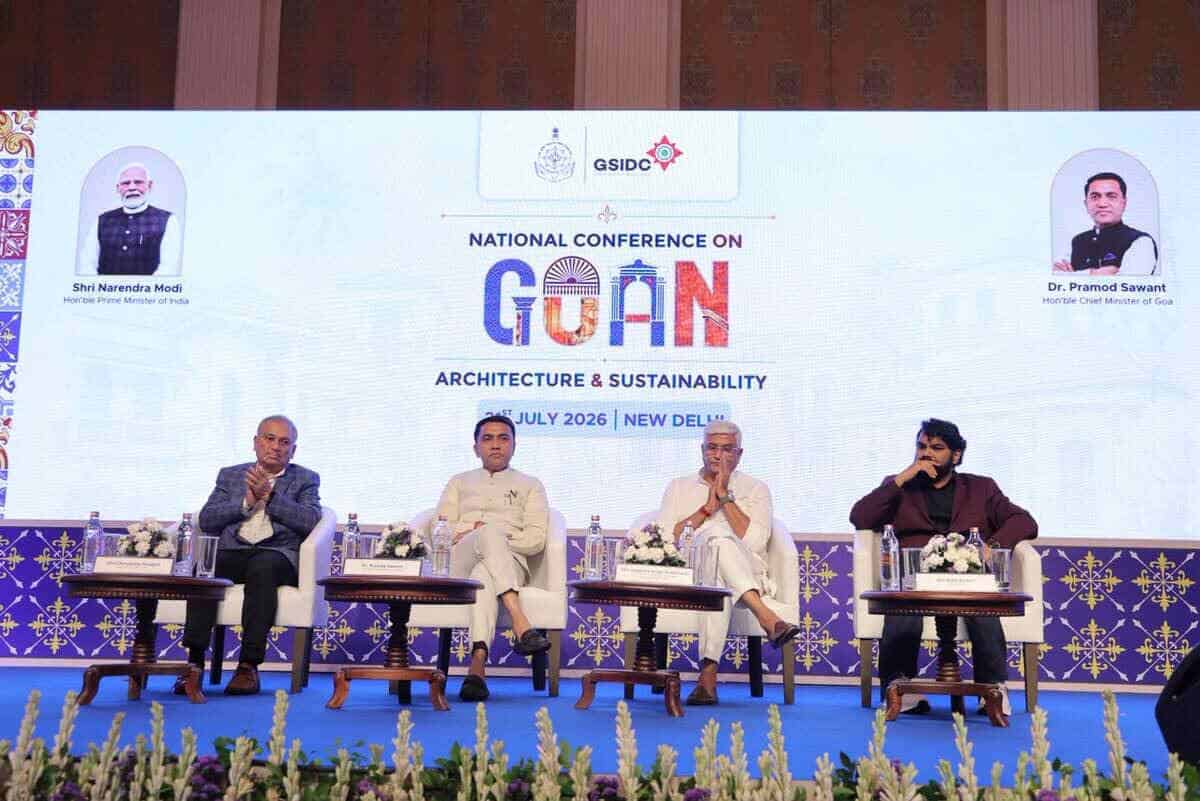
Image generated with Ai
Goa is inspiring India’s next generation of sustainable cities as architecture experts, policymakers and urban planners come together to promote heritage conservation, smart growth and responsible development. The National Conference on Goan Architecture and Sustainability, organised by the Goa State Infrastructure Development Corporation (GSIDC), highlighted the need to balance modern infrastructure with Goa’s unique architectural identity, encouraging innovative approaches that protect cultural heritage while creating environmentally sustainable and future-ready communities.
The conference gathered a multitude of stakeholders and international representatives: policymakers, architects, and urban planners and practitioners; business and sustainability professionals. Participants shared innovative ideas and the latest advancements to make contemporary infrastructure sustainable and to ensure the preservation of traditional architecture.
Participants brought focus to the need for heritage-driven and sustainable future urban developments and planning. The conference provided a strong foundation for the need to partner with governments, professionals, and businesses to become the guiding consensus for future sustainable and adaptive developments.
The conference was inaugurated by Dr. Pramod Sawant, Hon’ble Chief Minister of Goa; Sri. Gajendra Singh Shekhawat, Hon’ble Union Minister of Tourism & Culture, Govt of India; Sri. Sadanand Shet Tanavade, Member of Parliament, Rajya Sabha and distinguished guests from across India and abroad. The inaugural session featured ceremonial lamp lighting followed by keynote addresses highlighting Goa’s commitment to sustainable infrastructure and responsible urban development.
Advertisement
Advertisement
Speaking to the media, Dr. Pramod Sawant,Hon’ble Chief Minister of Goa, said, “Goa’s architectural heritage is a living legacy that continues to shape our future. As we pursue rapid development, we remain committed to creating world-class, resilient and inclusive infrastructure rooted in sustainability, environmental responsibility and respect for our unique cultural identity. Our vision is to ensure that progress strengthens, rather than diminishes, the character that makes Goa truly distinctive. The National Conference on Goan Architecture & Sustainability serves as a valuable platform for architects, planners, policymakers and experts to exchange ideas and advance innovative, climate-resilient and heritage-sensitive solutions. Through collaboration, green technologies and the conservation of our architectural legacy, we can ensure that development and preservation move forward together, building a prosperous and environmentally responsible Goa for generations to come.”
Advertisement
Advertisement
The conference brought together participants from across all fields and professions that intersect with sustainable architecture and responsible development, allowing for an in-depth look and analysis at the rapid changes posed in this area. There were four thematic panel discussions that focused on different areas of Goan architecture: Contextual Design, Heritage Conservation and Sustainable Habitat, Energy Efficiency and Green Building Certification, Climate-Smart Materials and Sustainable Construction Practices. Each session focused on the particular challenges and aspects of designing buildings that are both responsible to the environment.
The participants on the various panels were each invited as experts and included participants from major institutions, associations, and bodies, of both a national and international nature, that specialize and are engaged in the development and practice of architecture, sustainability and conservation in relation to infrastructure. The presentations and discussions included participants from the TERI, the Charles Correa Foundation, INTACH, the GRIHA Council, the World Bank, the International Finance Corporation, the Centre for Science and Environment, the Auroville Earth Institute, the European Union, the Royal Danish Embassy, the Embassy of the Kingdom of the Netherlands and many others. The discussions focused on innovative practices and the use of new technologies that would promote sustainable practices in urban development while ensuring the conservation of its architectural heritage.
An essential forum for discussion, the conference, took on the issues of rapid urbanization, and how it is possible to remain environmentally sustainable in the face of it. The potential of resilient infrastructure was examined in the context of climate responsive planning, sustainable materials, innovative building techniques, and policy frameworks. What was evident from the discussion, was the importance of collaboration and the intersection of the Government, the private sector, research, and the community.
An exhibition of GoVAN products was opened for delegates to view Goan products. The exhibition was a demonstration of the products, and the solutions based on the skills, creativity and entrepreneurial spirit of the of Goan people. The products illustrated the potential and practice of innovative regional construction, and the promotion of local skills, crafts, and a conscious production of low-impact, sustainable resources and methods.
A summary of the day’s discussions, and the recommendations and outcomes, was presented during the final session. The focus of the final session was the continued importance of collaboration and the sharing of knowledge and information, in the pursuit of the aims of sustainable development. A networking high tea was held and provided a platform for government officials, members of the private sector, architects, researchers, and policy makers to discuss and develop ideas and possible collaborations.
The National Conference on Goan Architecture and Sustainability focused on how Goa can set examples for sustainable development as it pertains to heritage, modern infrastructure, climate-resilient urban planning, and preservation. It demonstrated the importance of innovating the balance of architectural identity to sustain Goa’s uniqueness and of growth coupled with environmental responsibility. It was also a huge architectural opportunity in its own right regarding sustainable, collaborative, and cultural future-oriented development.
Advertisement
